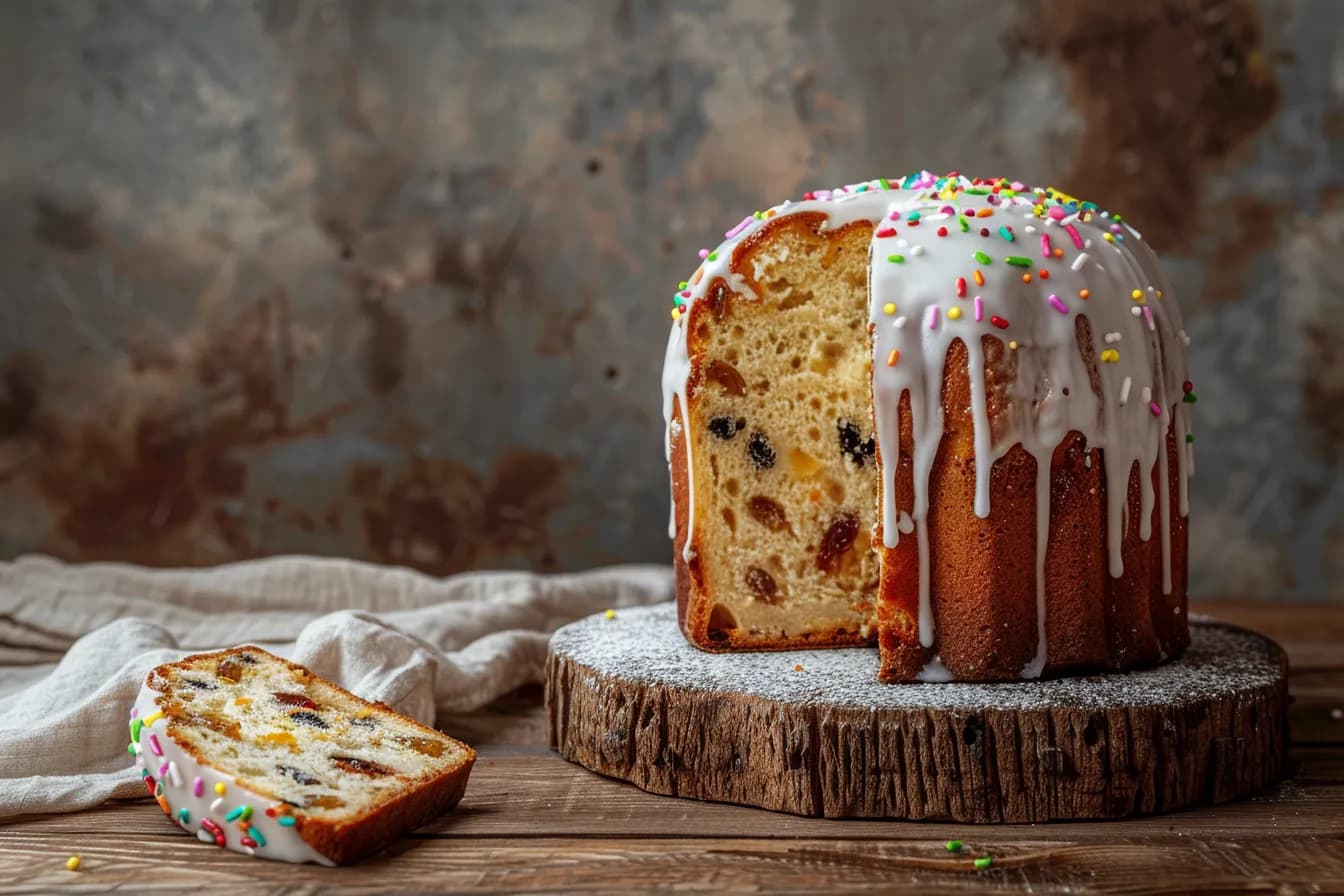
Kulich
Russian Easter bread, a tall yeast cake with sugar glaze, and it is cooled lying down.
- Preparation
- 45 min
- Cook/bake time
- 50 min
- Total
- 7 hr 45 min
- Difficulty
- Medium
- Calories
- 451 kcal
- Servings
- 12 pieces
- Prep
- 45 min
- Cooking & baking
- 50 min
- Resting
- 6 hr 10 min
Only 1 hr 35 min of that is hands-on – the rest takes care of itself.
Russian Easter bread, a tall yeast cake with sugar glaze, and it is cooled lying down. Like panettone, the crumb is not yet stable when hot and would collapse under its own weight. Unlike panettone, however, kulich is not hung upside down, but placed on a pillow and turned. Traditionally, it is on the table for Easter Mass.
Why this works
Kulich dough contains a lot of butter, egg yolks, and sugar, and each of these three slows down the yeast: fat coats the gluten strands, sugar draws water from the yeast osmotically. Therefore, the dough needs a pre-ferment. Only in this thin, low-sugar environment can the yeast multiply undisturbed, so that it is present in sufficient numbers in the main dough to overcome the obstacles. Without a pre-ferment, such a rich dough will hardly rise. The second point is cooling it lying down: the crumb of a tall, very soft yeast cake fresh from the oven does not yet have enough structure to support its own weight; its starches must first crystallize. Lying on its side and turned occasionally, the weight is distributed, and the kulich retains its height.
Step-by-step instructions
- 1
Vorteig ansetzen
Verrühr die lauwarme Milch mit Hefe, Mehl und Zucker zu einem dünnen Brei. Abgedeckt 40 Minuten stehen lassen, bis die Oberfläche blasig aufgeht und deutlich nach Hefe riecht. Der Brei muss sichtbar arbeiten, sonst geht der Hauptteig später nicht.
- 2
Hauptteig kneten
Gib Mehl, Zucker, Eigelb, Salz, Vanille und Kardamom zum Vorteig und knete 10 Minuten. Arbeite dann die weiche Butter löffelweise ein und knete weitere 10 Minuten, bis der Teig glänzt und sich vom Schüsselrand löst.
- 3
Erste Gare
Lass den Teig abgedeckt an einem warmen Ort gehen, bis er sich verdoppelt hat – rechne mit 2 Stunden. Reiche Hefeteige brauchen deutlich länger als magere. Geh nach dem Volumen, nicht nach der Uhr.
- 4
Formen und zweite Gare
Heb die abgetropften Rosinen, das Orangeat und die Mandeln kurz unter. Füll den Teig zu zwei Dritteln in hohe, gefettete Formen. Noch einmal 90 Minuten gehen lassen, bis er fast den Rand erreicht. Heiz den Ofen rechtzeitig auf 170 °C vor.
- 5
Backen und abkühlen
Back den Kulitsch bei 170 °C rund 50 Minuten. Deck ihn nach 25 Minuten mit Alufolie ab, wenn die Haube zu dunkel wird. Nimm ihn aus der Form und leg ihn seitlich auf ein gefaltetes Handtuch, nicht aufrecht – dreh ihn alle 20 Minuten weiter.
- 6
Glasur aufziehen
Schlag das Eiweiß mit Puderzucker und Zitronensaft zu einer dicken, glänzenden Glasur. Der Kulitsch muss dafür ganz kalt sein, sonst läuft sie herunter. Streich die Glasur über die Haube und streu sofort die Zuckerstreusel darauf.
Our best tips
- The pre-ferment is not optional for this dough. Butter and sugar slow down the yeast so much that it will not work without pre-multiplication.
- Cool lying down and turn. Upright, the soft crumb collapses under its own weight, and the tall cake becomes flat.
- In Russia, kulich is traditionally brought to Easter Mass along with paskha and dyed eggs to be blessed. It is a festive pastry, not an everyday cake.
Tasty variations
With saffron
Soak a pinch of saffron in the warm milk for the pre-ferment. This colors the crumb golden yellow and is common in some regions.
Bake in tin cans
Use tall, clean tin cans as molds. They yield the classic narrow, tall shape that would otherwise require special paper molds.
What is left over?
This recipe only uses the yolks. The whites keep for three days in the fridge and freeze well – nobody has to throw them out.
This recipe only uses the whites. There are better places for the yolks than the bin.
Nutrition facts
| Calories | 451 kcal |
|---|---|
| Protein | 8 g |
| Carbohydrates | 74 g |
| – of which sugar | 41 g |
| Fat | 14 g |
| Fiber | 3 g |
Where the 451 kcal come from
per serving
Calculated from the ingredients – how we do it
We add up reference values for every ingredient and divide by the number of servings. These assumptions are baked in:
- Reference values per 100 g – for the raw ingredient, exactly as listed.
- Tinned goods count at drained weight, bone-in meat at purchase weight: you eat about 70 per cent of a chicken thigh and leave the rest.
- Water evaporates as you cook. The energy stays in the pot, the weight does not – so the figure is per serving, not per 100 g of finished dish.
- Anything listed without a quantity – “salt and pepper” – is not counted.
A guide value, not a lab measurement: no two onions weigh the same, and fat content varies from pack to pack.
Frequently asked questions
Why is kulich cooled lying down?
Because the crumb is not yet stable when hot. A tall, very soft yeast cake will collapse under its own weight if left upright. Lying down and turned regularly, the weight is distributed until the starches have crystallized.
How many calories are in a piece of kulich?
Around 450 kcal per piece for twelve pieces, with glaze. Butter, sugar, and dried fruits make up the majority. Without glaze, it is about 390 kcal.
Why do I need a pre-ferment?
Butter and sugar slow down the yeast considerably. In the pre-ferment, it first multiplies undisturbed in a thin, low-sugar environment, so that there is enough of it to leaven the rich main dough.
How long does kulich keep?
About a week in a sealed bag. The high fat and sugar content acts as a preservative. It actually gets better in the first few days because the moisture distributes more evenly.
Comments & ratings(0)
Sign in to rate and comment on this recipe.
You might also like
 Bread & Rolls
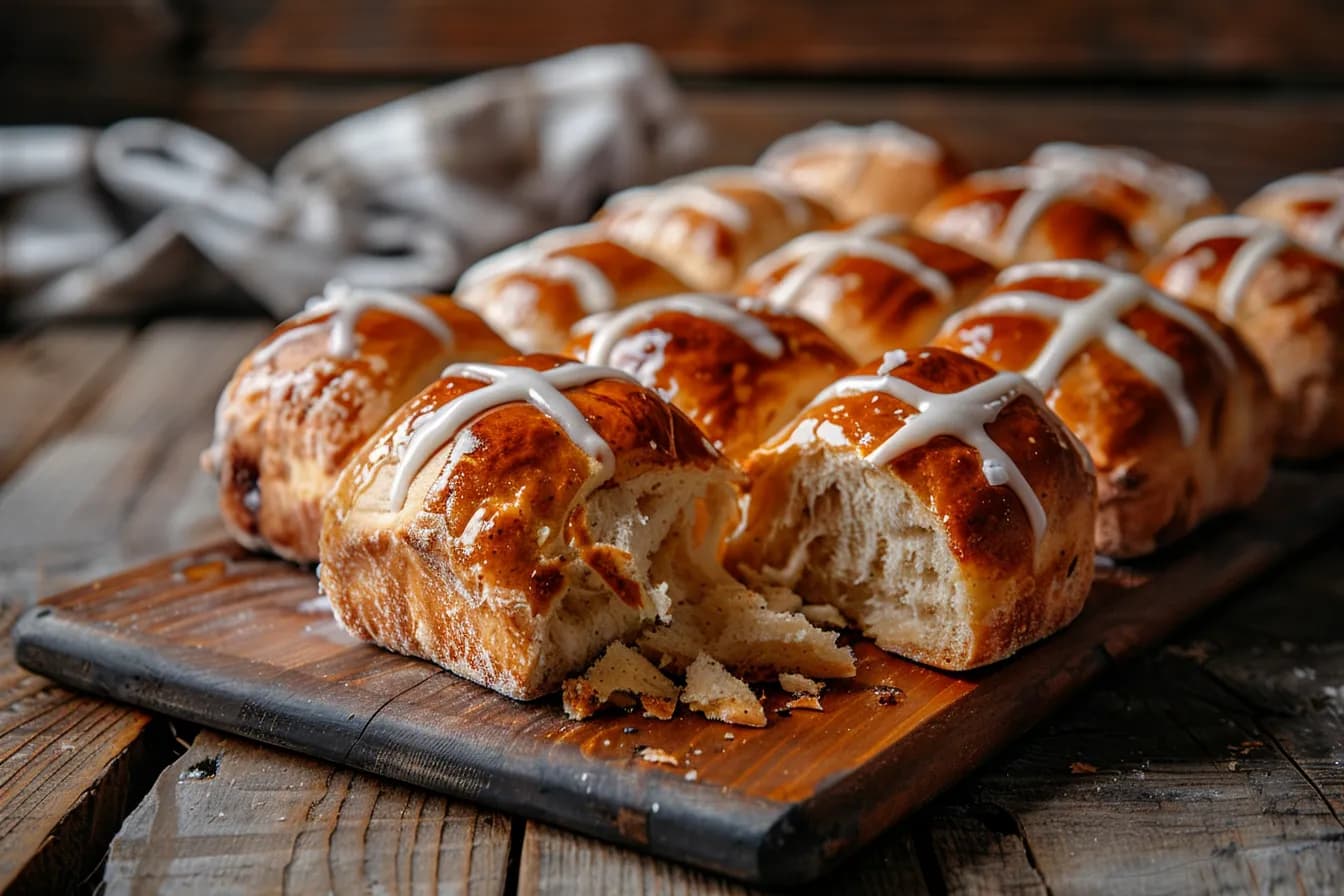
Hot Cross Buns
Soft, spiced yeast buns with raisins and the white cross, a British Easter pastry.
 Basic Recipes
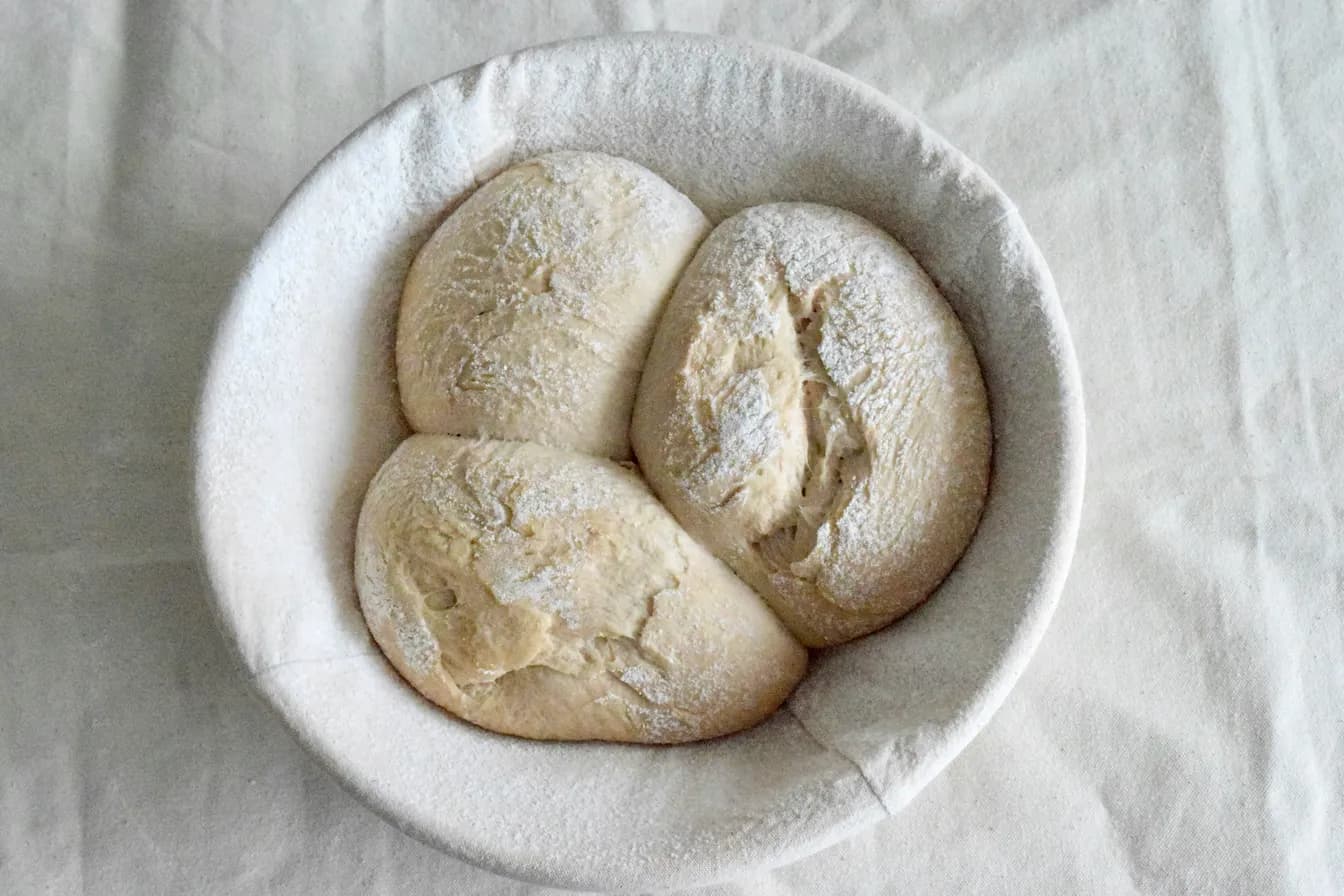
Yeast Dough
A sweet basic dough for braided bread, rolls, and doughnuts, and the answer to the question of why it sometimes fails to rise.
 Cakes & Pastries
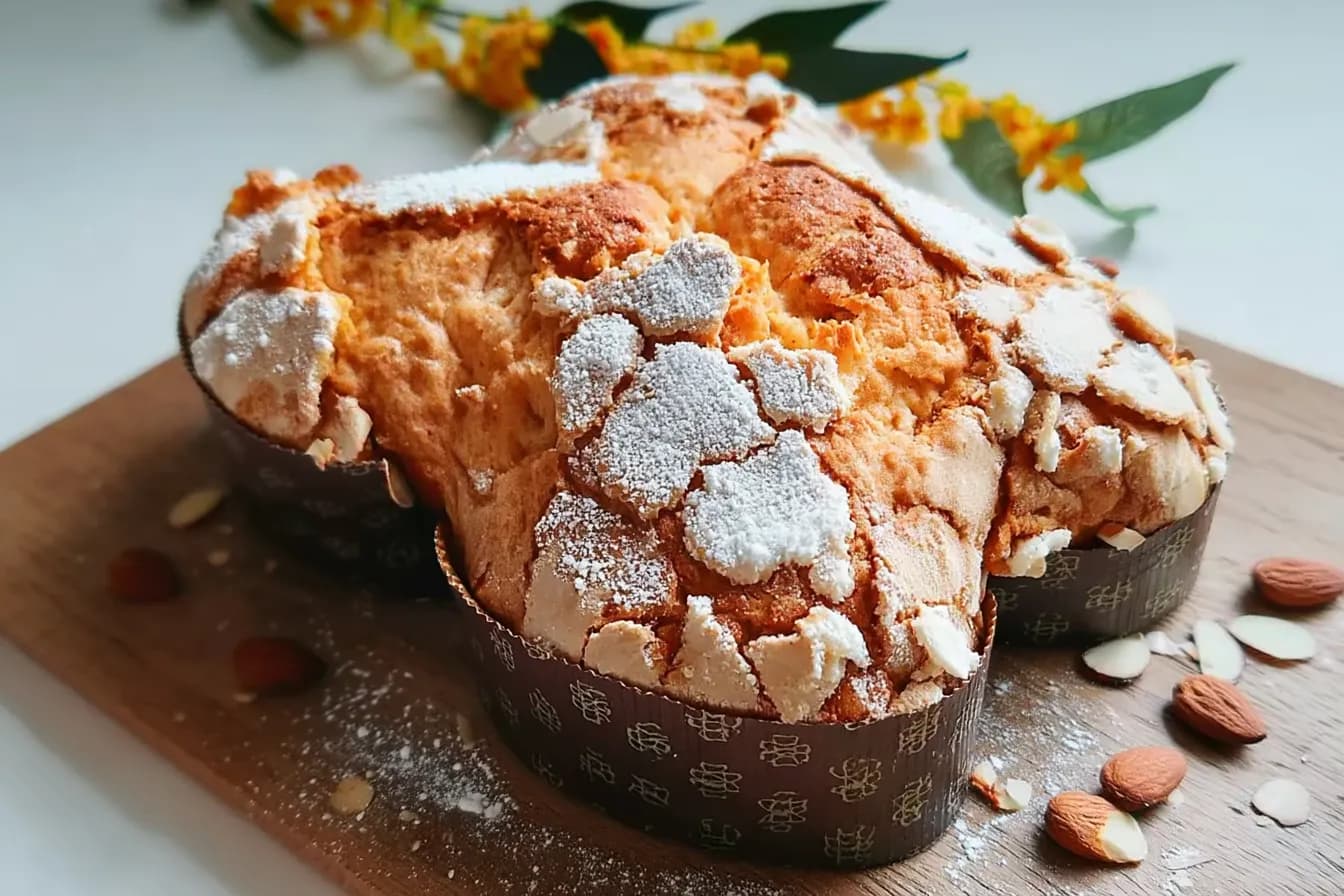
Colomba Pasquale
The Italian Easter dove, a yeast cake like panettone, just in the shape of a dove and with an almond crust.