Colomba Pasquale
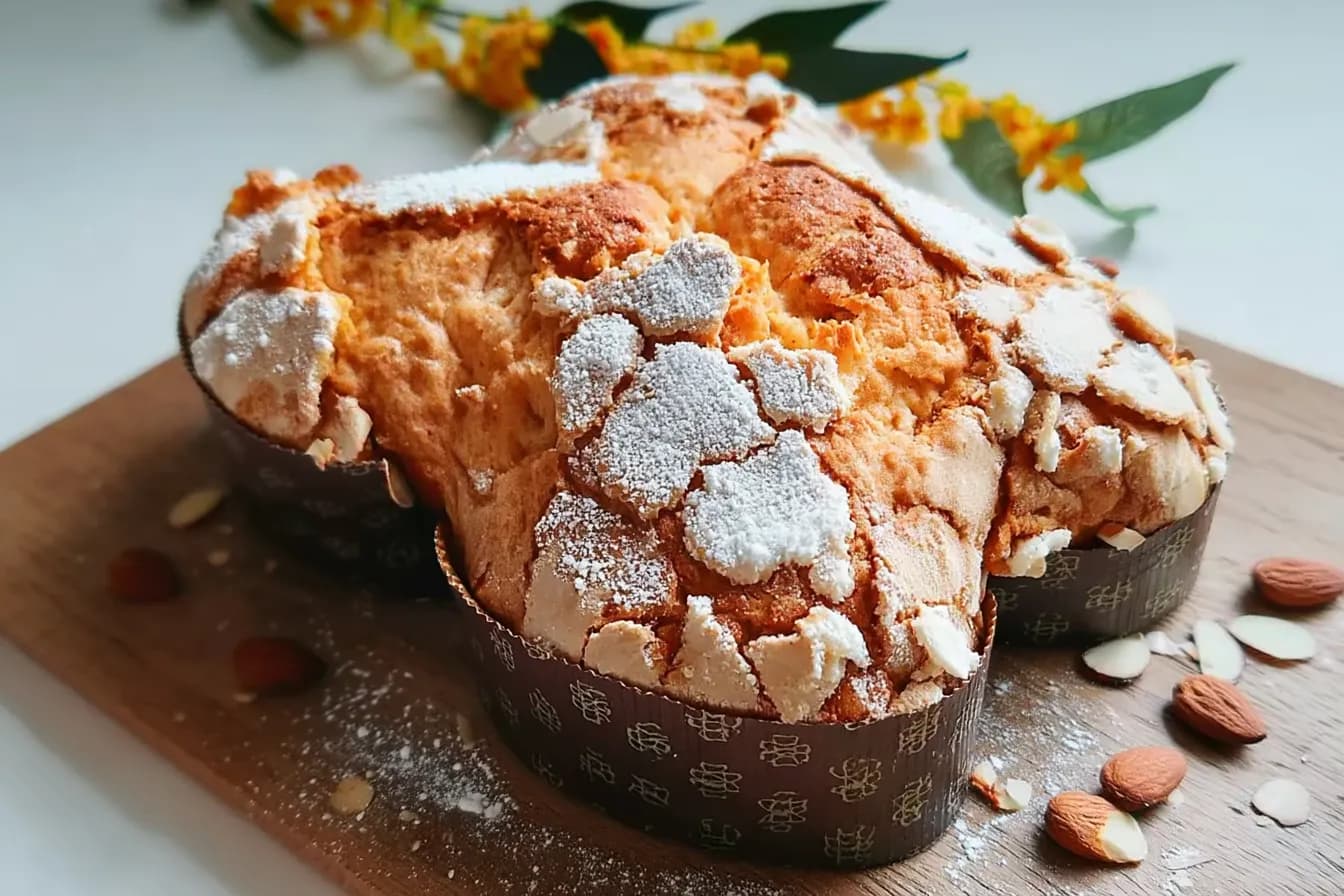
The Italian Easter dove, a yeast cake like panettone, just in the shape of a dove and with an almond crust.
- Preparation
- 1 hr 30 min
- Cook/bake time
- 45 min
- Total
- 21 hr 15 min
- Difficulty
- Advanced
- Calories
- 420 kcal
- Servings
- 12 pieces
- Prep
- 1 hr 30 min
- Cooking & baking
- 45 min
- Resting
- 19 hr
Only 2 hr 15 min of that is hands-on – the rest takes care of itself.
The Italian Easter dove, a yeast cake like panettone, just in the shape of a dove and with an almond crust. Technically, the colomba is a panettone variation: the same fat- and sugar-rich dough, the same two-stage process. What sets it apart is the glaze made of almonds and egg whites, which turns into a crispy crust in the oven.
Why this works
As with panettone, the two-stage dough process is not a tradition, but a necessity: fat settles between the gluten strands and sugar osmotically draws water from the yeast. In a single pass, this dough could never form a viable structure. In the first dough, both are still low enough that a strong gluten network develops overnight; only then are butter, egg yolks, and sugar added in portions. The glaze is the real special feature of the colomba and works like a macaroon mixture: egg whites and sugar form a firm network in the oven, the almonds provide fat and prevent it from becoming too hard. Because it is applied **before** baking and the dough underneath still rises, it cracks in a controlled manner, hence the characteristic crackling. Applied after baking, it would remain smooth and flake off.
Step-by-step instructions
- 1
Knead the first dough
Dissolve the yeast in the lukewarm water and knead it with flour and sugar for ten minutes until smooth. Add the egg yolks one by one, then the butter in cubes. Only when the previous piece is incorporated does the next one go in.
- 2
Let rise overnight
Let the dough rise covered at about 20 degrees for twelve hours until it has tripled in size. Doubling is not enough: the gluten network must be able to carry the second load of sugar and fat.
- 3
Build the second dough
Add flour and salt and knead for ten minutes. Then alternately work in sugar, egg yolks, and butter in small portions, along with vanilla and orange zest, for a total of about forty minutes. If the dough temperature stays above 26 degrees, pause and briefly chill the bowl.
- 4
Candied orange peel and mold
Fold in the candied orange peel only briefly, for a maximum of one minute. Divide the dough into two strands, place them crosswise in the colomba mold. The longer one becomes the body, the shorter one the wings. Let rise for four to five hours until the dough almost reaches the edge.
- 5
Glaze and bake
Mix egg whites, ground almonds, and sugar into a spreadable mixture and distribute it on the risen dough **before** baking. Sprinkle whole almonds and pearl sugar on top. Bake at 165 °C for about 45 minutes until the core temperature reaches 94 degrees. Then hang upside down like a panettone.
Our best tips
- The glaze goes on the dough before baking. Only then does it tear open in a controlled manner when rising and produce the typical crackling. Applied afterwards, it flakes off.
- Colomba paper molds are available in baking supply stores. Alternatively, a large loaf pan works, then only the dove shape is missing, not the taste.
- Let cool upside down, just like panettone. The crumb is not yet stable when hot and collapses upright under its own weight.
Tasty variations
With chocolate
Replace candied orange peel with 200 g coarsely chopped dark chocolate. In Italy, this is now the best-selling variant, especially for families with children.
Without candied orange peel
Instead, use double the amount of orange zest and 100 g raisins. For those who do not like candied fruit, the orange tone is preserved.
What is left over?
This recipe only uses the yolks. The whites keep for three days in the fridge and freeze well – nobody has to throw them out.
This recipe only uses the whites. There are better places for the yolks than the bin.
Nutrition facts
| Calories | 420 kcal |
|---|---|
| Protein | 8 g |
| Carbohydrates | 54 g |
| – of which sugar | 33 g |
| Fat | 19 g |
| Fiber | 3 g |
Where the 420 kcal come from
per serving
Calculated from the ingredients – how we do it
We add up reference values for every ingredient and divide by the number of servings. These assumptions are baked in:
- Reference values per 100 g – for the raw ingredient, exactly as listed.
- Tinned goods count at drained weight, bone-in meat at purchase weight: you eat about 70 per cent of a chicken thigh and leave the rest.
- Water evaporates as you cook. The energy stays in the pot, the weight does not – so the figure is per serving, not per 100 g of finished dish.
- Anything listed without a quantity – “salt and pepper” – is not counted.
A guide value, not a lab measurement: no two onions weigh the same, and fat content varies from pack to pack.
Frequently asked questions
What is the difference to panettone?
The dough is almost identical. The differences are the shape, a dove instead of a cylinder, the almond glaze on the surface, and the filling: colomba traditionally contains only candied orange peel, no raisins.
How many calories does a piece of colomba have?
Around 420 kcal per piece for twelve pieces. The almond glaze alone contributes about 90 kcal per piece and is also the hallmark of the pastry.
Why does the glaze crack?
Because it is applied before baking and the dough underneath continues to rise. The crackling is intentional and the distinguishing feature of a colomba. A smooth glaze means it was applied too late.
How long does colomba keep?
In a sealed bag for about eight days, and like panettone, it even gets better in the first three days. The high fat and sugar content has a preserving effect.
Comments & ratings(0)
Sign in to rate and comment on this recipe.
You might also like
 Cakes & Pastries
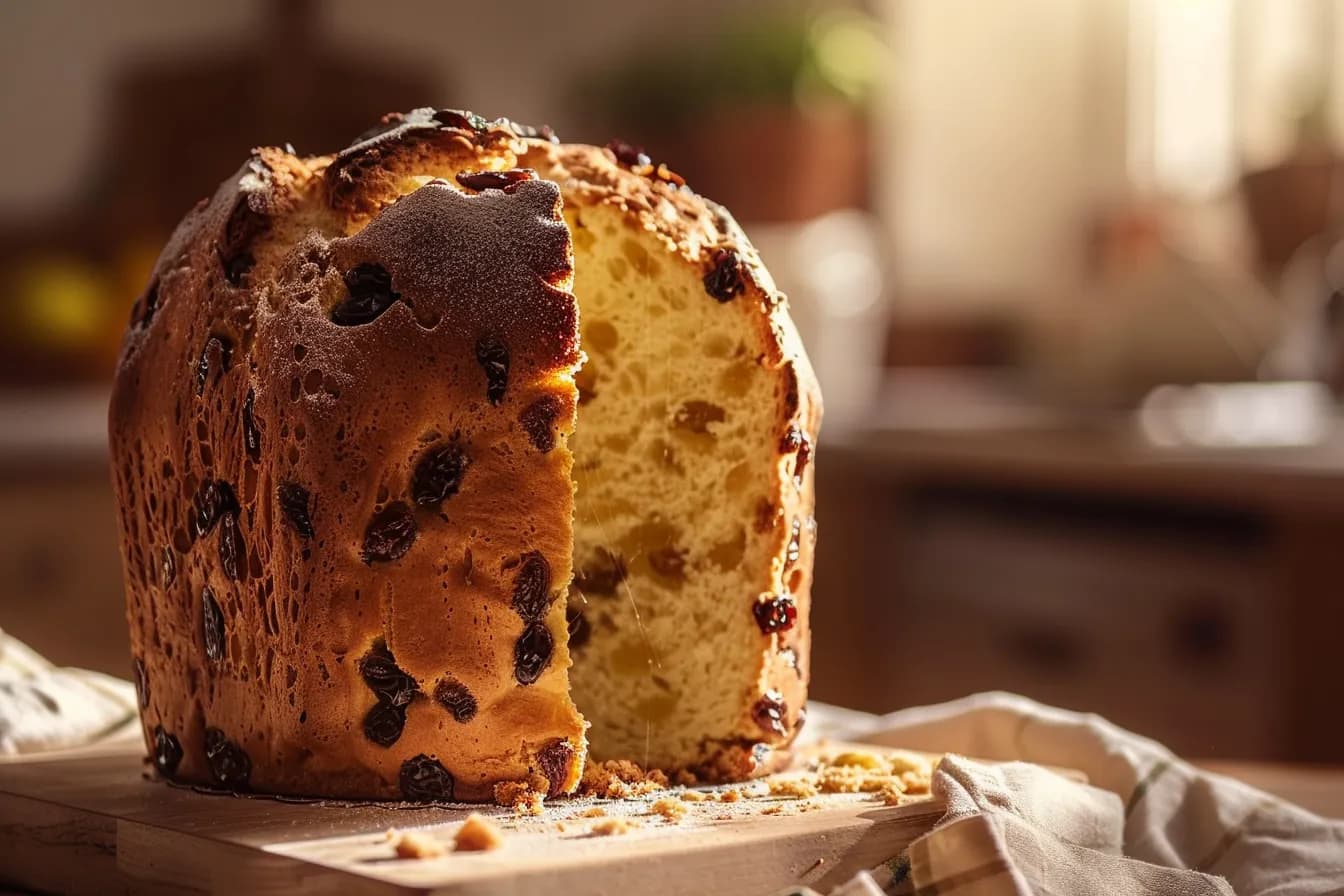
Panettone
The Milanese Christmas cake: tall, airy, tearable into shreds, and the result of two days of patience.
 Desserts
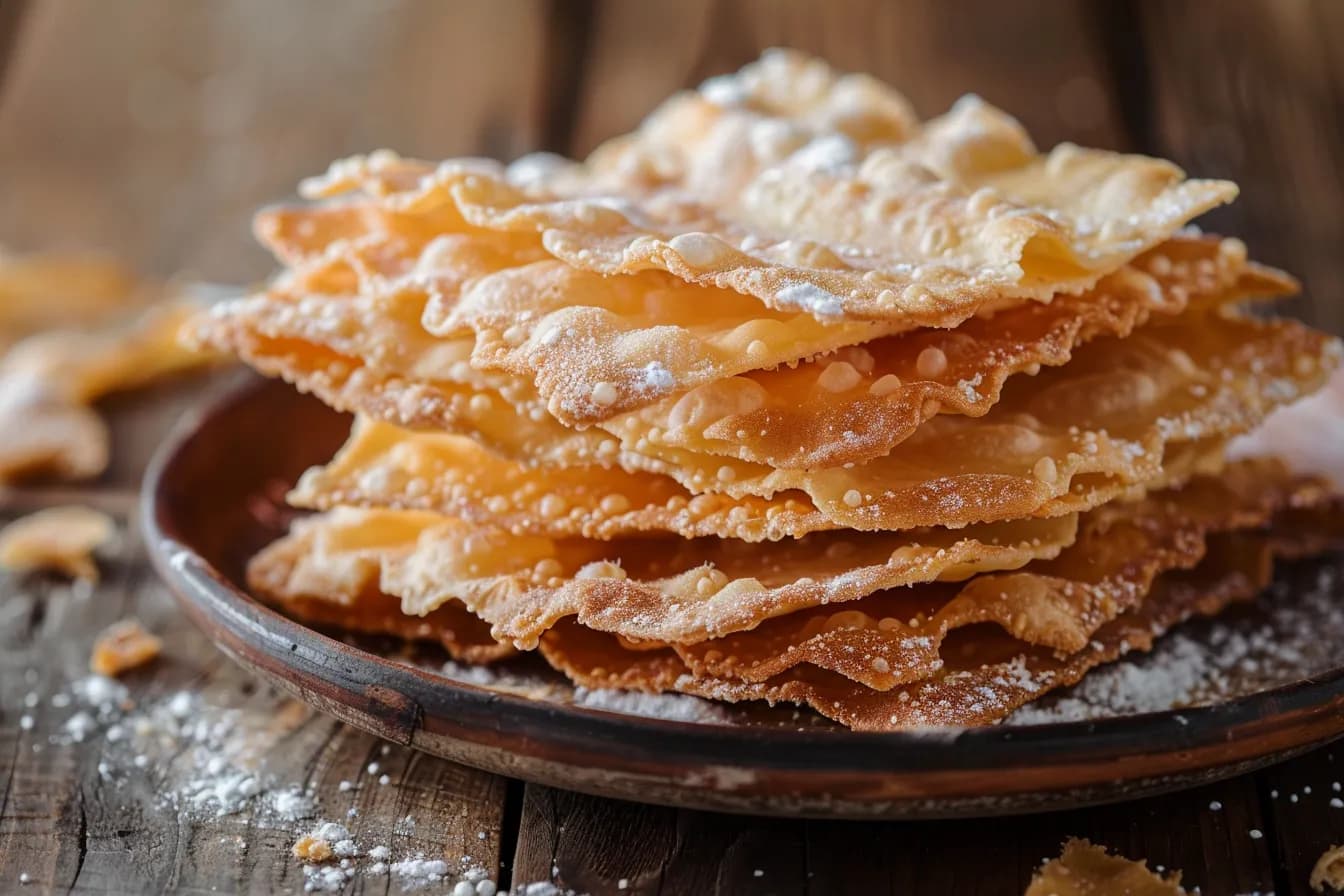
Chiacchiere
Wafer-thin Italian carnival pastries: fried ribbons of dough that shatter loudly when you bite into them.
 Cakes & Pastries
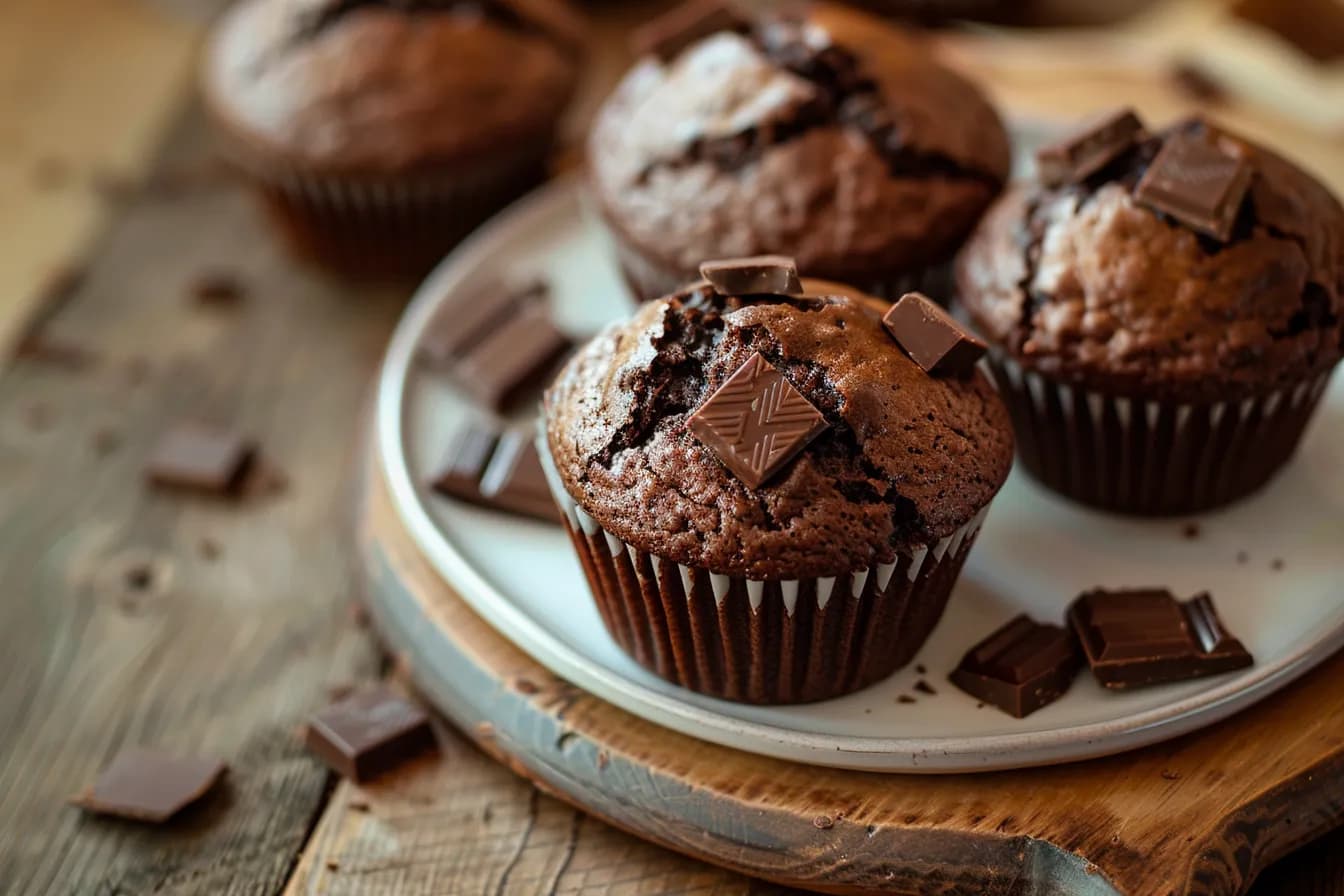
Chocolate Muffins
Dark, moist muffins with a domed top and melted chocolate chunks.