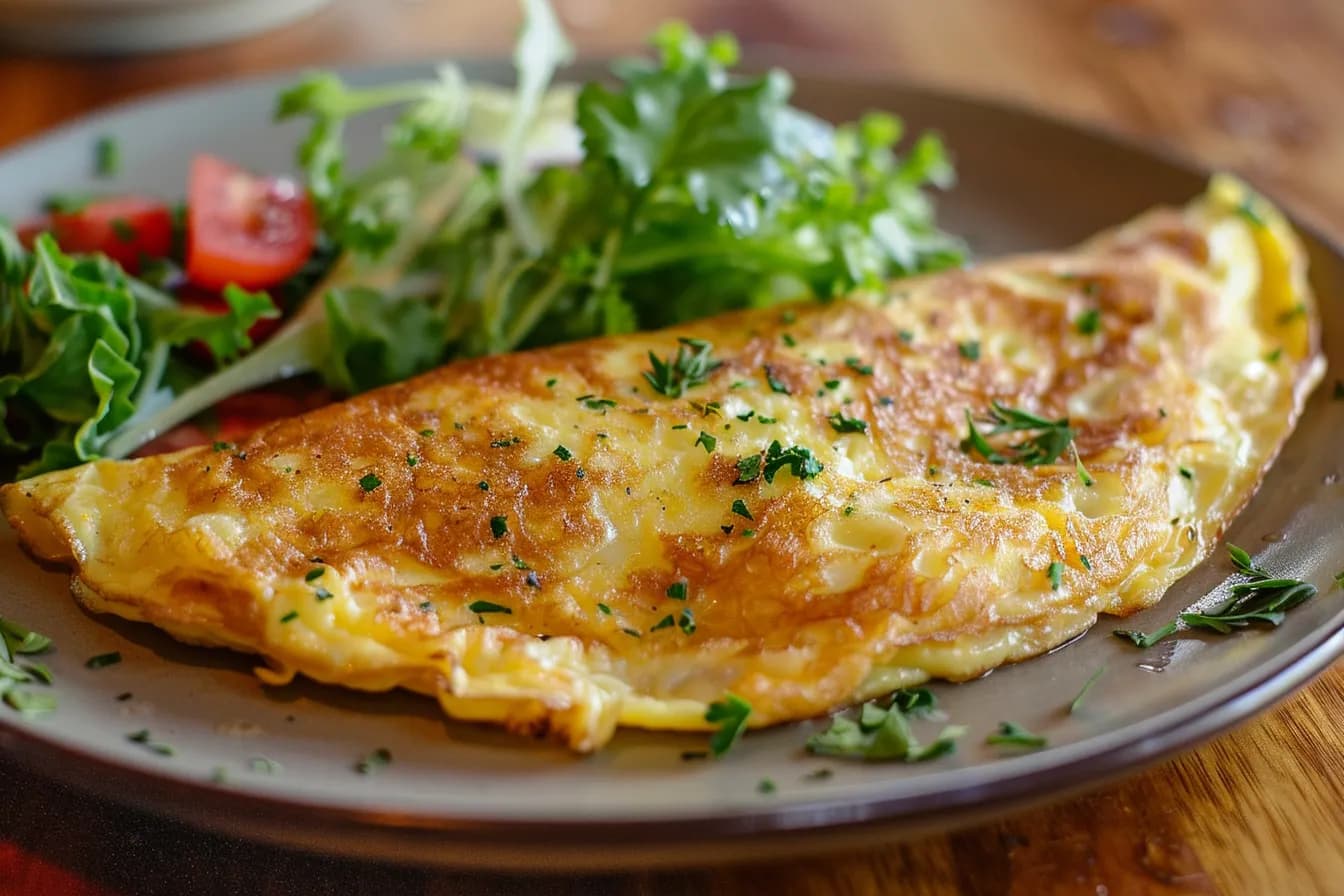
Fluffy Omelette
Gently set omelette with cheese and herbs, pale yellow on the outside and still creamy on the inside.
- Preparation
- 5 min
- Cook/bake time
- 6 min
- Total
- 11 min
- Difficulty
- Easy
- Calories
- 538 kcal
- Servings
- 1
- Prep
- 5 min
- Cooking & baking
- 6 min
Gently set omelette with cheese and herbs, pale yellow on the outside and still creamy on the inside. A good omelette is cooked over low heat and must not get any brown spots, because browning here always means that it was too hot. Three eggs, one pan, five minutes.
Why this works
Brown spots mean that the pan was over 140 °C, and at this temperature egg white contracts so strongly that it squeezes out water. The omelette becomes firm and at the same time wet in the pan, an unpleasant combination. Over low heat, the egg white coagulates slowly just above 62 °C and remains tender. Therefore, browning here is not flavor, but a diagnosis.
Step-by-step instructions
- 1
Whisk the eggs
Whisk the room temperature eggs with the milk, salt and white pepper for about thirty seconds with a fork until the egg white and yolk are completely combined and the mixture is evenly yellow. Do not beat in too much air, an omelette should be creamy and not rise frothily like a soufflé.
- 2
Temper the pan
Melt the butter in a 20 cm non-stick pan over medium to low heat until it just foams. It must not brown under any circumstances. Swirl the pan so that the bottom and the lower edge are completely coated.
- 3
Let the eggs set
Pour in the egg mixture and wait ten seconds. Then repeatedly pull the setting edges to the center with a rubber spatula and tilt the pan so that liquid mixture runs into the empty space. Repeat this for about one minute until everything is set at the bottom and still shiny and moist on top.
- 4
Fill
Sprinkle the grated Gruyère and the herbs on one half of the omelette. Remove the pan from the heat and let the residual heat work for thirty seconds, during this time the cheese melts and the surface cooks just enough so that it is no longer liquid but still creamy.
- 5
Fold and serve
Fold the empty half over the filled one with the spatula and let the omelette slide onto a preheated plate. Sprinkle it with a little salt and a few herbs. Serve immediately, because an omelette continues to cook on the plate and loses its creaminess within a minute.
Our best tips
- Low heat is mandatory. A brown omelette is an omelette cooked too hot.
- Remove from the pan while the surface is still slightly shiny. It continues to cook on the plate.
- Room temperature eggs set more evenly than cold ones straight from the fridge.
Tasty variations
Omelette aux fines herbes
Omit the cheese and use chervil, tarragon, parsley and chives instead.
With mushrooms
Fry 100 g of button mushrooms separately until golden brown beforehand and use as a filling.
Nutrition facts
| Calories | 538 kcal |
|---|---|
| Protein | 31 g |
| Carbohydrates | 3 g |
| – of which sugar | 2 g |
| Fat | 44 g |
| Fiber | 0 g |
Where the 538 kcal come from
per serving
Calculated from the ingredients – how we do it
We add up reference values for every ingredient and divide by the number of servings. These assumptions are baked in:
- Reference values per 100 g – for the raw ingredient, exactly as listed.
- Tinned goods count at drained weight, bone-in meat at purchase weight: you eat about 70 per cent of a chicken thigh and leave the rest.
- Water evaporates as you cook. The energy stays in the pot, the weight does not – so the figure is per serving, not per 100 g of finished dish.
- Anything listed without a quantity – “salt and pepper” – is not counted.
A guide value, not a lab measurement: no two onions weigh the same, and fat content varies from pack to pack.
Frequently asked questions
Why does my omelette become rubbery?
Too high heat or cooked too long. The egg white then contracts strongly and squeezes out liquid. Low heat and early removal from the pan are the solution.
Milk or water?
A spoonful of milk makes the omelette more tender, water slightly fluffier. Both are common, in the French original it is often omitted entirely.
Which pan size is right?
For three eggs, a 20 cm pan. In a pan that is too large, the mixture becomes too thin and cooks through before you can shape it.
Comments & ratings(0)
Sign in to rate and comment on this recipe.
You might also like
 Breakfast
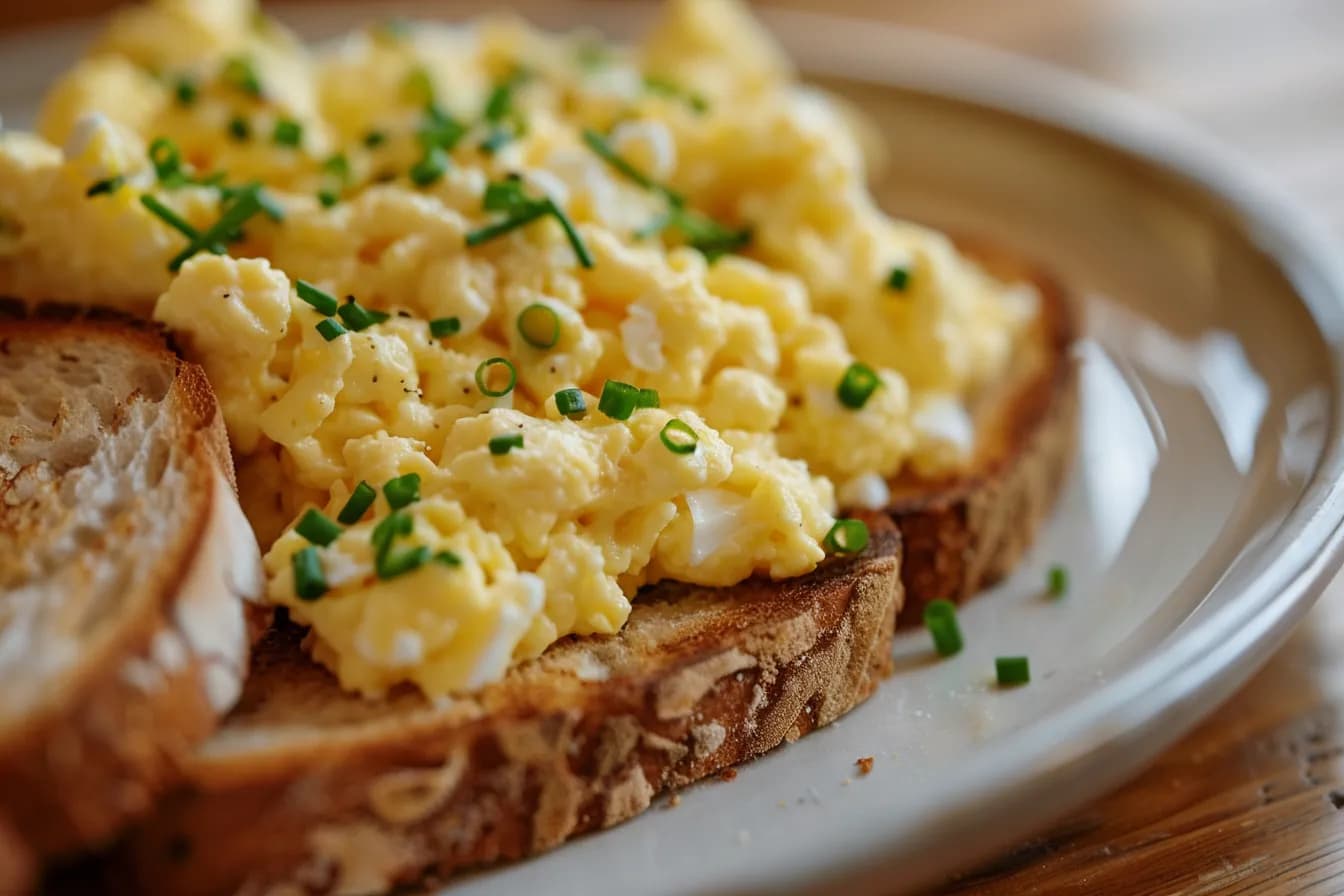
Creamy Scrambled Eggs
Soft, glossy egg curds, stirred slowly over low heat and served on toast.
 Breakfast
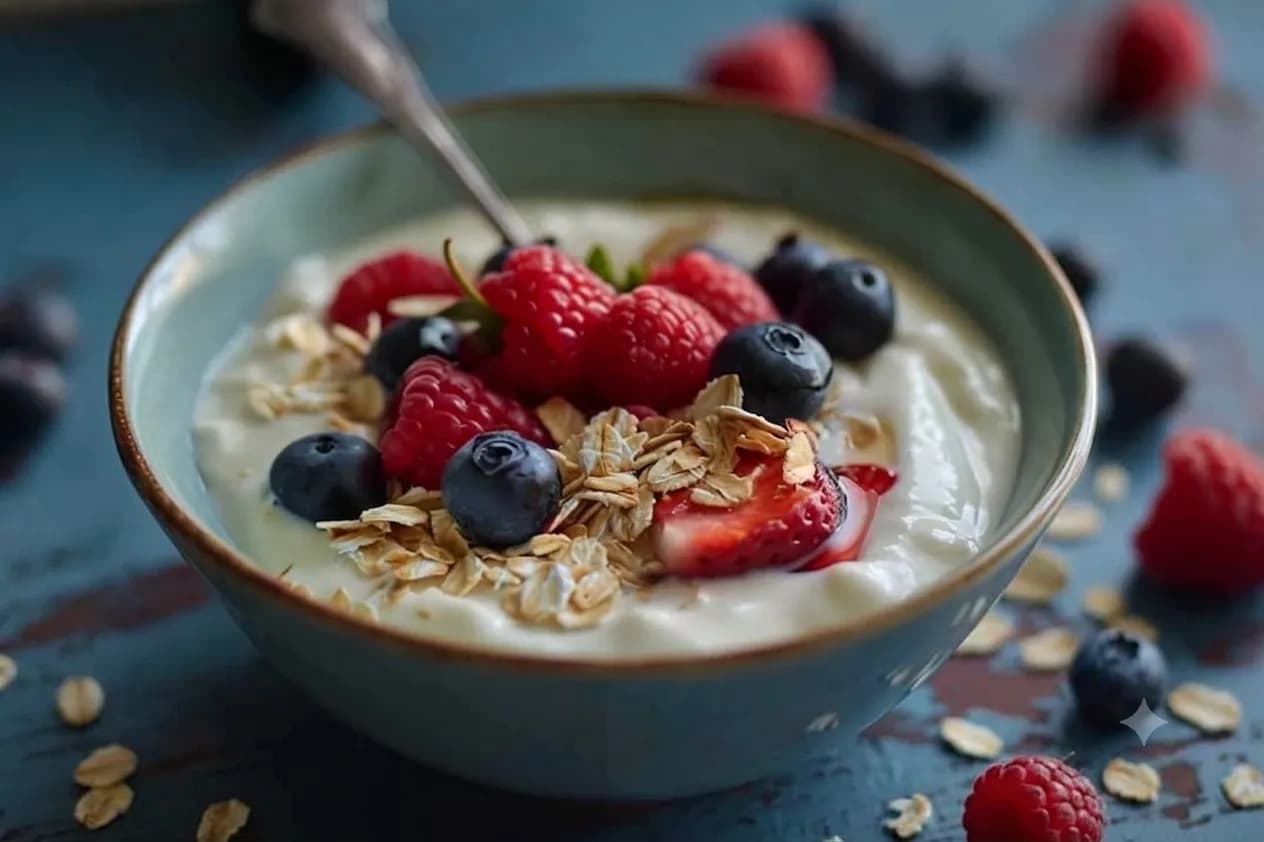
Skyr Bowl
Icelandic Skyr with berries, nuts and honey: 25 grams of protein in a bowl that is ready in four minutes.
 Breakfast
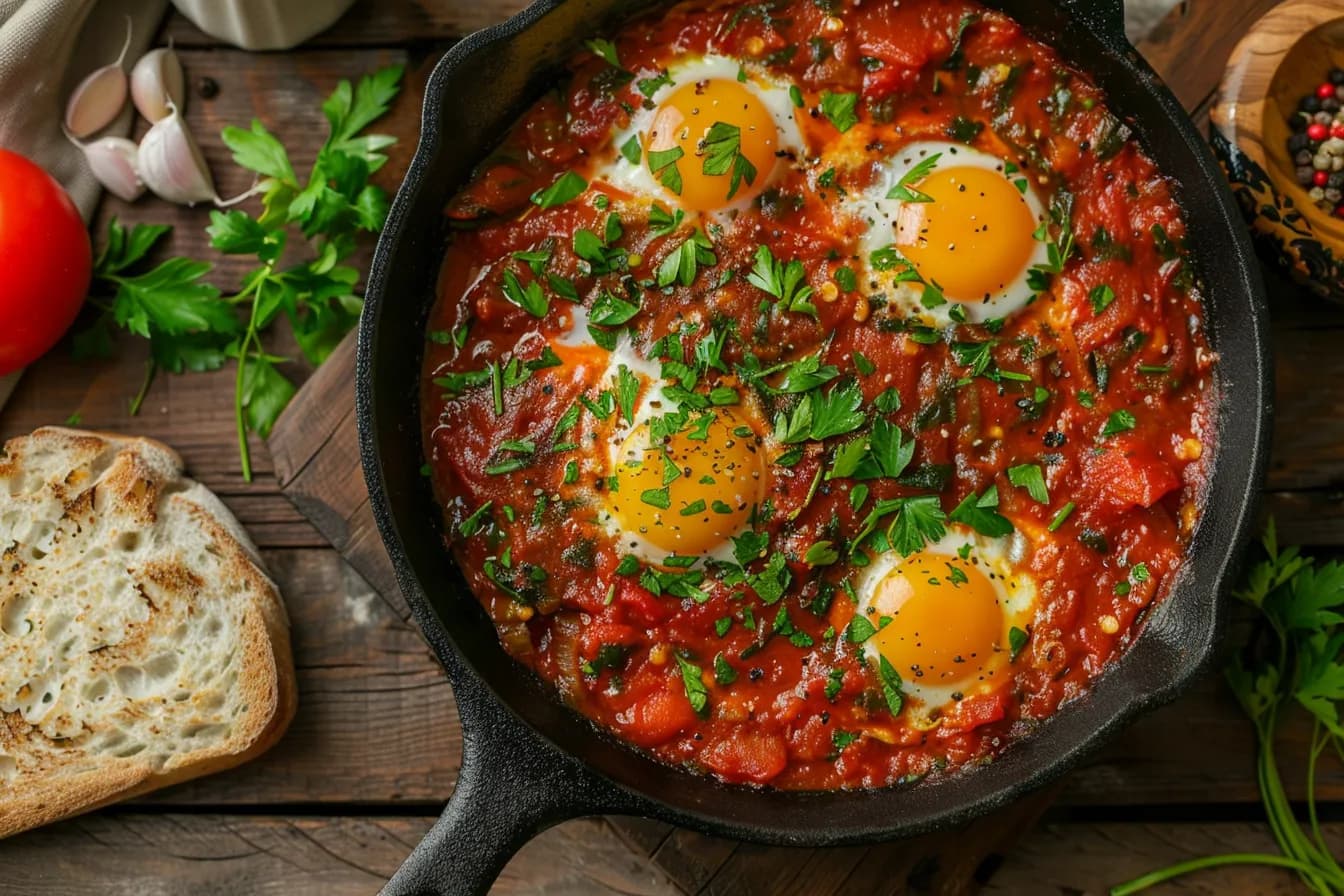
Eggs in Tomato Sauce for One
Half a can of tomatoes, two eggs, a small pan: Shakshuka in a single portion.