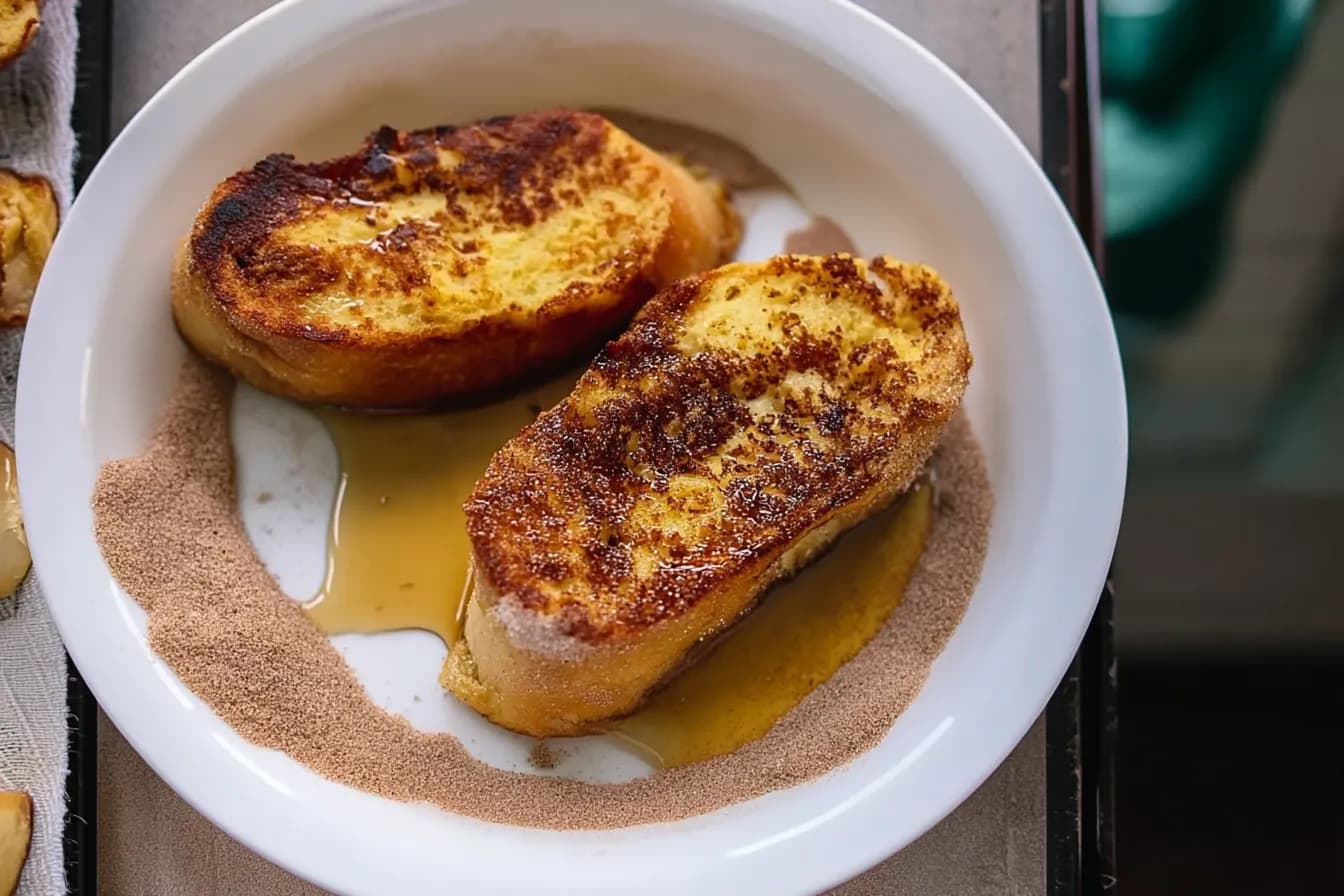
Torrijas
Spanish Easter toast in milk and wine, the French toast of Andalusia, and significantly better than its German relative.
- Preparation
- 15 min
- Cook/bake time
- 25 min
- Total
- 4 hr 40 min
- Difficulty
- Easy
- Calories
- 320 kcal
- Servings
- 8 pieces
- Prep
- 15 min
- Cooking & baking
- 25 min
- Resting
- 4 hr
Only 40 min of that is hands-on – the rest takes care of itself.
Spanish Easter toast in milk and wine, the French toast of Andalusia, and significantly better than its German relative. Torrijas are as much a part of Holy Week in Spain as cookies are to Christmas. The difference from German Arme Ritter lies in the soaking time: the bread steeps for hours instead of seconds and becomes almost pudding-like inside.
Why this works
The difference from German Arme Ritter is the soaking time, and it fundamentally changes the dish. Briefly dipped bread only absorbs liquid on the surface and remains dry inside; over three hours, however, the milk completely penetrates the starch structure and swells it, so that the torrija becomes almost pudding-like inside. For this to succeed, the bread must be stale: fresh bread with a high water content falls apart in the milk, while stale bread has a firmer, retrograded starch structure that absorbs liquid without collapsing. The egg coating on the outside is the second building block, it coagulates in the hot pan within seconds and forms a closed skin that prevents the soaked crumb from falling apart during frying. That is why it is only turned in egg and not in flour.
Step-by-step instructions
- 1
Boil flavored milk
Heat milk, wine, sugar, cinnamon stick and lemon peel to just below boiling point and let everything steep for twenty minutes. Then remove the cinnamon stick and peel and let the milk cool completely, hot milk would immediately decompose the bread.
- 2
Soak for three hours
Place the bread slices in a shallow dish and pour the cold milk over them. Let them steep for at least three hours and turn them carefully once. They should be completely soaked, that is the difference from briefly dipped French toast.
- 3
Lift out carefully
Lift the slices out of the milk with a wide spatula and let them drain briefly. They are now very soft and break easily, a second spatula for support helps.
- 4
Turn in egg and fry
Turn each slice in beaten egg and fry in hot olive oil until golden brown on both sides, about two minutes per side. The egg coating coagulates immediately and holds the soaked crumb together. No flour, it would form a sticky layer.
- 5
Roll in cinnamon sugar
Mix sugar and cinnamon and roll the still warm torrijas in it. Serve lukewarm or cold, in Spain they are kept in the refrigerator throughout Holy Week and eaten cold.
Our best tips
- Stale bread is a prerequisite. Fresh bread falls apart in the milk before it has absorbed it, two-day-old white bread with a firm crumb is right.
- Cut thickly, at least three centimeters. Thin slices soak up faster, but lose exactly the pudding-like center that it is all about.
- Fry in olive oil, not in butter. In Andalusia this is standard, and olive oil tolerates the heat better, butter burns before the torrija is done.
Tasty variations
With honey instead of sugar
Pour warm honey over the finished torrijas instead of rolling them in cinnamon sugar. In some regions of Spain, the older version.
Without alcohol
Replace the wine with the same amount of milk and add an additional teaspoon of lemon peel. For children, the usual variant.
Nutrition facts
| Calories | 320 kcal |
|---|---|
| Protein | 8 g |
| Carbohydrates | 37 g |
| – of which sugar | 24 g |
| Fat | 14 g |
| Fiber | 1 g |
Where the 320 kcal come from
per serving
Calculated from the ingredients – how we do it
We add up reference values for every ingredient and divide by the number of servings. These assumptions are baked in:
- Reference values per 100 g – for the raw ingredient, exactly as listed.
- Tinned goods count at drained weight, bone-in meat at purchase weight: you eat about 70 per cent of a chicken thigh and leave the rest.
- Water evaporates as you cook. The energy stays in the pot, the weight does not – so the figure is per serving, not per 100 g of finished dish.
- Anything listed without a quantity – “salt and pepper” – is not counted.
A guide value, not a lab measurement: no two onions weigh the same, and fat content varies from pack to pack.
Frequently asked questions
What is the difference from French toast?
The soaking time. Torrijas steep for three hours in flavored milk and become almost pudding-like inside; German Arme Ritter is only briefly dipped and remains bread-like inside. In addition, there are wine, cinnamon and lemon peel in the milk.
How many calories does a torrija have?
Around 320 kcal per piece for eight pieces. Bread, milk and sugar make up the majority, the frying oil contributes about 70 kcal per piece.
Why do my torrijas fall apart?
The bread was too fresh or the milk too hot. Stale bread has a firmer starch structure and absorbs liquid without collapsing. The milk must be completely cooled.
Can I prepare them in advance?
Yes, it is even common. In Spain, torrijas are fried on Maundy Thursday and eaten cold from the refrigerator over Holy Week. They keep for two to three days.
Comments & ratings(0)
Sign in to rate and comment on this recipe.
You might also like
 Cakes & Pastries
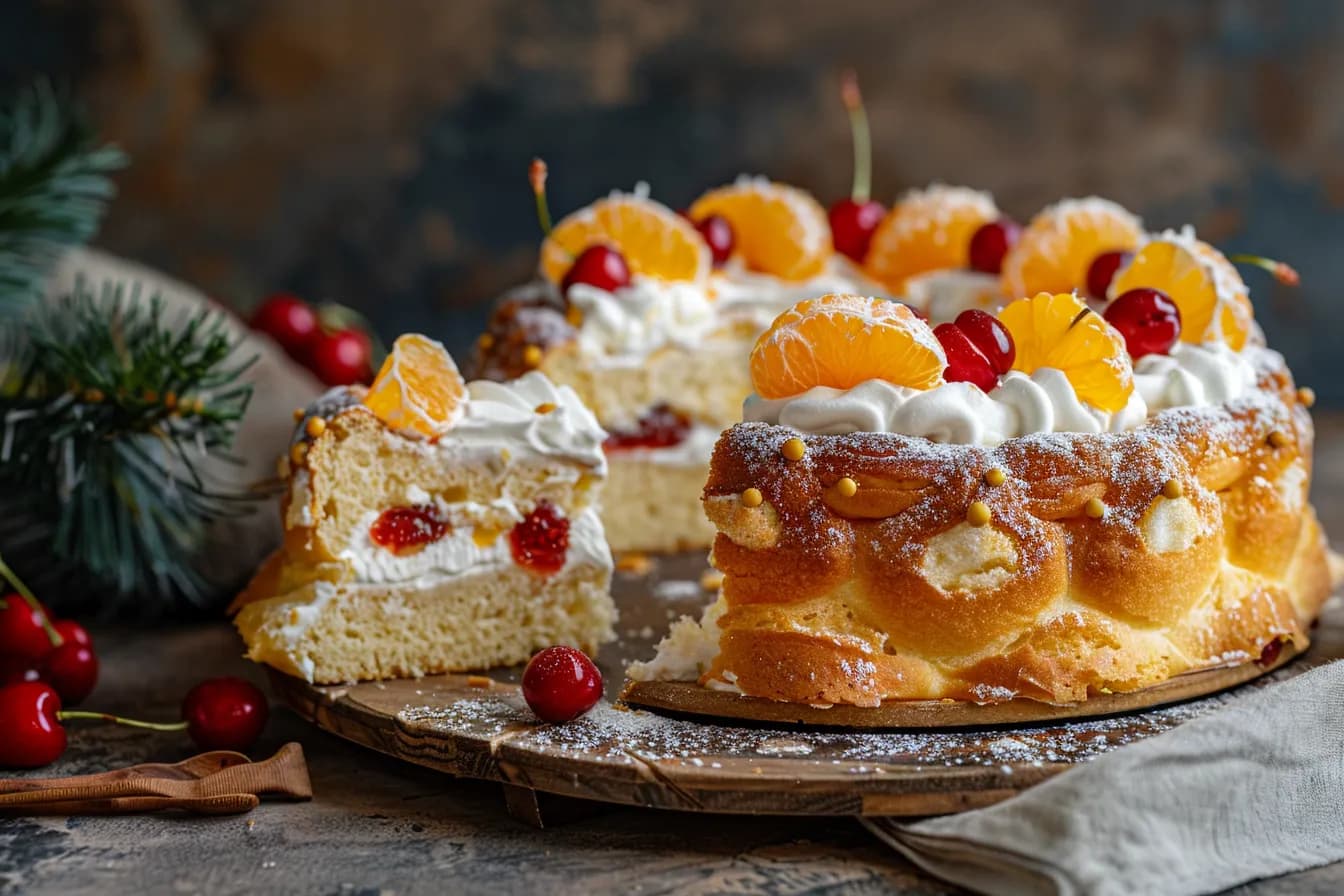
Roscón de Reyes
Spanish Epiphany wreath made of yeast dough with orange blossom water, the scent that defines January 6th in Spain.
 Desserts
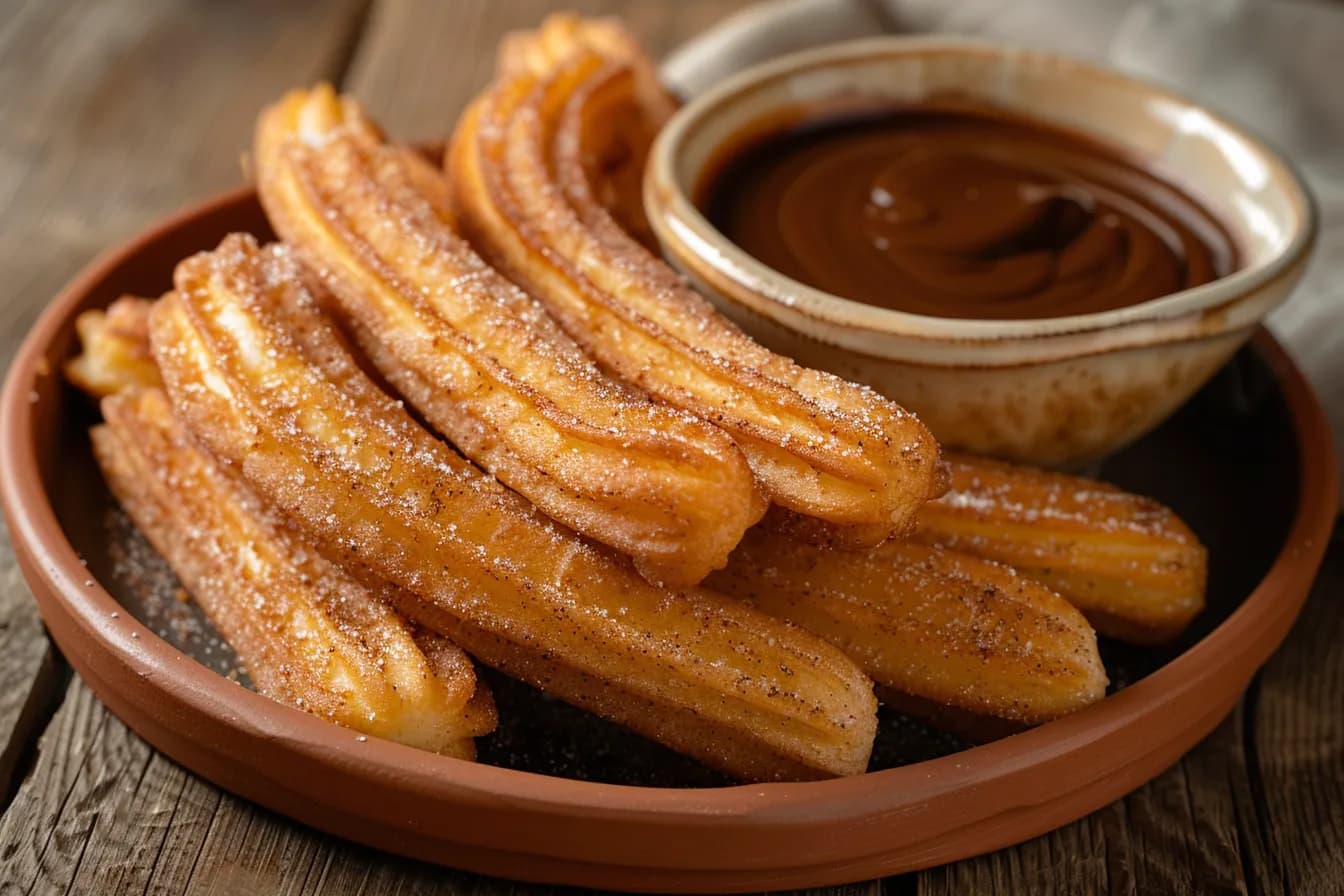
Churros with Chocolate Sauce
Fluted piped pastries made from choux pastry, rolled in cinnamon sugar and served with thick chocolate sauce.
 Desserts
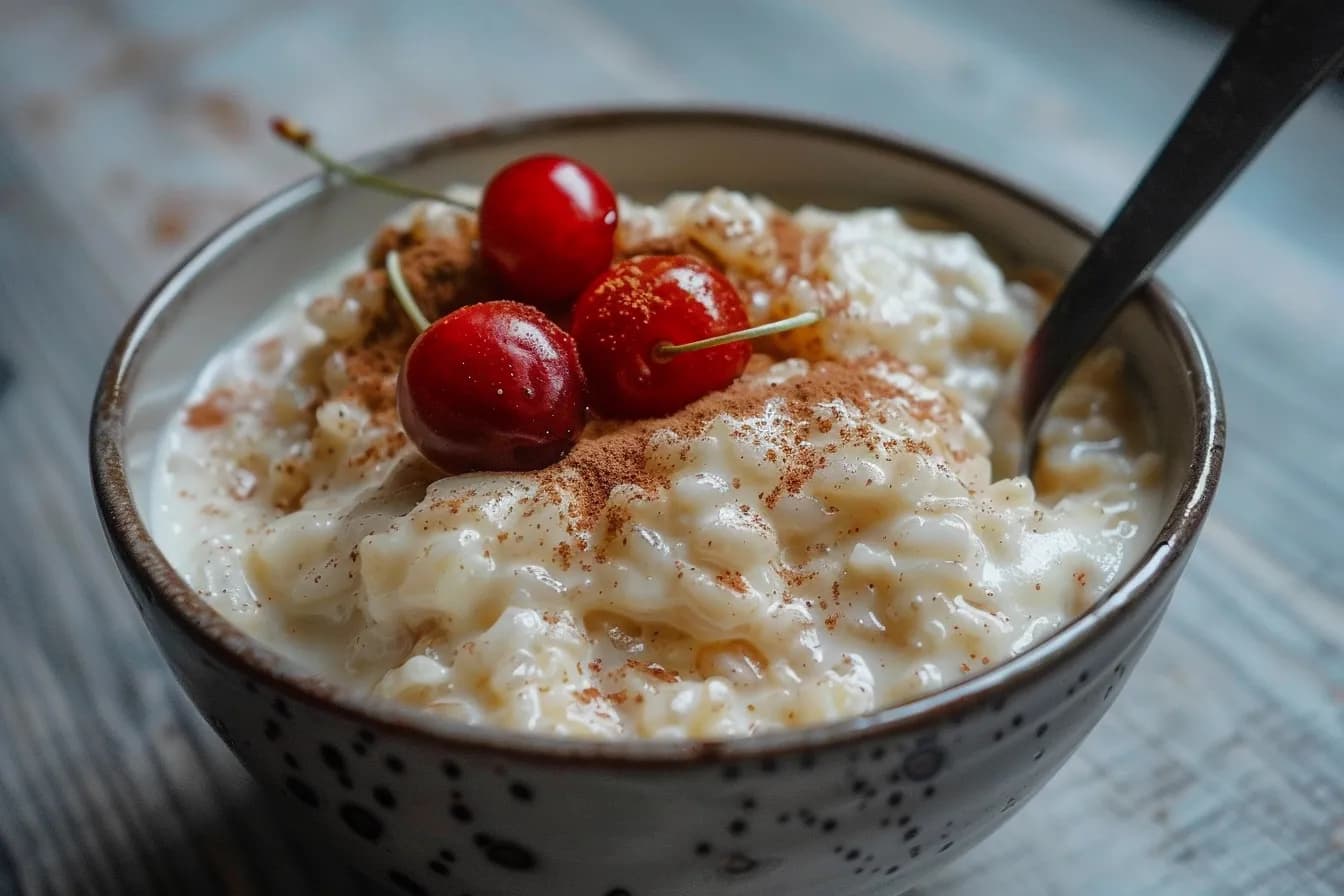
Rice Pudding
Creamy rice pudding that does not burn, and the explanation of why sugar only belongs at the end.