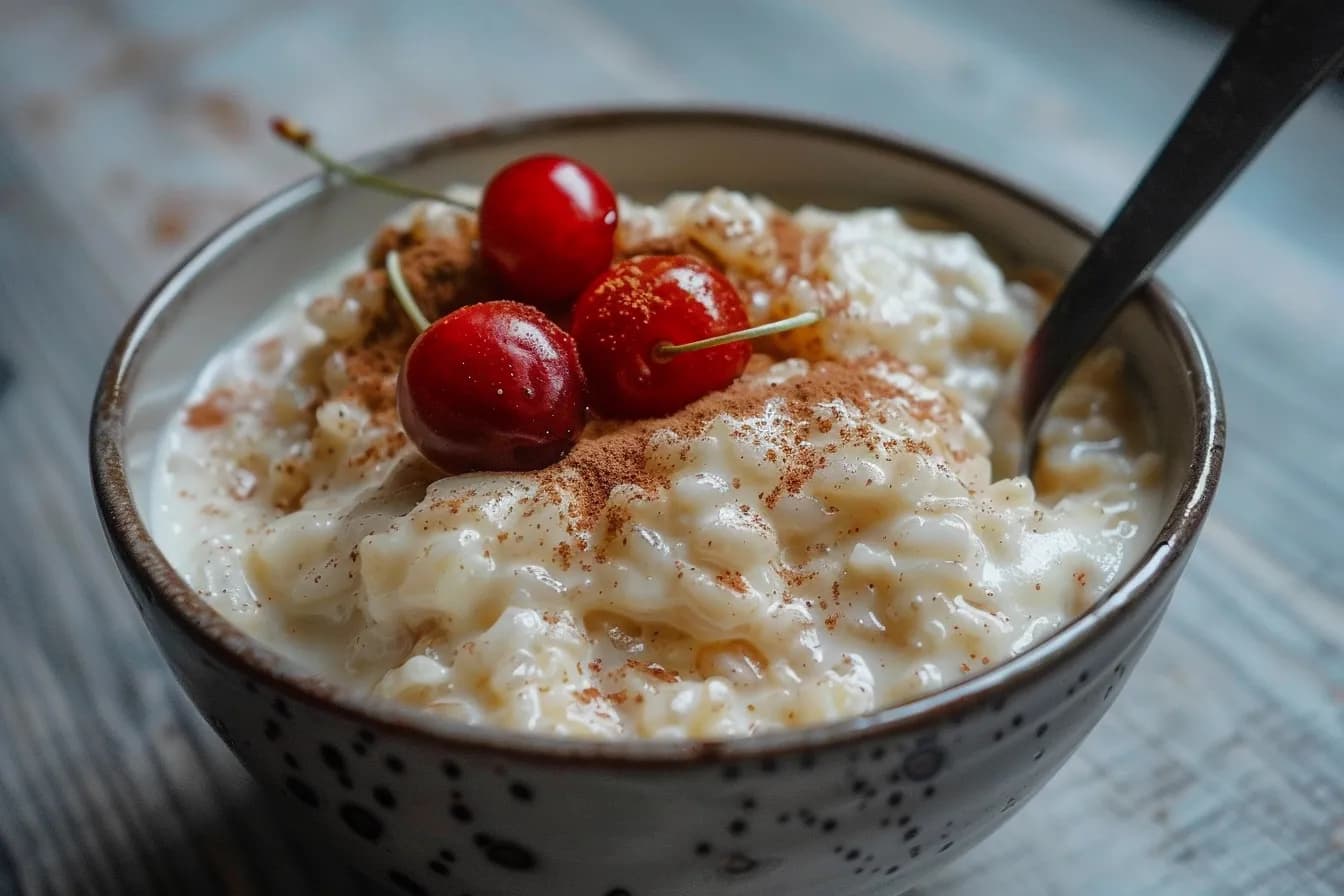
Rice Pudding
Creamy rice pudding that does not burn, and the explanation of why sugar only belongs at the end.
- Preparation
- 5 min
- Cook/bake time
- 35 min
- Total
- 50 min
- Difficulty
- Easy
- Calories
- 452 kcal
- Servings
- 4
- Prep
- 5 min
- Cooking & baking
- 35 min
- Resting
- 10 min
Only 40 min of that is hands-on – the rest takes care of itself.
Creamy rice pudding that does not burn, and the explanation of why sugar only belongs at the end. Rice pudding is one of those dishes where every step has a reason: milk sugar caramelizes on the bottom of the pot, cane sugar delays the swelling, and a thick bottom of the pot is more important than any amount of attention. Thirty minutes of stirring cannot be replaced, but they can certainly be made more pleasant.
Why this works
Rice pudding burns so easily because milk brings two things that water does not have: milk sugar, which caramelizes on the hot bottom of the pot and then burns, and milk protein, which flocculates from about 70 degrees and settles as a film. Both happen exactly where the rice lies and the heat arrives directly. A thick bottom of the pot distributes it and is therefore more effective than even the most diligent stirring. The sugar is added at the end for another reason: it binds water osmotically and competes with the rice grain for it, so that a rice pudding sweetened from the beginning takes significantly longer and becomes mushy on the outside before it is cooked on the inside. Short-grain rice is mandatory because it contains a lot of amylopectin, the same branched starch that also makes risotto creamy.
Step-by-step instructions
- 1
Put the milk on
Bring the milk, salt, vanilla seeds and the scraped pod slowly to a simmer in a pot with a thick bottom. Do not let it boil. Boiling over milk is the second most common kitchen disaster with rice pudding after burning.
- 2
Stir in the rice
Stir in the rice without washing it first. The surface starch is the active ingredient here, not the disruptive factor. Washed rice results in a rice pudding that remains watery instead of becoming creamy.
- 3
Thirty minutes over low heat
Let the rice pudding simmer quietly over the lowest heat for thirty minutes and stir regularly with the spatula over the entire bottom of the pot, especially into the edges. It settles there first because the spatula reaches the curve less well than the middle.
- 4
Sugar only now
Take the pot off the stove and only now stir in the sugar. Added from the beginning, it would have competed with the rice for the water and significantly extended the cooking time. Pull out the vanilla pod.
- 5
Let swell for ten minutes
Let the rice pudding stand covered for ten minutes. It thickens considerably in the process. Anyone who judges it directly from the stove thinks it is too liquid and cooks it down too far. Serve sprinkled with cinnamon and sugar.
Our best tips
- A pot with a thick bottom is half the battle. A thin pot burns, no matter how often it is stirred, because the heat arrives at specific points.
- Sugar only at the end. Added from the beginning, it noticeably extends the cooking time because it extracts the water from the rice grain that it needs to swell.
- It thickens strongly when cooling down. The next day it is almost sliceable, then simply stir it creamy again with a dash of milk.
Tasty variations
With coconut milk
Replace half of the milk with coconut milk and season with lime zest. Significantly closer to the Southeast Asian variant and doable without cow's milk.
Arroz con leche
Cook a cinnamon stick and the peel of a lemon along with it, replace the sugar with sweetened condensed milk. The Spanish version, significantly sweeter and denser.
Nutrition facts
| Calories | 452 kcal |
|---|---|
| Protein | 13 g |
| Carbohydrates | 77 g |
| – of which sugar | 28 g |
| Fat | 10 g |
| Fiber | 2 g |
Where the 452 kcal come from
per serving
Calculated from the ingredients – how we do it
We add up reference values for every ingredient and divide by the number of servings. These assumptions are baked in:
- Reference values per 100 g – for the raw ingredient, exactly as listed.
- Tinned goods count at drained weight, bone-in meat at purchase weight: you eat about 70 per cent of a chicken thigh and leave the rest.
- Water evaporates as you cook. The energy stays in the pot, the weight does not – so the figure is per serving, not per 100 g of finished dish.
- Anything listed without a quantity – “salt and pepper” – is not counted.
A guide value, not a lab measurement: no two onions weigh the same, and fat content varies from pack to pack.
Frequently asked questions
How many calories does rice pudding have?
Around 450 kcal per portion for four portions. With low-fat milk, the value drops to about 380 kcal; the sugar alone contributes around 60 kcal per portion and can easily be halved.
Why does my rice pudding burn?
Because the bottom of the pot is too thin or the heat is too high. Milk sugar caramelizes on the hot bottom and milk protein flocculates. A thick bottom of the pot helps against this more than more frequent stirring.
Which rice is the right one?
Short-grain rice, usually referred to directly as rice pudding rice in stores. It contains a lot of amylopectin, which escapes during cooking and creates the creaminess. Long-grain rice remains grainy and does not bind the milk.
Can I prepare rice pudding in advance?
Yes, three days in the refrigerator. It becomes very firm in the process. Stirred up with a dash of milk, it is like fresh again. Freezing is not worth it, the starch becomes grainy in the process.
Comments & ratings(0)
Sign in to rate and comment on this recipe.
You might also like
 Breakfast
French Toast
Stale bread soaks up the egg mixture, while fresh bread just swims in it, which is why this recipe is perfect for leftovers.
 Cakes & Pastries
Roscón de Reyes
Spanish Epiphany wreath made of yeast dough with orange blossom water, the scent that defines January 6th in Spain.
 Desserts
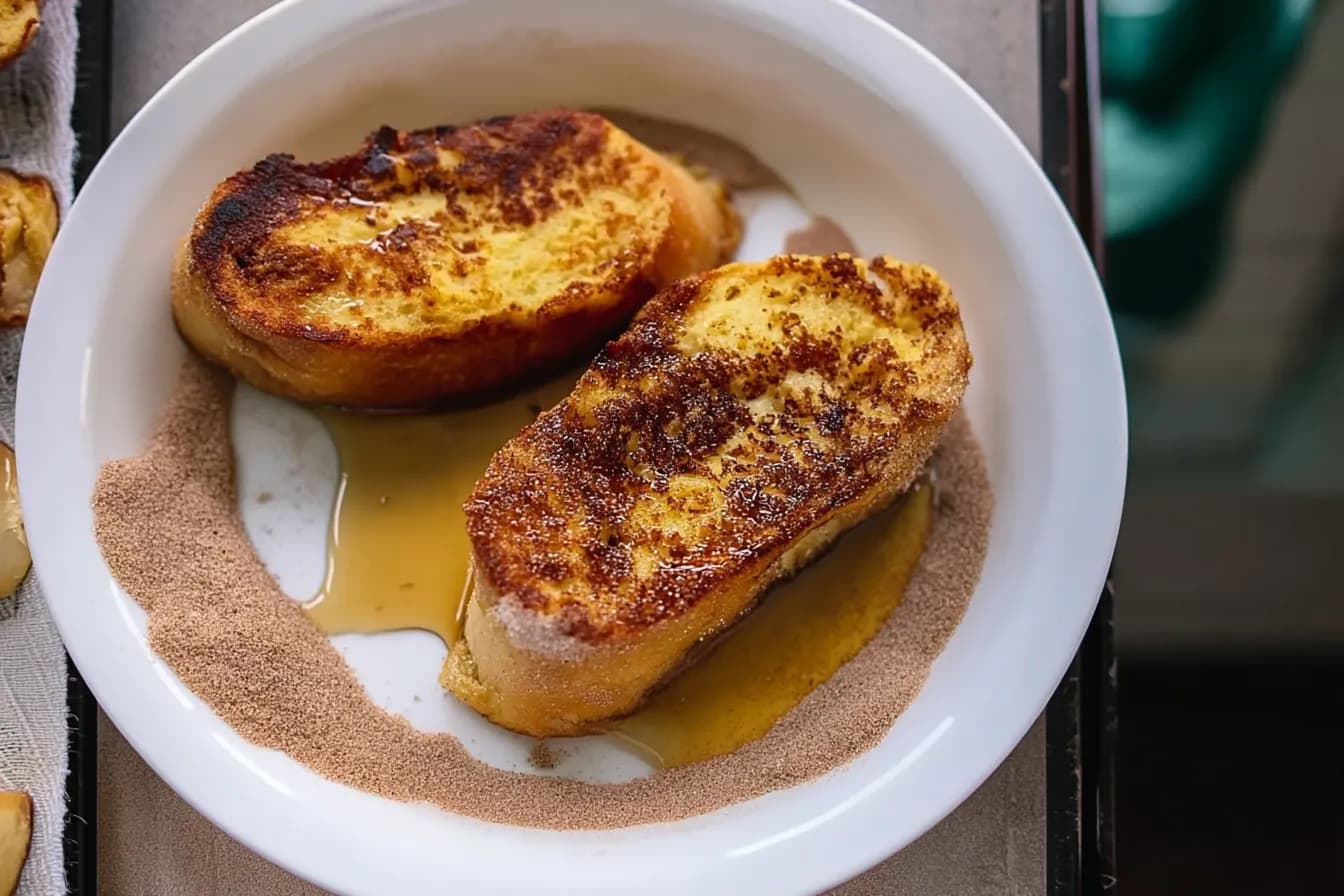
Torrijas
Spanish Easter toast in milk and wine, the French toast of Andalusia, and significantly better than its German relative.