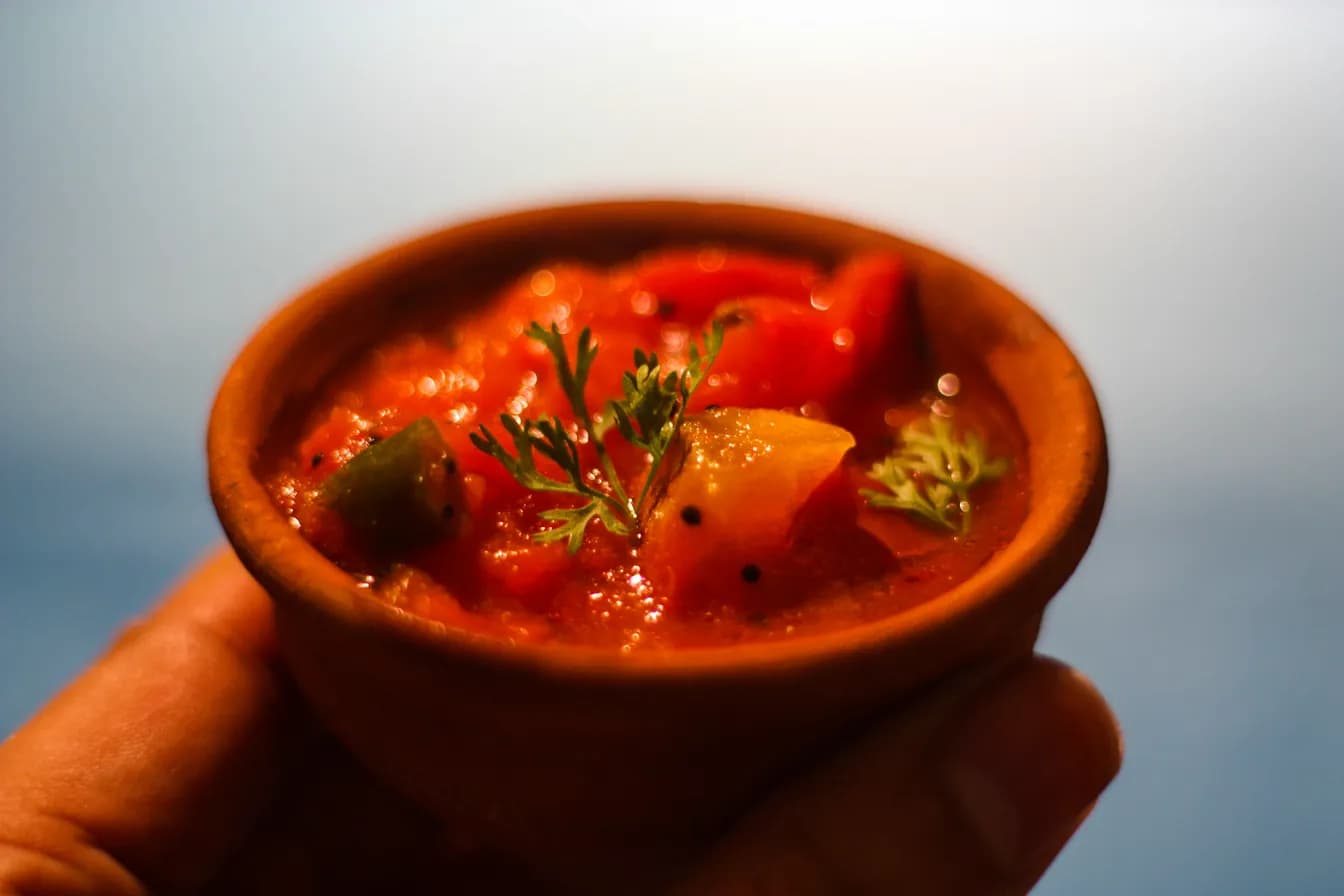
Tomato Sauce
The one sauce that turns into pizza, pasta, lasagna, and casseroles. Four ingredients and no shortcuts when simmering.
- Preparation
- 10 min
- Cook/bake time
- 55 min
- Total
- 1 hr 5 min
- Difficulty
- Easy
- Calories
- 96 kcal
- Servings
- 6
- Prep
- 10 min
- Cooking & baking
- 55 min
The one sauce that turns into pizza, pasta, lasagna, and casseroles. Four ingredients and no shortcuts when simmering. The difference between a flat and a well-rounded tomato sauce is not about secret ingredients, but about time. Forty minutes of uncovered simmering builds a sweetness that half an hour less simply lacks. Sugar only belongs in it if the tomatoes demand it.
Why this works
During a long, uncovered simmer, two things happen simultaneously, and both take time. First, water evaporates, which concentrates the sugar and acidity of the tomato. A thin, sour liquid turns into a dense, well-rounded sauce. Second, at over 100 degrees, Maillard reactions slowly take place between the amino acids and the sugars of the tomato, forming new, deeper flavor compounds. It is exactly this second reaction that cannot be rushed. A sauce that has cooked for twenty minutes is thickened, but not matured. The wide pot is therefore more important than the heat. The evaporation rate depends on the surface area, not the temperature, and in a tall, narrow pot, the same sauce simmers twice as long to reach the same thickness.
Step-by-step instructions
- 1
Slowly sweat the onion
Sweat the diced onion in olive oil over low heat for ten minutes until translucent, without browning them. They should become soft and sweet, not roasted. Browned onions give the sauce a dark note that does not suit pizza and pasta. Add the garlic only in the last two minutes, as it burns faster.
- 2
Add the tomatoes
Add the tomatoes and the salt, and roughly crush the pieces with a wooden spoon. Rinse the cans with a small splash of water and pour it in. Otherwise, a noticeable amount of sauce remains in the cans.
- 3
Simmer uncovered for forty minutes
Let the sauce simmer uncovered over low heat for forty minutes, stirring occasionally. It is ready when the spoon leaves a trail that stays for a moment, and when oil separates at the edge of the pot. This escaping oil is the most reliable sign that enough water has evaporated.
- 4
Season and add basil
Remove the pot from the heat and stir in the basil leaves, torn rather than cut. Cut edges oxidize and turn dark. Taste now and only add a pinch of sugar if the sauce tastes sour. Good tomatoes do not need it.
Our best tips
- Use a wide pot instead of a tall one. Evaporation depends on the surface area. In a narrow pot, the same sauce simmers twice as long to reach the same thickness.
- Sugar is not a standard ingredient, but a correction. Taste first, then decide. Whoever always adds it also masks good tomatoes.
- Always cook double the amount. The effort is the same, and frozen in portions, the sauce keeps for three months. That saves forty minutes every time you make pizza and pasta.
Tasty variations
Arrabbiata
Toast two dried peperoncini with the garlic and omit the onion. Significantly more direct and spicy, this is the standard sauce in Rome.
For pizza
Do not cook. Simply purée canned tomatoes with salt, olive oil, and basil. On the pizza base, the sauce reduces in the oven. If pre-cooked, it becomes too dry there.
Nutrition facts
| Calories | 96 kcal |
|---|---|
| Protein | 2 g |
| Carbohydrates | 6 g |
| – of which sugar | 5 g |
| Fat | 7 g |
| Fiber | 2 g |
Where the 96 kcal come from
per serving
Calculated from the ingredients – how we do it
We add up reference values for every ingredient and divide by the number of servings. These assumptions are baked in:
- Reference values per 100 g – for the raw ingredient, exactly as listed.
- Tinned goods count at drained weight, bone-in meat at purchase weight: you eat about 70 per cent of a chicken thigh and leave the rest.
- Water evaporates as you cook. The energy stays in the pot, the weight does not – so the figure is per serving, not per 100 g of finished dish.
- Anything listed without a quantity – “salt and pepper” – is not counted.
A guide value, not a lab measurement: no two onions weigh the same, and fat content varies from pack to pack.
Frequently asked questions
How many calories does the tomato sauce have?
Around 95 kcal per portion for six portions. A good three-quarters of this comes from the olive oil. With two instead of four tablespoons, the value drops to about 60 kcal, but the sauce then becomes less well-rounded.
Fresh or canned tomatoes?
Canned tomatoes, except in midsummer with truly ripe outdoor tomatoes. Canned tomatoes are harvested ripe and processed immediately. Supermarket tomatoes in winter have hardly any sugar and result in a thin, sour sauce.
Why does my tomato sauce taste sour?
Usually cooked too short. Forty minutes of uncovered simmering builds the sweetness that a quarter of an hour less simply lacks. If the time is right and it is still sour, a pinch of sugar or a spoonful of grated carrot helps.
How long does it keep?
In the refrigerator for five days, frozen for three months. Filled hot into sterilized jars and sealed, it keeps unopened for several months in the pantry.
Comments & ratings(0)
Sign in to rate and comment on this recipe.
You might also like
 Basic Recipes
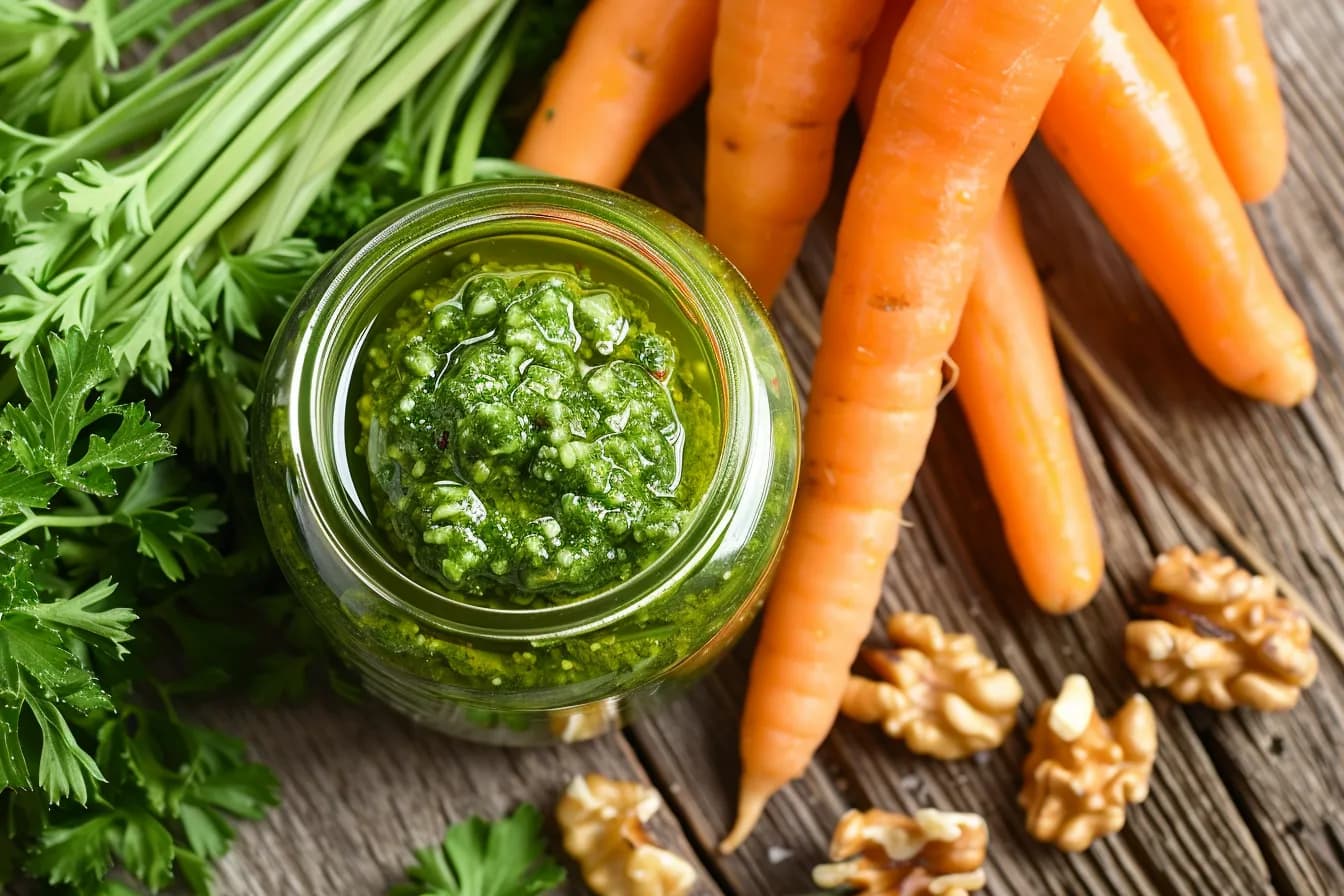
Carrot Top Pesto
The greens that get cut off at the store are edible, and they make a more robust pesto than basil.
 Basic Recipes
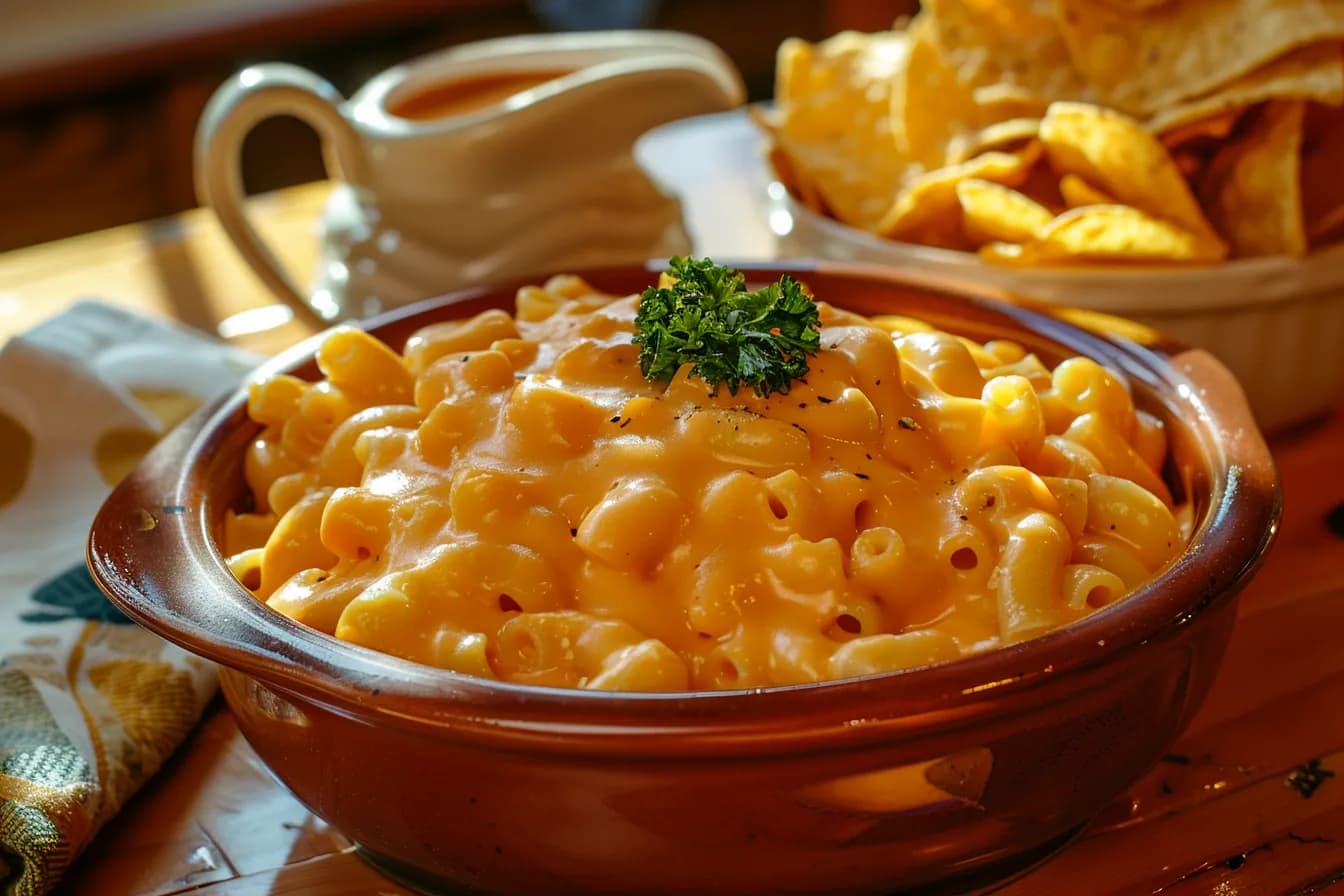
Lactose-Free Cheese Sauce
Potato and carrot combine with nutritional yeast to create a sauce that stretches and melts, completely without cheese.
 Basic Recipes
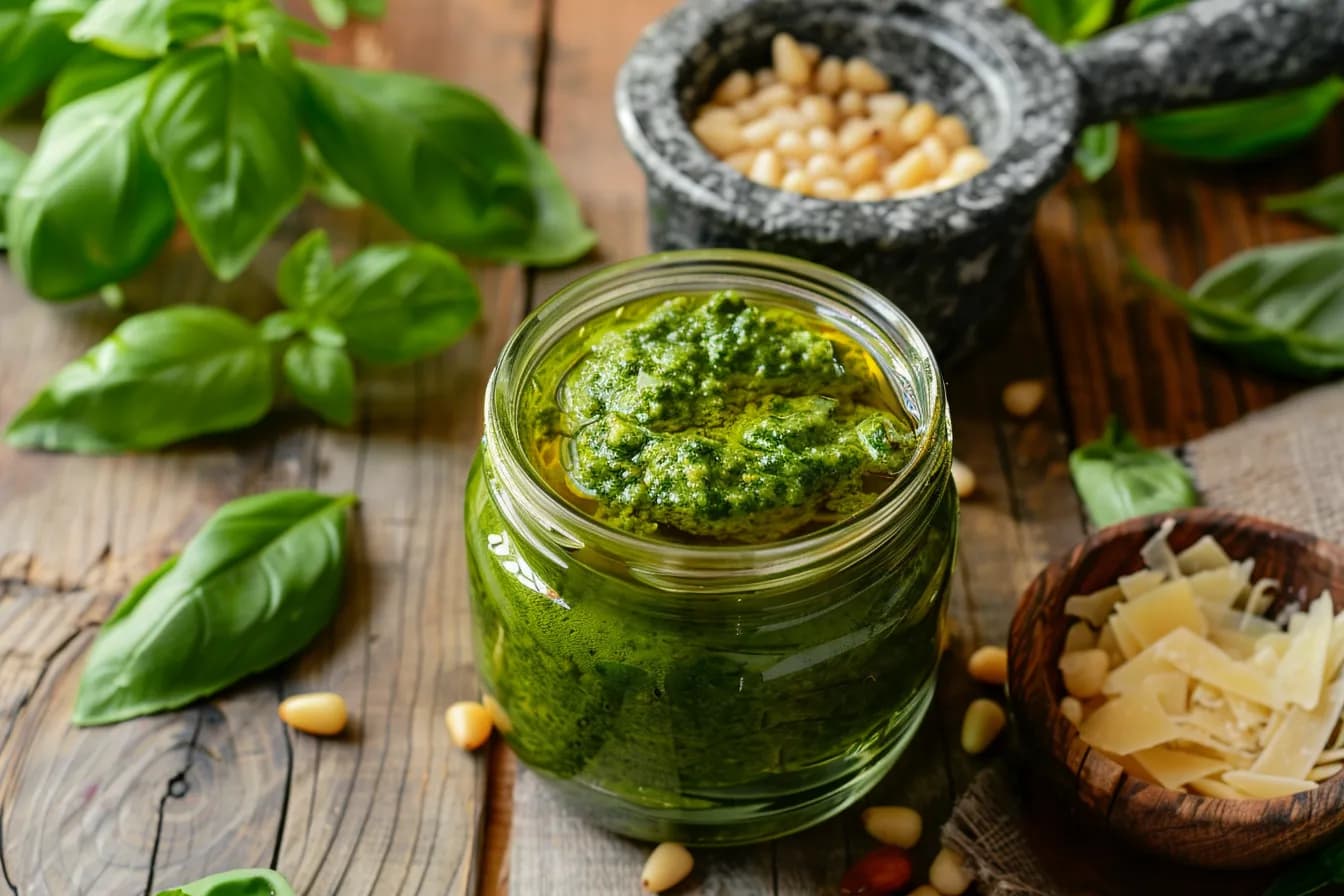
Make your own pesto, from whatever you have
Greens, fat, nuts, salt: pesto does not need basil, it just needs four roles filled.