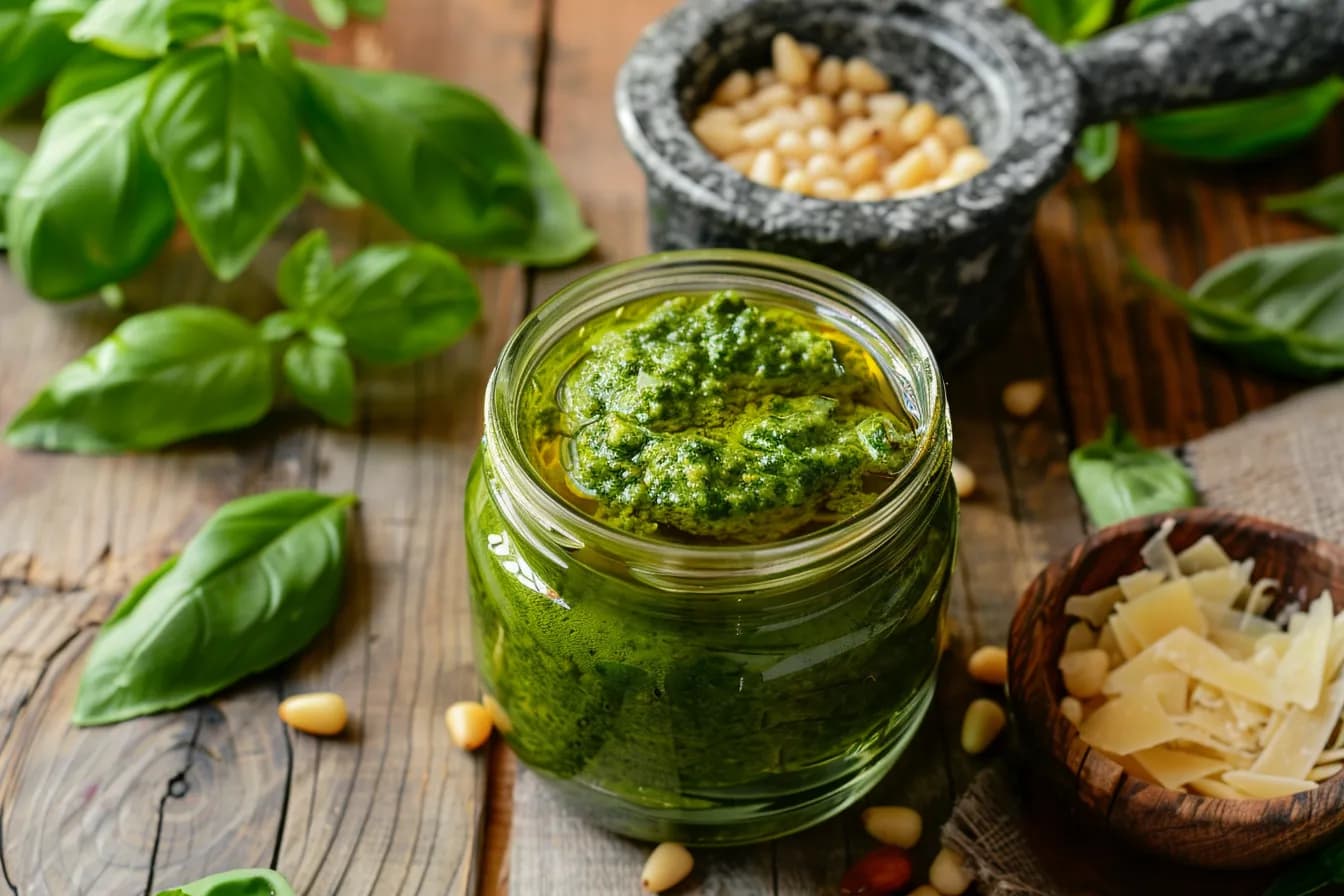
Make your own pesto, from whatever you have
Greens, fat, nuts, salt: pesto does not need basil, it just needs four roles filled.
- Preparation
- 15 min
- Cook/bake time
- 3 min
- Total
- 18 min
- Difficulty
- Easy
- Calories
- 320 kcal
- Servings
- 6 servings
- Prep
- 15 min
- Cooking & baking
- 3 min
Greens, fat, nuts, salt: pesto does not need basil, it just needs four roles filled. Carrot greens, radish leaves and half a bunch of parsley from the day before make a better pesto than uninspired herbs bought in a plastic pot. Choose what is in the fridge, as the formula supports any combination.
Why this works
Pesto becomes bitter when it gets too warm, and that happens faster than most people think. A high-performance blender brings the mixture to over 50 °C in one minute, and during this process the chlorophyll breakdown products in the basil oxidize into bitter compounds. That is why we blend in short bursts here, and that is why the nuts are added roasted but cooled down. The second point is the oil. It is stirred in at the end, not blended. Under the blade the oil cells tear and release bitter substances, especially with strong olive oil, but folded in by hand it stays well-rounded. And the salt is added right at the beginning to the greens because it draws out water and makes the mixture denser on its own.
Build your own
Pick one option per row. Ingredients, steps, cook mode and shopping list adapt instantly.
Your pick: Basil · Pine nuts · Parmesan · Olive oil
Sign in to save your combinations. Sign in
Step-by-step instructions
- 1
Wash and dry the greens
Wash the leaves and spin them really dry. One salad spinner round too few means the pesto will be watery instead of dense. Put them in the blender jug with the salt and let them sit briefly, as the salt draws out water and the mixture becomes more compact on its own.
- 2
Toast the nuts and let them cool
Toast nuts or seeds in a dry pan for two to three minutes until fragrant, and immediately pour them onto a cold plate. They must cool completely. Warm nuts heat up the mixture, and warm pesto becomes bitter.
- 3
Add the salty component
Add the salty component. It brings its own salt, which is why you season it right at the end, otherwise the pesto is already fully salted before the cheese is in.
- 4
Blend briefly and in bursts
Blend everything together with garlic and lemon juice in short bursts of two seconds each, not continuously. Scrape down the sides in between. Friction heat is the enemy. Above 50 °C bitter breakdown products form in the basil, and they do not go away.
- 5
Fold in the oil and season
Fold the oil in by hand with a spoon instead of blending it. Under the blade the oil cells tear and release bitter substances, but folded in it stays well-rounded. Only now season to taste with salt and lemon. In a jar with a layer of oil on top, the pesto will keep for one week.
Our best tips
- Nothing warm in the blender. Freshly toasted nuts heat up the mixture, and above 50 degrees pesto becomes bitter. A two-minute wait saves the whole batch.
- Fold in the oil by hand. Blended in, especially good olive oil becomes bitter because the blade tears its oil cells.
- To freeze, pour into an ice cube tray. One cube is exactly one portion of pasta, and pesto thaws in the hot pasta pan in seconds.
Tasty variations
Classic Pesto Genovese
Basil, pine nuts, Parmesan, extra virgin olive oil. The original, and the benchmark against which all other combinations must be measured.
Leftover pesto
Carrot greens and parsley, sunflower seeds, nutritional yeast and miso. Costs practically nothing, is vegan and uses exactly what would otherwise end up in the compost.
Nutrition facts
| Calories | 320 kcal |
|---|---|
| Protein | 5.7 g |
| Carbohydrates | 2 g |
| – of which sugar | 0.6 g |
| Fat | 32.9 g |
| Fiber | 0.6 g |
Where the 320 kcal come from
per serving
Calculated from the ingredients – how we do it
We add up reference values for every ingredient and divide by the number of servings. These assumptions are baked in:
- Reference values per 100 g – for the raw ingredient, exactly as listed.
- Tinned goods count at drained weight, bone-in meat at purchase weight: you eat about 70 per cent of a chicken thigh and leave the rest.
- Water evaporates as you cook. The energy stays in the pot, the weight does not – so the figure is per serving, not per 100 g of finished dish.
- Anything listed without a quantity – “salt and pepper” – is not counted.
- For build-your-own recipes the figure applies to the default choice. A different combination shifts it, sometimes considerably.
A guide value, not a lab measurement: no two onions weigh the same, and fat content varies from pack to pack.
Frequently asked questions
Which combination do the nutritional values apply to?
For the standard selection of basil, pine nuts, Parmesan and olive oil, calculated for six servings of about two tablespoons each. The values hardly shift between the nut types, while the vegan version with nutritional yeast is slightly lower.
Why did my pesto turn bitter?
Usually the heat in the blender. A strong blender brings the mixture to over 50 degrees in one minute of continuous running, and this creates bitter compounds in the basil that do not disappear. Short bursts, cooled nuts, and oil added afterwards ensure it stays well-rounded. The second source is blended olive oil.
How long does pesto keep?
In a jar with a thumb-width layer of oil on top, it keeps for one week in the fridge. The oil layer is the oxygen seal and not a decorative detail. Frozen, it keeps for three months. Pesto with yogurt or cream cheese is not included here, as those are sauces and keep for three days.
Comments & ratings(0)
Sign in to rate and comment on this recipe.
You might also like
 Basic Recipes
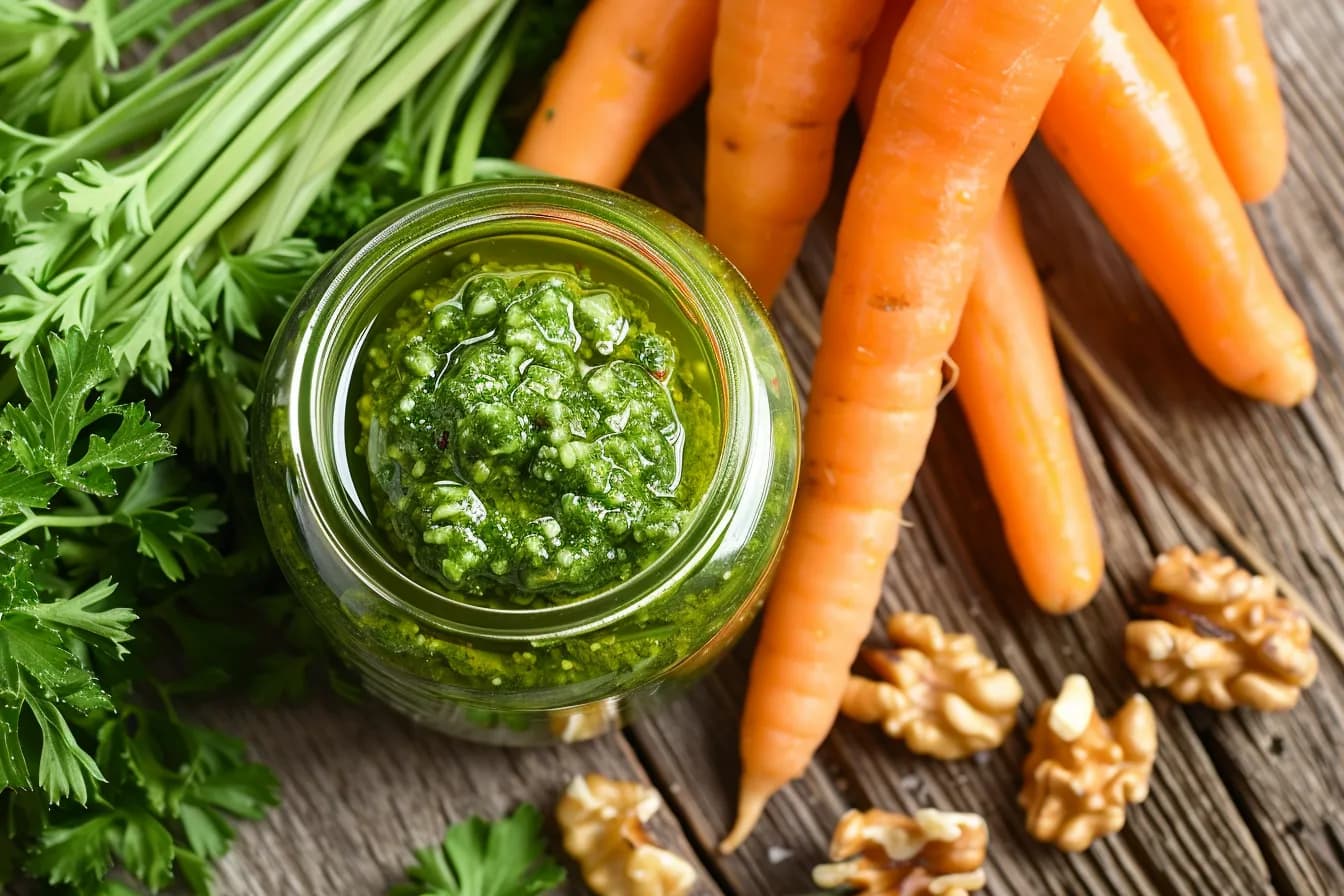
Carrot Top Pesto
The greens that get cut off at the store are edible, and they make a more robust pesto than basil.
 Basic Recipes
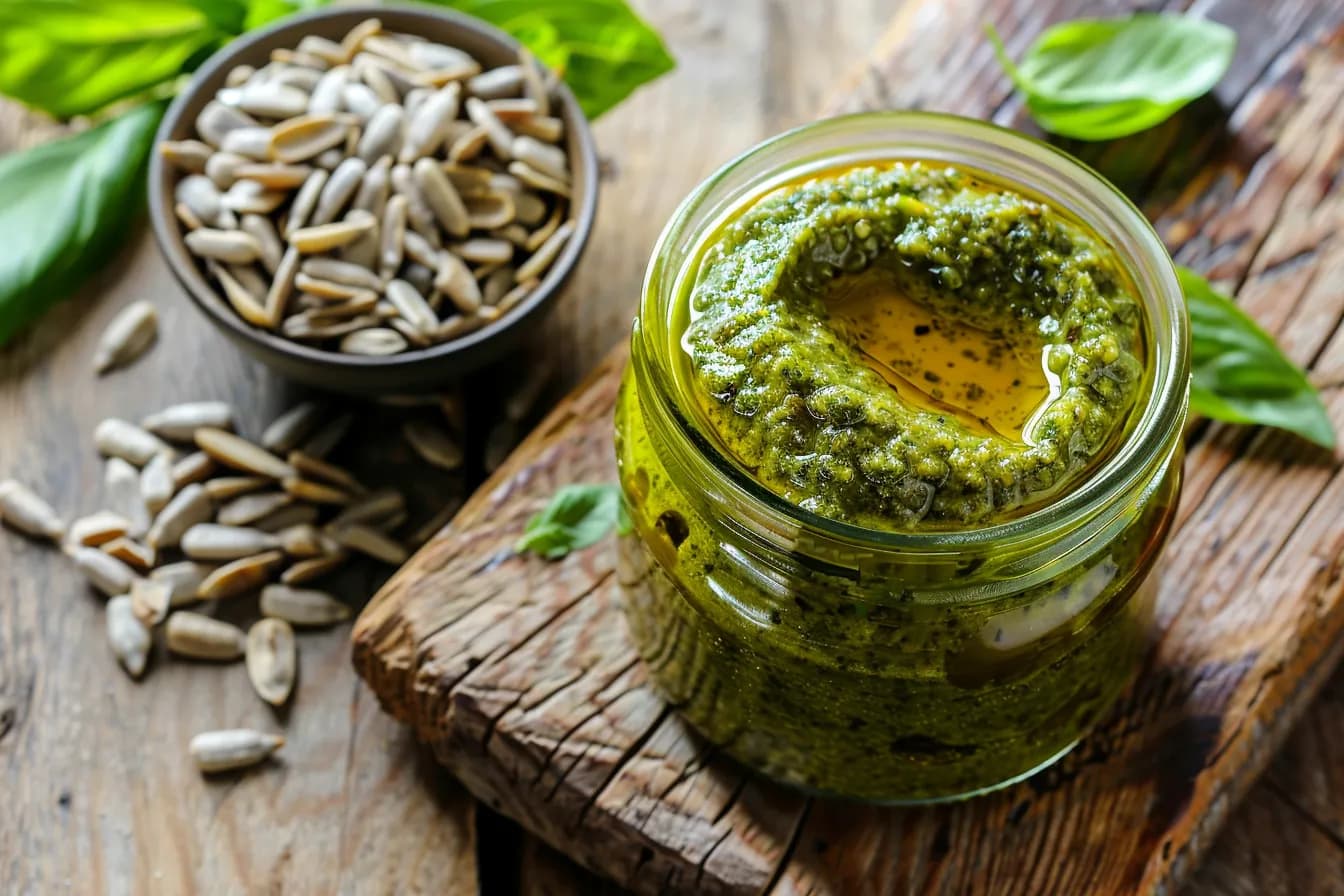
Nut-Free Pesto
Sunflower seeds instead of pine nuts are cheaper, schoolyard-friendly, and almost indistinguishable in taste.
 Leftover Cooking
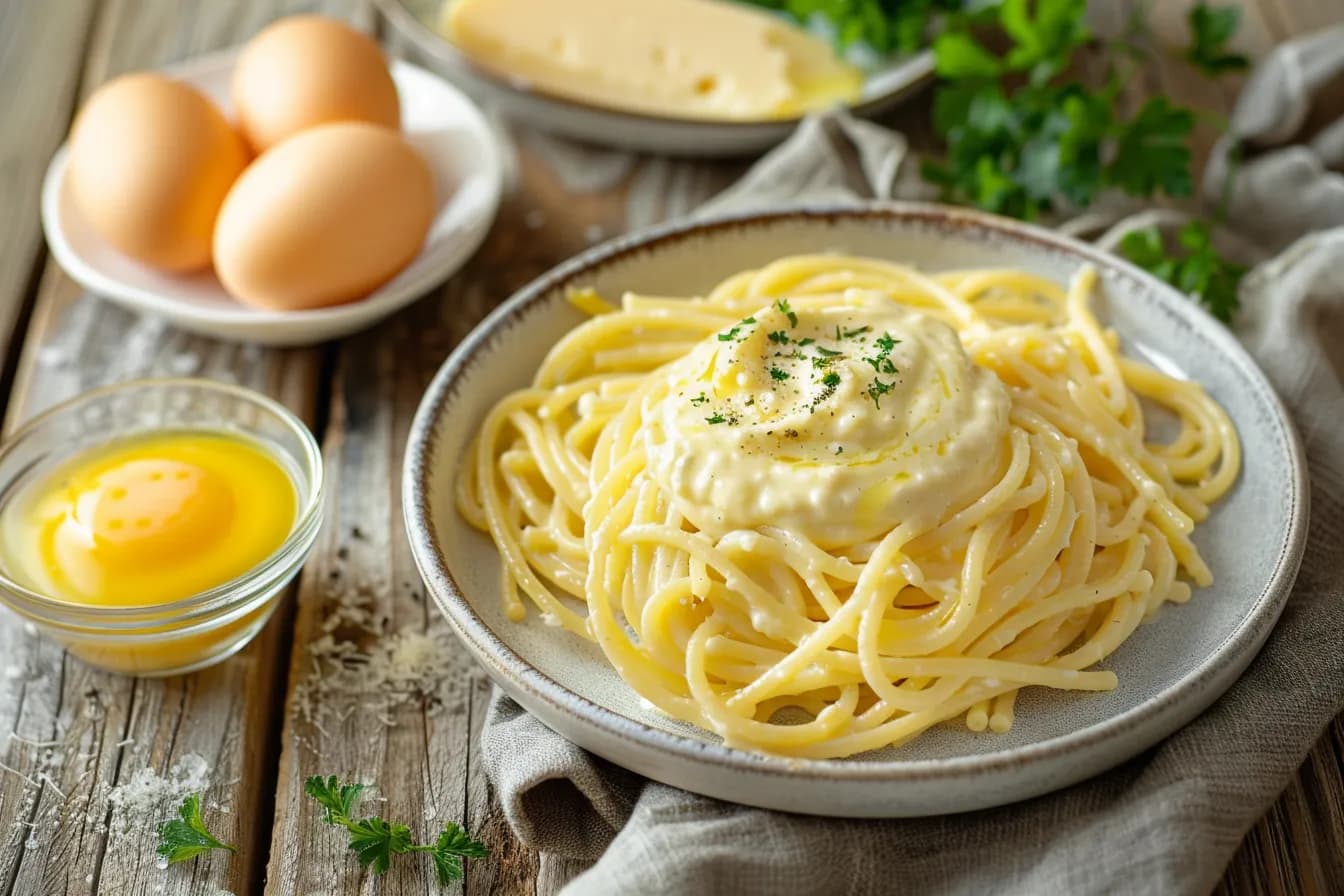
Leftover Egg Yolks 3 Ways
Aioli, pasta, or custard, egg yolks are the more valuable leftover, and they only last two days.