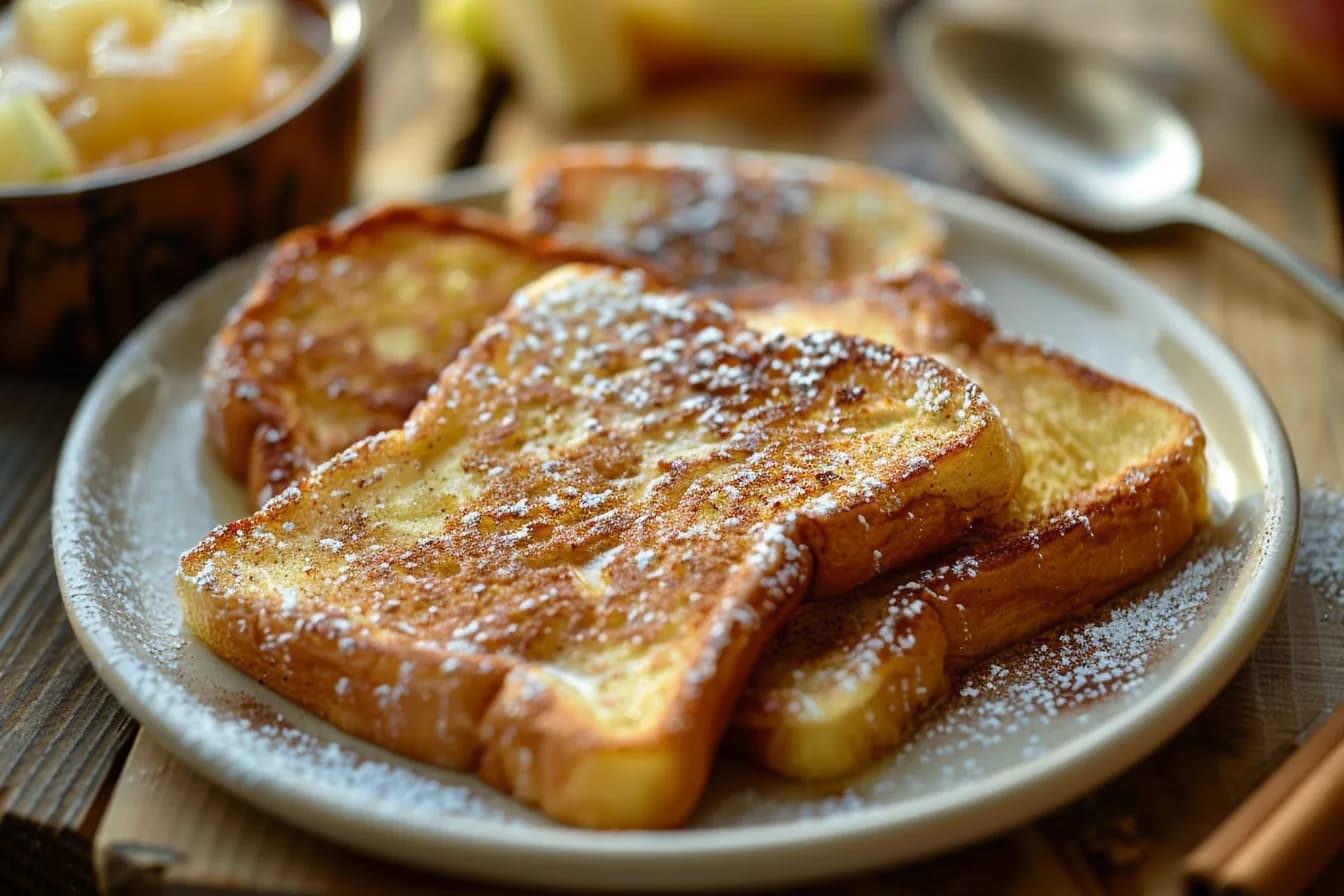
French Toast
Stale bread soaks up the egg mixture, while fresh bread just swims in it, which is why this recipe is perfect for leftovers.
- Preparation
- 10 min
- Cook/bake time
- 12 min
- Total
- 22 min
- Difficulty
- Easy
- Calories
- 647 kcal
- Servings
- 2
- Prep
- 10 min
- Cooking & baking
- 12 min
Stale bread soaks up the egg mixture, while fresh bread just swims in it, which is why this recipe is perfect for leftovers. Two-day-old slices have lost water and absorb liquid instead without falling apart. The rest is just butter, cinnamon, and a pan that must not be too hot.
Why this works
Fresh bread contains a lot of bound water and has a soft, elastic crumb structure, so it can hardly absorb any liquid and falls apart when flipped. Stale bread is not simply drier, but has also undergone a structural change: its starch has retrograded, meaning it has partially crystallized, and this firmer structure withstands the egg mixture. It soaks it up like a sponge and still keeps its shape. The second point is the pan temperature. The egg in the milk coagulates at 70 to 80 degrees. If the pan gets too hot, the outside will be brown in one minute while the core is still liquid. Medium heat and three minutes per side bring both together at the same time.
Step-by-step instructions
- 1
Mix the egg mixture
Thoroughly whisk the eggs, milk, sugar, vanilla, and salt in a shallow dish. Thoroughly means whisking until no more streaks of egg white are visible, as these would otherwise appear as rubbery threads on the finished bread.
- 2
Soak the bread
Place the slices in the mixture for twenty seconds per side. Two-day-old bread will soak up completely in this time, whereas fresh bread would fall apart after just five seconds. The slices should feel heavy but still stay in one piece.
- 3
Fry over medium heat
Melt half of the butter in a non-stick pan over medium heat and fry the slices for three minutes per side until golden brown. Medium heat is crucial, because over high heat the outside will brown while the egg mixture inside remains liquid.
- 4
Toss in cinnamon sugar
Mix the sugar and cinnamon on a plate and toss the still-hot slices in it. Warmth is important, as the sugar will not stick to cooled bread and will fall off at the first bite.
Our best tips
- The bread must be stale, at least two days old. Fresh bread does not soak up the liquid but falls apart, making this not just a budget recipe but a technical requirement.
- Use medium heat for three minutes per side. If it is too hot, the outside will brown while the egg mixture inside remains liquid.
- Apply the cinnamon sugar to the hot bread. It will not stick to cooled bread and will end up on the plate later.
Tasty variations
Savory with cheese
Omit the sugar and vanilla, and instead add salt, pepper, and nutmeg to the egg mixture, then sprinkle grated cheese on the slices during the last two minutes. This creates a completely different dish using the same technique.
Made with brioche or challah
Leftover challah makes for the richest variation, but you should only soak it for ten seconds per side. Brioche already contains egg and butter and soaks up liquid much faster than white bread.
Nutrition facts
| Calories | 647 kcal |
|---|---|
| Protein | 22 g |
| Carbohydrates | 68 g |
| – of which sugar | 28 g |
| Fat | 31 g |
| Fiber | 3 g |
Where the 647 kcal come from
per serving
Calculated from the ingredients – how we do it
We add up reference values for every ingredient and divide by the number of servings. These assumptions are baked in:
- Reference values per 100 g – for the raw ingredient, exactly as listed.
- Tinned goods count at drained weight, bone-in meat at purchase weight: you eat about 70 per cent of a chicken thigh and leave the rest.
- Water evaporates as you cook. The energy stays in the pot, the weight does not – so the figure is per serving, not per 100 g of finished dish.
- Anything listed without a quantity – “salt and pepper” – is not counted.
A guide value, not a lab measurement: no two onions weigh the same, and fat content varies from pack to pack.
Frequently asked questions
My bread fell apart while soaking.
It was too fresh or cut too thin. Two centimeters is the minimum thickness, and the bread should have been left uncovered for at least two days. An emergency solution for fresh bread is to let the slices dry out in the oven for ten minutes at 150 degrees.
Can I prepare this in advance?
You can prepare the egg mixture one day ahead in the fridge. Do not prepare the soaked bread, as it will continue to absorb liquid and turn to mush after an hour. Once fried, it holds up for about twenty minutes before the crust gets soft.
What goes well with this?
Anything tart goes well, such as applesauce, berry compote, or plum jam. French toast is sweet and rich, and the combination needs a counterbalance. Maple syrup also works, but it amplifies the sweetness instead of cutting through it.
Comments & ratings(0)
Sign in to rate and comment on this recipe.
You might also like
 Dinner
Fried Potatoes from Boiled Potatoes
Boiled potatoes from the day before are firmer than fresh ones, and therefore superior in the pan.
 Breakfast
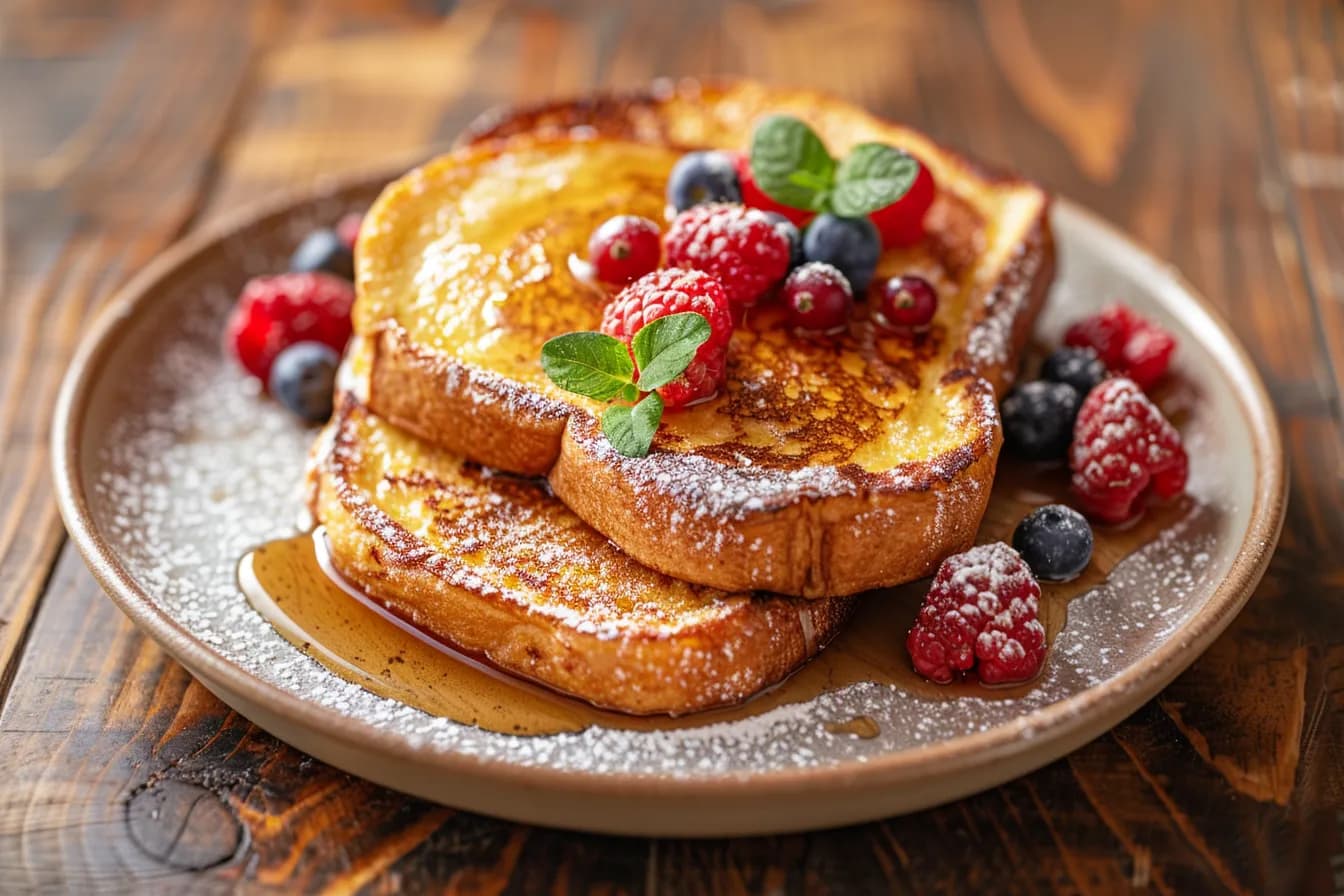
French Toast
Bread soaked in an egg and milk mixture, fried until golden brown, and served with maple syrup and berries.
 Breakfast
Smoothie Bowl
Thick, spoonable berry and banana base topped with granola, fruit, and seeds.