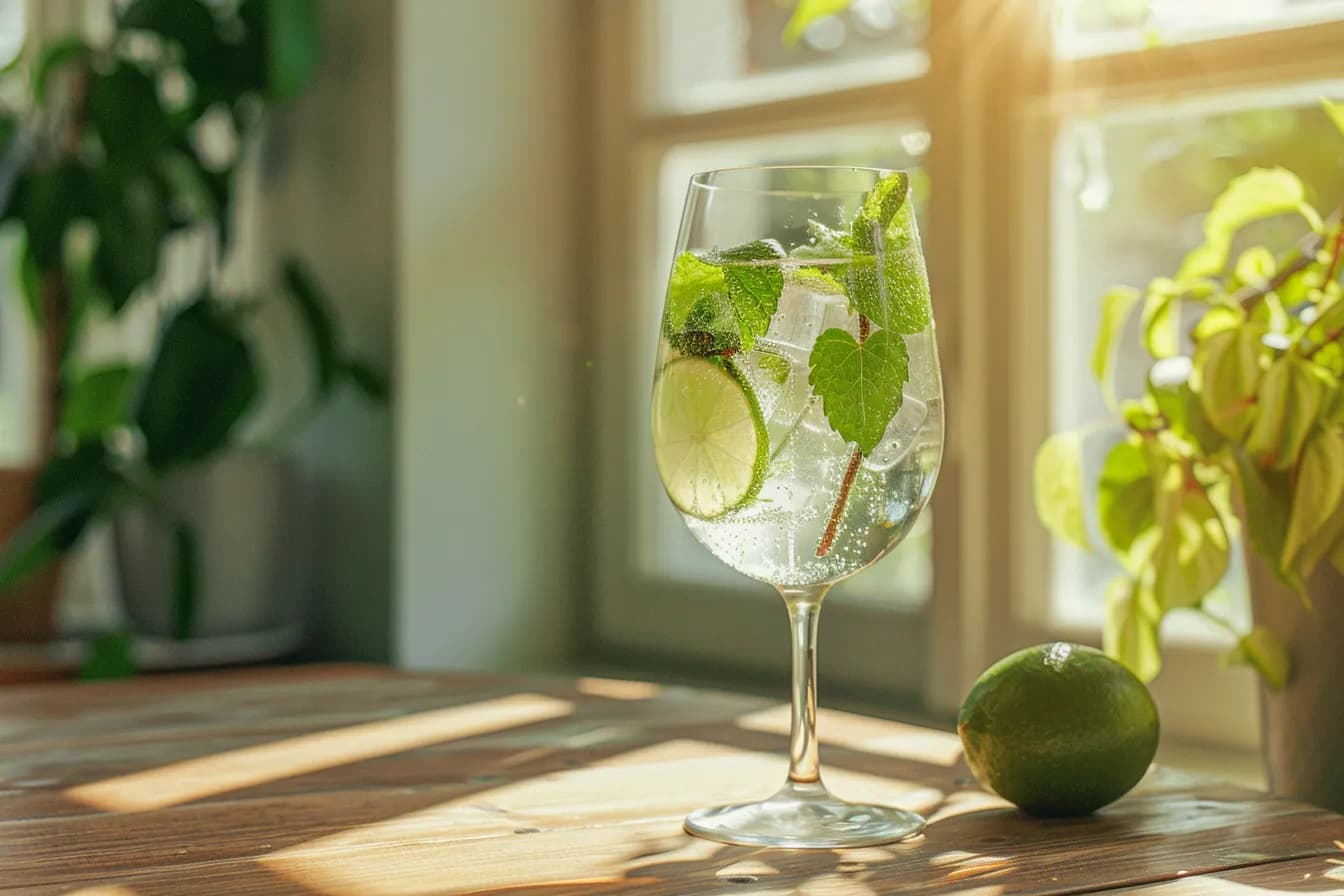
Elderflower, lime, and mint over ice, the Hugo without alcohol that does not taste like a compromise. The trick lies in the acidity: non-alcoholic sparkling wine is almost always sweeter than its counterpart, and without a clear splash of lime juice, the drink tips into stickiness. With the right balance, no one at the glass will notice what is missing.
Why this works
When leaving out the alcohol, two things disappear at once: the solvent for the flavor compounds and the warming sensation in the mouth that keeps the sweetness in check in the original. Non-alcoholic sparkling wine also brings more residual sugar because flavor is lost during dealcoholization and manufacturers compensate for this with sweetness. Both together explain why a simply converted Hugo tastes cloying, the solution is more acidity instead of less syrup, because lime juice counters the sweetness, while less syrup only takes away the elderflower. The slapped mint additionally replaces part of the aromatic punch that the alcohol would otherwise have carried.
Step-by-step instructions
- 1
Slap the mint
Place the mint leaves in one palm and slap them once briefly with the other. The oil glands sit on the surface and burst open, while the cells underneath remain intact. Anyone who muddles the mint in the glass instead releases chlorophyll and bitter substances, the most common reason for a grassy Hugo.
- 2
Syrup and acid first
Put elderflower syrup and lime juice in a large wine glass and swirl both briefly. This order is important: the viscous syrup distributes itself effortlessly in the small amount of juice, whereas in the finished cold drink it would remain at the bottom.
- 3
Ice, mint, lime
Fill the glass three quarters full with large ice cubes and distribute the mint leaves and lime slices between the cubes. This way they are distributed in the drink instead of on top and release flavor throughout the entire drinking time.
- 4
Top up and serve
Pour the ice-cold non-alcoholic sparkling wine along the edge of the glass and finally add the soda water. Do not stir, the heavier syrup rises on its own when topping up and mixes in. Serve immediately.
Our best tips
- Non-alcoholic sparkling wines differ greatly in sugar content. With a very sweet product, reduce the syrup to 15 milliliters and use a little more lime instead.
- Homemade elderflower syrup is significantly more floral than store-bought. Ready-made syrup is often more heavily sweetened, so use 20 rather than 25 milliliters.
- For a carafe, prepare everything except sparkling wine and soda and chill. Only top up over ice when serving, otherwise you end up with a carafe of meltwater.
Tasty variations
Hugo with alcohol
Replace non-alcoholic sparkling wine with dry Prosecco and reduce the lime juice to one teaspoon. The Prosecco is drier and needs less counter-acidity.
Winter Hugo
Instead of mint, use two rosemary needles and a slice of blood orange. Results in a significantly warmer, resinous direction for the cold season.
Nutrition facts
| Calories | 115 kcal |
|---|---|
| Protein | 0 g |
| Carbohydrates | 26 g |
| – of which sugar | 26 g |
| Fat | 0 g |
| Fiber | 1 g |
Where the 115 kcal come from
per serving
Calculated from the ingredients – how we do it
We add up reference values for every ingredient and divide by the number of servings. These assumptions are baked in:
- Reference values per 100 g – for the raw ingredient, exactly as listed.
- Tinned goods count at drained weight, bone-in meat at purchase weight: you eat about 70 per cent of a chicken thigh and leave the rest.
- Water evaporates as you cook. The energy stays in the pot, the weight does not – so the figure is per serving, not per 100 g of finished dish.
- Anything listed without a quantity – “salt and pepper” – is not counted.
A guide value, not a lab measurement: no two onions weigh the same, and fat content varies from pack to pack.
Frequently asked questions
How many calories does a non-alcoholic Hugo have?
About 115 kcal per glass compared to around 150 kcal for the Hugo with Prosecco. The difference is smaller than many expect: the alcohol is omitted, but non-alcoholic sparkling wine and syrup together bring more sugar.
Why does my non-alcoholic Hugo taste too sweet?
Almost always because of the non-alcoholic sparkling wine, which contains significantly more residual sugar than Prosecco. More lime juice helps better than less syrup, because the acidity counters the sweetness without taking away the elderflower flavor.
Does mineral water also work instead of non-alcoholic sparkling wine?
Yes, then it becomes an elderflower lemonade. The carbonation makes up the majority of the mouthfeel, so this works well, only the wine note is missing. Then increase the amount of syrup slightly again.
Is the drink suitable for pregnant women?
Non-alcoholic sparkling wine may contain up to 0.5 percent vol in the EU. Anyone who wants to rule this out completely should use mineral water or a product expressly declared as 0.0 percent.
Comments & ratings(0)
Sign in to rate and comment on this recipe.
You might also like
 Cocktails
Homemade Spritz
Bitter, sparkling wine, soda, three building blocks, and one recipe turns into all the Spritz variations on the Italian aperitivo menu.
 Cocktails
Negroni Sbagliato
The "mistaken" Negroni: Prosecco goes into the glass instead of gin, turning the heavy classic into an aperitif.
 Cocktails
Limoncello Spritz
The southern Italian answer to the Aperol Spritz: lemon liqueur, Prosecco, and a basil leaf.