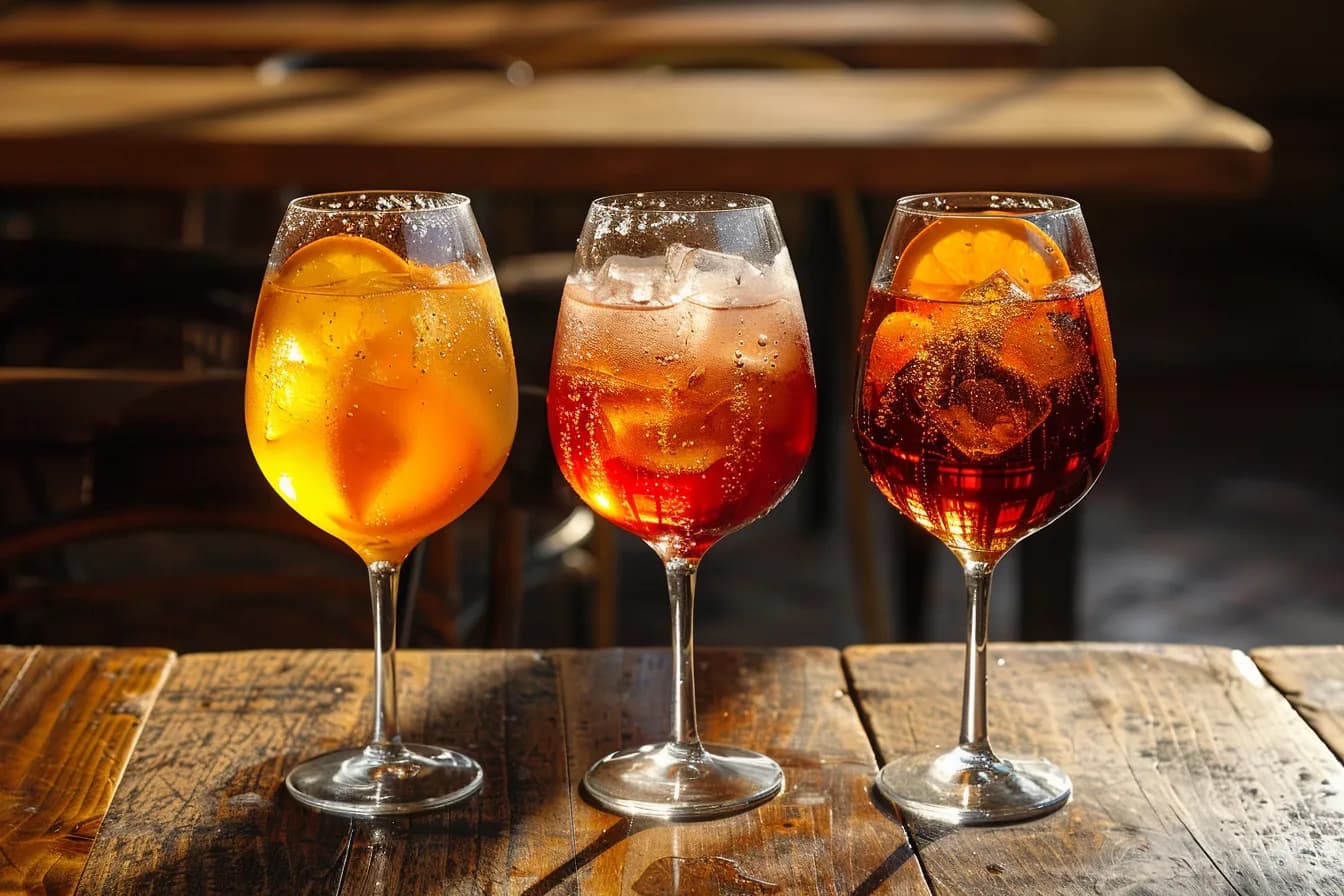
Homemade Spritz
Bitter, sparkling wine, soda, three building blocks, and one recipe turns into all the Spritz variations on the Italian aperitivo menu.
- Preparation
- 5 min
- Cook/bake time
- –
- Total
- 15 min
- Difficulty
- Easy
- Calories
- 175 kcal
- Servings
- 1
- Prep
- 5 min
- Resting
- 10 min
Only 5 min of that is hands-on – the rest takes care of itself.
Bitter, sparkling wine, soda, three building blocks, and one recipe turns into all the Spritz variations on the Italian aperitivo menu. The 3:2:1 ratio always stays the same, only the bitter decides whether the drink will be sweet and mild or tart and grown-up. Choose your combination, the craft behind it is identical for all of them.
Why this works
All Spritz variations share the same physics, and that is why a modular system works here at all. Aperitivo bitters contain so much sugar that, at around 1.05 grams per milliliter, they are noticeably heavier than sparkling wine at just under 1.0. The bitter sinks to the bottom on its own after pouring, creating a slow current that mixes the drink without stirring. This is not a detail, but the reason for the order: every stir drives out carbon dioxide, which only stays in solution under cold and pressure. What changes between the variations is exclusively the bitter proportion. Aperol brings 11 percent alcohol and a lot of sugar, Campari 25 percent and significantly more bitter compounds, and exactly these two numbers explain the entire difference in taste.
Build your own
Pick one option per row. Ingredients, steps, cook mode and shopping list adapt instantly.
Your pick: Aperol · Prosecco · Orange slice
Sign in to save your combinations. Sign in
Step-by-step instructions
- 1
Pre-chill the glass
Place a large stemmed wine glass in the freezer for ten minutes or rinse it with ice water. A pre-chilled glass noticeably slows down the melting of the ice, and that decides whether the Spritz still tastes good after ten minutes or just like cold water. If you skip this step, you won't notice it on the first sip, but on the last.
- 2
Add ice generously
Fill the glass at least three-quarters full with large ice cubes. This seems like too much and is exactly right: a large cold mass melts slower than a few individual cubes because the surface-to-volume ratio is smaller. Too little ice is the most common mistake of all and the only one that cannot be corrected later.
- 3
Sparkling wine first
Tilt the glass slightly and pour the ice-cold sparkling wine along the edge, not into the center. This way, the liquid splashes less and retains significantly more carbon dioxide. The sparkling wine forms the lighter base on which everything else is placed, which is why it goes into the glass before the bitter and not after.
- 4
Bitter slowly follows
Pour the bitter in slowly. It is heavier than the sparkling wine and sinks to the bottom on its own, creating a current on the way that mixes the drink. This is exactly why it is not stirred: every movement with the spoon costs carbon dioxide, and the effect happens on its own anyway. The color gradient in the glass is no coincidence, but visible density.
- 5
Soda, garnish, serve immediately
Add a quick splash of soda water. It brings sweetness and bitterness into balance and makes the drink drinkable instead of syrupy. Add the garnish and serve the glass immediately. A Spritz is not a drink that waits: after ten minutes it has lost carbon dioxide and gained meltwater, and you can taste both.
Our best tips
- The 3:2:1 ratio of sparkling wine, bitter, and soda is the official standard and carries every variation. Once you actually measure it out, you will never need to again.
- All ingredients must be cold before mixing, including the bitter. A bottle at room temperature melts the ice, and meltwater is the difference between a good and a tired Spritz.
- With Campari and Cynar, a splash of soda is more worthwhile than with Aperol. The higher bitterness needs more dilution, otherwise the drink tips into the medicinal.
Tasty variations
Spritz for the pitcher
For several guests, mix everything except the ice in a 3:2:1 ratio in a pitcher and chill. Only pour over ice when serving, otherwise the whole batch will water down at once.
Less sugar
Choose the sparkling wine as Brut Nature instead of Extra Dry and reduce the bitter proportion to 45 ml. This saves around 30 kilocalories per glass without the drink becoming thin.
Nutrition facts
| Calories | 175 kcal |
|---|---|
| Protein | 0.3 g |
| Carbohydrates | 19 g |
| – of which sugar | 17.6 g |
| Fat | 0 g |
| Fiber | 0.6 g |
Where the 175 kcal come from
per serving
Calculated from the ingredients – how we do it
We add up reference values for every ingredient and divide by the number of servings. These assumptions are baked in:
- Reference values per 100 g – for the raw ingredient, exactly as listed.
- Tinned goods count at drained weight, bone-in meat at purchase weight: you eat about 70 per cent of a chicken thigh and leave the rest.
- Water evaporates as you cook. The energy stays in the pot, the weight does not – so the figure is per serving, not per 100 g of finished dish.
- Anything listed without a quantity – “salt and pepper” – is not counted.
- For build-your-own recipes the figure applies to the default choice. A different combination shifts it, sometimes considerably.
A guide value, not a lab measurement: no two onions weigh the same, and fat content varies from pack to pack.
Frequently asked questions
Which combination do the nutritional values apply to?
For the standard selection: Prosecco, Aperol, and an orange slice. Other combinations are sometimes significantly off. Campari brings more alcohol and thus more energy, while the non-alcoholic bitter brings around a third less.
How many calories does a Spritz have?
With Prosecco and Aperol, a glass is around 175 kcal, with Campari around 220 kcal, with non-alcoholic bitter and non-alcoholic sparkling wine around 75 kcal. In all cases, the lion's share is the sugar in the bitter, not the alcohol.
What is the difference between Aperol and Aperol Spritz?
Aperol is the liqueur alone, an aperitivo bitter with 11 percent alcohol. Aperol Spritz is the finished drink made from it: Prosecco, Aperol, and soda in a 3:2:1 ratio over plenty of ice. Drunk neat, Aperol is much too sweet for most people.
Can I make a Spritz with Sprite or lemonade?
Possible, but then it is no longer a Spritz, but a very sweet long drink. Soda water is unsweetened and has exactly the task of stretching the sugar-rich bitter. With lemonade, you add sugar to sugar.
Does Aperol need to go in the fridge?
It doesn't have to, but it helps. Because of the sugar and the low alcohol content, Aperol does not spoil, but a cold bottle melts less ice. After opening, it stays good for a year or more, only losing freshness over time.
Comments & ratings(0)
Sign in to rate and comment on this recipe.
You might also like
 Cocktails
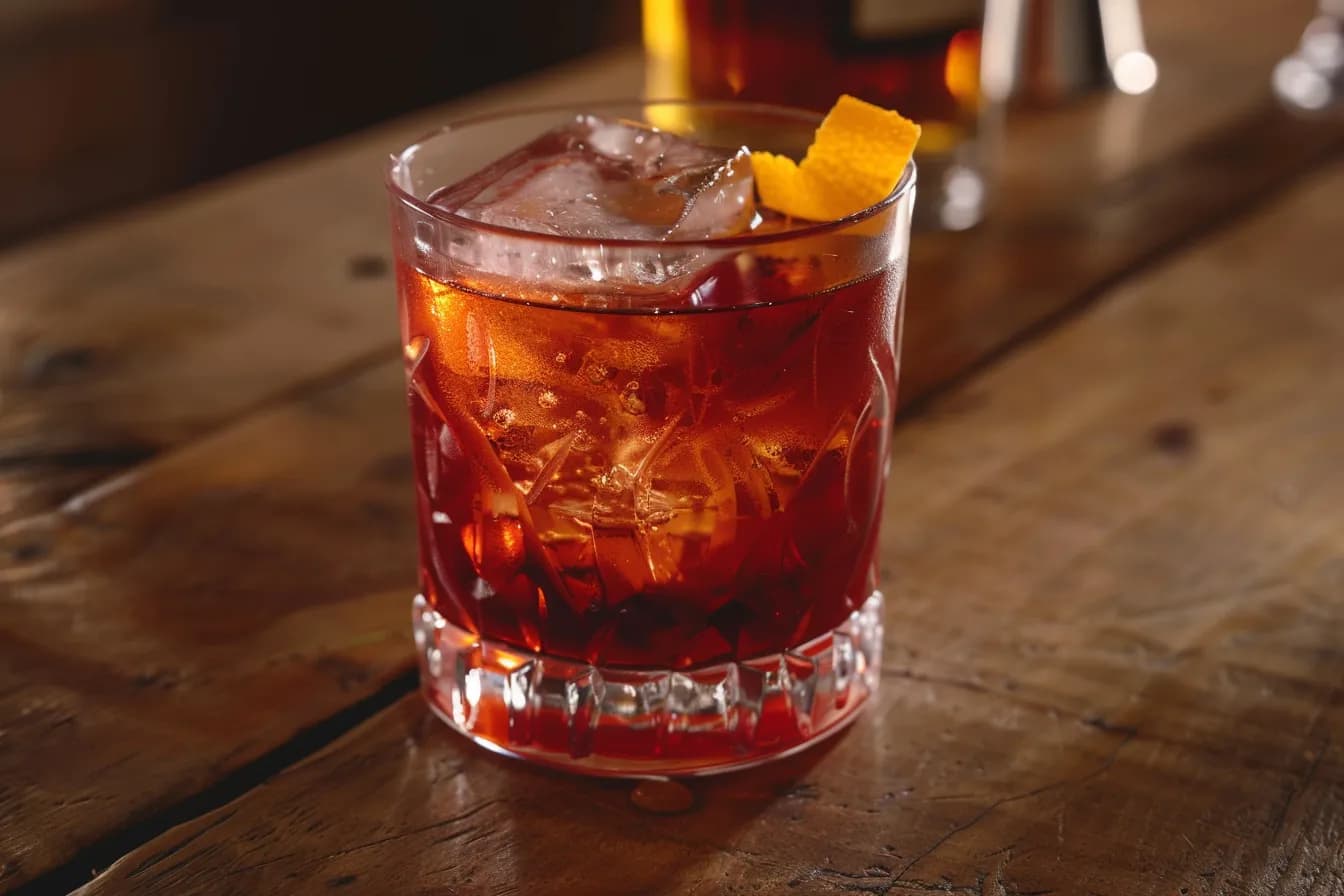
Negroni Sbagliato
The "mistaken" Negroni: Prosecco goes into the glass instead of gin, turning the heavy classic into an aperitif.
 Cocktails
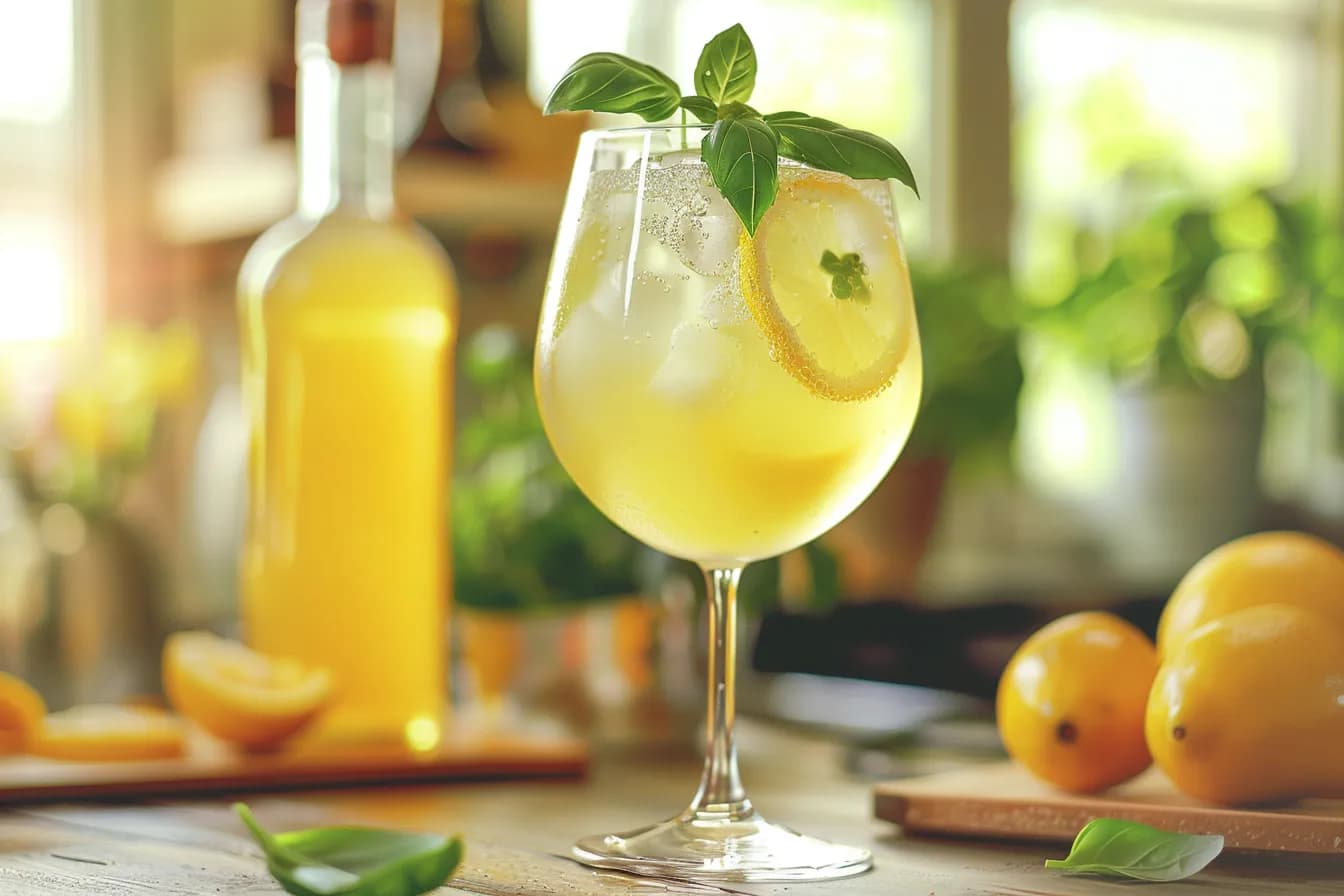
Limoncello Spritz
The southern Italian answer to the Aperol Spritz: lemon liqueur, Prosecco, and a basil leaf.
 Cocktails
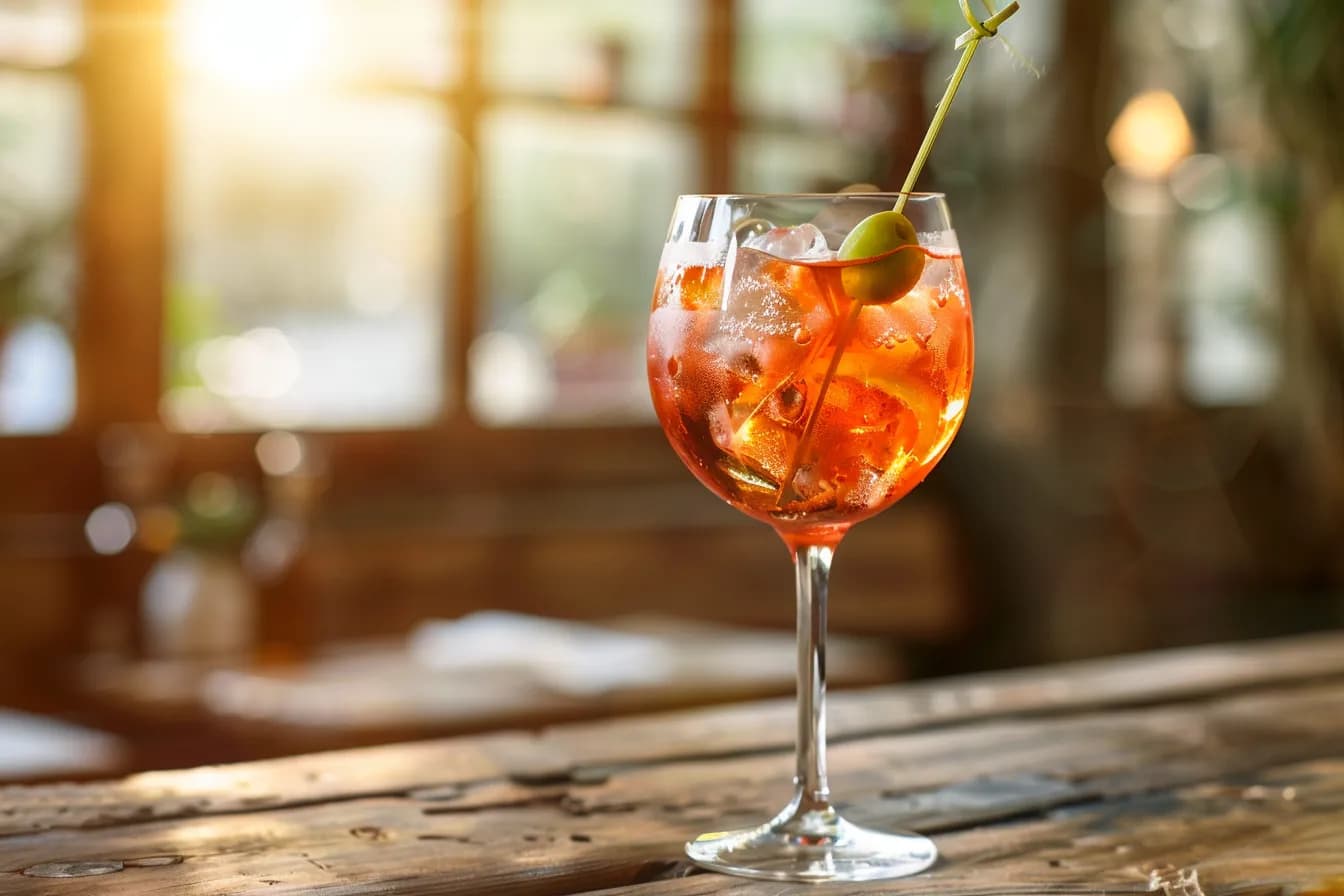
Select Spritz
The spritz you get in Venice when you simply order 'uno spritz', made with Select and an olive.