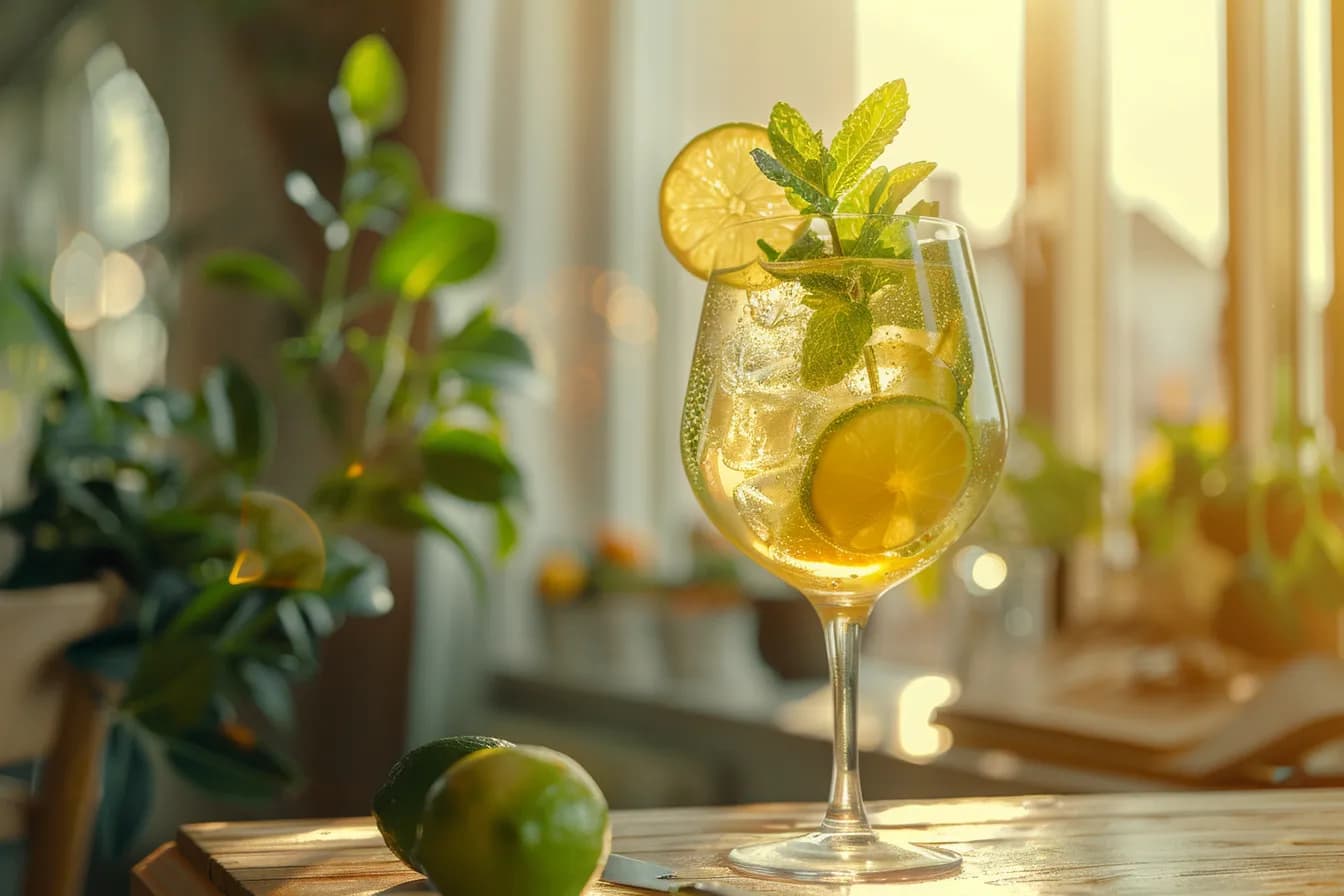
Prosecco, elderflower syrup, mint and lime make the most refreshing aperitif north of the Alps. The South Tyrolean classic is mixed in 5 minutes and tastes like a summer evening. Everyone can raise a glass with our non-alcoholic version.
Why this works
Carbon dioxide dissolves better the colder the liquid is. At 4 °C, Prosecco holds almost twice as much of it as at 20 °C. A lukewarm Hugo therefore loses its fizz within minutes. For the same reason, the syrup goes into the glass first and the Prosecco last: every stir after pouring costs carbonation.
Step-by-step instructions
- 1
Prepare the glasses
Fill two wine glasses generously with ice cubes, right up to the brim. That sounds like a lot, but the more ice there is in the glass, the slower it melts and the longer your Hugo stays cold and undiluted.
- 2
Mix
Distribute the elderflower syrup between the two glasses and top up with well chilled Prosecco. Finally, add a small splash of sparkling water to bring a fine fizz without watering down the drink.
- 3
Garnish
Clap the mint once firmly between your palms, as this releases the essential oils and the drink immediately smells wonderful. Add the mint to the glass with a few lime slices and stir everything gently just once. Do not crush the leaves while doing this, otherwise the Hugo will become bitter.
Our best tips
- Chill all ingredients beforehand, as a lukewarm Hugo is a sad Hugo.
- Never crush the mint, just clap it: otherwise the drink will become bitter.
- Quality counts: a dry Prosecco DOC perfectly balances the sweetness of the syrup.
Tasty variations
Non-alcoholic (Virgin Hugo)
Replace the Prosecco with non-alcoholic sparkling wine or tonic water for an equally refreshing drink.
With gin
2 cl of gin per glass turns the aperitif into an evening drink.
Nutrition facts
| Calories | 153 kcal |
|---|---|
| Protein | 1 g |
| Carbohydrates | 17 g |
| – of which sugar | 14 g |
| Fat | 0 g |
| Fiber | 3 g |
Where the 153 kcal come from
per serving
Calculated from the ingredients – how we do it
We add up reference values for every ingredient and divide by the number of servings. These assumptions are baked in:
- Reference values per 100 g – for the raw ingredient, exactly as listed.
- Tinned goods count at drained weight, bone-in meat at purchase weight: you eat about 70 per cent of a chicken thigh and leave the rest.
- Water evaporates as you cook. The energy stays in the pot, the weight does not – so the figure is per serving, not per 100 g of finished dish.
- Anything listed without a quantity – “salt and pepper” – is not counted.
A guide value, not a lab measurement: no two onions weigh the same, and fat content varies from pack to pack.
Frequently asked questions
Where does the Hugo come from?
The Hugo was invented in 2005 by bartender Roland Gruber in Naturns, South Tyrol, originally with lemon balm syrup instead of elderflower.
Which glass is the right one?
A large white wine glass or a balloon glass: plenty of space for ice and flavors, and the drink stays cold longer.
How many calories does a Hugo Spritz have?
One glass has around 145 kcal. Prosecco and elderflower syrup contribute the most, while the mineral water adds nothing. If you halve the syrup and top up with more water, you will end up noticeably lower.
Comments & ratings(0)
Sign in to rate and comment on this recipe.
You might also like
 Cocktails
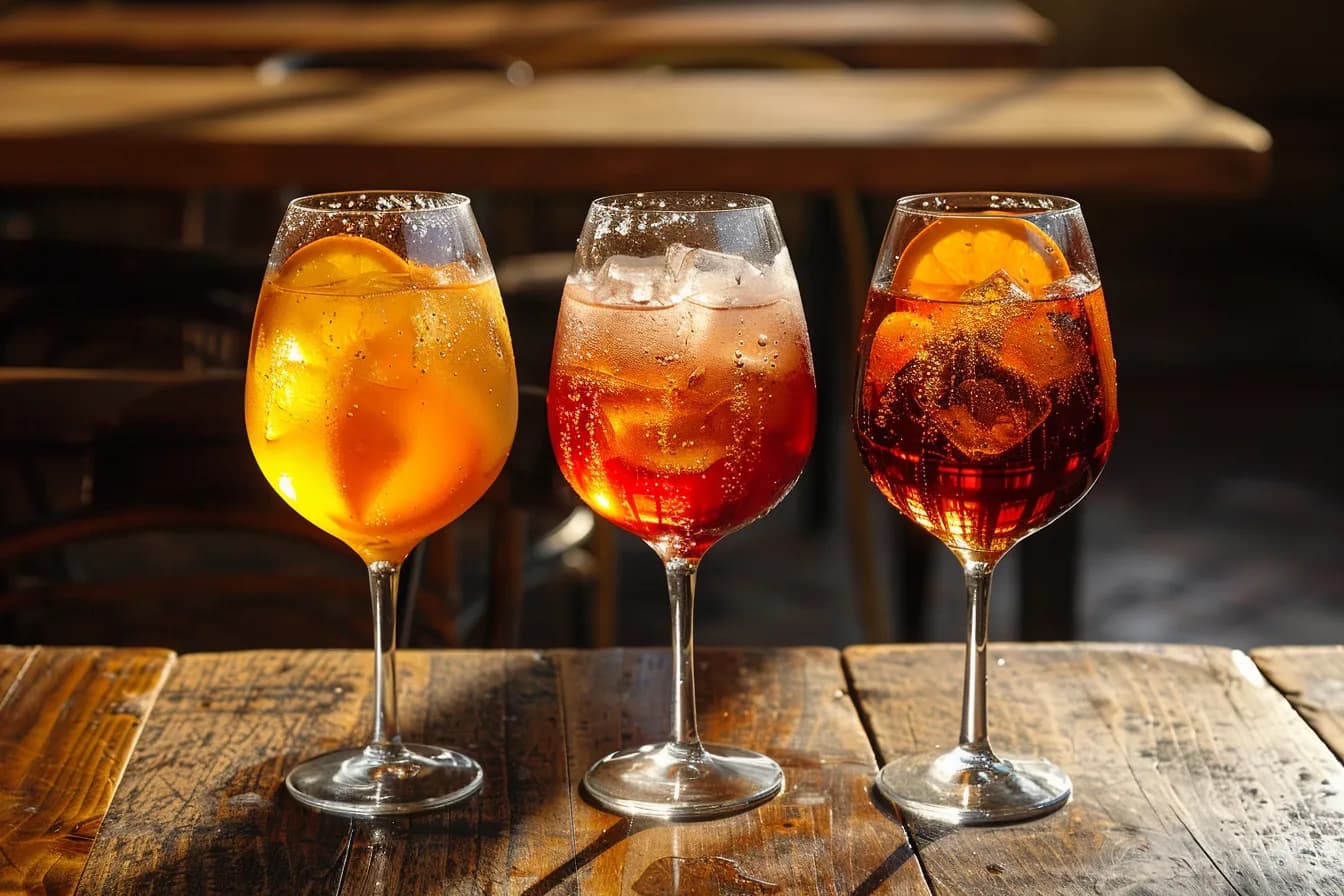
Homemade Spritz
Bitter, sparkling wine, soda, three building blocks, and one recipe turns into all the Spritz variations on the Italian aperitivo menu.
 Cocktails
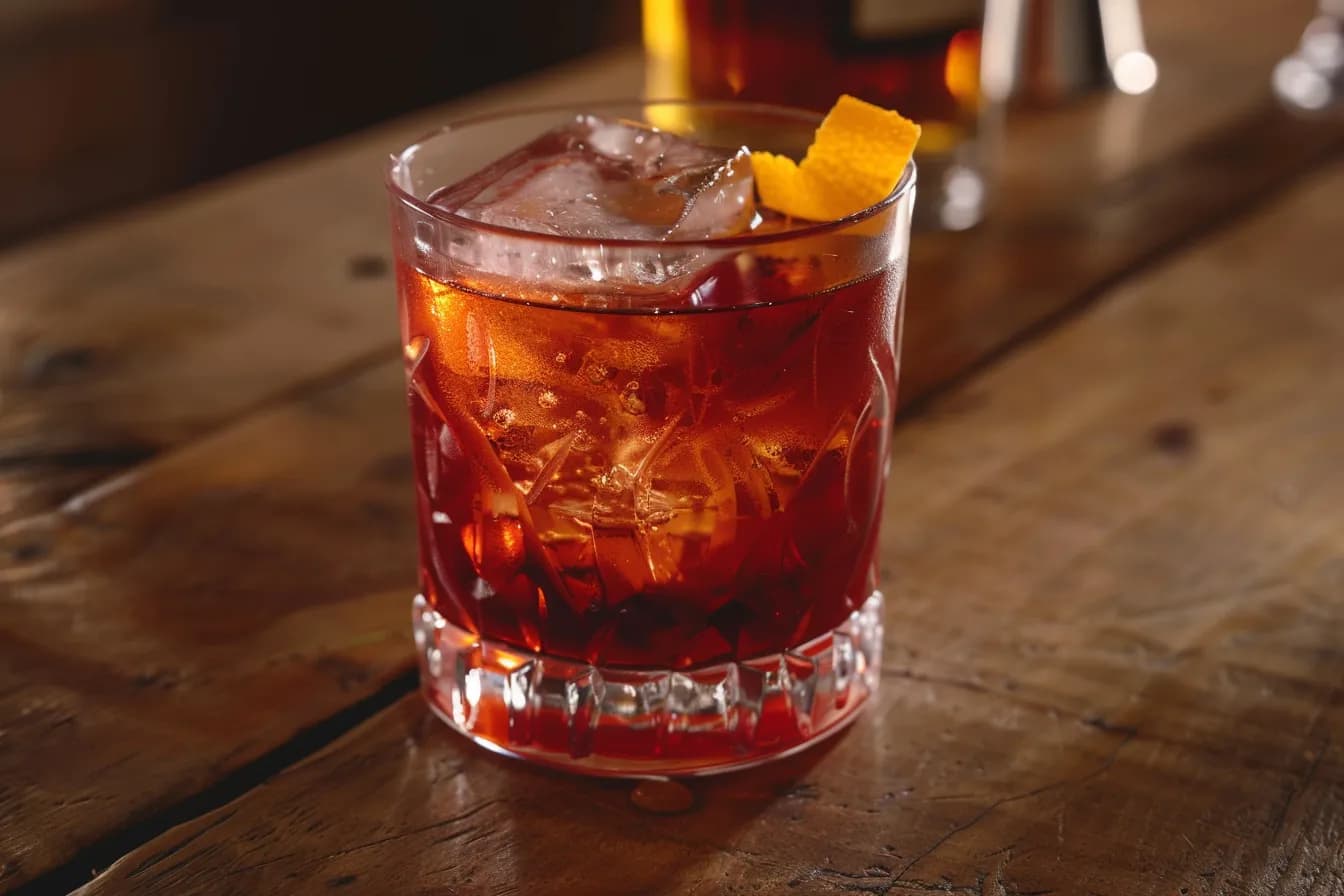
Negroni Sbagliato
The "mistaken" Negroni: Prosecco goes into the glass instead of gin, turning the heavy classic into an aperitif.
 Cocktails
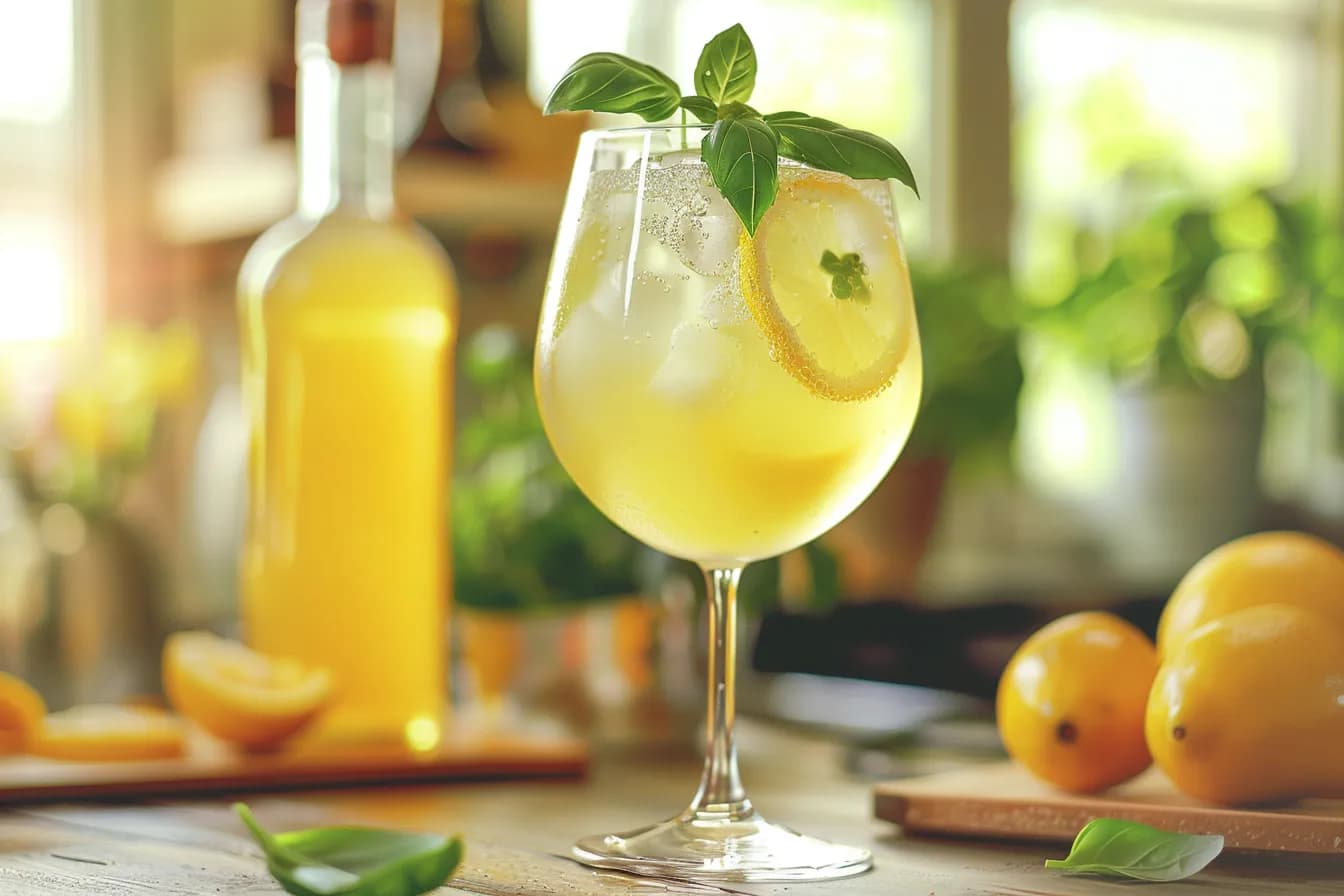
Limoncello Spritz
The southern Italian answer to the Aperol Spritz: lemon liqueur, Prosecco, and a basil leaf.