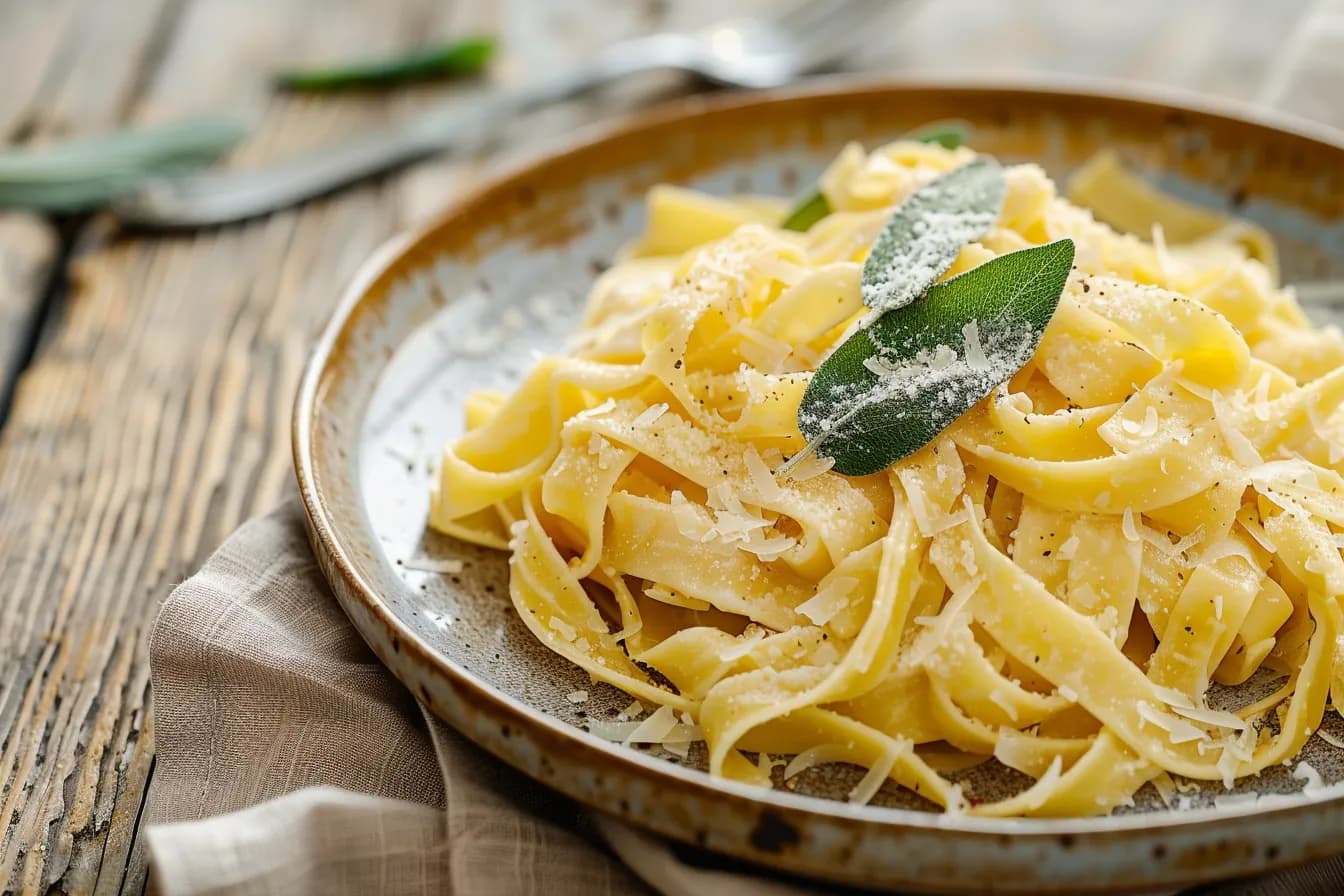
Brown Butter Sage Pasta
Three ingredients, eight minutes, and the best proof that butter is a flavor and not just a fat.
- Preparation
- 5 min
- Cook/bake time
- 13 min
- Total
- 18 min
- Difficulty
- Easy
- Calories
- 870 kcal
- Servings
- 2
- Prep
- 5 min
- Cooking & baking
- 13 min
Three ingredients, eight minutes, and the best proof that butter is a flavor and not just a fat. Brown butter is created when the milk proteins in the butter toast. It becomes nutty, caramelly, and is achievable in four minutes. With sage and Parmesan, it turns into a dish you would go to a restaurant for in Italy.
Why this works
Butter consists of about 80 percent fat, 16 percent water, and 3 percent milk protein. When heated, the water evaporates first, which causes the loud foaming, and only then can the temperature rise above 100 degrees. Then the milk protein toasts and forms the nutty flavors in seconds that you make brown butter for. The window is short. At about 150 degrees it is perfect, at 165 it is burned, and there are less than thirty seconds in between. That is why the sage goes in right then, as its moisture lowers the temperature and stops the browning. The pasta water then takes over the second task. The dissolved starch allows the butter and water to emulsify into a sauce instead of the fat running off the pasta.
Step-by-step instructions
- 1
Boil the pasta
Cook the pasta in plenty of salted water one minute less than the package instructions. They will continue to cook in the sauce later, and they need a little reserve for that. Be sure to scoop out a cup of cooking water before draining.
- 2
Brown the butter
Melt the butter in a light-colored pan over medium heat. It will foam loudly, which is the evaporating water. When the foaming subsides, it turns golden brown within seconds and smells nutty. From here on, every second counts. A light-colored pan is important because you cannot see the color in a black one.
- 3
Add the sage
Toss the sage leaves into the brown butter. They will sizzle, become crispy in thirty seconds, and their moisture simultaneously stops the browning. The sage is not just flavor here, but the emergency brake.
- 4
Emulsify and serve
Add the drained pasta with half a cup of cooking water to the pan and toss vigorously for one minute until the liquid becomes creamy and clings to the pasta. Remove from the heat, toss in the Parmesan, and season to taste with pepper and nutmeg.
Our best tips
- Use a light-colored pan. You cannot see the color of the butter in a black pan, and there are less than thirty seconds between golden brown and burned.
- Pasta water is the sauce. The dissolved starch allows the butter and water to emulsify. Without it, the fat runs off the pasta into the plate.
- Add Parmesan only off the heat. In a hot pan, it separates and becomes stringy instead of creamy.
Tasty variations
With pumpkin
Roast 300 g of diced pumpkin beforehand in the same pan and set aside. Pumpkin and brown butter are a classic combination. The sweetness of the pumpkin and the nuttiness of the butter enhance each other.
With lemon and capers
After the sage, add a tablespoon of capers and the juice of half a lemon. The acidity makes the dish significantly lighter and is the perfect answer if brown butter alone is too rich.
Nutrition facts
| Calories | 870 kcal |
|---|---|
| Protein | 25 g |
| Carbohydrates | 96 g |
| – of which sugar | 4 g |
| Fat | 42 g |
| Fiber | 5 g |
Where the 870 kcal come from
per serving
Calculated from the ingredients – how we do it
We add up reference values for every ingredient and divide by the number of servings. These assumptions are baked in:
- Reference values per 100 g – for the raw ingredient, exactly as listed.
- Tinned goods count at drained weight, bone-in meat at purchase weight: you eat about 70 per cent of a chicken thigh and leave the rest.
- Water evaporates as you cook. The energy stays in the pot, the weight does not – so the figure is per serving, not per 100 g of finished dish.
- Anything listed without a quantity – “salt and pepper” – is not counted.
A guide value, not a lab measurement: no two onions weigh the same, and fat content varies from pack to pack.
Frequently asked questions
My butter burned. Can I save it?
No, burned milk proteins taste bitter and that does not go away. Start over and use one level less heat. Rule of thumb: when the loud foaming stops, you have about twenty seconds left. Do not walk away from that point on.
Does this also work with dried sage?
It works with some compromises in flavor, but the second function is missing. Dried leaves bring no moisture and do not stop the browning. You will have to take the pan off the heat yourself, and a little earlier than you think.
Which pasta works best?
Ribbon pasta or anything else with a lot of surface area works best. The sauce is thin and needs something to cling to. Penne and other smooth tubes let it run into the plate. Fresh pasta is especially good here because its starch additionally supports the emulsion.
Comments & ratings(0)
Sign in to rate and comment on this recipe.
You might also like
 Dinner
15-Minute Gnocchi Skillet
Refrigerated gnocchi go uncooked into the pan, and they become crispy on the outside.
 Pasta
PastaCacio e Pepe
Just Pecorino, pepper, and pasta water, the high art of Roman simplicity.
 Dinner
Miso Butter Noodles
Two ingredients emulsify with pasta water into a sauce that tastes like it took hours to make.