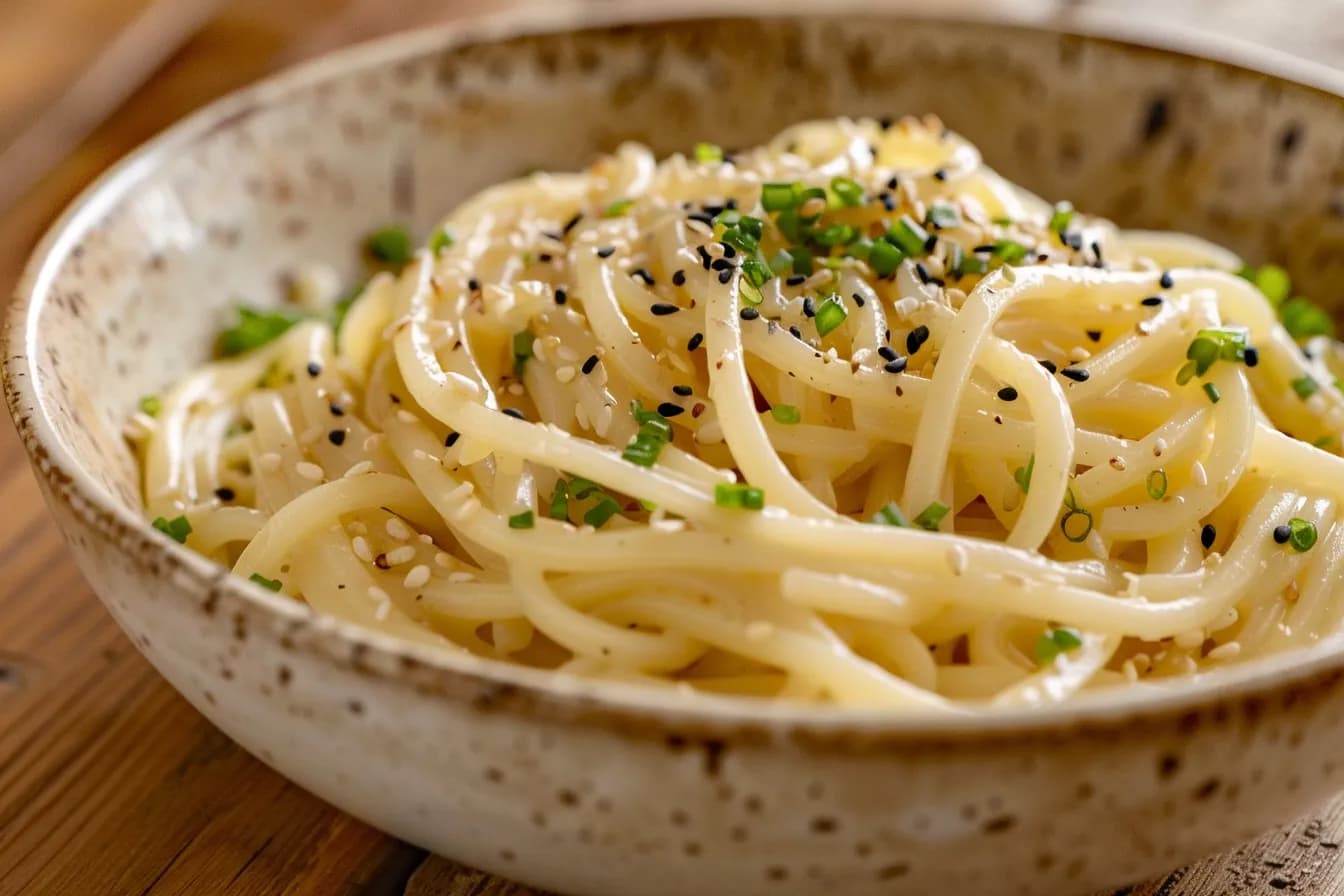
Miso Butter Noodles
Two ingredients emulsify with pasta water into a sauce that tastes like it took hours to make.
- Preparation
- 5 min
- Cook/bake time
- 12 min
- Total
- 17 min
- Difficulty
- Easy
- Calories
- 740 kcal
- Servings
- 2
- Prep
- 5 min
- Cooking & baking
- 12 min
Two ingredients emulsify with pasta water into a sauce that tastes like it took hours to make. Miso is fermented soy protein and therefore a glutamate bomb, while butter carries the flavors and makes the sauce creamy. Together with starchy pasta water, this creates the shortest path to deep flavor in just eight minutes.
Why this works
Miso contains free glutamic acid from the fermented soy protein in a concentration otherwise only achieved by aged Parmesan or dried mushrooms. This amino acid is the reason why a spoonful of miso instantly gives a sauce the depth you would normally cook hours for. The second part is mechanical. Butter and pasta water only form a sauce when the starch in the water emulsifies them. This is why the butter must go into the pan cold and in pieces, and why you toss instead of stir. Cold butter melts slowly enough for the emulsion to build up, whereas melted butter separates immediately. Miso is added off the heat because it loses a large part of its flavors above 80 degrees.
Step-by-step instructions
- 1
Cook the noodles and save the water
Cook the spaghetti one minute less than instructed. Salt the water only lightly this time because miso brings a lot of salt. Scoop out two cups of cooking water before draining.
- 2
Mix the miso paste
Mix the miso and garlic with four tablespoons of hot pasta water in a bowl to form a smooth paste. This is necessary because miso clumps when added directly to the pan, and miso clumps are salty spots instead of a sauce.
- 3
Emulsify the butter
Add the drained noodles to the pan with half a cup of cooking water, add the cold butter in pieces and toss vigorously. The sauce will become visibly creamy and light. Cold butter is important because if added melted, it separates immediately from the water.
- 4
Fold in the miso
Remove the pan from the heat and fold in the miso paste. Above 80 degrees, miso loses a large part of its flavor, and this exact flavor is the reason for the recipe. Finish with scallions, sesame seeds and pepper.
Our best tips
- Salt the pasta water only lightly. Two tablespoons of miso bring so much salt that normally salted water makes the dish inedible.
- Use cold butter in pieces. If added melted, it separates from the water instead of emulsifying with it.
- Add miso only off the heat. It is a fermented product, and heat above 80 degrees destroys the exact flavors you are using it for.
Tasty variations
With mushrooms
Sear 200 g of shiitake or button mushrooms beforehand and fold them in at the end. Mushrooms bring a second source of glutamate, and this amplifies noticeably with the miso.
With egg and chili oil
Top with one soft-boiled egg per portion and a teaspoon of chili oil. The runny egg yolk makes the sauce even creamier, while the chili oil provides a contrast to the saltiness.
Nutrition facts
| Calories | 740 kcal |
|---|---|
| Protein | 19 g |
| Carbohydrates | 101 g |
| – of which sugar | 5 g |
| Fat | 28 g |
| Fiber | 6 g |
Where the 740 kcal come from
per serving
Calculated from the ingredients – how we do it
We add up reference values for every ingredient and divide by the number of servings. These assumptions are baked in:
- Reference values per 100 g – for the raw ingredient, exactly as listed.
- Tinned goods count at drained weight, bone-in meat at purchase weight: you eat about 70 per cent of a chicken thigh and leave the rest.
- Water evaporates as you cook. The energy stays in the pot, the weight does not – so the figure is per serving, not per 100 g of finished dish.
- Anything listed without a quantity – “salt and pepper” – is not counted.
A guide value, not a lab measurement: no two onions weigh the same, and fat content varies from pack to pack.
Frequently asked questions
Which miso should I use?
Light miso (shiro), as it is milder and less salty. Dark red miso also works, but then use only one and a half tablespoons. It is fermented longer, significantly stronger, and will otherwise completely dominate the butter.
My sauce is oily instead of creamy.
The emulsion did not form. Causes include too little pasta water, butter that is too warm, or stirring instead of tossing. To fix it, remove the pan from the heat, add two tablespoons of pasta water and toss vigorously until it binds again.
Does miso last a long time?
An opened jar lasts about a year in the fridge, as it is a preservation method itself. The color darkens over time and the flavor becomes stronger, but it practically does not spoil.
Comments & ratings(0)
Sign in to rate and comment on this recipe.
You might also like
 Dinner
15-Minute Gnocchi Skillet
Refrigerated gnocchi go uncooked into the pan, and they become crispy on the outside.
 Dinner
Brown Butter Sage Pasta
Three ingredients, eight minutes, and the best proof that butter is a flavor and not just a fat.
 Pasta
PastaCacio e Pepe
Just Pecorino, pepper, and pasta water, the high art of Roman simplicity.