Homemade Pasta Dough
100 g flour to one egg is more of a formula than a recipe, and thirty minutes of resting time is mandatory.
- Preparation
- 40 min
- Cook/bake time
- 3 min
- Total
- 1 hr 13 min
- Difficulty
- Medium
- Calories
- 434 kcal
- Servings
- 4
- Prep
- 40 min
- Cooking & baking
- 3 min
- Resting
- 30 min
Only 43 min of that is hands-on – the rest takes care of itself.
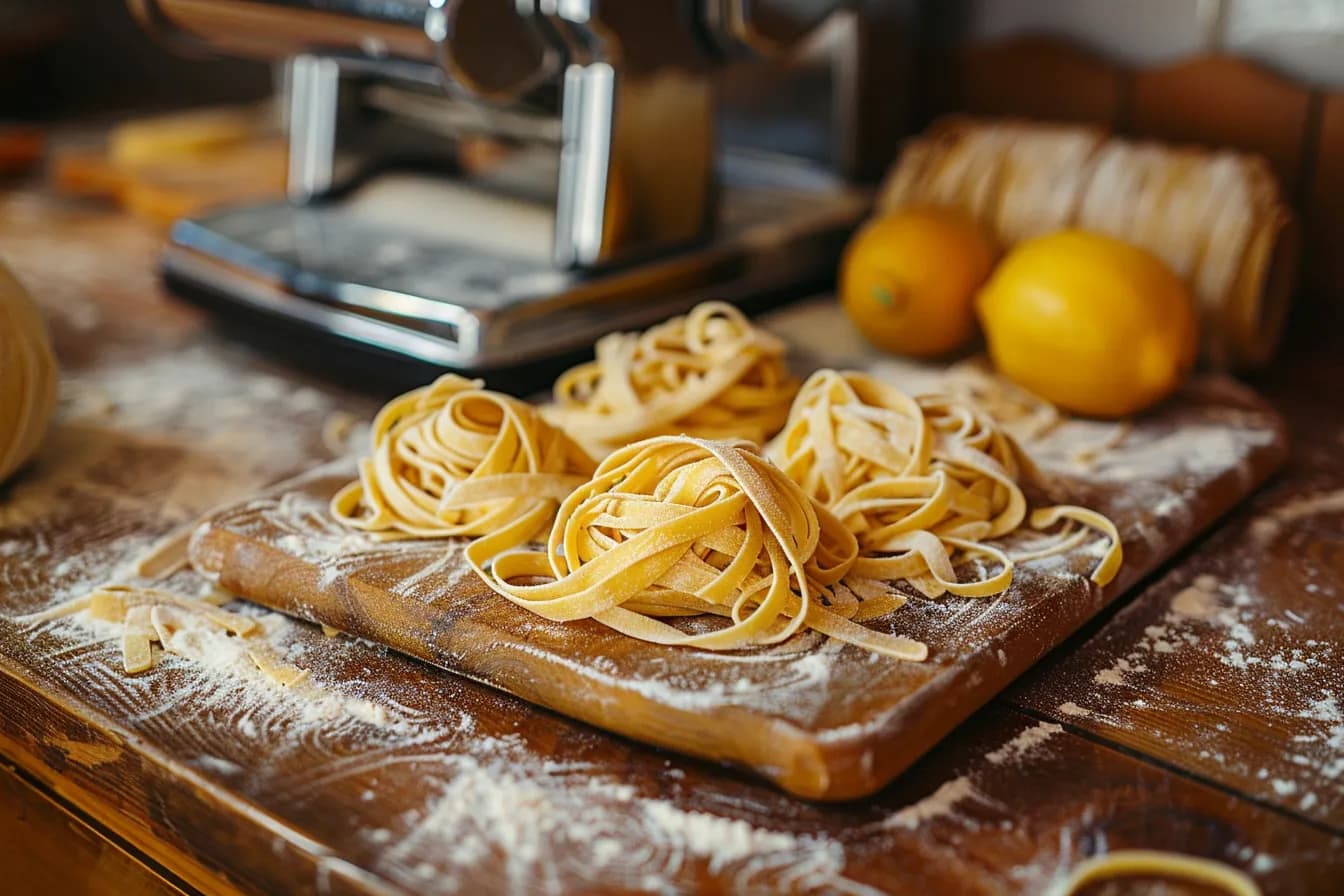
100 g flour to one egg is more of a formula than a recipe, and thirty minutes of resting time is mandatory. Fresh pasta requires three ingredients and half an hour of patience, after which it cooks in two minutes. The difference compared to dried pasta is not nostalgia, but a completely different texture.
Why this works
The thirty minutes of resting time is not a ritual, but the reason the dough can be rolled out at all. During kneading, the gluten strands are stretched like rubber bands. If you roll out the dough immediately, it will shrink back every time. During the resting period, these strands relax, and at the same time, the moisture distributes evenly throughout the dough so that no dry spots remain. The second point is the choice of flour: Type 405 is more finely ground than 550 and absorbs less water, which is exactly right for an egg dough. Adding durum wheat semolina provides a firm bite and ensures that the pasta holds its shape during cooking instead of swelling up.
Step-by-step instructions
- 1
Create a flour well
Pile the flour and semolina on the work surface and press a deep well into it. Crack the eggs into it, add the oil and salt, and whisk them with a fork while gradually incorporating more flour from the inside out. The wall must hold: if it breaks, the egg will run all over the table.
- 2
Knead for ten minutes
Knead with the heel of your hand, fold, turn, and knead again for ten minutes. The dough is ready when it is smooth and silky, and an indented dimple slowly springs back. This takes longer than you might think, and it makes the difference between a firm bite and a crumbly texture.
- 3
Rest for thirty minutes
Wrap the dough tightly in plastic wrap and let it rest for thirty minutes at room temperature. This time cannot be shortened. Without it, the dough will shrink back every time you roll it out, and you will be fighting against a rubber band.
- 4
Roll out and cut
Divide the dough into four portions and pass each one through the pasta machine, starting with the widest setting, then going thinner step by step. For ribbon pasta, the second to last setting is right: you should be able to see your hand shining through. Toss the cut pasta in semolina and loosely form it into nests.
- 5
Cook for two to three minutes
Fresh pasta needs two to three minutes in boiling salted water, no more. It is done when it floats to the surface and the center is no longer white. If you treat it like dried pasta, you will pull mush out of the pot.
Our best tips
- The resting time is not optional. Without it, the dough shrinks back when rolled out, and you will need twice as long for sheets that are only half as thin.
- Use durum wheat semolina instead of flour for dusting. It does not soak up moisture, and the pasta will not stick together. Regular flour turns into paste in the cooking water.
- Let the pasta nests dry for twenty minutes before they go into the pot. Otherwise, they will stick together in the water within seconds.
Tasty variations
Without egg, just with water
Knead 400 g of durum wheat semolina with 200 ml of lukewarm water and salt. This is the Southern Italian variation for Orecchiette and Trofie: firmer, more rustic, and vegan.
Green spinach dough
Finely puree 150 g of blanched, very well-squeezed spinach and omit one egg. The dough will be bright green and needs a little more flour because the spinach adds moisture.
Nutrition facts
| Calories | 434 kcal |
|---|---|
| Protein | 17 g |
| Carbohydrates | 73 g |
| – of which sugar | 1 g |
| Fat | 7 g |
| Fiber | 3 g |
Where the 434 kcal come from
per serving
Calculated from the ingredients – how we do it
We add up reference values for every ingredient and divide by the number of servings. These assumptions are baked in:
- Reference values per 100 g – for the raw ingredient, exactly as listed.
- Tinned goods count at drained weight, bone-in meat at purchase weight: you eat about 70 per cent of a chicken thigh and leave the rest.
- Water evaporates as you cook. The energy stays in the pot, the weight does not – so the figure is per serving, not per 100 g of finished dish.
- Anything listed without a quantity – “salt and pepper” – is not counted.
A guide value, not a lab measurement: no two onions weigh the same, and fat content varies from pack to pack.
Frequently asked questions
Can I do it without a pasta machine?
Yes, with a rolling pin. It just takes longer and requires more effort. Roll out a quarter of the dough at a time on a floured surface so thinly that you can see the grain of the board shining through, dust the sheet with semolina, roll it up loosely, and cut it into strips.
My dough is too dry or too sticky, what now?
Eggs vary in size, which is why the formula is a starting point. If it is too dry, knead in water a teaspoon at a time. If it is too sticky, add flour a tablespoon at a time. Always work in small steps and knead for a minute in between, because the dough absorbs moisture with a delay.
Can I freeze pasta dough?
It is best to freeze it as pre-cut nests: pre-freeze them individually on a floured baking sheet, then transfer them to a bag. They go into the boiling water frozen and then need four minutes. A whole lump of dough is much harder to work with after thawing.
Comments & ratings(0)
Sign in to rate and comment on this recipe.
You might also like
 Basic Recipes
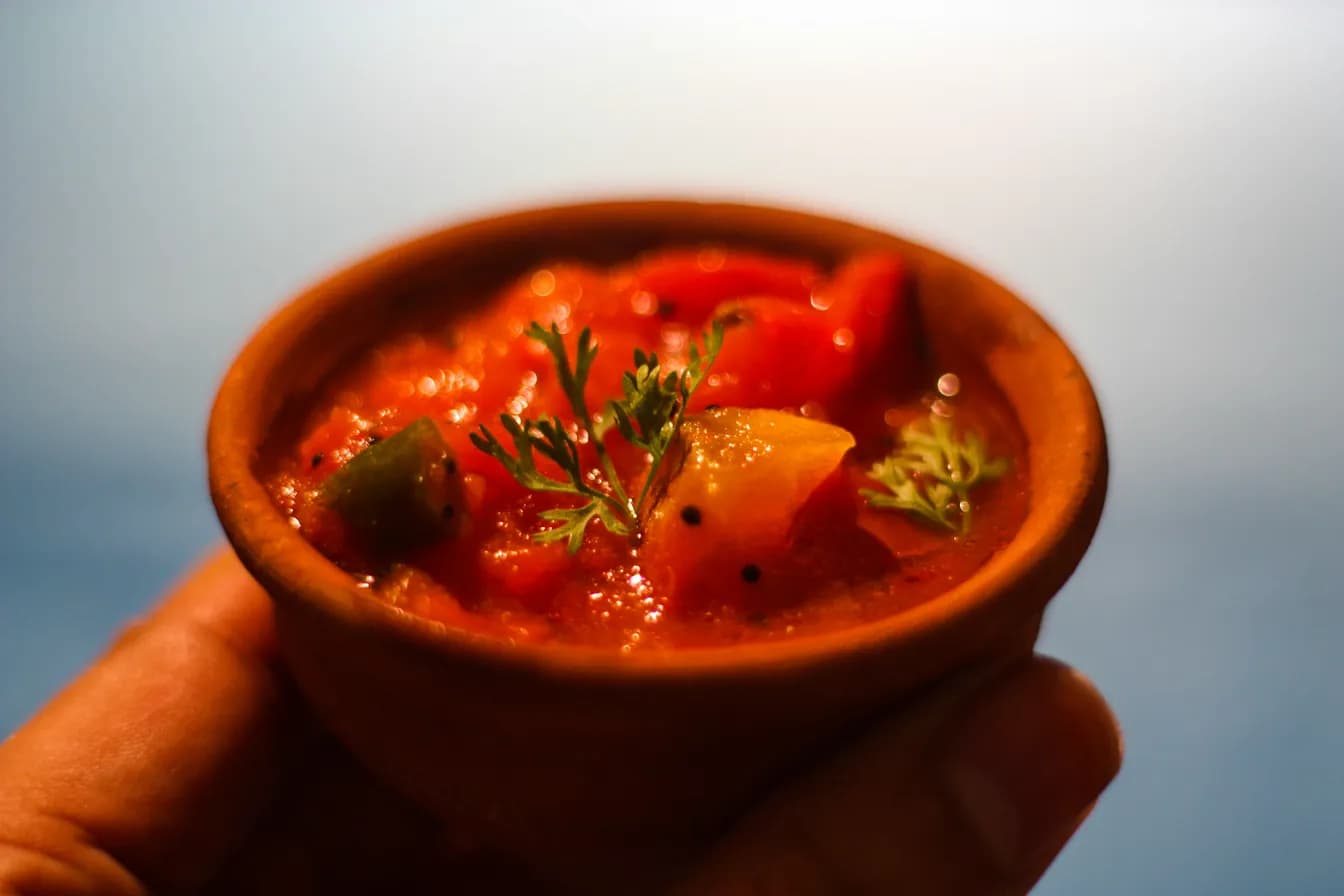
Tomato Sauce
The one sauce that turns into pizza, pasta, lasagna, and casseroles. Four ingredients and no shortcuts when simmering.
 Basic Recipes
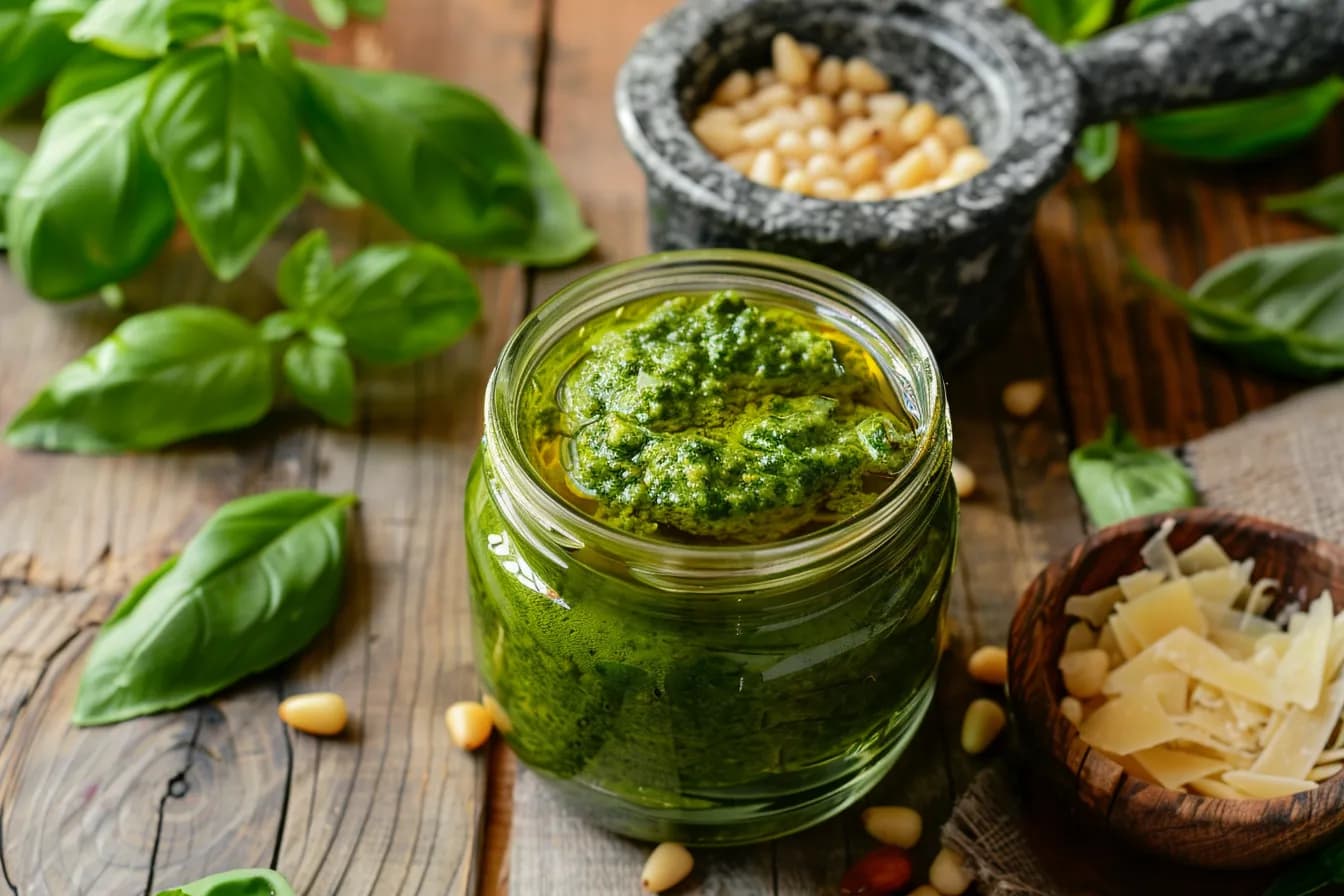
Make your own pesto, from whatever you have
Greens, fat, nuts, salt: pesto does not need basil, it just needs four roles filled.
 Basic Recipes
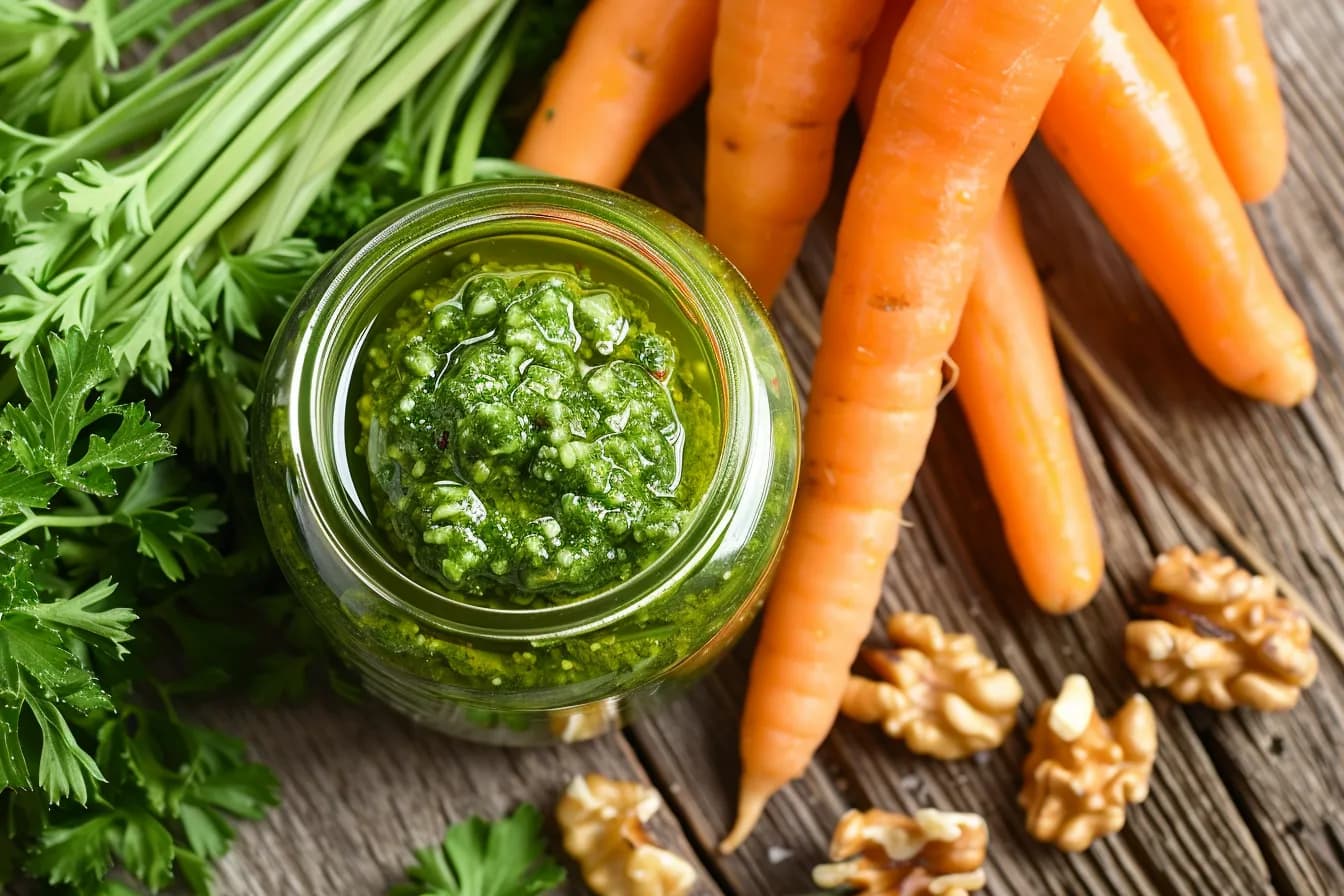
Carrot Top Pesto
The greens that get cut off at the store are edible, and they make a more robust pesto than basil.