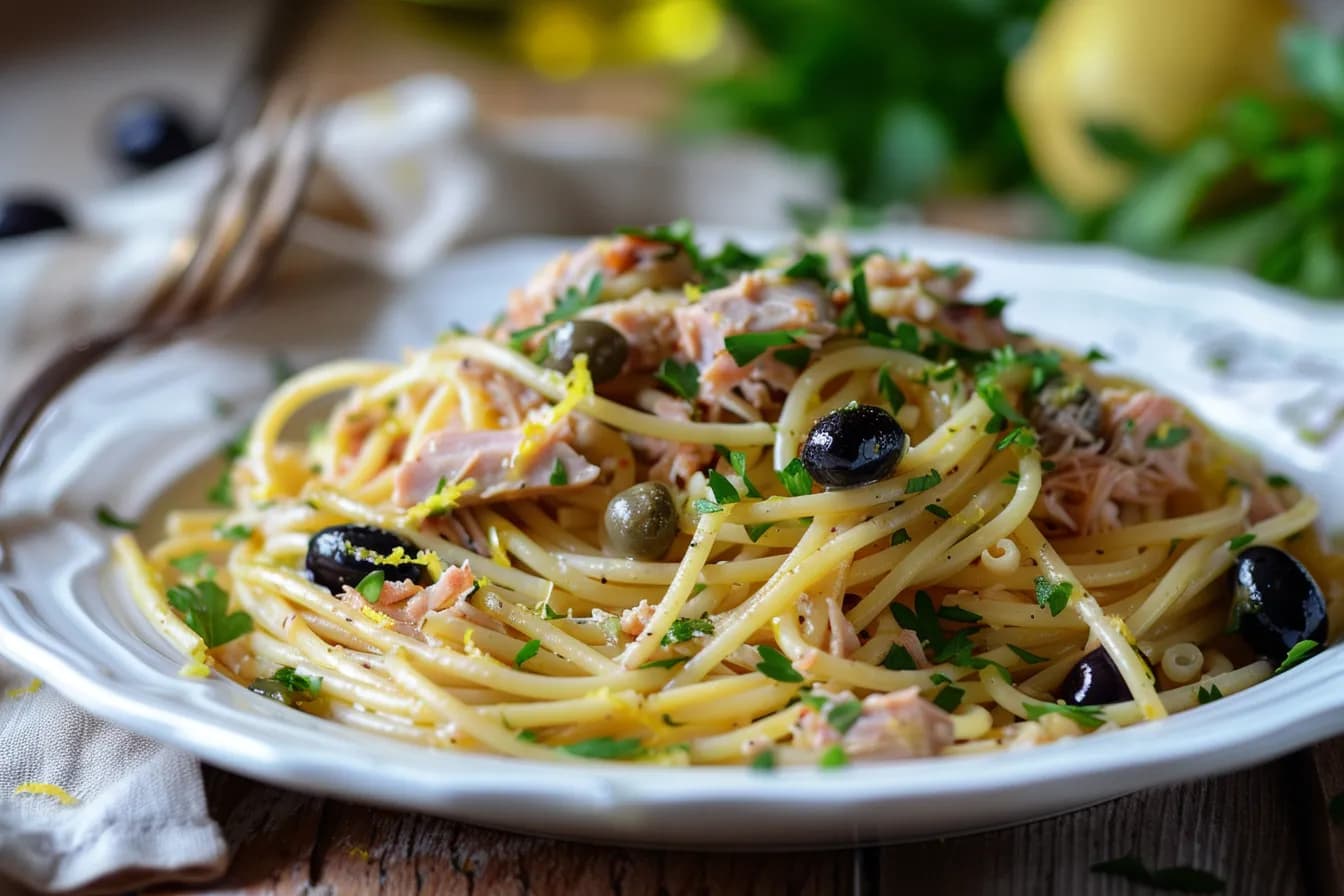
Pantry Tuna Pasta
Can, capers, garlic, pasta, the dinner for days when the fridge is empty.
- Preparation
- 5 min
- Cook/bake time
- 12 min
- Total
- 17 min
- Difficulty
- Easy
- Calories
- 767 kcal
- Servings
- 2
- Prep
- 5 min
- Cooking & baking
- 12 min
Can, capers, garlic, pasta, the dinner for days when the fridge is empty. Everything here lasts for months in the cupboard, nothing needs to be fresh, and in twelve minutes you have a plate you would also order in a restaurant. The oil from the can is not waste, but the base of the sauce.
Why this works
Canned tuna is already cooked and breaks down into dry fibers with further heat. That is why it is added right at the end and only folded in, never cooked along with it, the difference between juicy pieces and cat food lies exactly in these two minutes. The oil from the can, on the other hand, absolutely belongs in it: It has absorbed flavor from the fish for months and is the most flavorful ingredient of the whole dish. Capers and olives provide salt and glutamate, and together with the pasta water a short, emulsified sauce is created, it is the starch in the cooking water that holds oil and water together, instead of both standing separately in the plate.
Step-by-step instructions
- 1
Put the pasta on
Cook the spaghetti in well-salted water one minute less than indicated and save a cup of cooking water. The water is not an emergency reserve here, but an ingredient, without the starch dissolved in it there is no sauce.
- 2
Let the garlic steep in the canned oil
Pour the oil from the tuna can into a pan, add the olive oil and let the garlic turn light in it over low heat for two minutes. Over low heat, not high heat: Garlic slices burn quickly and bitterly, and here they should slowly release their aroma to the oil.
- 3
Capers, olives and chili
Add capers, olives and chili flakes and let them steep for a minute. You usually do not need any salt here at all, capers and olives bring enough with them, and that is the reason why the dish manages without fresh ingredients.
- 4
Emulsify, fold in tuna
Add the pasta with half a cup of cooking water to the pan and toss for a minute until the liquid becomes creamy. Only now remove the pan from the heat, fold in the drained tuna in coarse pieces and finish with lemon zest, lemon juice and parsley.
Our best tips
- The oil from the can belongs in the pan. It has absorbed aroma from the fish for months and is the most flavorful ingredient of the dish.
- Never cook tuna along with it. It is already cooked and breaks down into dry fibers with further heat, folded in after the stove it remains juicy.
- Only season at the end. Capers, olives and canned oil bring so much salt with them that salting beforehand is almost always too much.
Tasty variations
With tomato paste
Roast a tablespoon of tomato paste in the oil for two minutes until it turns dark. This gives the sauce color and depth and turns the light dish into a stronger, red variation.
With sardines
Replace tuna with a can of sardines and let them fall apart in the oil instead of folding them in. Sardines dissolve completely and season the whole sauce, significantly more intense and even cheaper.
Nutrition facts
| Calories | 767 kcal |
|---|---|
| Protein | 37 g |
| Carbohydrates | 98 g |
| – of which sugar | 5 g |
| Fat | 24 g |
| Fiber | 7 g |
Where the 767 kcal come from
per serving
Calculated from the ingredients – how we do it
We add up reference values for every ingredient and divide by the number of servings. These assumptions are baked in:
- Reference values per 100 g – for the raw ingredient, exactly as listed.
- Tinned goods count at drained weight, bone-in meat at purchase weight: you eat about 70 per cent of a chicken thigh and leave the rest.
- Water evaporates as you cook. The energy stays in the pot, the weight does not – so the figure is per serving, not per 100 g of finished dish.
- Anything listed without a quantity – “salt and pepper” – is not counted.
A guide value, not a lab measurement: no two onions weigh the same, and fat content varies from pack to pack.
Frequently asked questions
Tuna in oil or in water?
In oil, and clearly so. The oil is an ingredient in this recipe, not a preservative, tuna in water leaves the sauce thin and flat. If only water-packed is available, take two tablespoons more olive oil right away.
Can I take the dish with me?
Cold the next day it tastes surprisingly good, almost like a pasta salad, but then definitely add a dash of olive oil and a little more lemon, because the pasta absorbs the liquid overnight. Reheating makes the tuna dry.
Why does my sauce stay oily instead of creamy?
Too little pasta water or tossed too little. The emulsion is only created through movement: toss vigorously for a full minute, do not stir. If it still does not work, the cooking water was too little salted and too low in starch, next time use less water for the same amount of pasta.
Comments & ratings(0)
Sign in to rate and comment on this recipe.
You might also like
 Dinner
15-Minute Gnocchi Skillet
Refrigerated gnocchi go uncooked into the pan, and they become crispy on the outside.
 Dinner
Brown Butter Sage Pasta
Three ingredients, eight minutes, and the best proof that butter is a flavor and not just a fat.
 Pasta
PastaSpaghetti Aglio e Olio
Garlic, good olive oil, chili, and parsley make this the fastest brilliant pasta dish ever.