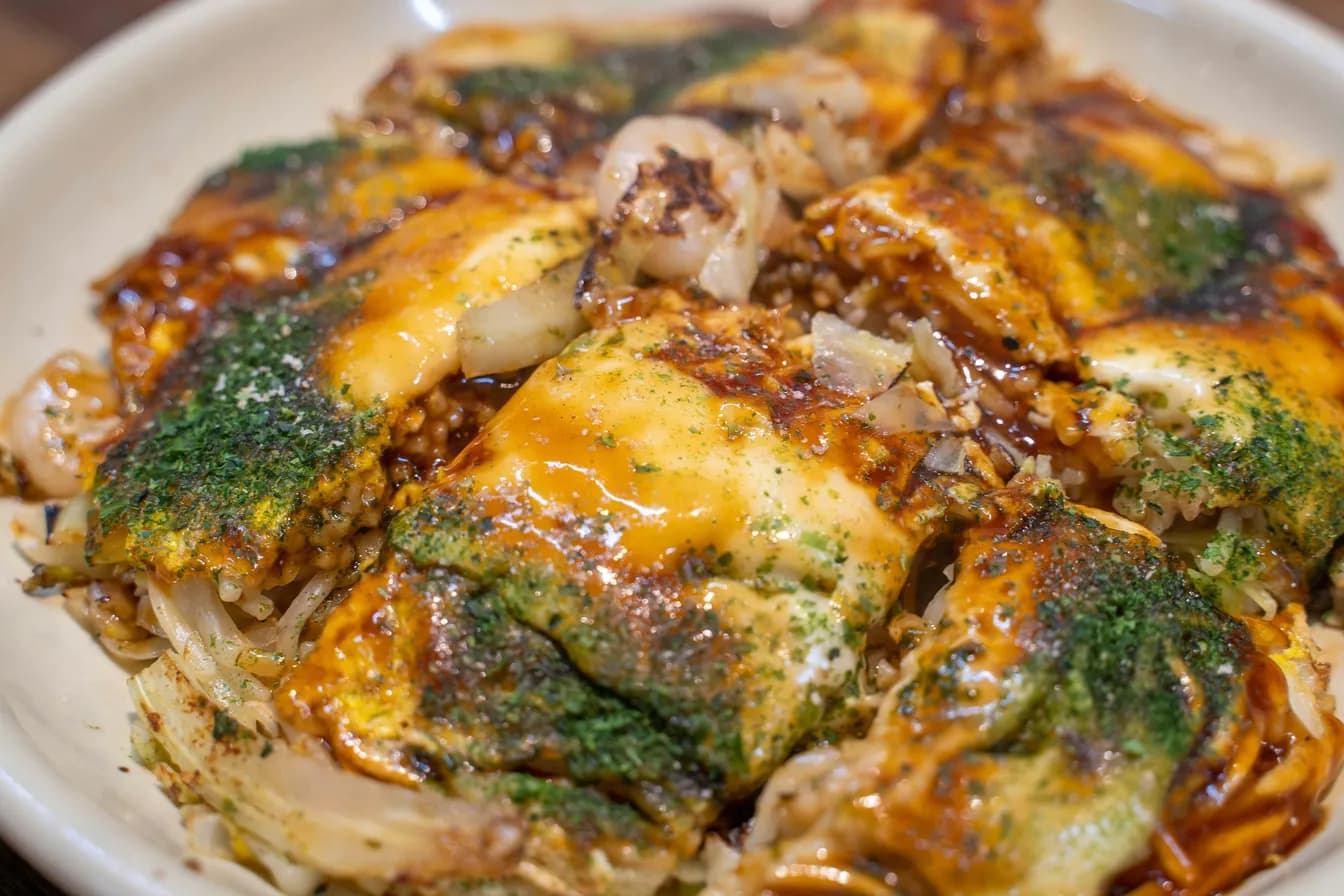
Okonomiyaki
Savory Japanese pancake with white cabbage, "grill what you like", and the cabbage makes it juicy instead of heavy.
- Preparation
- 20 min
- Cook/bake time
- 25 min
- Total
- 45 min
- Difficulty
- Medium
- Calories
- 644 kcal
- Servings
- 2 piece
- Prep
- 20 min
- Cooking & baking
- 25 min
Savory Japanese pancake with white cabbage, "grill what you like", and the cabbage makes it juicy instead of heavy. The batter is just enough to hold the finely shredded cabbage together; the rest is vegetables. Traditionally, grated yam is included, but baking powder and cold water come surprisingly close.
Why this works
Okonomiyaki works because white cabbage releases water when fried, which cannot escape inside the thick pancake and steams it from the inside. That is why it is juicy, even though there is a firm crust on the outside, and that is why it must not be pressed flat, because the pressure squeezes out exactly this water. The batter is deliberately kept to a minimum: it is meant to bind the cabbage, not embed it. Too much flour turns the dish into a dense flatbread in which the cabbage is merely an addition. The cold water in the batter serves the same purpose as in tempura, cold liquid delays gluten development, so the batter remains tender instead of becoming tough.
Step-by-step instructions
- 1
Finely shred the cabbage
Cut the white cabbage into really fine strips, at most three millimeters wide, and then across again. Cabbage that is cut too coarsely cannot be bound by the scant batter, and the pancake will fall apart when flipped, this is the most common reason for failure.
- 2
Mix the batter
Mix the flour, ice-cold water, eggs, baking powder and salt into a smooth, rather thin batter. Do not overmix: as with pancakes, overdeveloped gluten makes the result tough, and this is particularly noticeable here because there is so little batter involved.
- 3
Fold in the cabbage
Fold the cabbage and scallions into the batter until everything is just coated. It looks like far too little batter, that is correct. Process the mixture quickly, because the salt draws water out of the cabbage and the batter becomes thinner by the minute.
- 4
Fry, do not press
Heat the oil in the pan over medium heat, add half of the mixture and shape it into a circle about three centimeters thick. Fry it for five to six minutes without pressing it down. The pressure squeezes out the water that is supposed to steam the pancake from the inside.
- 5
Flip and top
Flip the pancake with two spatulas or over a plate and fry for another five minutes. Then brush it with the sauce, draw a lattice pattern over it with the mayonnaise and sprinkle katsuobushi and aonori on top. The bonito flakes move in the rising heat, that is part of it.
Our best tips
- Never press flat with the spatula. It is the most common habit when frying and ruins exactly what makes Okonomiyaki special.
- Real Okonomiyaki sauce is thicker and sweeter than hoisin. Hoisin with a teaspoon of rice vinegar and a pinch of Worcestershire sauce comes close.
- Better two smaller pancakes than one large one. A thick flatbread of 25 centimeters cannot be flipped in a household pan without breaking.
Tasty variations
With pork belly
Place four thin slices of pork belly on top before flipping so that they fry crispy after flipping. This is the standard version in Osaka.
Vegan
Replace eggs with three tablespoons of chickpea flour and six tablespoons of water, omit katsuobushi and use vegan mayonnaise. The cabbage carries the dish anyway.
Nutrition facts
| Calories | 644 kcal |
|---|---|
| Protein | 19 g |
| Carbohydrates | 65 g |
| – of which sugar | 16 g |
| Fat | 33 g |
| Fiber | 8 g |
Where the 644 kcal come from
per serving
Calculated from the ingredients – how we do it
We add up reference values for every ingredient and divide by the number of servings. These assumptions are baked in:
- Reference values per 100 g – for the raw ingredient, exactly as listed.
- Tinned goods count at drained weight, bone-in meat at purchase weight: you eat about 70 per cent of a chicken thigh and leave the rest.
- Water evaporates as you cook. The energy stays in the pot, the weight does not – so the figure is per serving, not per 100 g of finished dish.
- Anything listed without a quantity – “salt and pepper” – is not counted.
A guide value, not a lab measurement: no two onions weigh the same, and fat content varies from pack to pack.
Frequently asked questions
What does Okonomiyaki mean?
Literally something like "grill what you like", "okonomi" stands for preference, "yaki" for grilled. The name says it all: the base of batter and cabbage remains the same, everything else is a matter of taste.
How many calories does Okonomiyaki have?
Around 645 kcal per piece, where one piece is a complete meal. Mayonnaise and sauce together contribute around 215 kcal, this is the easiest place to save.
Why is my Okonomiyaki falling apart?
Usually the cabbage is cut too coarsely. The batter is deliberately kept to a minimum and can only bind fine strips. Second reason: flipped too early, before a firm crust has formed on the bottom.
Do I need yam?
No. Traditionally, grated nagaimo makes the batter particularly airy, but it is hard to get outside of Japan. Baking powder and ice-cold water achieve a very similar result.
Comments & ratings(0)
Sign in to rate and comment on this recipe.
You might also like
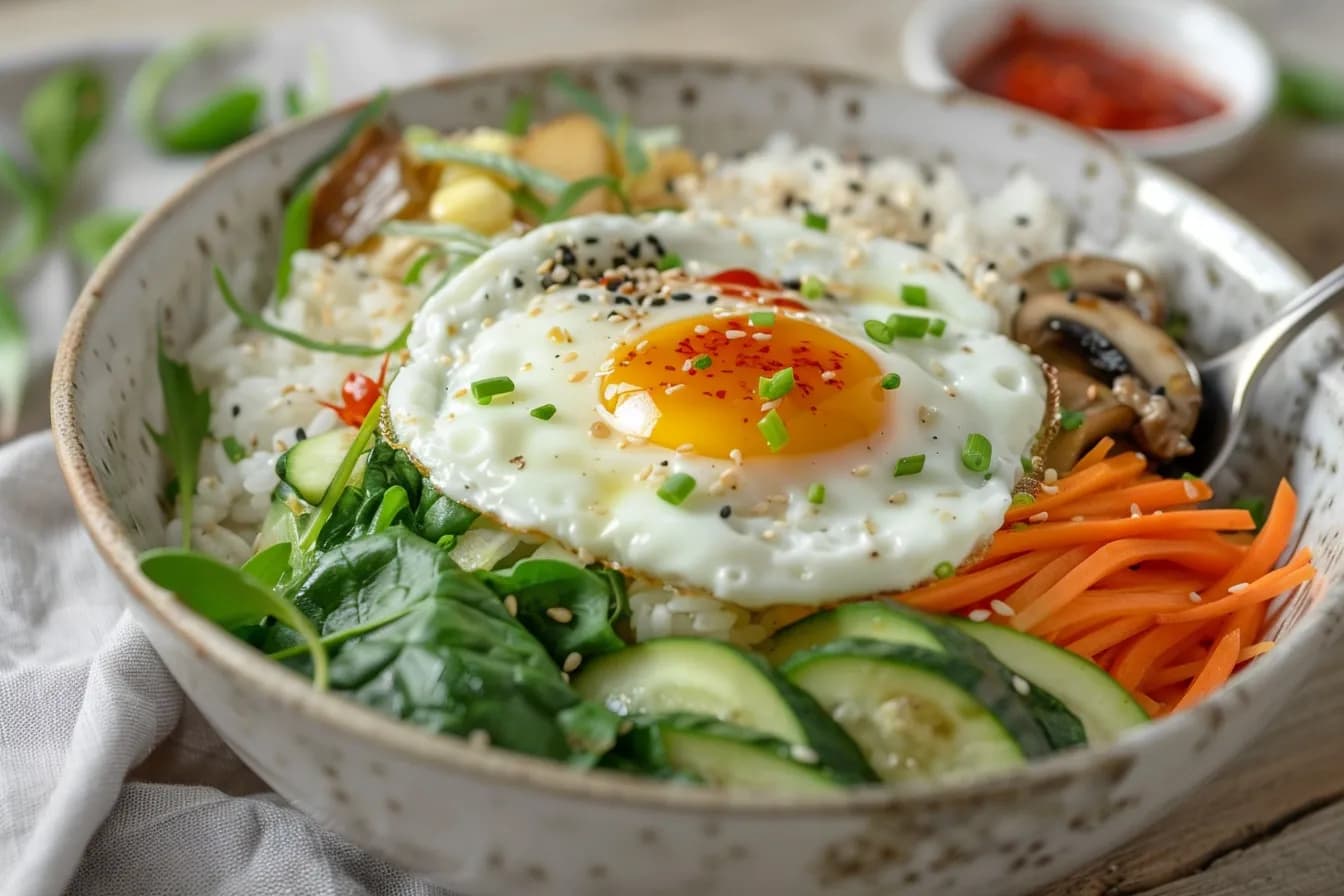 Dinner
Bibimbap
Korean rice bowl with five individually seasoned vegetables, egg, and gochujang, meaning "mixed rice", and that is meant literally.
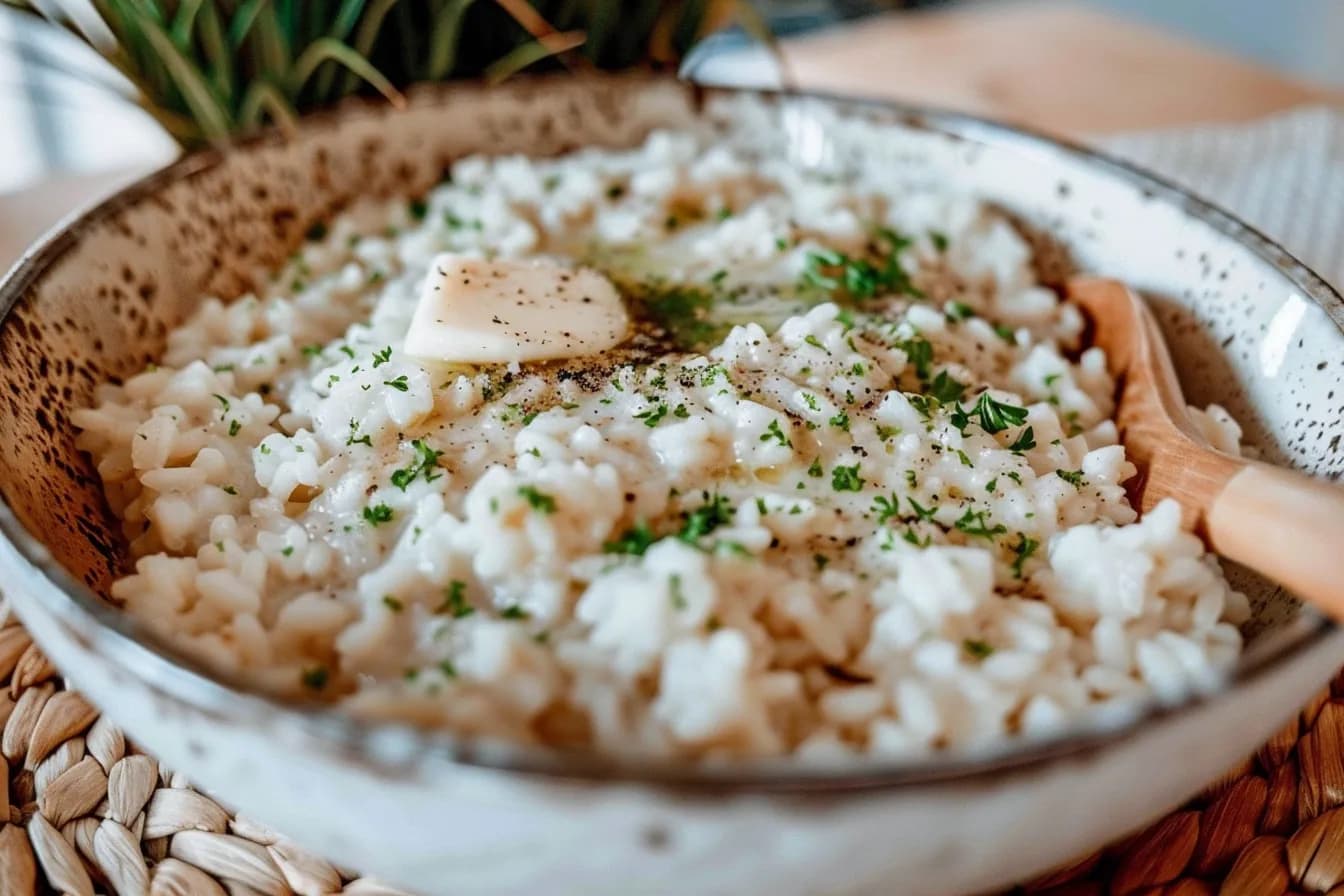 Basic Recipes
Risotto
The basic technique for any risotto, along with the explanation of why cold butter is added at the end.
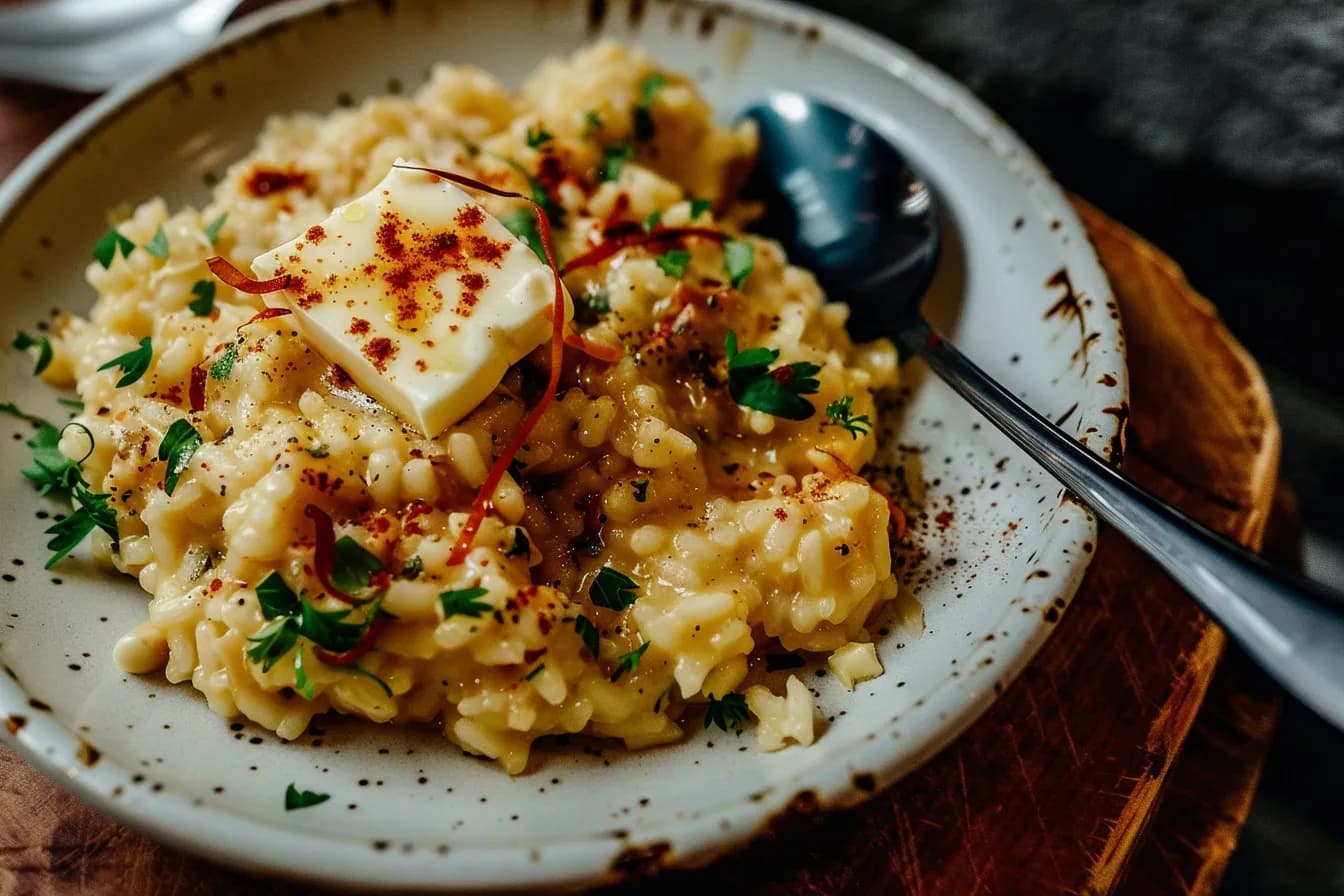 Dinner
Risotto alla Milanese
Saffron risotto from Milan, golden yellow, with beef marrow, and the classic accompaniment to ossobuco.