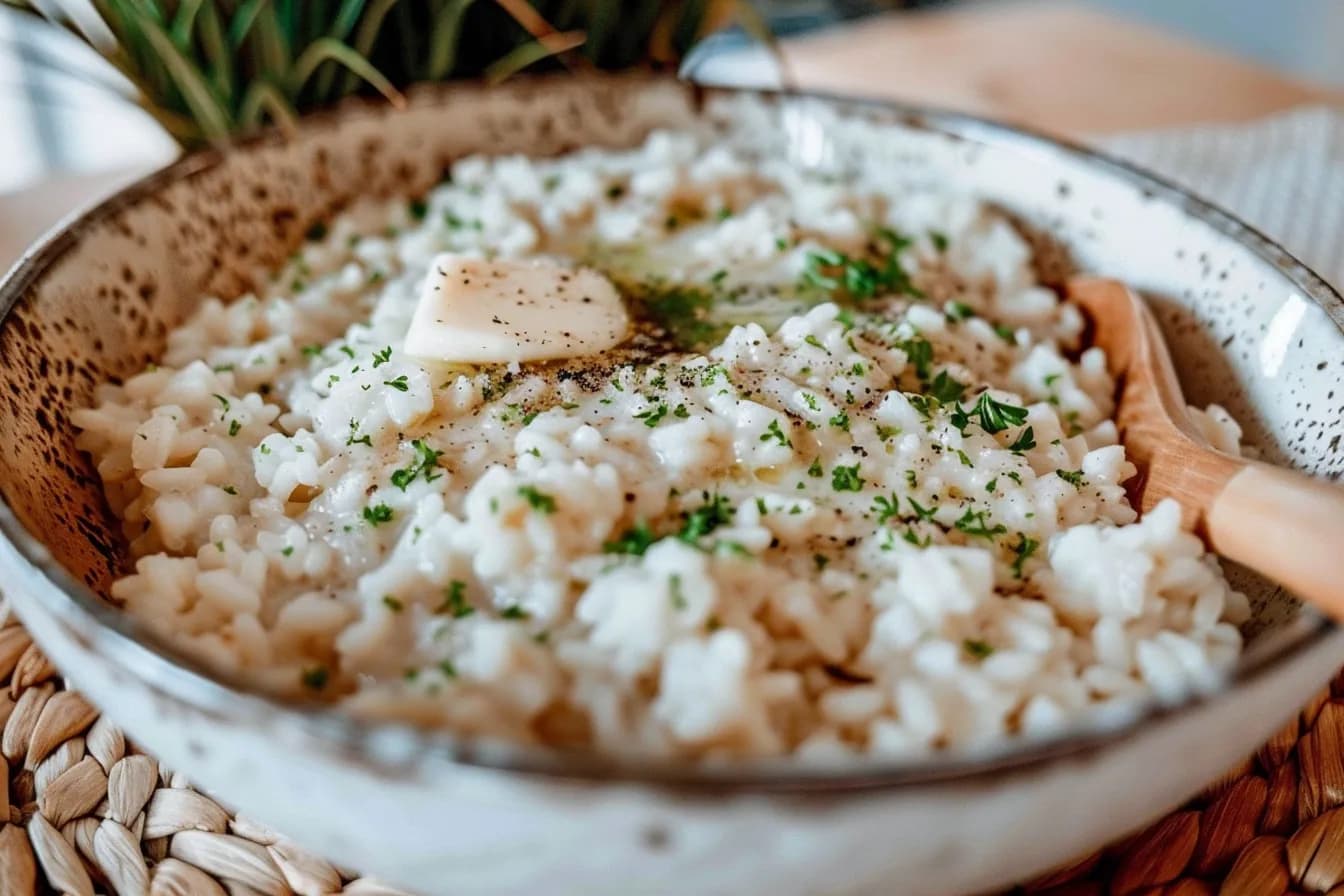
Risotto
The basic technique for any risotto, along with the explanation of why cold butter is added at the end.
- Preparation
- 10 min
- Cook/bake time
- 30 min
- Total
- 40 min
- Difficulty
- Medium
- Calories
- 573 kcal
- Servings
- 4
- Prep
- 10 min
- Cooking & baking
- 30 min
The basic technique for any risotto, along with the explanation of why cold butter is added at the end. Risotto gets its creaminess not from cream, but from the starch released by the rice as you stir. Once you understand this, you can use any add-ins and will never need another recipe.
Why this works
Risotto rice like Arborio or Carnaroli has a high proportion of amylopectin, a branched starch that escapes from the grain during cooking and binds the liquid. The constant stirring and the rubbing of the grains against each other release exactly this starch. This is why stirring is not just busywork, but the actual cooking process itself. For the same reason, the rice is never washed: washing removes exactly the starch you need. The broth is added ladle by ladle and kept hot, because cold liquid interrupts the cooking process every time and causes the grains to burst on the outside before they are cooked on the inside. The final step is called Mantecatura and is the reason for the cold butter. In the hot, starchy liquid, cold fat stirred in forms a fine emulsion instead of simply melting. This is the same physics as a butter sauce. Warm butter separates instead and forms a layer of fat on top.
Step-by-step instructions
- 1
Keep the broth hot
Heat the broth in a second pot and keep it just below a simmer the entire time. Cold broth would interrupt the cooking process with every ladle, causing the rice to burst on the outside before the center is cooked.
- 2
Sauté the onion and rice
Sauté the onion in olive oil until translucent without browning it, then add the rice. Stir it for two minutes until the grains are translucent at the edges and still white in the center. This Tostatura lightly seals the surface so that the grains do not fall apart during the long stirring process.
- 3
Deglaze with wine
Pour in the white wine and stir until it is almost completely absorbed. The alcohol evaporates, but the acidity remains, and it is this acidity that gives the otherwise very mild dish its structure. Without wine, risotto tastes flat, even with good broth.
- 4
Add broth by the ladle, stirring constantly
Add a ladle of hot broth and stir until it is almost absorbed, then add the next. This takes about 18 minutes in total. The rice should always be just covered, not swimming. Never stop stirring, because this releases the starch that provides the creaminess.
- 5
Mantecatura
Remove the pot from the heat, vigorously stir in the ice-cold butter and Parmesan, and let the risotto rest covered for two minutes. The cold butter emulsifies in the hot starchy liquid instead of just melting. This is the difference between creamy and greasy. It should spread slightly on the plate, not stand stiff.
Our best tips
- Never wash the rice. Unlike Basmati or sushi rice, the surface starch here is the active ingredient and not a disruptive factor.
- The butter must be cold. It is the final step and determines the texture. At room temperature, it only melts and separates.
- Italians call the right consistency 'all'onda': when you tilt the plate, the risotto should flow like a wave. If it stands firm, too little broth was used.
Tasty variations
Risotto alla Milanese
Soak a packet of saffron threads in a little hot broth for ten minutes and add them in the last five minutes. This is the classic accompaniment to Osso Buco.
Mushroom Risotto
Sear 300 g of mushrooms separately over high heat and fold them in only during the Mantecatura. If cooked along with the rice, they release water and dilute the risotto.
Nutrition facts
| Calories | 573 kcal |
|---|---|
| Protein | 14 g |
| Carbohydrates | 67 g |
| – of which sugar | 3 g |
| Fat | 24 g |
| Fiber | 2 g |
Where the 573 kcal come from
per serving
Calculated from the ingredients – how we do it
We add up reference values for every ingredient and divide by the number of servings. These assumptions are baked in:
- Reference values per 100 g – for the raw ingredient, exactly as listed.
- Tinned goods count at drained weight, bone-in meat at purchase weight: you eat about 70 per cent of a chicken thigh and leave the rest.
- Water evaporates as you cook. The energy stays in the pot, the weight does not – so the figure is per serving, not per 100 g of finished dish.
- Anything listed without a quantity – “salt and pepper” – is not counted.
A guide value, not a lab measurement: no two onions weigh the same, and fat content varies from pack to pack.
Frequently asked questions
How many calories does risotto have?
Around 575 kcal per serving in the basic version. Butter and Parmesan together contribute about 190 kcal per serving, but they are exactly what makes risotto creamy.
Why is my risotto not creamy?
Usually, it was not stirred enough or the rice was washed. The creaminess comes from the starch that escapes when the grains rub against each other. Without stirring, it stays inside the grain.
Which rice is the right one?
Arborio, Carnaroli, or Vialone Nano. Carnaroli is considered the most reliable because it retains a firmer core and overcooks less quickly. Long-grain rice does not work, as it lacks the surface starch.
Can I prepare risotto in advance?
Only halfway. Professionals cook it to two-thirds done, spread it out to cool, and finish it à la minute. Finished risotto becomes firm when reheated and cannot be restored. Leftovers are turned into Arancini.
Comments & ratings(0)
Sign in to rate and comment on this recipe.
You might also like
 Dinner
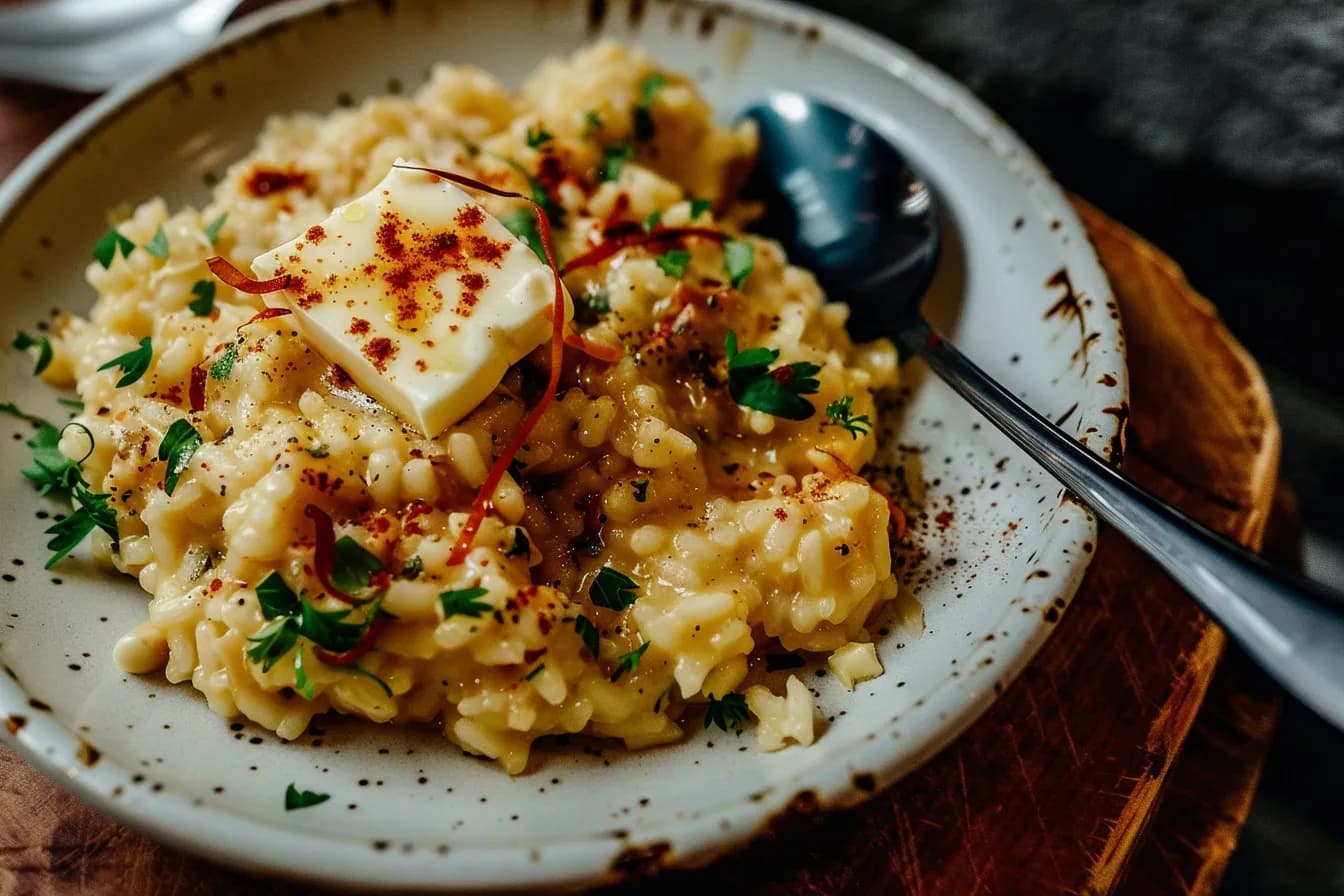
Risotto alla Milanese
Saffron risotto from Milan, golden yellow, with beef marrow, and the classic accompaniment to ossobuco.
 Dinner
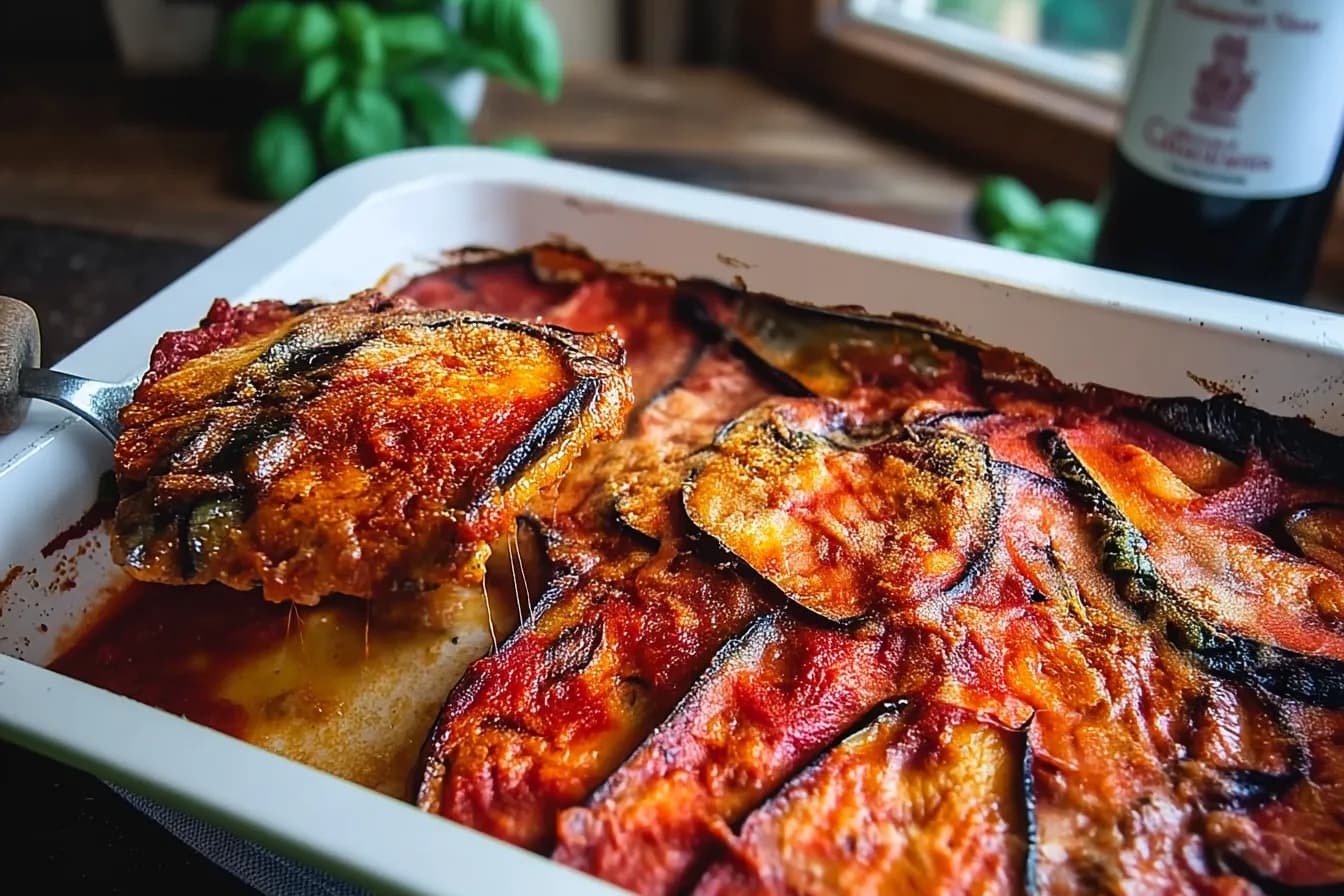
Parmigiana di melanzane
Eggplant casserole from southern Italy, and the reason why the slices are salted beforehand.
 Pasta
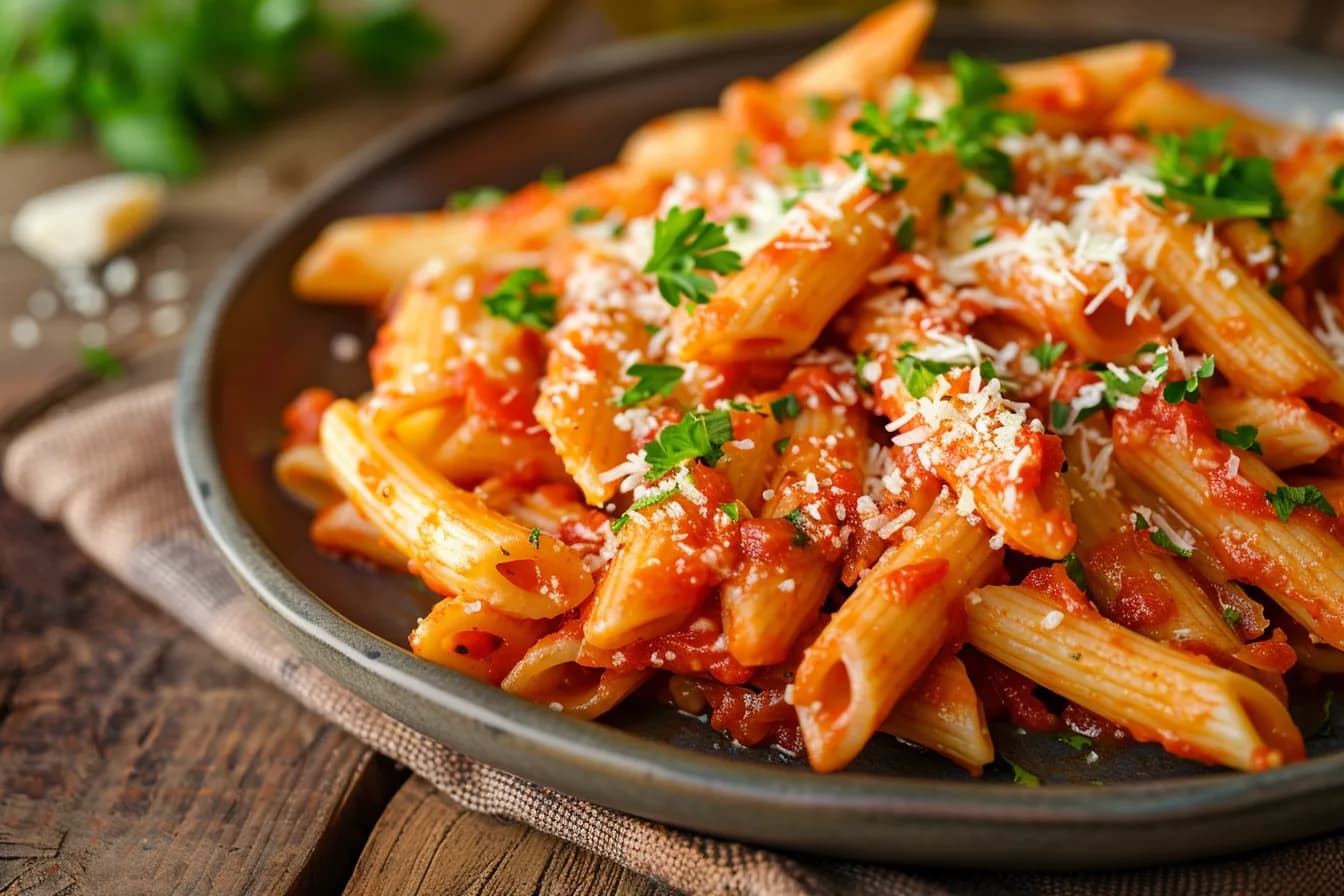
PastaPenne all'Arrabbiata
Fiery tomato sauce with garlic and chili, Roman, spicy, and ready in 20 minutes.