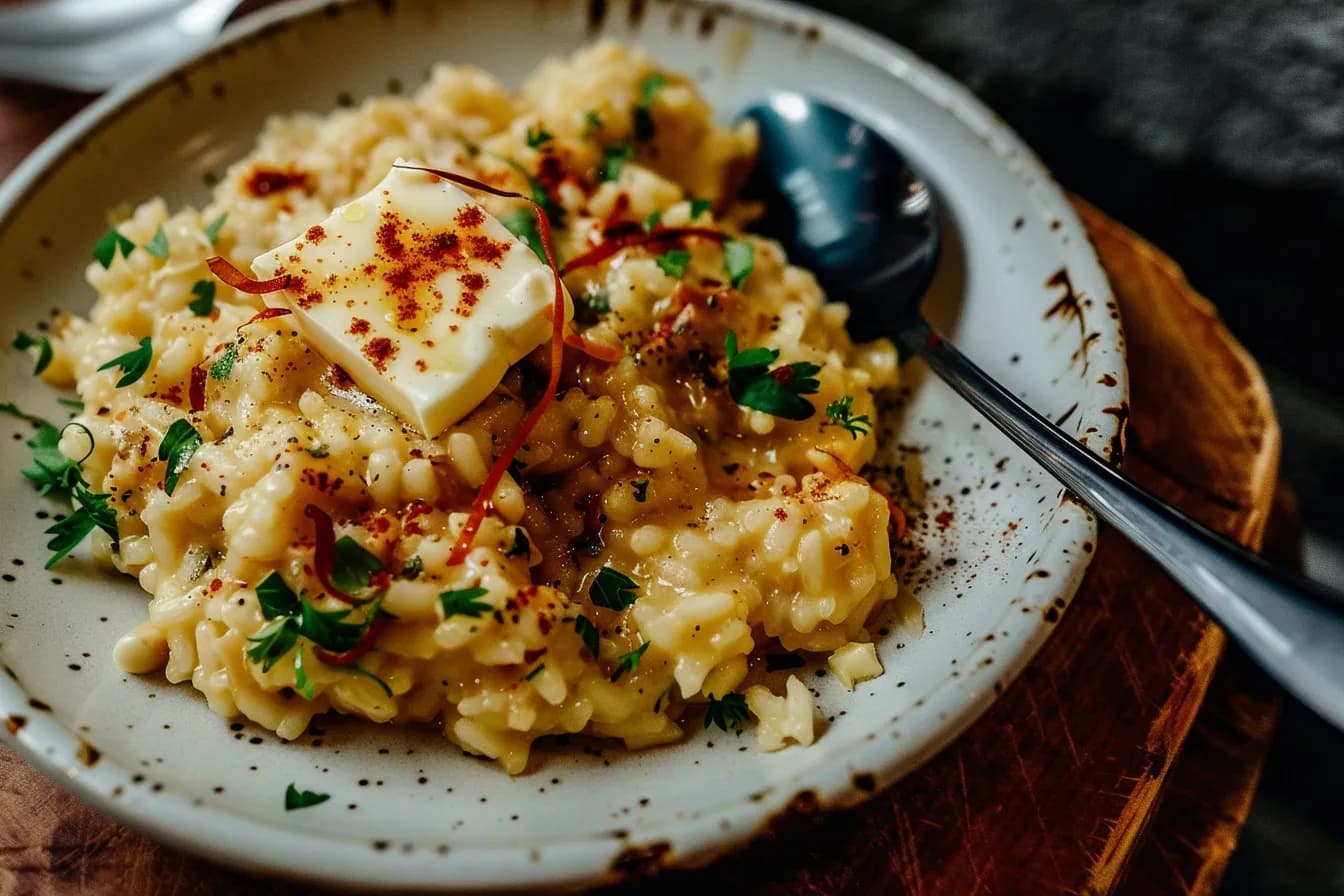
Risotto alla Milanese
Saffron risotto from Milan, golden yellow, with beef marrow, and the classic accompaniment to ossobuco.
- Preparation
- 10 min
- Cook/bake time
- 30 min
- Total
- 1 hr
- Difficulty
- Medium
- Calories
- 608 kcal
- Servings
- 4
- Prep
- 10 min
- Cooking & baking
- 30 min
- Resting
- 20 min
Only 40 min of that is hands-on – the rest takes care of itself.
Saffron risotto from Milan, golden yellow, with beef marrow, and the classic accompaniment to ossobuco. The saffron is not simply sprinkled in, but soaked beforehand in warm broth. Its color and flavor compounds are water-soluble and need time to emerge from the threads at all. Added dry, the same saffron barely colors the dish.
Why this works
Saffron owes its color to crocin and its aroma to safranal, and both are water-soluble but firmly enclosed in the dry stigma. Only when the threads steep for twenty minutes in warm liquid do they fully emerge. Sprinkled dry into the rice, the same saffron releases only a fraction and colors the risotto pale instead of deep yellow. The liquid must not be too hot during this process. Above about 80 degrees, safranal breaks down, the aroma disappears, and only the color remains. The beef marrow, which distinguishes the Milanese version from any other risotto, works on a different level. It melts at body temperature and thus provides a fat that makes the starch emulsion particularly smooth without the need for more butter.
Step-by-step instructions
- 1
Soak the saffron
Put the saffron threads in a small bowl, pour two ladles of broth at about 70 degrees over them, and let them steep for twenty minutes. The liquid should turn deep yellow. Hotter than 80 degrees destroys the aroma, and shorter than twenty minutes does not extract the color.
- 2
Sweat the marrow and onion
Render the beef marrow over low heat and sweat the diced onions in it until translucent without letting them take on color. The marrow melts almost completely and leaves a fat that gives the risotto its special smoothness.
- 3
Toast the rice and deglaze
Add the rice and stir it for two minutes until the grains are translucent at the edges. Deglaze with white wine and let it absorb almost completely. The acidity gives contour to the otherwise very mild dish.
- 4
Ladle by ladle of broth
Add hot broth ladle by ladle and stir continuously until it is almost absorbed each time. After about ten minutes, add the saffron broth. Do not add it earlier, otherwise some of the aroma will boil away. In total, about 18 minutes.
- 5
Mantecatura
Remove the pot from the heat and vigorously stir in ice-cold butter and Parmesan. The cold butter emulsifies in the hot starchy liquid instead of just melting. Let it rest covered for two minutes and season to taste with salt and white pepper. It should spread slightly on the plate.
Our best tips
- Saffron threads instead of saffron powder. Powder is often cut with other ingredients, and you cannot tell by looking at it. With threads, you can recognize the quality by the deep red color.
- Beef marrow can be obtained from the butcher in marrow bones. If you cannot get it, use 20 g more butter. The risotto will then be slightly less silky, but by no means bad.
- The saffron is added in the second half of the cooking time. Cooked from the beginning, it loses some of its aroma without the color becoming more intense.
Tasty variations
Risotto al salto
Fry cold risotto from the previous day as a flat cake in butter until crispy. In Milan, this is the classic way to use leftovers, crispy on the outside, creamy on the inside.
Without marrow
Instead, use 20 g more butter when sweating the onions. This makes the dish vegetarian without changing the technique.
Nutrition facts
| Calories | 608 kcal |
|---|---|
| Protein | 14 g |
| Carbohydrates | 68 g |
| – of which sugar | 3 g |
| Fat | 27 g |
| Fiber | 2 g |
Where the 608 kcal come from
per serving
Calculated from the ingredients – how we do it
We add up reference values for every ingredient and divide by the number of servings. These assumptions are baked in:
- Reference values per 100 g – for the raw ingredient, exactly as listed.
- Tinned goods count at drained weight, bone-in meat at purchase weight: you eat about 70 per cent of a chicken thigh and leave the rest.
- Water evaporates as you cook. The energy stays in the pot, the weight does not – so the figure is per serving, not per 100 g of finished dish.
- Anything listed without a quantity – “salt and pepper” – is not counted.
A guide value, not a lab measurement: no two onions weigh the same, and fat content varies from pack to pack.
Frequently asked questions
How many calories does Risotto alla Milanese have?
Around 610 kcal per serving. Butter, Parmesan, and beef marrow together contribute about 250 kcal per serving, and they are also the reason for the texture.
Why is my saffron risotto not yellow?
The saffron was added dry. Its color compounds are water-soluble and must first steep for twenty minutes in warm liquid before they emerge from the threads.
Does it have to have beef marrow?
For the classic Milanese version, yes, it is its distinguishing feature. Without marrow, it becomes a very good saffron risotto, and with 20 g of additional butter, the difference is small.
How much saffron do I need?
One gram for four servings, which is about two to three small packets. Less colors too weakly, significantly more makes the risotto medicinal and bitter. Saffron has a strict upper limit.
Comments & ratings(0)
Sign in to rate and comment on this recipe.
You might also like
 Basic Recipes
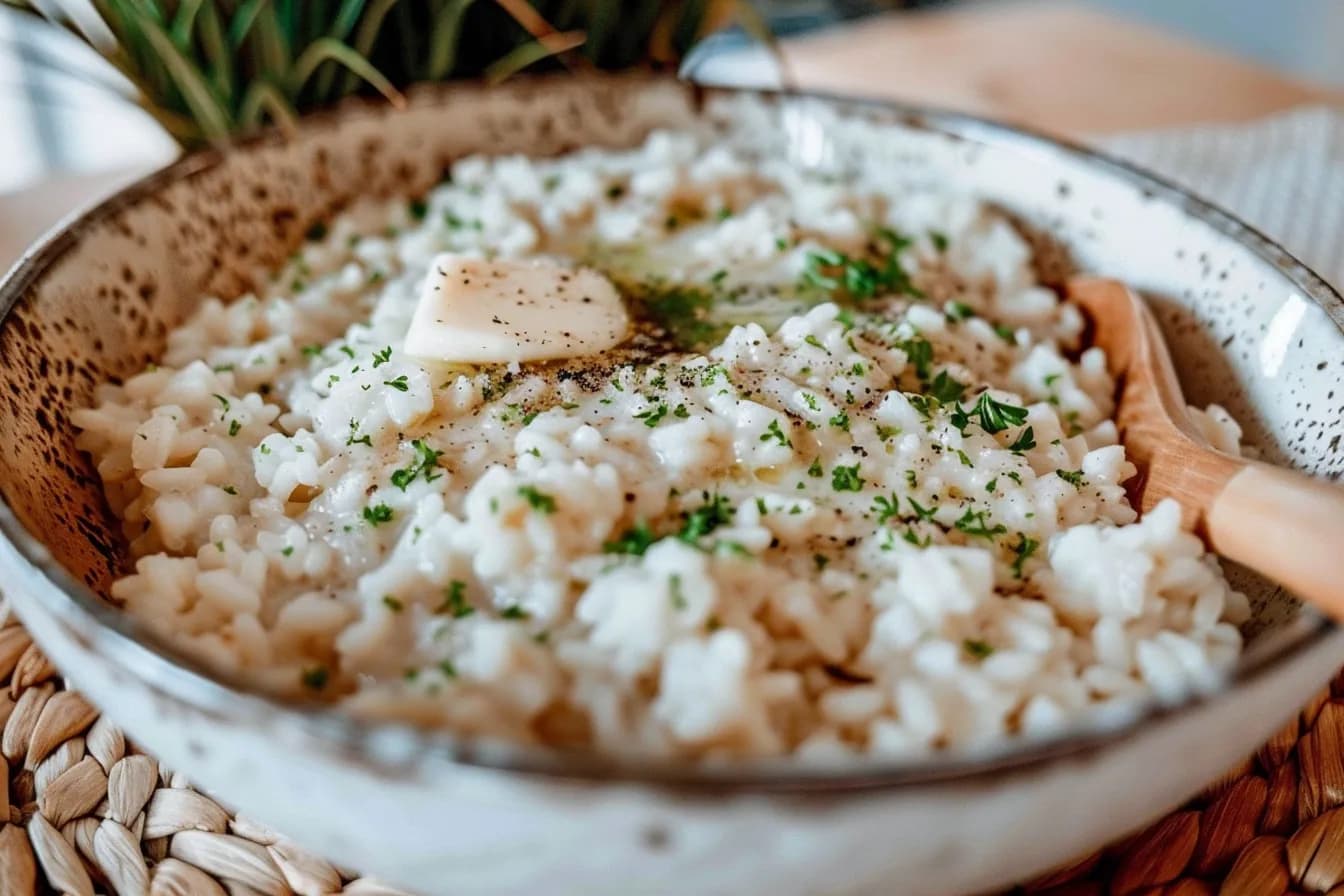
Risotto
The basic technique for any risotto, along with the explanation of why cold butter is added at the end.
 Dinner
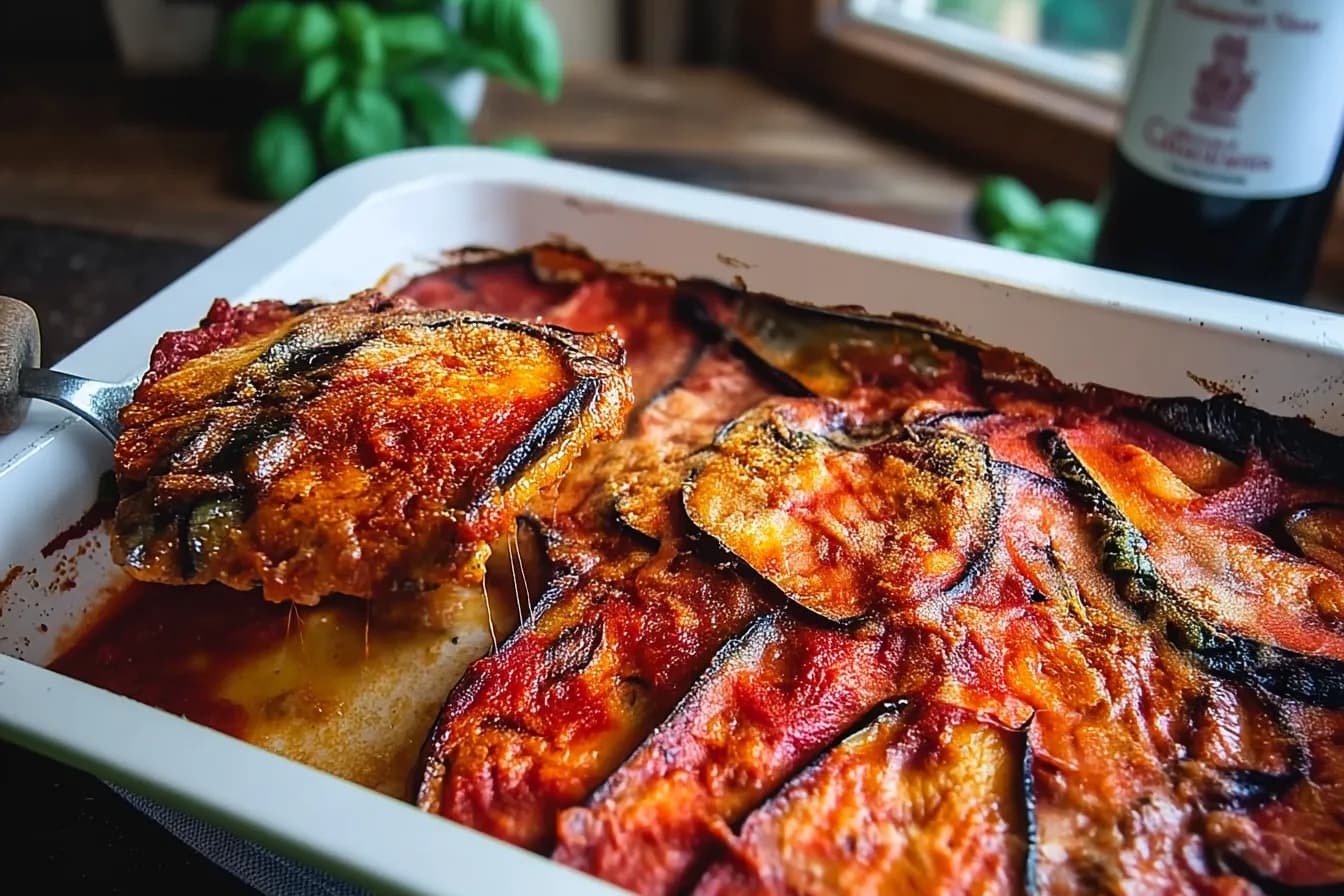
Parmigiana di melanzane
Eggplant casserole from southern Italy, and the reason why the slices are salted beforehand.
 Pasta
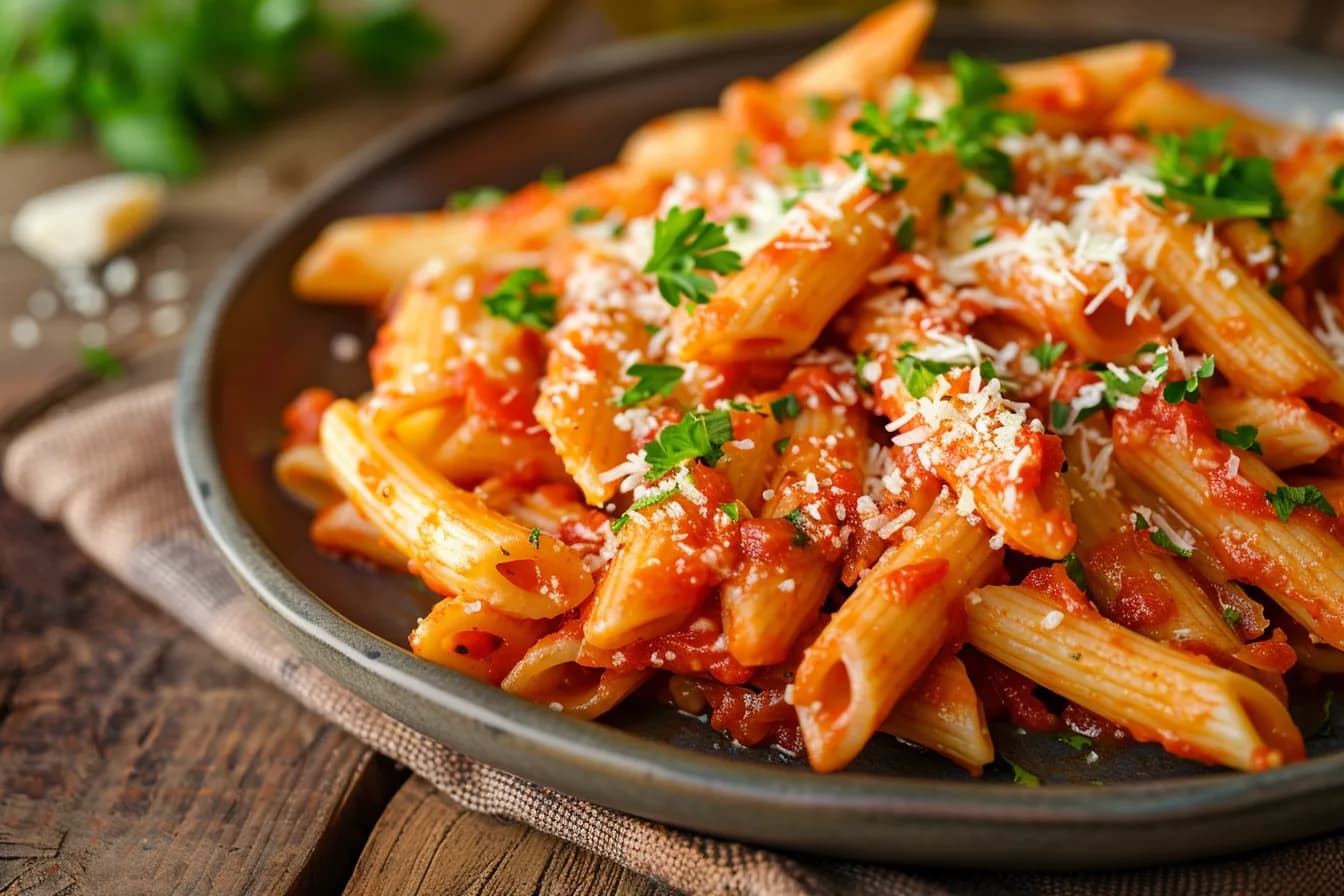
PastaPenne all'Arrabbiata
Fiery tomato sauce with garlic and chili, Roman, spicy, and ready in 20 minutes.