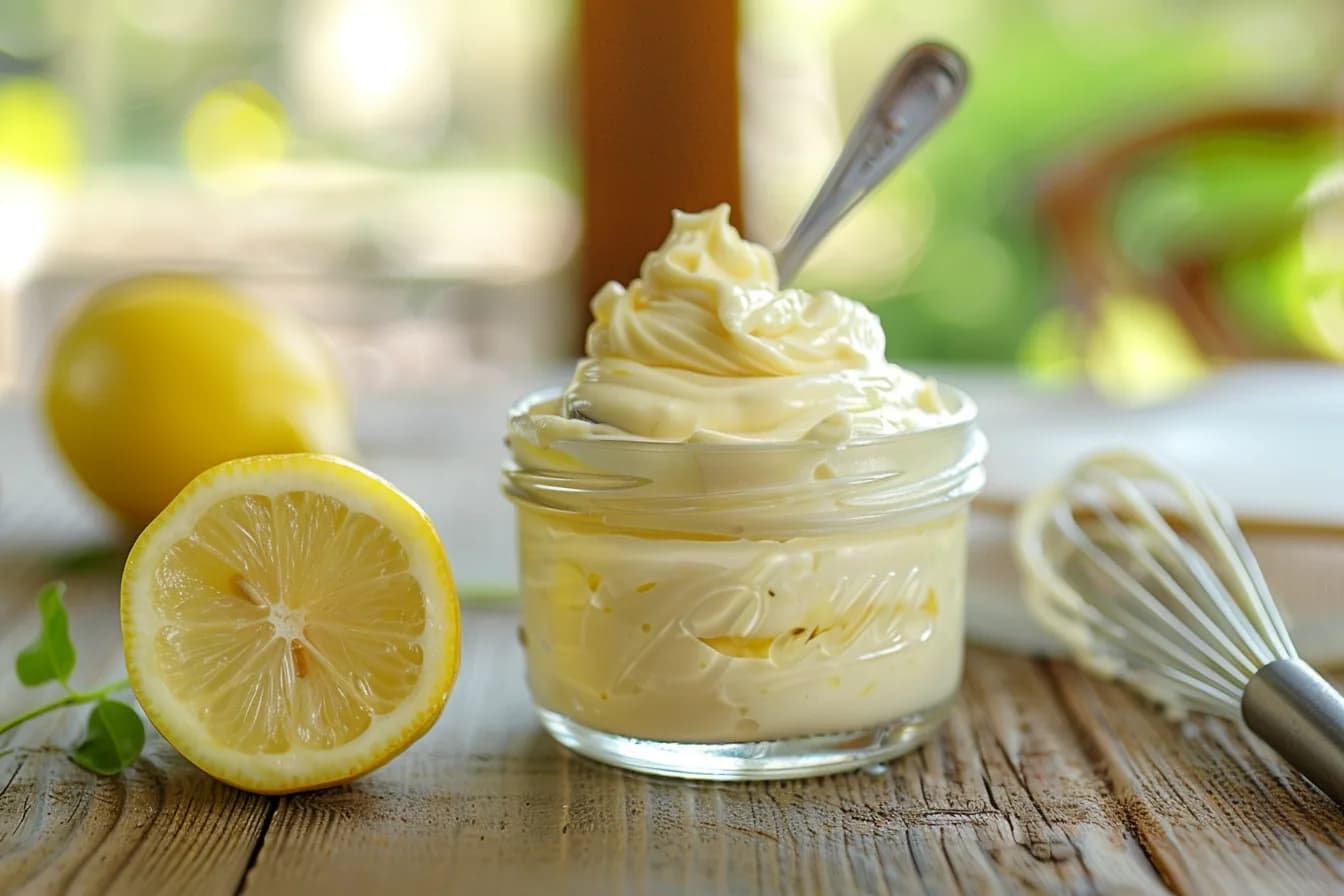
How to Make Mayonnaise
One egg yolk binds a quarter liter of oil, provided it is added drop by drop and everything is at the same temperature.
- Preparation
- 10 min
- Cook/bake time
- –
- Total
- 40 min
- Difficulty
- Medium
- Calories
- 263 kcal
- Servings
- 8 servings
- Prep
- 10 min
- Resting
- 30 min
Only 10 min of that is hands-on – the rest takes care of itself.
One egg yolk binds a quarter liter of oil, provided it is added drop by drop and everything is at the same temperature. Homemade mayonnaise is ready in five minutes, tastes like the oil you choose, and is the starting point for remoulade, aioli, and any sandwich worth its salt.
Why this works
Mayonnaise is an emulsion of around 80 percent oil in 20 percent water. The oil is therefore the main ingredient and yet the dispersed phase. This is made possible by the lecithin in the egg yolk. It wraps around every single oil droplet with a water-loving and a fat-loving end. For this to succeed, the oil must be added slowly enough that each droplet gets its coating before the next one arrives. Too fast and the droplets flow together, causing the mayonnaise to curdle. The second condition is the temperature. Cold egg yolk from the fridge and room-temperature oil have different viscosities, and the whisk cannot unite them. Therefore, both must be at room temperature.
Step-by-step instructions
- 1
Bring everything to room temperature
Take the egg and oil out of the fridge at least thirty minutes beforehand. This is the most common source of error of all. Cold egg yolk and room-temperature oil have different viscosities, and then nothing binds, no matter how long you whisk.
- 2
Mix egg yolk, mustard, and acid
Whisk the egg yolk, mustard, vinegar, and salt in a narrow, tall bowl for thirty seconds until smooth. The mustard is not a spice here, but a second emulsifier. It gives the emulsion a reserve in case the oil is added too quickly.
- 3
Add oil drop by drop at first
At first, really add the oil drop by drop and whisk continuously. The first fifty milliliters decide everything. As soon as the mixture has become visibly lighter and thicker, you can continue pouring in a thin stream. Then the emulsion will hold.
- 4
Season to taste
Season to taste with salt, pepper, and a little more acid. If the mayonnaise is too firm, stir in a teaspoon of warm water. This does not dilute it, but gives the emulsion more water phase and makes it smoother.
Our best tips
- Use a tall, narrow vessel instead of a bowl. The whisk or immersion blender reaches the entire volume in it, and the emulsion gets going faster.
- Curdled? Put a fresh egg yolk in a clean bowl and whisk in the curdled mixture drop by drop. This saves practically any mayonnaise.
- No extra virgin olive oil. Under the blade or whisk, its bitter substances are released, and the mayonnaise tastes sharp and bitter. Use neutral oil, of which at most a quarter is olive oil.
Tasty variations
Aioli
Add two finely grated garlic cloves to the egg yolk and use olive oil for a quarter of the oil amount. Let it steep for an hour. Garlic needs time to distribute, otherwise only every third bite tastes like it.
Remoulade
Stir two tablespoons each of finely chopped pickles, capers, and herbs, as well as a chopped hard-boiled egg, into the finished mayonnaise. The classic accompaniment to fried fish and meatballs.
What is left over?
This recipe only uses the yolks. The whites keep for three days in the fridge and freeze well – nobody has to throw them out.
Nutrition facts
| Calories | 263 kcal |
|---|---|
| Protein | 0 g |
| Carbohydrates | 0 g |
| – of which sugar | 0 g |
| Fat | 30 g |
| Fiber | 0 g |
Where the 263 kcal come from
per serving
Calculated from the ingredients – how we do it
We add up reference values for every ingredient and divide by the number of servings. These assumptions are baked in:
- Reference values per 100 g – for the raw ingredient, exactly as listed.
- Tinned goods count at drained weight, bone-in meat at purchase weight: you eat about 70 per cent of a chicken thigh and leave the rest.
- Water evaporates as you cook. The energy stays in the pot, the weight does not – so the figure is per serving, not per 100 g of finished dish.
- Anything listed without a quantity – “salt and pepper” – is not counted.
A guide value, not a lab measurement: no two onions weigh the same, and fat content varies from pack to pack.
What can go wrong
The points where this recipe most often goes sideways – and what to do about it.
- The mayonnaise has curdled and remains liquid
- The oil was added too quickly. It can be saved. Put a fresh egg yolk in a clean bowl, and stir in the curdled mixture drop by drop like the oil before. Nothing is thrown away, it just takes twice as long.
- It doesn't get thick at all
- Usually, the egg and oil are at different temperatures. Both should be at room temperature. An egg yolk straight from the fridge emulsifies significantly worse. Taking the egg out half an hour beforehand is enough.
Frequently asked questions
My mayonnaise has curdled, is it lost?
No. Put a fresh egg yolk in a clean bowl and whisk in the curdled mixture drop by drop, as if it were the oil. It almost always binds again. If you don't want to sacrifice a second egg, a teaspoon of hot water also works as a starting point.
How long does homemade mayonnaise keep?
Three days in the fridge, in a clean, closed jar. It contains raw egg and is not heated, so it is not suitable for pregnant women, toddlers, and the immunocompromised. With pasteurized egg yolk, this concern does not apply.
Does this also work with an immersion blender?
Yes, and faster. Put all the ingredients including the oil in the supplied beaker, place the immersion blender on the bottom, turn it on, and only then slowly pull it upwards. The mayonnaise is ready in twenty seconds. The emulsion is created from the bottom up.
Comments & ratings(0)
Sign in to rate and comment on this recipe.
You might also like
 Basic Recipes
Hollandaise Sauce
A whipped butter and egg yolk emulsion ready in eight minutes, along with the rule on exactly what temperature makes it curdle.
 Salads
Basic Vinaigrette Recipe – the 3:1 Formula
Three parts oil, one part acid, one spoonful of emulsifier, and then you choose which.
 Basic Recipes
Béchamel Sauce Basic Recipe
Butter, flour, milk, equal parts fat and flour, and the milk in three batches.