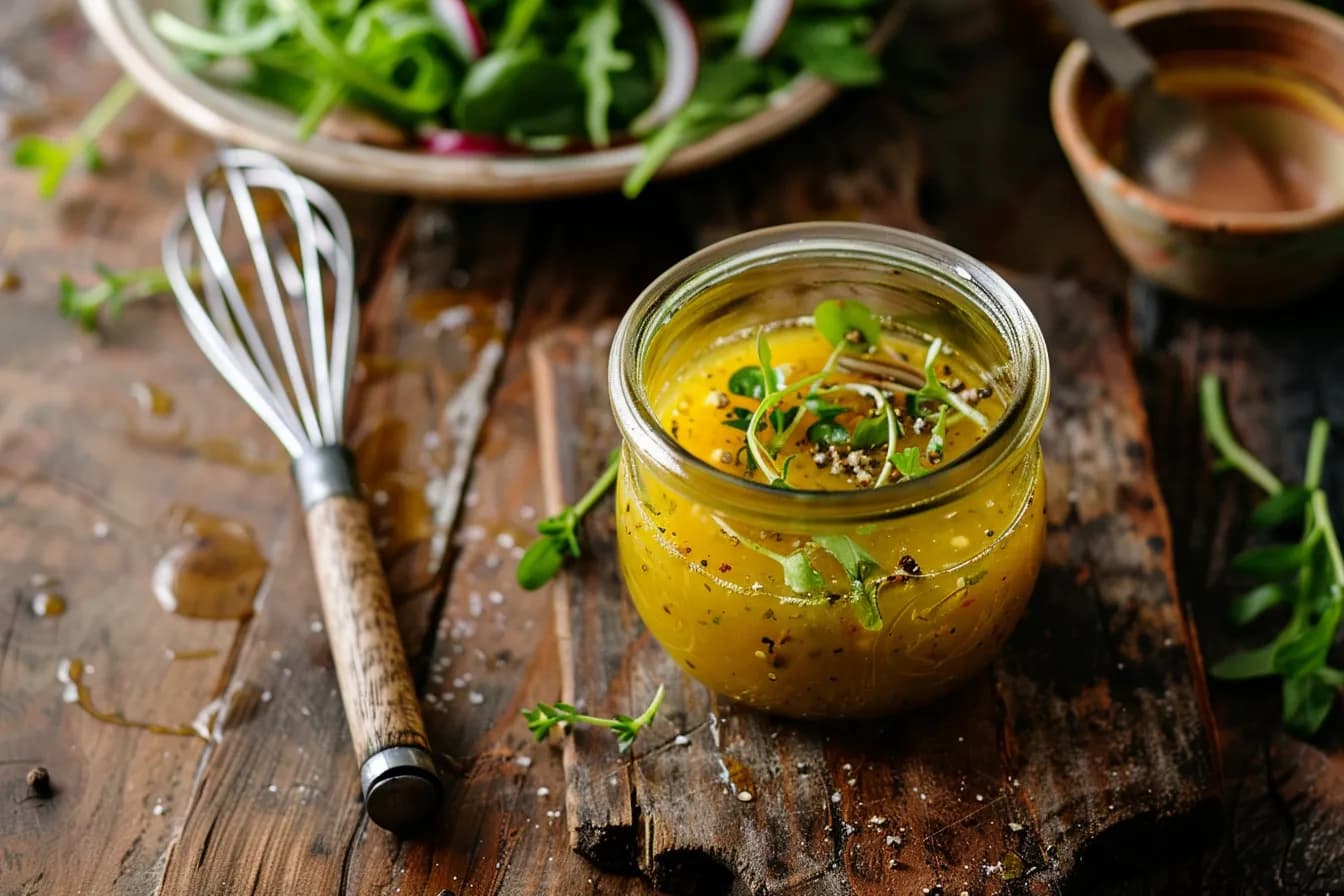
Basic Vinaigrette Recipe – the 3:1 Formula
Three parts oil, one part acid, one spoonful of emulsifier, and then you choose which.
- Preparation
- 5 min
- Cook/bake time
- –
- Total
- 5 min
- Difficulty
- Easy
- Calories
- 188 kcal
- Servings
- 8 servings
Three parts oil, one part acid, one spoonful of emulsifier, and then you choose which. A vinaigrette is the most useful formula in the entire kitchen: It is ready in five minutes, lasts for two weeks, and saves any salad, any roasted vegetables, and any bowl. What holds it together is not stirring, but chemistry.
Why this works
Oil and vinegar do not mix because water molecules attract each other more strongly than they attract oil molecules. Shaken together, they separate again within minutes. An emulsifier is a molecule with two ends, one of which likes water and one of which likes fat; it wraps around the oil droplets and keeps them suspended. Mustard does this via its mucilage, honey via its sugar molecules, egg yolk via lecithin. That is why there is always a spoonful of it in this formula, and that is why the ratio is three to one: Less oil and the acid dominates, more and the emulsion no longer holds. The second rule is the order. Salt goes into the acid first, because it does not dissolve in oil and will crunch between your teeth later.
Build your own
Pick one option per row. Ingredients, steps, cook mode and shopping list adapt instantly.
Your pick: White wine vinegar · Olive oil · Mustard · Shallot & herbs
Sign in to save your combinations. Sign in
Step-by-step instructions
- 1
Dissolve salt in the acid
Put the acid, emulsifier, and salt together in a screw-top jar and stir until the salt has visibly disappeared. This order is not pedantry: Salt does not dissolve in oil, and a dressing that is salted at the end will crunch between your teeth.
- 2
Add the seasoning
Now the seasoning goes into the acid before the oil, because flavor compounds from shallots, garlic, and ginger dissolve better in acid than in fat and then distribute evenly.
- 3
Let the shallot steep
Put the finely diced shallot into the acid and let it sit for ten minutes before adding the oil. The acid takes away its aggressive sharpness and makes it mild. Added raw to the finished dressing, it tastes pungent the next day.
- 4
Add oil and shake
Pour in the oil, close the jar, and shake it vigorously for thirty seconds. The dressing will become visibly lighter and thicker. That is the moment the emulsion forms. If it remains clear and two-layered, the emulsifier is missing or it was too short.
- 5
Taste and store
Taste with a lettuce leaf, not with a spoon: Pure, every vinaigrette tastes too sour, but on the leaf it almost never is. In a closed jar, it will keep for two weeks in the refrigerator. Olive oil will solidify there. Leave it for ten minutes at room temperature, then shake briefly.
Our best tips
- Always use a screw-top jar instead of a bowl. Thirty seconds of shaking emulsifies better than two minutes of stirring, and the dressing can be stored right in it.
- Salt belongs in the acid, not in the finished dressing. It does not dissolve in oil. It remains as a crystal and crunches.
- Too sour? Do not stretch it with water, but with a spoonful of oil. Water dilutes the emulsion and it will separate within an hour.
Tasty variations
Classic French vinaigrette
White wine vinegar, olive oil, Dijon mustard, shallot, and herbs. The original by which everything else is measured, and the combination that works on every green salad.
Creamy tahini dressing
Lemon juice, olive oil, tahini, garlic. Instead of clear and light, it becomes thick and creamy; goes well with roasted vegetables and grain salads, where a thin vinaigrette simply runs to the bottom.
Nutrition facts
| Calories | 188 kcal |
|---|---|
| Protein | 0.3 g |
| Carbohydrates | 0.7 g |
| – of which sugar | 0.4 g |
| Fat | 20.6 g |
| Fiber | 0.2 g |
Where the 188 kcal come from
per serving
Calculated from the ingredients – how we do it
We add up reference values for every ingredient and divide by the number of servings. These assumptions are baked in:
- Reference values per 100 g – for the raw ingredient, exactly as listed.
- Tinned goods count at drained weight, bone-in meat at purchase weight: you eat about 70 per cent of a chicken thigh and leave the rest.
- Water evaporates as you cook. The energy stays in the pot, the weight does not – so the figure is per serving, not per 100 g of finished dish.
- Anything listed without a quantity – “salt and pepper” – is not counted.
- For build-your-own recipes the figure applies to the default choice. A different combination shifts it, sometimes considerably.
A guide value, not a lab measurement: no two onions weigh the same, and fat content varies from pack to pack.
Frequently asked questions
Which combination do the nutritional values apply to?
For the standard selection of white wine vinegar, olive oil, and Dijon mustard, calculated for eight servings of about two tablespoons each. The values hardly change between oils, since oil is oil, but they do with yogurt as an emulsifier, which noticeably lowers the calories.
Why does my dressing separate anyway?
Either the emulsifier is missing, or the oil was added too quickly. Both can be repaired: Add another teaspoon of mustard to the jar and shake vigorously again. A vinaigrette is an unstable emulsion. The fact that it separates again after hours is normal and not a mistake.
How much dressing does a salad need?
About one tablespoon per person and side salad. It is better to start with too little and add more: Too much dressing cannot be taken out again, and lettuce collapses within ten minutes if it swims in it.
Comments & ratings(0)
Sign in to rate and comment on this recipe.
You might also like
 Basic Recipes
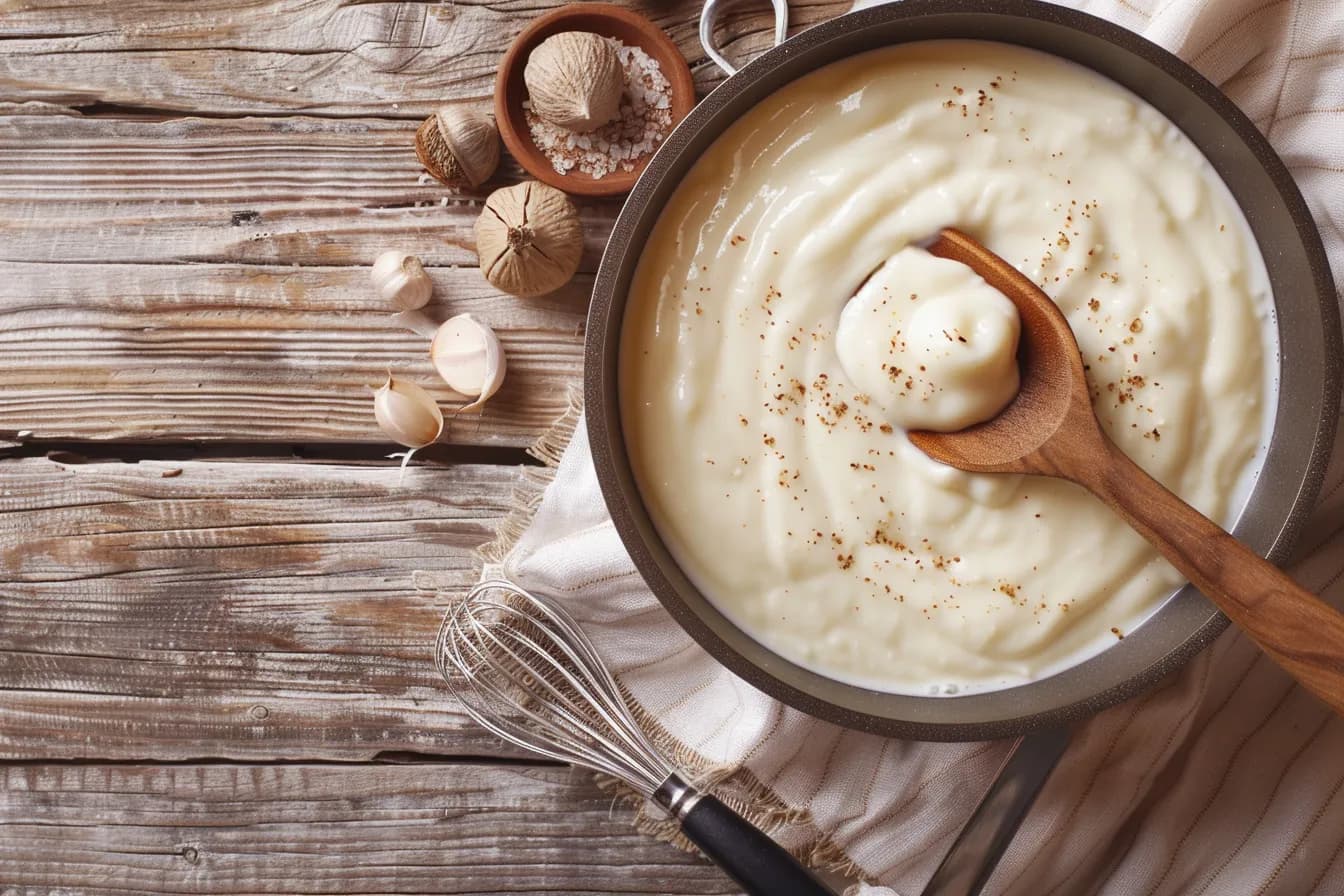
Béchamel Sauce Basic Recipe
Butter, flour, milk, equal parts fat and flour, and the milk in three batches.
 Basic Recipes
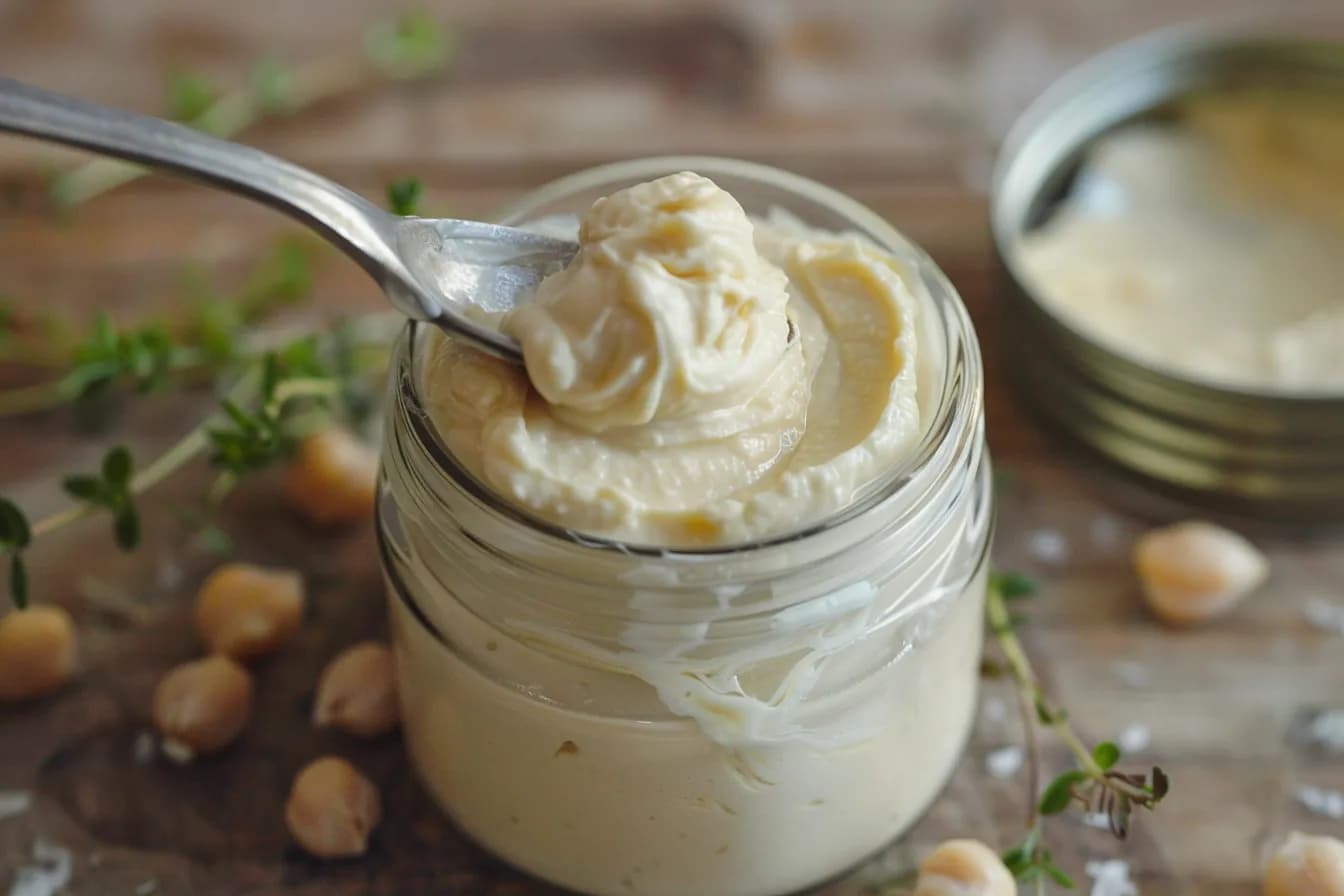
Vegan Aquafaba Mayonnaise
The water from the chickpea can replaces the egg yolk, and it emulsifies just as reliably.
 Low Carb
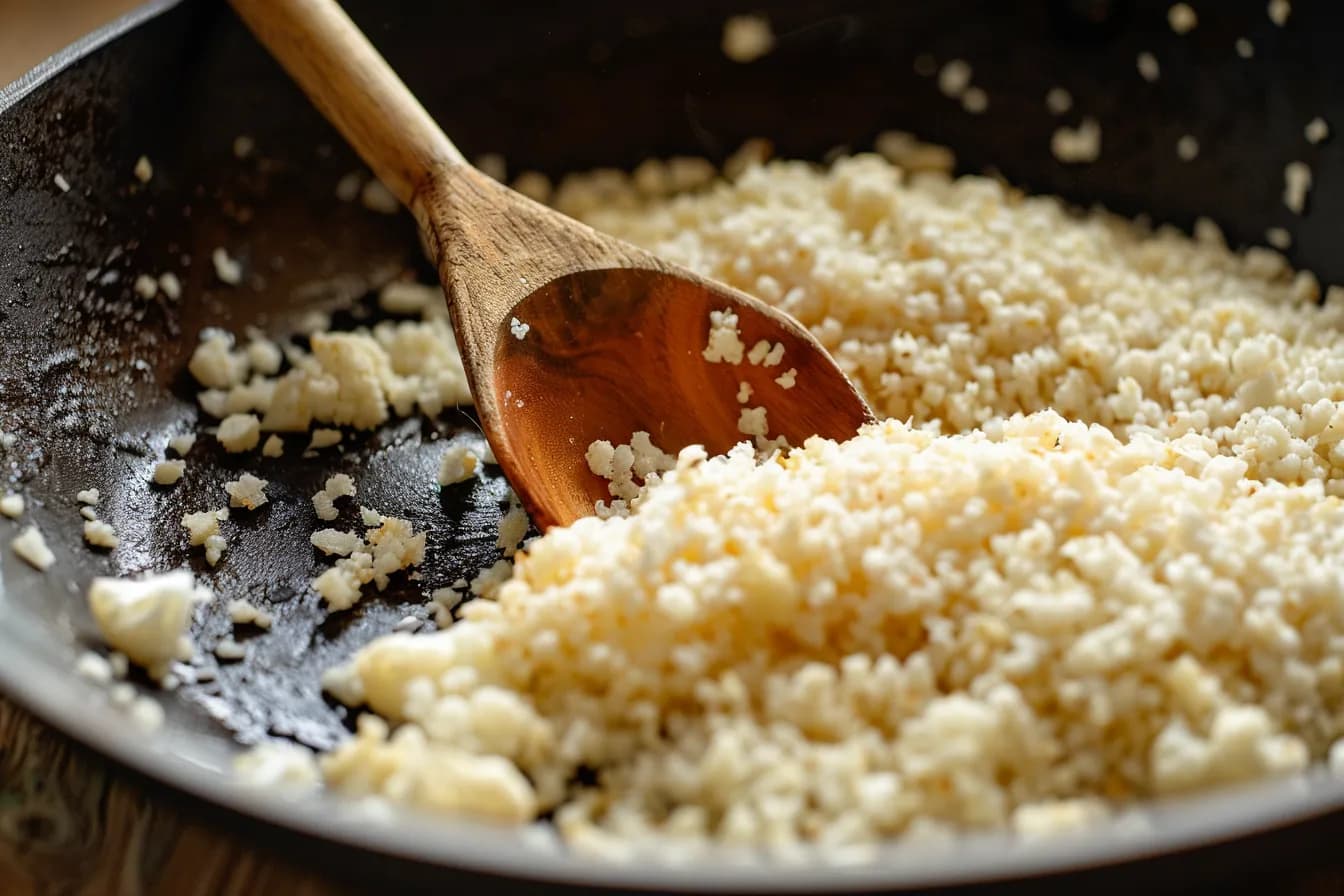
Cauliflower Rice
A rice substitute made from cauliflower with a tenth of the carbohydrates, dry roasted instead of steamed, otherwise it turns to mush.