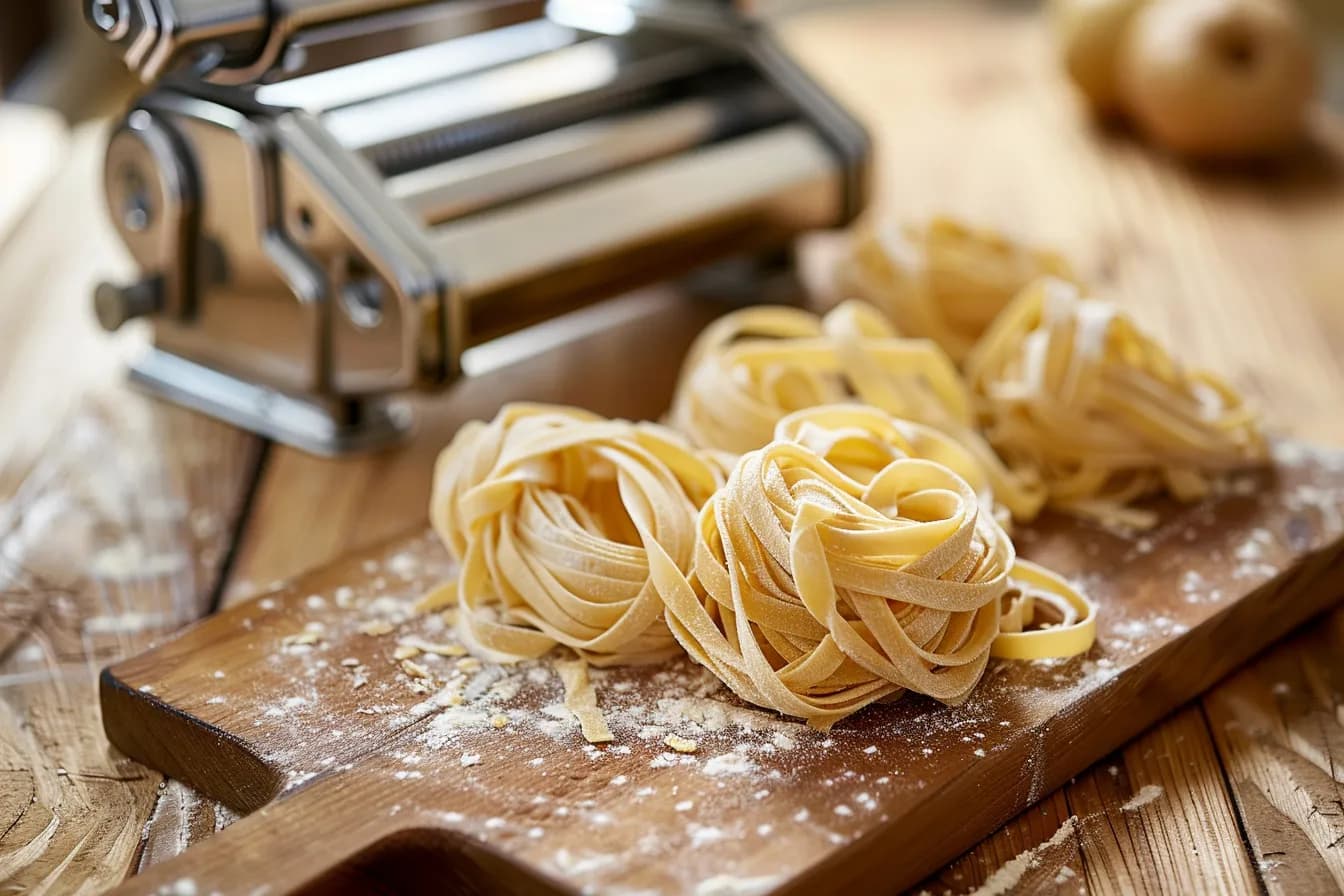
Homemade Gluten-Free Pasta
Without gluten, the dough lacks elasticity. Hot water instead of egg solves this because it gelatinizes the starch.
- Preparation
- 35 min
- Cook/bake time
- 4 min
- Total
- 1 hr 9 min
- Difficulty
- Medium
- Calories
- 387 kcal
- Servings
- 4
- Prep
- 35 min
- Cooking & baking
- 4 min
- Resting
- 30 min
Only 39 min of that is hands-on – the rest takes care of itself.
Without gluten, the dough lacks elasticity. Hot water instead of egg solves this because it gelatinizes the starch. A gluten-free pasta dough cannot be stretched, only pressed. The solution is a scalded dough. Boiling water causes some of the starch to gelatinize, and this paste takes over the role usually played by gluten.
Why this works
In wheat dough, kneading creates a gluten network that makes the dough elastic and holds the noodle together during cooking. Gluten-free flours do not have this network, and that is why the dough breaks when rolled out. The trick is a scalded dough. Boiling hot water causes some of the starch to gelatinize. The starch granules burst open and release long molecular chains that act like an adhesive. This paste makes the dough pliable and holds it together. Xanthan gum further enhances the effect because it is a thickener that binds water and provides elasticity even in the smallest amounts. The resting time is also mandatory here, but for a different reason than with wheat dough. It gives the starch time to absorb the water evenly.
Step-by-step instructions
- 1
Mehle mischen
Verrühr Reismehl, Maisstärke, Tapiokastärke, Xanthan und Salz gründlich in einer Schüssel. Xanthan wirkt schon in winzigen Mengen – ein Klumpen wird im Teig zu einer gummiartigen Stelle.
- 2
Mit Wasser überbrühen
Gieß das kochende Wasser über die Mehlmischung und rühr sofort mit einem Löffel um. Die Masse klumpt und dampft, keine Sorge. Lass sie abkühlen, bis du sie anfassen kannst – sonst stockt das Ei beim Kneten.
- 3
Eier einkneten
Arbeite Eier und Öl ein und knete fünf Minuten, bis der Teig glatt ist. Er bleibt fester und weniger elastisch als Weizenteig, darf aber nicht bröseln. Ist er zu trocken, hilft 1 EL warmes Wasser.
- 4
Teig ruhen lassen
Wickel den Teig fest in Folie und lass ihn 30 Minuten liegen. In dieser Zeit nimmt die Stärke das Wasser gleichmäßig auf. Ohne die Pause reißt er beim Ausrollen.
- 5
Ausrollen und schneiden
Roll den Teig zwischen zwei Lagen Backpapier oder in der Maschine bis zur mittleren Stufe aus. Dünner reißt er. Bestäub die Bahnen großzügig mit Reismehl und schneide sie in Bänder.
- 6
Nudeln kochen
Koch die Bänder in sprudelndem Salzwasser drei bis vier Minuten und gieß sie sofort ab. Glutenfreie Nudeln haben keine Reserve: Von bissfest zu breiig ist es weniger als eine Minute.
Our best tips
- Boiling water is the whole trick. It gelatinizes some of the starch, and this paste replaces the missing gluten. With cold water, the dough will break.
- Do not roll out as thinly as wheat dough. The middle setting of the machine is the maximum, thinner and it will tear when picked up.
- Drain immediately, do not keep warm. Gluten-free noodles have no reserve and go from al dente to mushy in less than a minute.
Tasty variations
Without egg
Replace the two eggs with 100 ml of additional boiling water and another tablespoon of oil. The dough will be slightly less pliable and needs more rice flour when rolling out, but the pasta is then also egg-free.
Gnocchi instead of ribbon noodles
Form finger-thick rolls from the same dough and cut into two-centimeter pieces. They are done when they rise to the surface, which takes about two minutes, and they are much less delicate than ribbon noodles.
Nutrition facts
| Calories | 387 kcal |
|---|---|
| Protein | 6 g |
| Carbohydrates | 76 g |
| – of which sugar | 1 g |
| Fat | 6 g |
| Fiber | 2 g |
Where the 387 kcal come from
per serving
These lines have no quantity (“to taste”) or no table value, so they are missing from the total.
Calculated from the ingredients – how we do it
We add up reference values for every ingredient and divide by the number of servings. These assumptions are baked in:
- Reference values per 100 g – for the raw ingredient, exactly as listed.
- Tinned goods count at drained weight, bone-in meat at purchase weight: you eat about 70 per cent of a chicken thigh and leave the rest.
- Water evaporates as you cook. The energy stays in the pot, the weight does not – so the figure is per serving, not per 100 g of finished dish.
- Anything listed without a quantity – “salt and pepper” – is not counted.
A guide value, not a lab measurement: no two onions weigh the same, and fat content varies from pack to pack.
Frequently asked questions
Can I leave out the xanthan gum?
Not without a substitute. It provides the elasticity that gluten-free dough otherwise completely lacks. Alternative: the same amount of ground psyllium husks. The result is slightly less refined, but it works. Without any binder at all, the dough will fall apart when rolled out.
Why does my dough still tear?
Rolled out too thinly or rested too little. Gluten-free dough cannot handle the thinnest settings of a pasta machine. The middle one is the limit. And the thirty minutes of resting time here are not for relaxation, but for water absorption, without which the dough remains uneven.
Is the pasta safe for celiac disease?
The ingredients are gluten-free, but rice and tapioca starch often run on shared equipment with wheat. For celiac disease, use only certified flours with a gluten-free symbol, and do not share the cooking water with wheat noodles.
Comments & ratings(0)
Sign in to rate and comment on this recipe.
You might also like
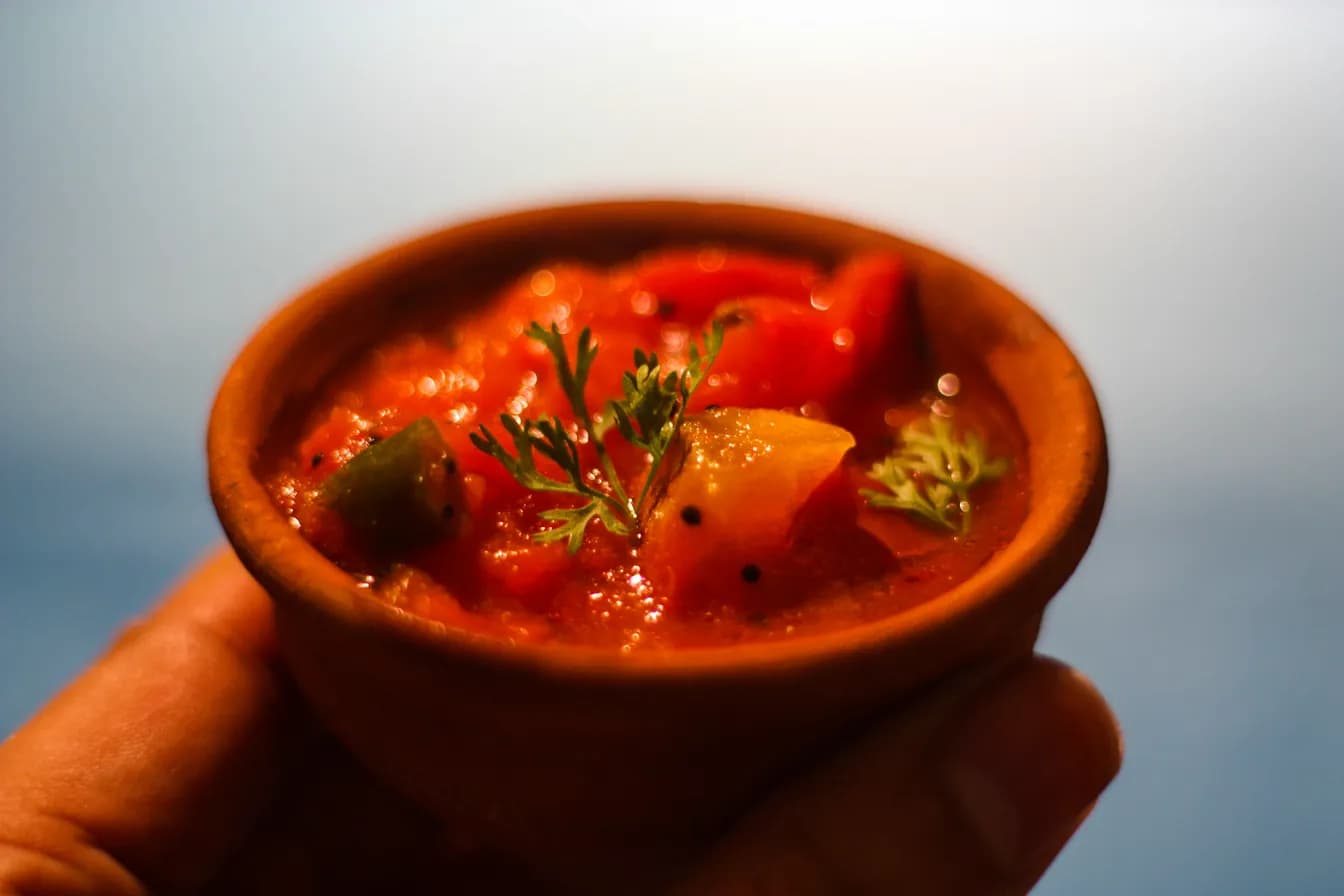 Basic Recipes
Tomato Sauce
The one sauce that turns into pizza, pasta, lasagna, and casseroles. Four ingredients and no shortcuts when simmering.
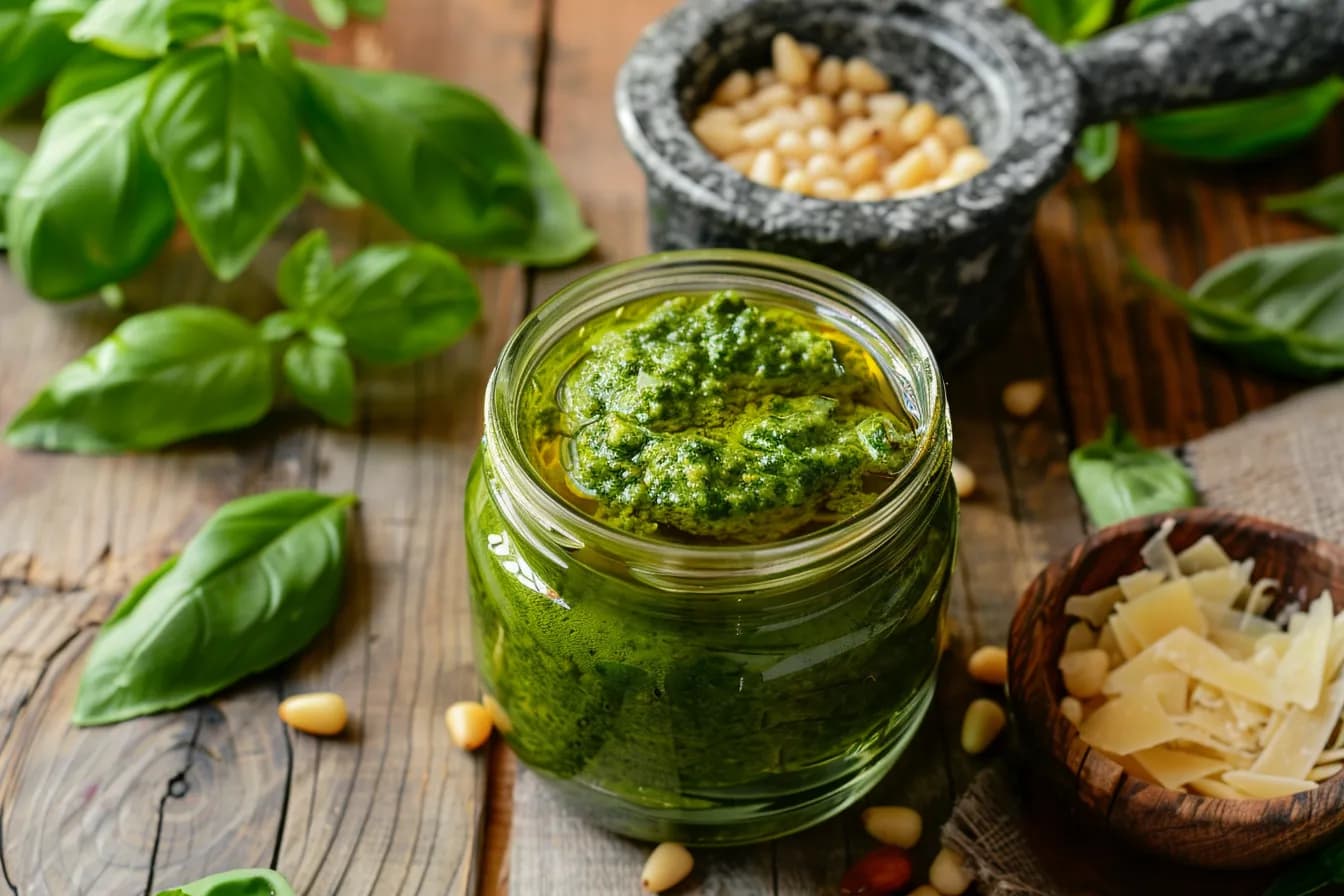 Basic Recipes
Make your own pesto, from whatever you have
Greens, fat, nuts, salt: pesto does not need basil, it just needs four roles filled.
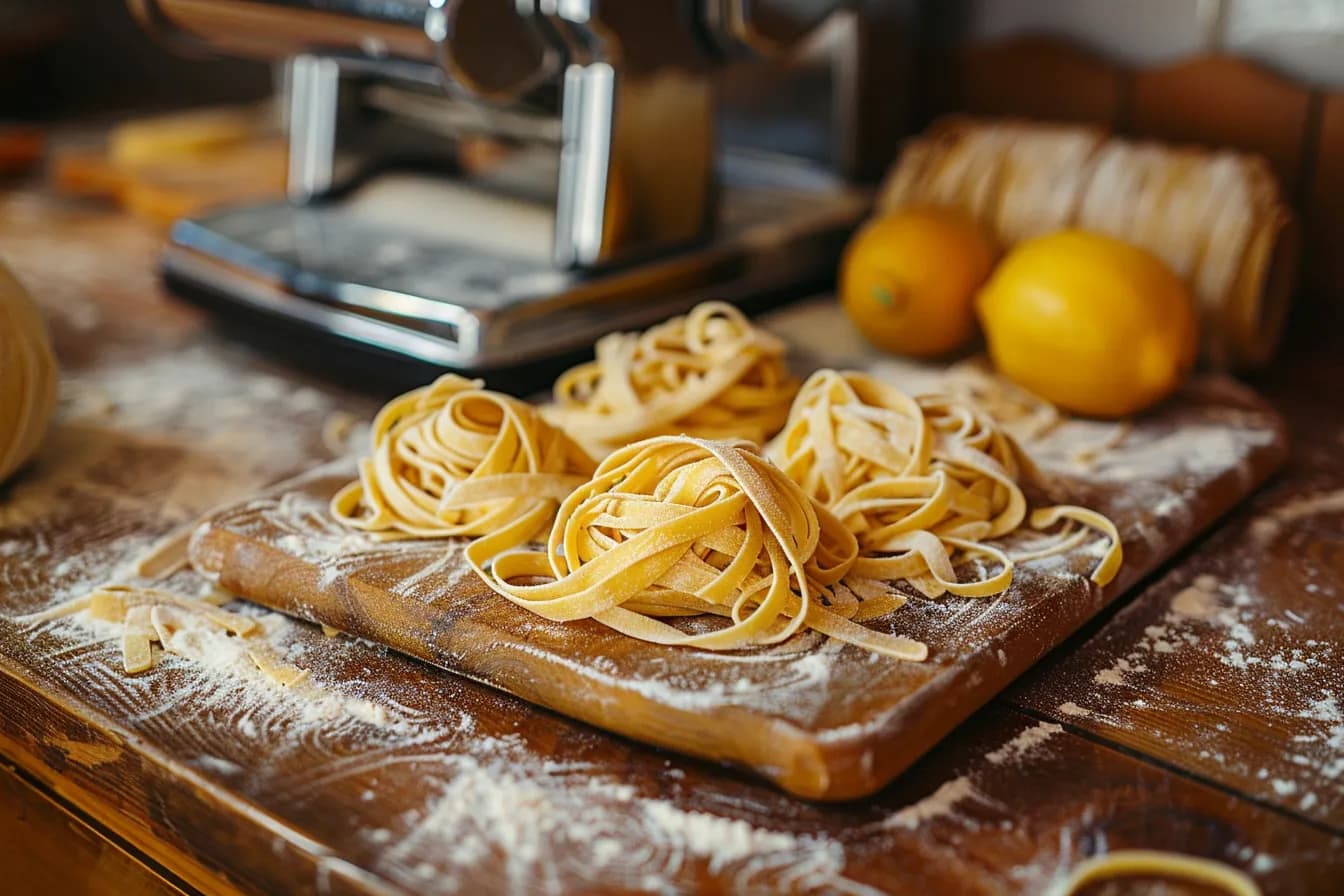 Basic Recipes
Homemade Pasta Dough
100 g flour to one egg is more of a formula than a recipe, and thirty minutes of resting time is mandatory.