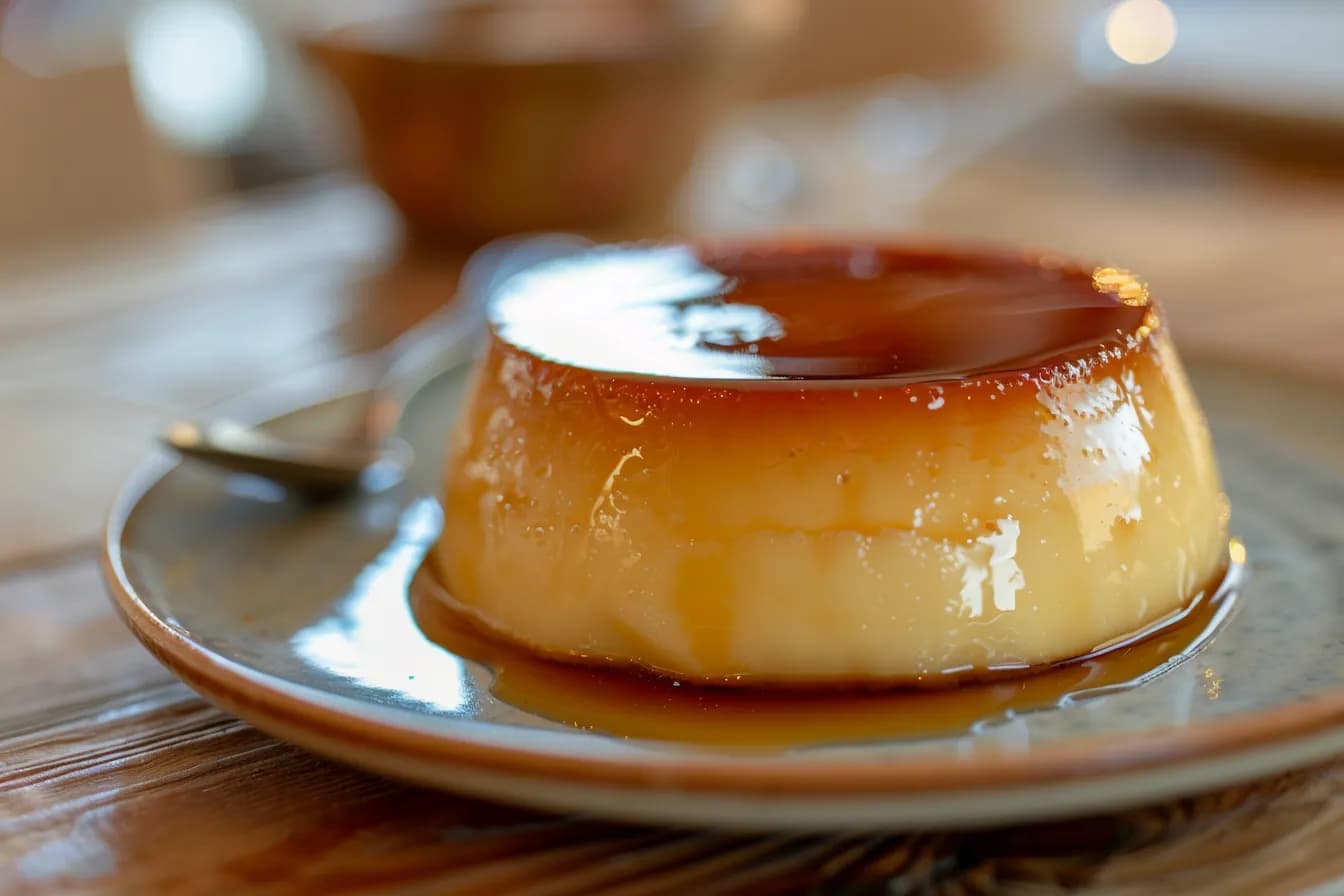
Caramel Flan
Unmolded egg custard with liquid caramel, silky smooth and without a single bubble.
- Preparation
- 20 min
- Cook/bake time
- 1 hr 10 min
- Total
- 7 hr 45 min
- Difficulty
- Medium
- Calories
- 340 kcal
- Servings
- 8
- Prep
- 20 min
- Cooking & baking
- 1 hr 10 min
- Resting
- 6 hr 15 min
Only 1 hr 30 min of that is hands-on – the rest takes care of itself.
Unmolded egg custard with liquid caramel, silky smooth and without a single bubble. The flan is baked in a water bath at a low temperature so the egg binds gently instead of curdling and forming bubbles. A dessert that is at home throughout Latin America and Spain.
Why this works
Sugar wants to crystallize, and a single crystal is enough to act as a seed for a chain reaction throughout the entire pan. Stirring brings crystals from the edge of the pan back into the melt and triggers exactly that; swirling moves the liquid without incorporating the edge. The flan itself needs the same care for the opposite reason: Above 85 °C, egg yolks curdle into lumps and the resulting steam leaves bubbles. The water bath keeps both in check.
Step-by-step instructions
- 1
Cook the caramel
Heat the sugar and water in a light-colored pot without stirring, and only swirl it occasionally. Let the mixture simmer until it is amber-colored, which takes about eight minutes. Stirring would cause the sugar to crystallize. Immediately pour the caramel into a baking dish and swirl it to coat the bottom.
- 2
Flavor the milk
Scrape out the vanilla seeds and heat them with the pod, milk, and cream until the mixture is slightly steaming but not boiling. Remove it from the heat and let it steep covered for fifteen minutes so the vanilla flavor fully dissolves.
- 3
Temper the eggs
Whisk the eggs, egg yolks, sugar, and salt just until the sugar has dissolved, beating in as little air as possible. Then pour in the warm milk in a thin stream while stirring constantly so the eggs do not curdle. Afterward, strain the mixture twice through a fine sieve.
- 4
Bake in a water bath
Carefully pour the custard over the set caramel in the dish. Place it in a deep roasting pan and pour in boiling water until it reaches halfway up the sides. Bake the flan at 150 °C for 50 to 55 minutes until the edges are set and the center still jiggles significantly.
- 5
Chill and unmold
Let the flan cool and place it in the refrigerator for at least six hours, preferably overnight. During this time, the solid caramel at the bottom dissolves into a liquid sauce. To unmold, run a knife along the edge and quickly invert the dish onto a deep plate.
Our best tips
- Never stir when cooking caramel, only swirl. Stirring almost always leads to crystals.
- Strain the custard twice. This removes egg white strands and is the path to a silky texture.
- Chill overnight so the caramel dissolves into a sauce. After two hours, it is still solid.
Tasty variations
Flan de Coco
Replace half of the milk with coconut milk and stir in 40 g of desiccated coconut.
Coffee Flan
Replace 100 ml of the milk with strong espresso, which results in a darker, more bitter variation.
What is left over?
This recipe only uses the yolks. The whites keep for three days in the fridge and freeze well – nobody has to throw them out.
Nutrition facts
| Calories | 340 kcal |
|---|---|
| Protein | 7 g |
| Carbohydrates | 44 g |
| – of which sugar | 44 g |
| Fat | 15 g |
| Fiber | 0 g |
Where the 340 kcal come from
per serving
Calculated from the ingredients – how we do it
We add up reference values for every ingredient and divide by the number of servings. These assumptions are baked in:
- Reference values per 100 g – for the raw ingredient, exactly as listed.
- Tinned goods count at drained weight, bone-in meat at purchase weight: you eat about 70 per cent of a chicken thigh and leave the rest.
- Water evaporates as you cook. The energy stays in the pot, the weight does not – so the figure is per serving, not per 100 g of finished dish.
- Anything listed without a quantity – “salt and pepper” – is not counted.
A guide value, not a lab measurement: no two onions weigh the same, and fat content varies from pack to pack.
What can go wrong
The points where this recipe most often goes sideways – and what to do about it.
- The caramel has become bitter
- It was on the stove for a moment too long. Sugar goes from golden brown to burnt in a few seconds. The pot must be removed from the heat as soon as the color is right because it continues to caramelize in the residual heat. Bitter caramel cannot be saved, but a new batch is made in five minutes.
- The flan has holes like a sponge
- Baked too hot or the egg mixture was beaten too vigorously. Only mix, do not beat until frothy, and cook in a water bath at a low temperature. Skim off any foam on the surface before baking.
Frequently asked questions
Why does my flan have bubbles?
It was baked too hot or the mixture contained too much air. Baking at 150 °C in a water bath and gentle mixing reliably prevent this.
What is the difference from crème caramel?
Practically none, they are regional names for the same principle. Flan is often made with condensed milk and is then slightly denser.
How long does it keep?
Three days in the refrigerator in the dish. Only unmold shortly before serving, otherwise the caramel sauce will run away.
Comments & ratings(0)
Sign in to rate and comment on this recipe.
You might also like
 Desserts
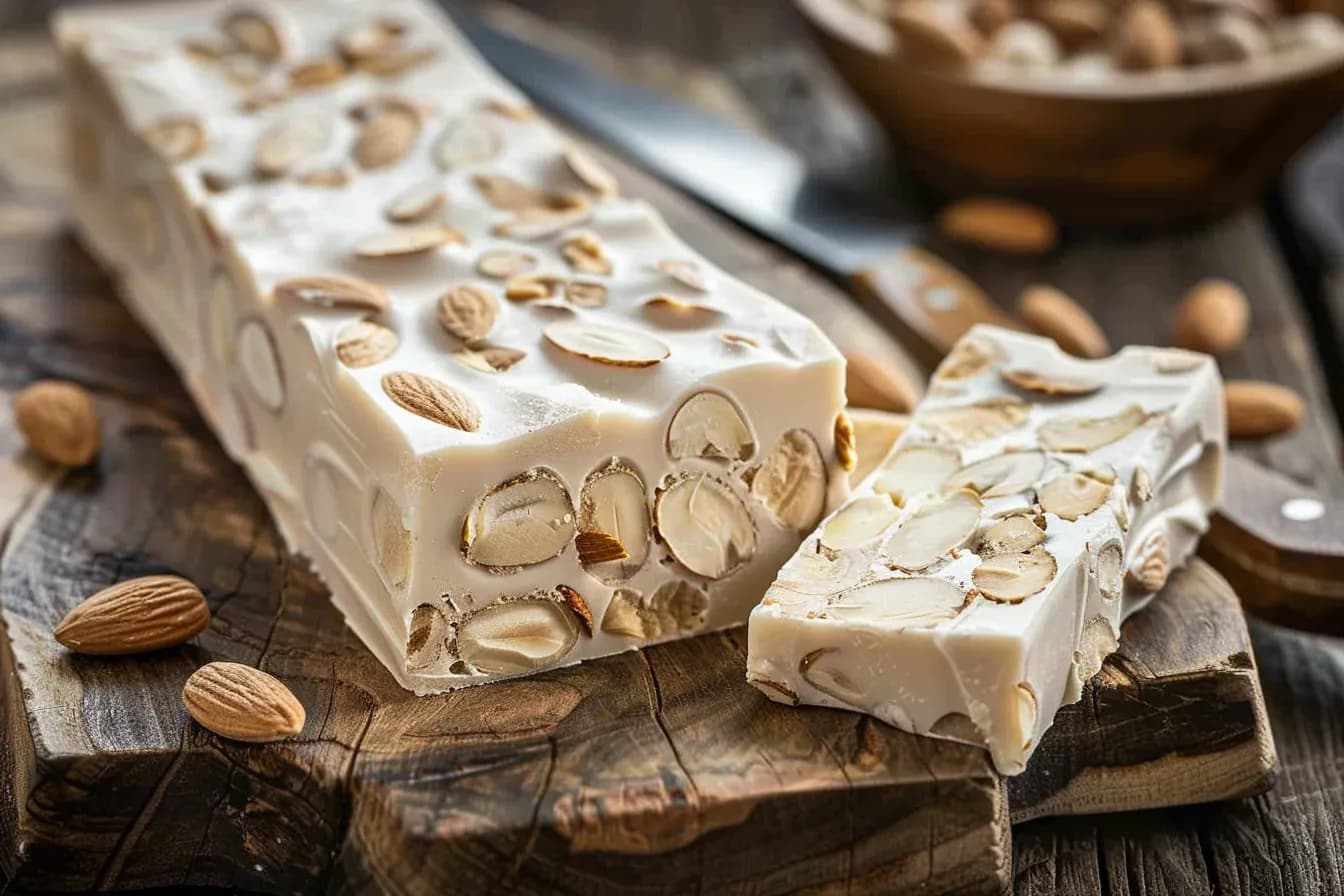
Turrón
Spanish Christmas nougat made of almonds and honey, either rock hard or buttery soft, with nothing in between.
 Cakes & Pastries
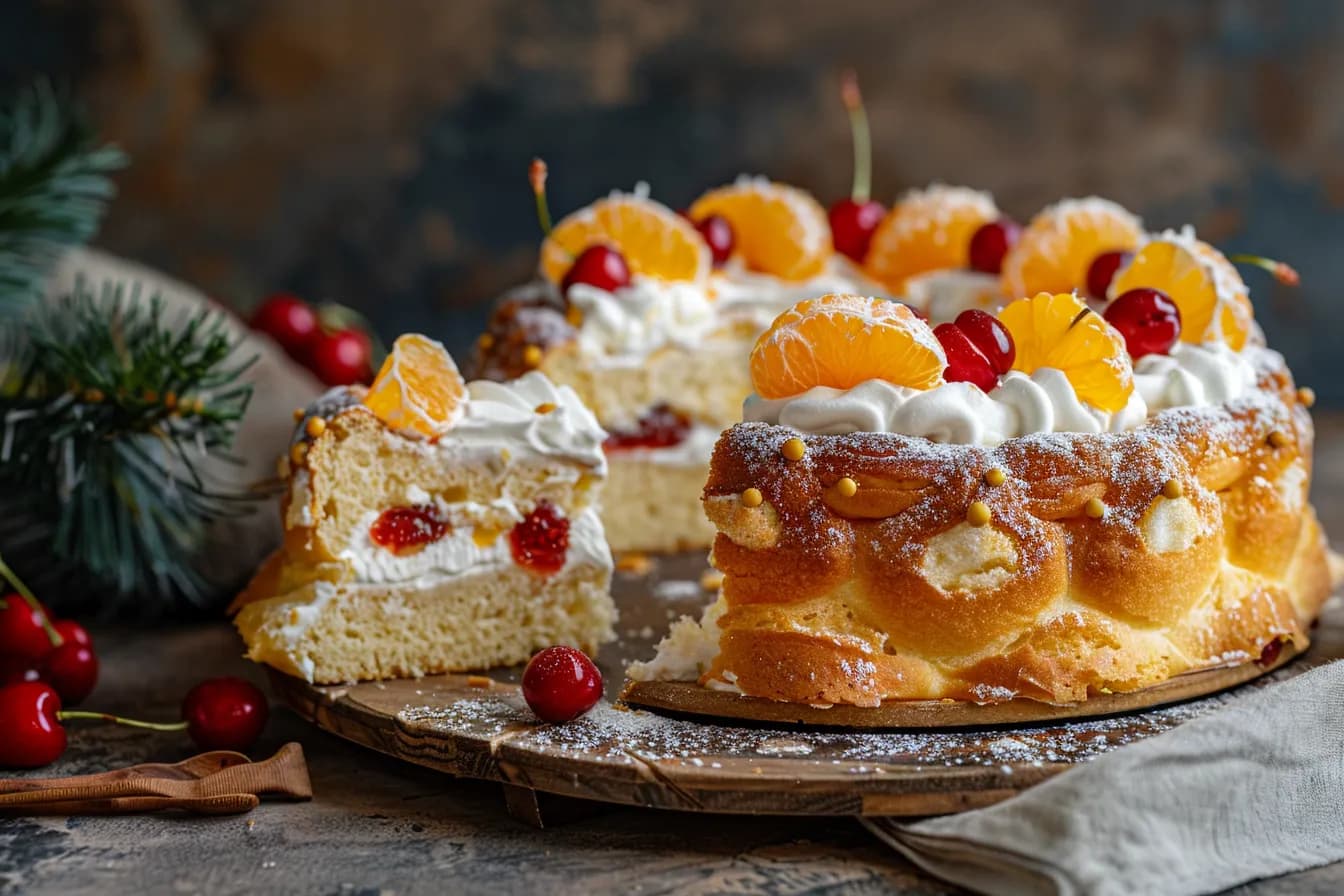
Roscón de Reyes
Spanish Epiphany wreath made of yeast dough with orange blossom water, the scent that defines January 6th in Spain.
 Desserts
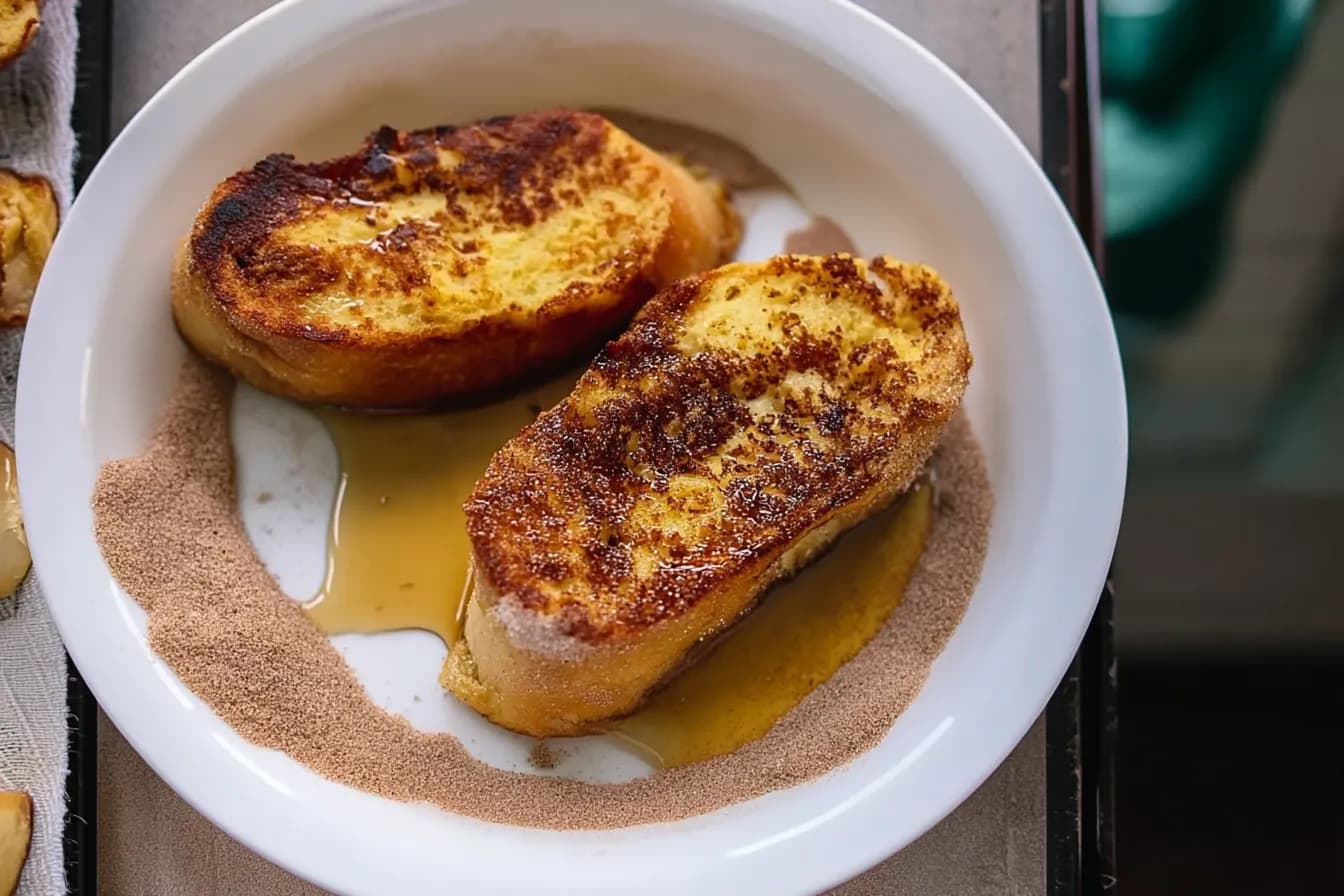
Torrijas
Spanish Easter toast in milk and wine, the French toast of Andalusia, and significantly better than its German relative.