Cauliflower Rice
A rice substitute made from cauliflower with a tenth of the carbohydrates, dry roasted instead of steamed, otherwise it turns to mush.
- Preparation
- 12 min
- Cook/bake time
- 8 min
- Total
- 20 min
- Difficulty
- Easy
- Calories
- 82 kcal
- Servings
- 4
- Prep
- 12 min
- Cooking & baking
- 8 min
A rice substitute made from cauliflower with a tenth of the carbohydrates, dry roasted instead of steamed, otherwise it turns to mush. Cauliflower consists of over ninety percent water, and if you cook it in a pot with a lid, you boil it in its own juices. The hot, open pan is the whole difference between a grainy rice substitute and a wet puree.
Why this works
Cauliflower contains over ninety percent water, and when chopped, the cell walls are broken down, allowing this water to easily escape. If it is cooked in a closed pot, the resulting steam remains in the vessel, condenses again, and the cauliflower cooks in its own liquid, inevitably resulting in a puree. In a wide, hot pan without a lid, however, the same water evaporates unhindered, and the cauliflower pieces remain separate and firm to the bite. The second effect is flavor: only at over 140 degrees does the Maillard reaction start on the dry surface, giving the cauliflower a nutty note and masking the sulfurous cabbage flavor that many dislike.
Step-by-step instructions
- 1
Chop
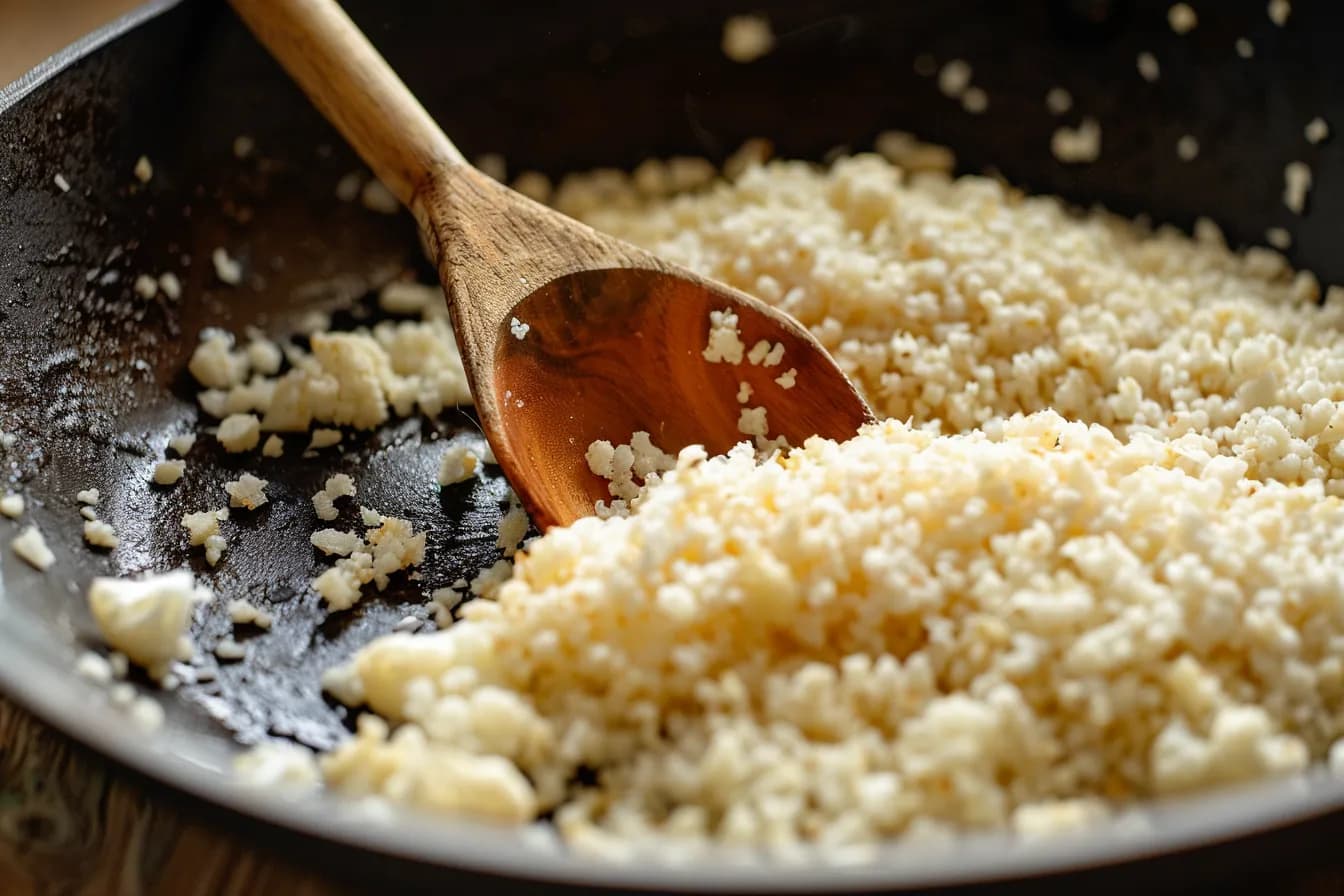
Place the florets in the food processor in batches and pulse them briefly until pieces the size of a grain of rice are formed. Working in batches is important: an overfilled bowl results in puree at the bottom and whole pieces at the top. Without a machine, the coarse side of a grater works just as well.
- 2
Squeeze out moisture
Place the cauliflower rice in a clean kitchen towel and squeeze it out vigorously. A surprising amount of water comes out, and every milliliter of it would otherwise have to evaporate in the pan. This step halves the cooking time.
- 3
Fry hot and open
Heat the oil in a large pan over high heat and add the cauliflower. Fry, do not stir: let it sit for two minutes so it takes on color, then turn once. A total of 6 to 8 minutes, without a lid. It should be golden brown on the edges and still have a bite.
- 4
Salt only at the end
Salt and pepper only when the pan comes off the stove. Salt osmotically draws water out of the vegetables, and if added at the beginning, it flushes out exactly the liquid you wanted to get rid of.
Our best tips
- Never cook with a lid. The trapped steam is the only reason why cauliflower rice turns to mush for most people.
- Better two pans than one overfilled one. With too little surface area, the temperature drops, the water boils instead of evaporating, and the result is puree again.
- Frozen cauliflower rice works, but it must go into the hot pan frozen. Once thawed, it has released too much water and can no longer be saved.
Tasty variations
As a Basmati substitute
Fry with a crushed cardamom pod and a bay leaf. This makes it a good match for curry and dal without bringing the cauliflower to the foreground.
Fried cauliflower rice
Treat like fried rice: add egg, scallions, peas, and soy sauce. This results in a low-carb version of the classic with around 200 kcal less per serving.
Nutrition facts
| Calories | 82 kcal |
|---|---|
| Protein | 3 g |
| Carbohydrates | 5 g |
| – of which sugar | 3 g |
| Fat | 6 g |
| Fiber | 3 g |
Where the 82 kcal come from
per serving
Calculated from the ingredients – how we do it
We add up reference values for every ingredient and divide by the number of servings. These assumptions are baked in:
- Reference values per 100 g – for the raw ingredient, exactly as listed.
- Tinned goods count at drained weight, bone-in meat at purchase weight: you eat about 70 per cent of a chicken thigh and leave the rest.
- Water evaporates as you cook. The energy stays in the pot, the weight does not – so the figure is per serving, not per 100 g of finished dish.
- Anything listed without a quantity – “salt and pepper” – is not counted.
A guide value, not a lab measurement: no two onions weigh the same, and fat content varies from pack to pack.
Frequently asked questions
How many calories does cauliflower rice have?
Around 80 kcal per serving compared to about 265 kcal for a comparable serving of cooked rice, with 5 instead of around 58 g of carbohydrates. Around two thirds of the calories here come from the frying oil.
Why does my cauliflower rice get mushy?
Almost always because of the lid or a pan that is too full. Cauliflower must be able to release its water; if the steam remains in the vessel, it cooks in it and falls apart.
Can you taste the cauliflower?
Less than you expect, provided it is browned properly. The roasted aromas largely mask the sulfurous cabbage flavor. Steamed, on the other hand, it tastes distinctly of cauliflower.
Can I prepare it in advance?
Chopped raw, it keeps for three days in the refrigerator and freezes well. Fried, however, it should be eaten fresh because it continues to lose water when reheated.
Comments & ratings(0)
Sign in to rate and comment on this recipe.
You might also like
 Air Fryer
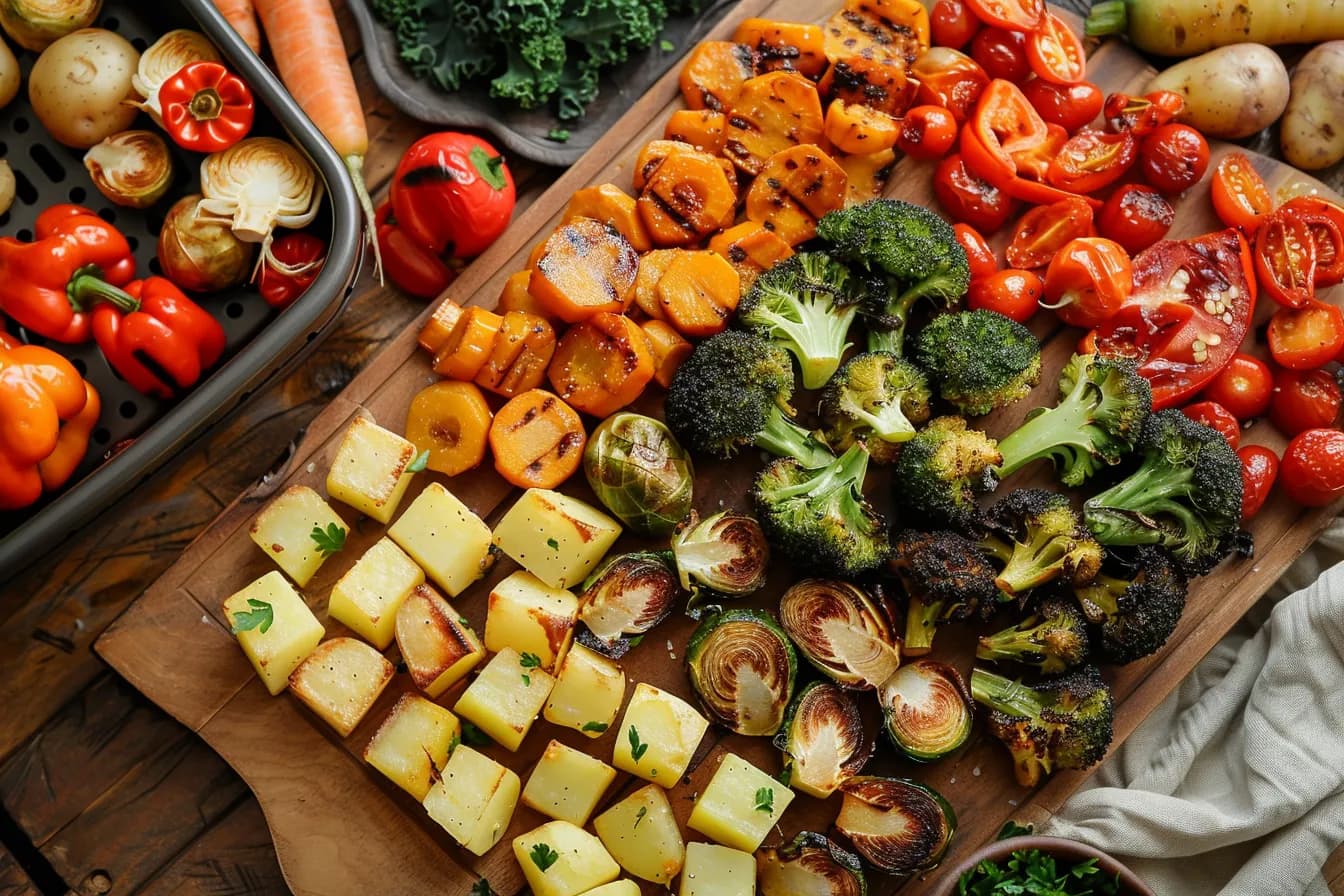
Air Fryer Vegetables: Time & Temperature
Fourteen types of vegetables, each with a time and a temperature, the chart that should have come with the machine.
 Basic Recipes
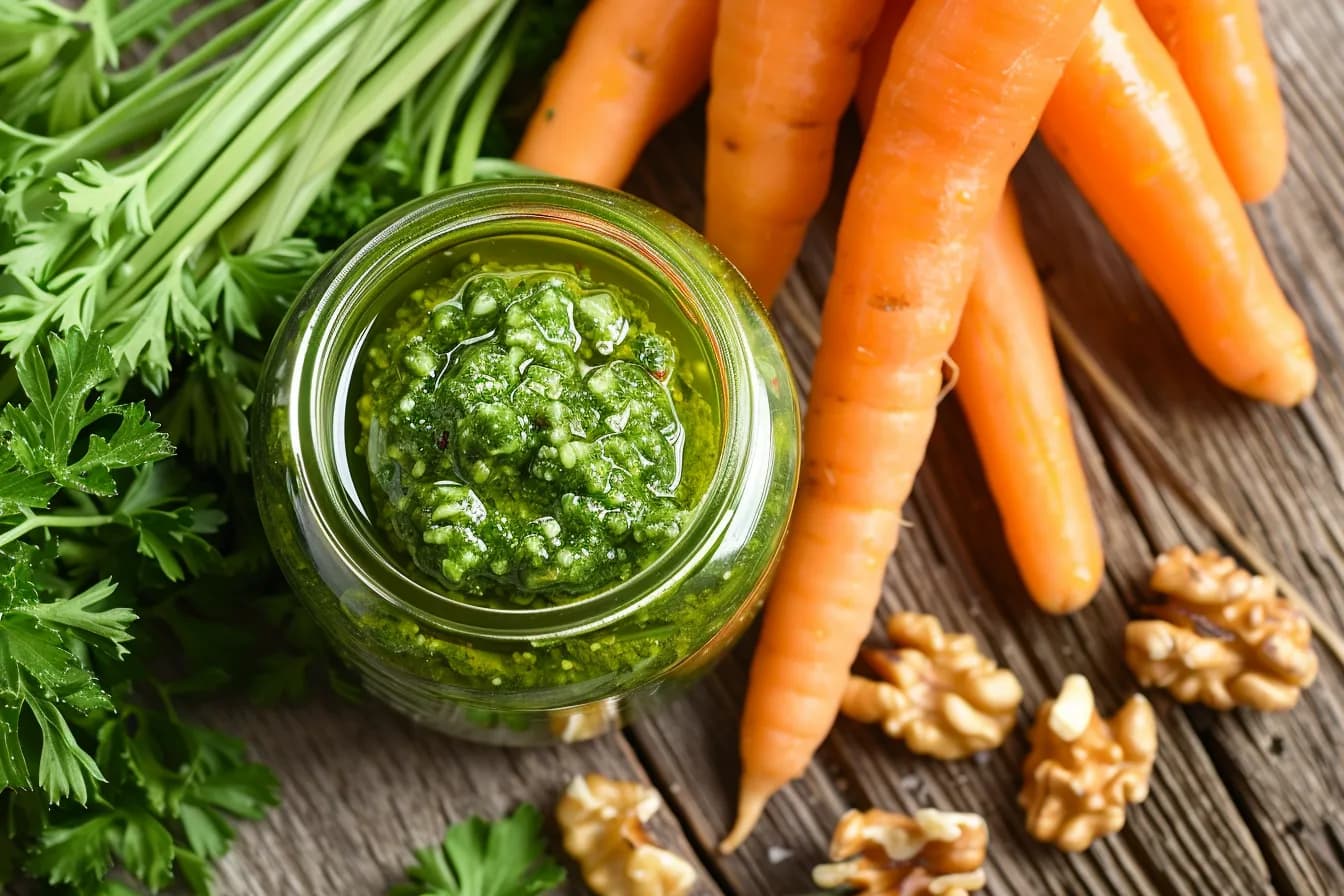
Carrot Top Pesto
The greens that get cut off at the store are edible, and they make a more robust pesto than basil.
 Basic Recipes
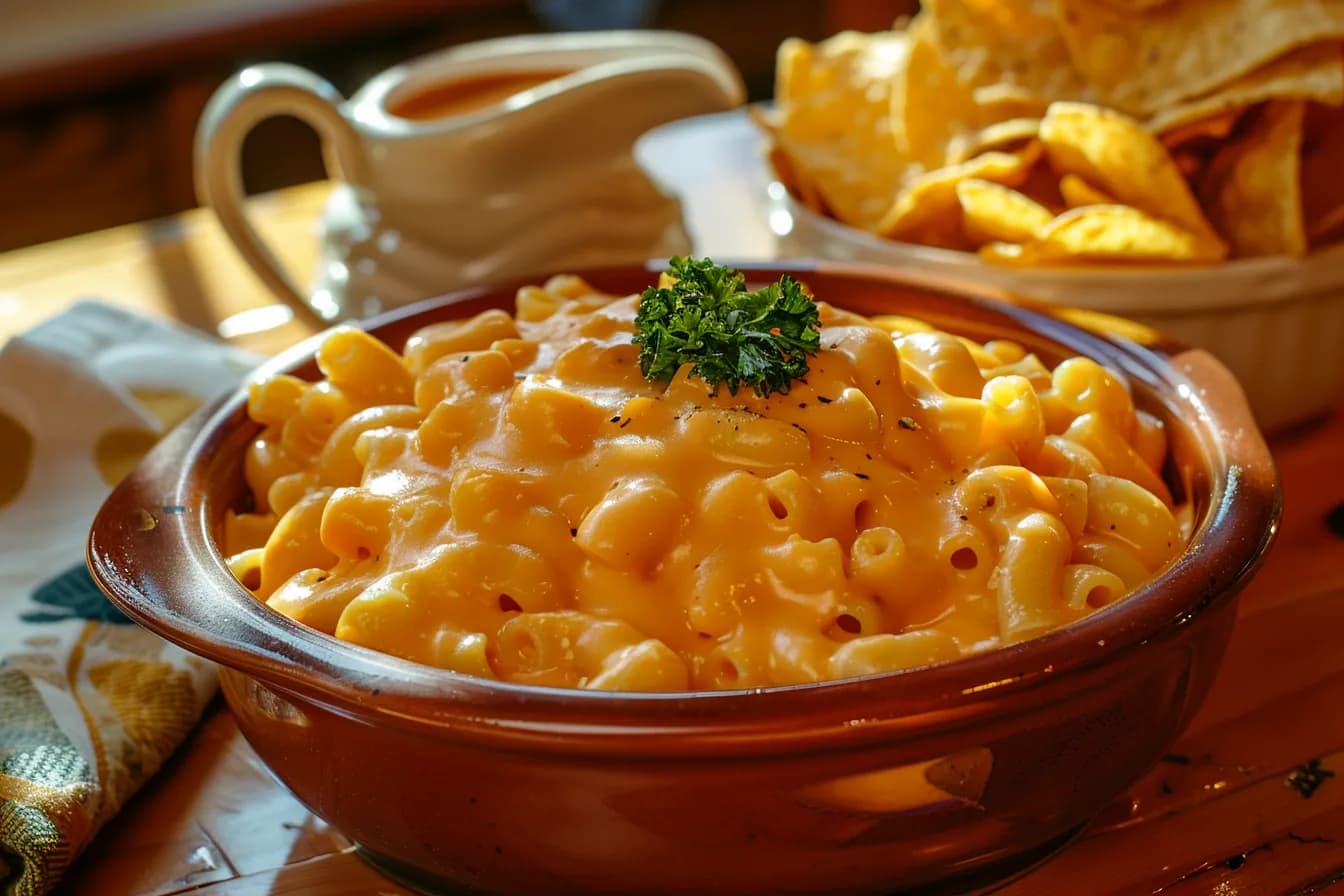
Lactose-Free Cheese Sauce
Potato and carrot combine with nutritional yeast to create a sauce that stretches and melts, completely without cheese.