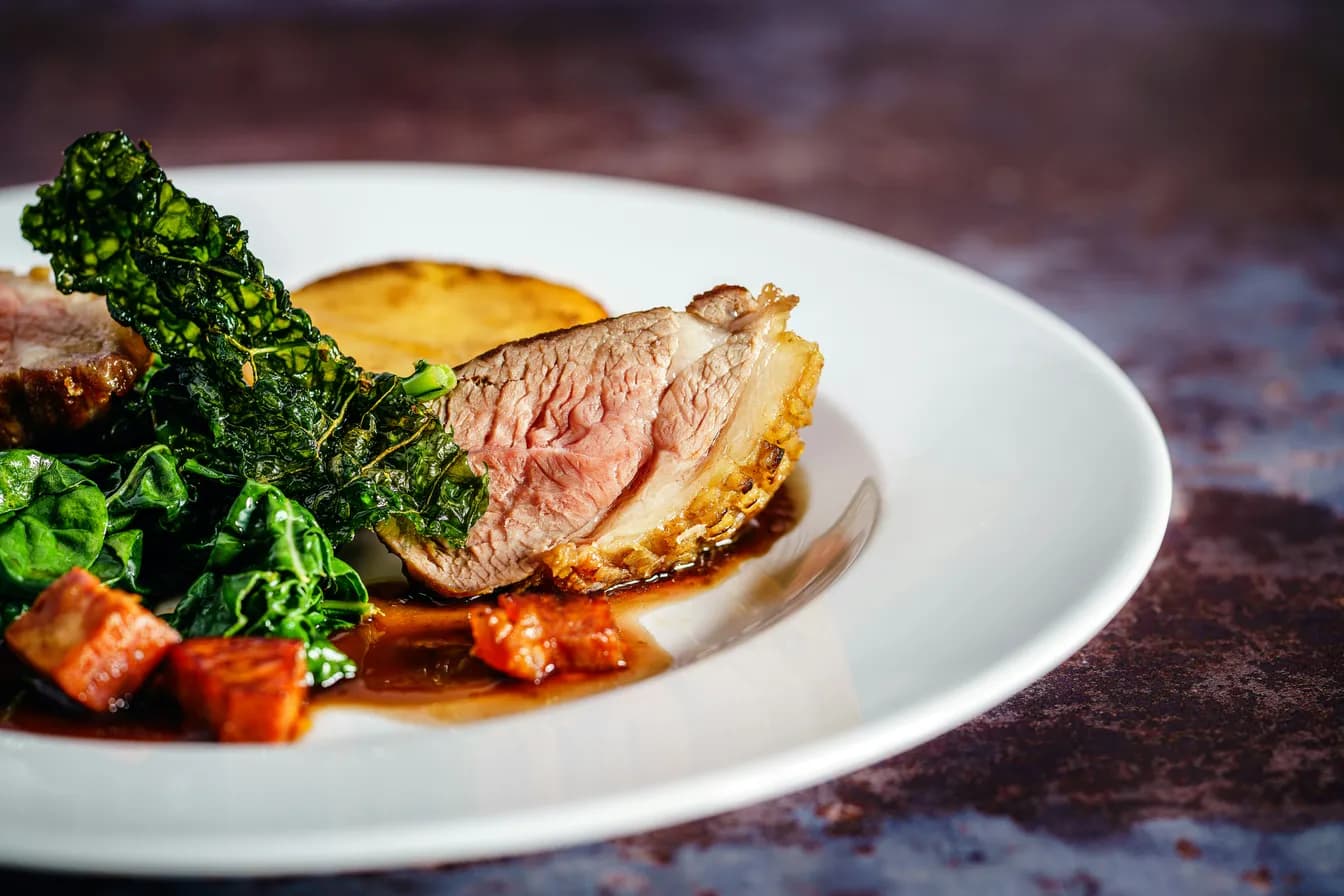
Sunday Roast
Roast beef with Yorkshire puddings and gravy, the British Sunday dinner, and the batter must go into smoking hot fat.
- Preparation
- 25 min
- Cook/bake time
- 1 hr 40 min
- Total
- 2 hr 35 min
- Difficulty
- Medium
- Calories
- 880 kcal
- Servings
- 6
- Prep
- 25 min
- Cooking & baking
- 1 hr 40 min
- Resting
- 30 min
Only 2 hr 5 min of that is hands-on – the rest takes care of itself.
Roast beef with Yorkshire puddings and gravy, the British Sunday dinner, and the batter must go into smoking hot fat. The Yorkshire puddings are the part everything hinges on: they only rise if the thin batter hits roasting fat that is over 200 degrees. A lukewarm tray results in muffin-shaped pancakes.
Why this works
Yorkshire puddings don't rise because of baking powder, but because of steam. The batter is basically a thin pancake batter made of flour, egg, and milk. When it hits fat that is over 200 degrees, the water it contains evaporates suddenly and puffs up the batter, while the outside cooks at the same time and sets the shape. Both must happen simultaneously: if the fat is too cool, there is no burst of steam, and the batter cooks flat. That is why the tin with the fat in it must be preheated in the oven until the fat smokes. The second reason for the roast's resting time is meat physics: during cooking, juices migrate outwards from the contracted muscle fibers; when resting, they relax and pull it back. A roast carved immediately loses these juices onto the board.
Step-by-step instructions
- 1
Sear the roast
Rub the room-temperature roast beef with mustard, oil, salt, and pepper and sear it vigorously on all sides in a roasting pan. Room temperature is important: cold meat from the fridge cooks much further on the outside before the center reaches the target temperature.
- 2
Into the oven at 220 °C
Slide the roasting pan with the thyme into the oven at 220 °C, lower to 180 °C after 20 minutes, and continue cooking the roast until the core temperature reaches 54 degrees, which yields medium rare. Expect around 50 minutes for 1.5 kg, but go by the thermometer, not the clock.
- 3
Mix the Yorkshire batter and let it rest
Whisk the flour, eggs, milk, and salt into a thin, smooth batter and let it stand for at least thirty minutes. During this time, the starch granules swell and the batter becomes more uniform. A freshly mixed one rises unevenly.
- 4
Rest the roast, bake the puddings
Take the roast out and let it rest under foil for thirty minutes. Put one tablespoon of roasting fat into each muffin cup and preheat the tin at 220 °C for ten minutes, **until the fat smokes**. Pour the batter in quickly and bake the puddings for 20 minutes without opening the oven.
- 5
Gravy and serving
Stir the flour into the pan drippings in the roasting pan, deglaze with red wine, and pour in the stock. Let it boil down for ten minutes, pour through a sieve, and season to taste with mustard. Slice the roast thinly across the grain and serve with puddings and gravy.
Our best tips
- The fat in the muffin tin must smoke before the batter goes in. It is the only reason Yorkshire puddings rise. Without it, they will be flat discs.
- Do not open the oven during the puddings. The drop in temperature makes them collapse immediately, and they will not recover.
- Thirty minutes of resting time for the roast is the minimum. It is not a lost time buffer, but the reason why the juices stay in the meat instead of ending up on the board.
Tasty variations
With lamb
Leg of lamb instead of roast beef, core temperature 58 degrees, and rosemary instead of thyme. At least as common in the UK.
Vegetarian roast
A nut roast made of walnuts, lentils, and breadcrumbs instead of meat, with vegetable broth for the gravy. Yorkshire puddings work with oil instead of roasting fat.
Nutrition facts
| Calories | 880 kcal |
|---|---|
| Protein | 62 g |
| Carbohydrates | 22 g |
| – of which sugar | 3 g |
| Fat | 59 g |
| Fiber | 1 g |
Where the 880 kcal come from
per serving
Calculated from the ingredients – how we do it
We add up reference values for every ingredient and divide by the number of servings. These assumptions are baked in:
- Reference values per 100 g – for the raw ingredient, exactly as listed.
- Tinned goods count at drained weight, bone-in meat at purchase weight: you eat about 70 per cent of a chicken thigh and leave the rest.
- Water evaporates as you cook. The energy stays in the pot, the weight does not – so the figure is per serving, not per 100 g of finished dish.
- Anything listed without a quantity – “salt and pepper” – is not counted.
A guide value, not a lab measurement: no two onions weigh the same, and fat content varies from pack to pack.
Frequently asked questions
Why are my Yorkshire puddings not rising?
The fat was not hot enough. The batter rises through steam, and that only forms when it hits fat that is over 200 degrees. The tin must be preheated with the fat in it until it visibly smokes.
How many calories does a Sunday roast have?
Around 880 kcal per portion with roast, two Yorkshire puddings, and gravy, without vegetable sides. The roast beef itself is quite lean, but the roasting fat in the puddings contributes significantly.
What is the right core temperature?
54 degrees for medium rare, 58 for medium, 65 for well done. It will rise by another two to three degrees while resting. A thermometer is more reliable than any time estimate for a piece of this size.
Can I prepare the Yorkshire puddings in advance?
The batter, yes, it even gets better by resting. The baked puddings collapse after a few minutes, so they belong straight from the oven onto the table.
Comments & ratings(0)
Sign in to rate and comment on this recipe.
You might also like
 Dinner
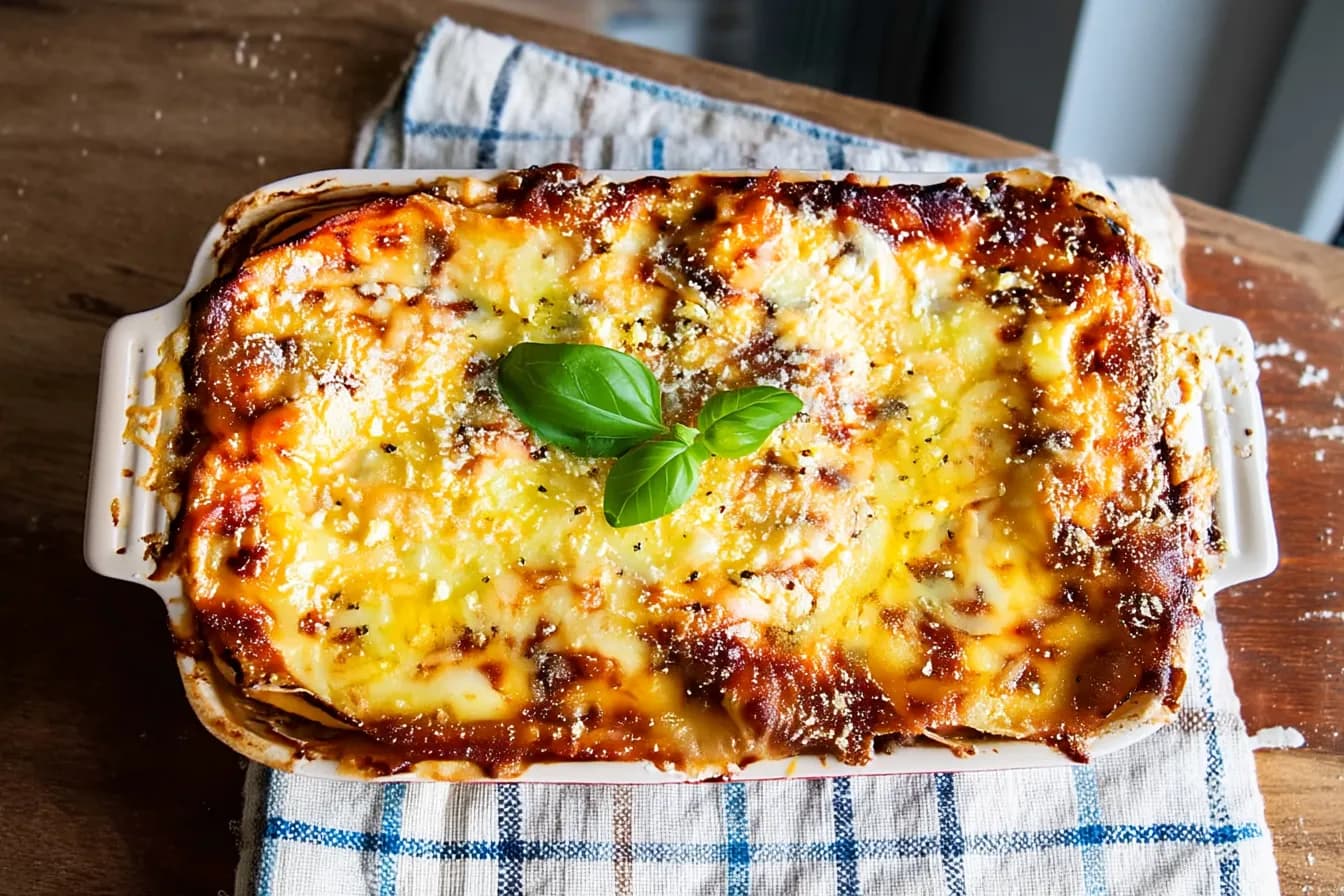
Shepherd's Pie
Minced lamb under a potato crust, and the difference to Cottage Pie is not the potato, but the animal.
 Dinner
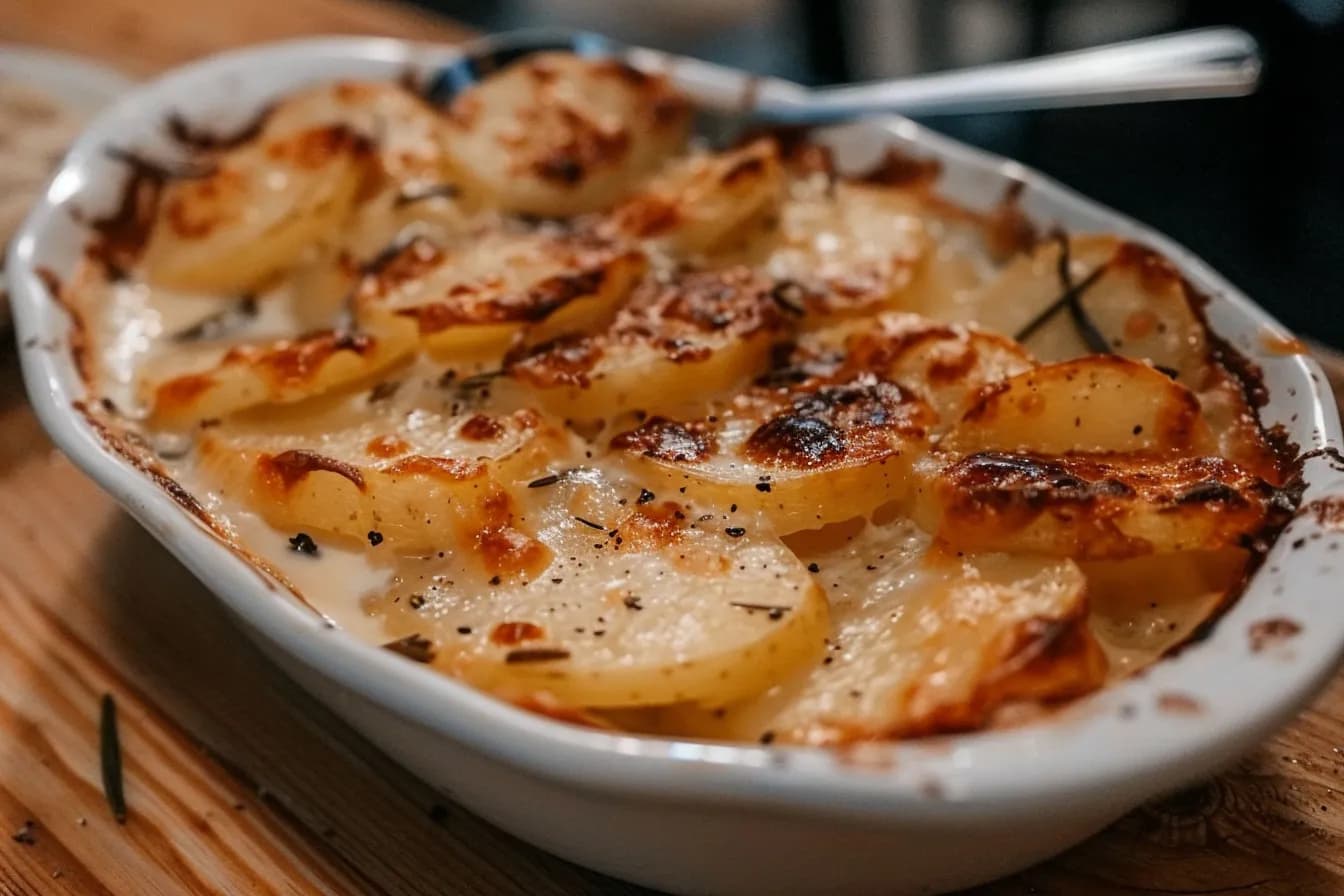
Gratin Dauphinois
Potato gratin without cheese and without egg: just potatoes, cream, garlic, and nutmeg, exactly as it should be in the Dauphiné region.
 Dinner
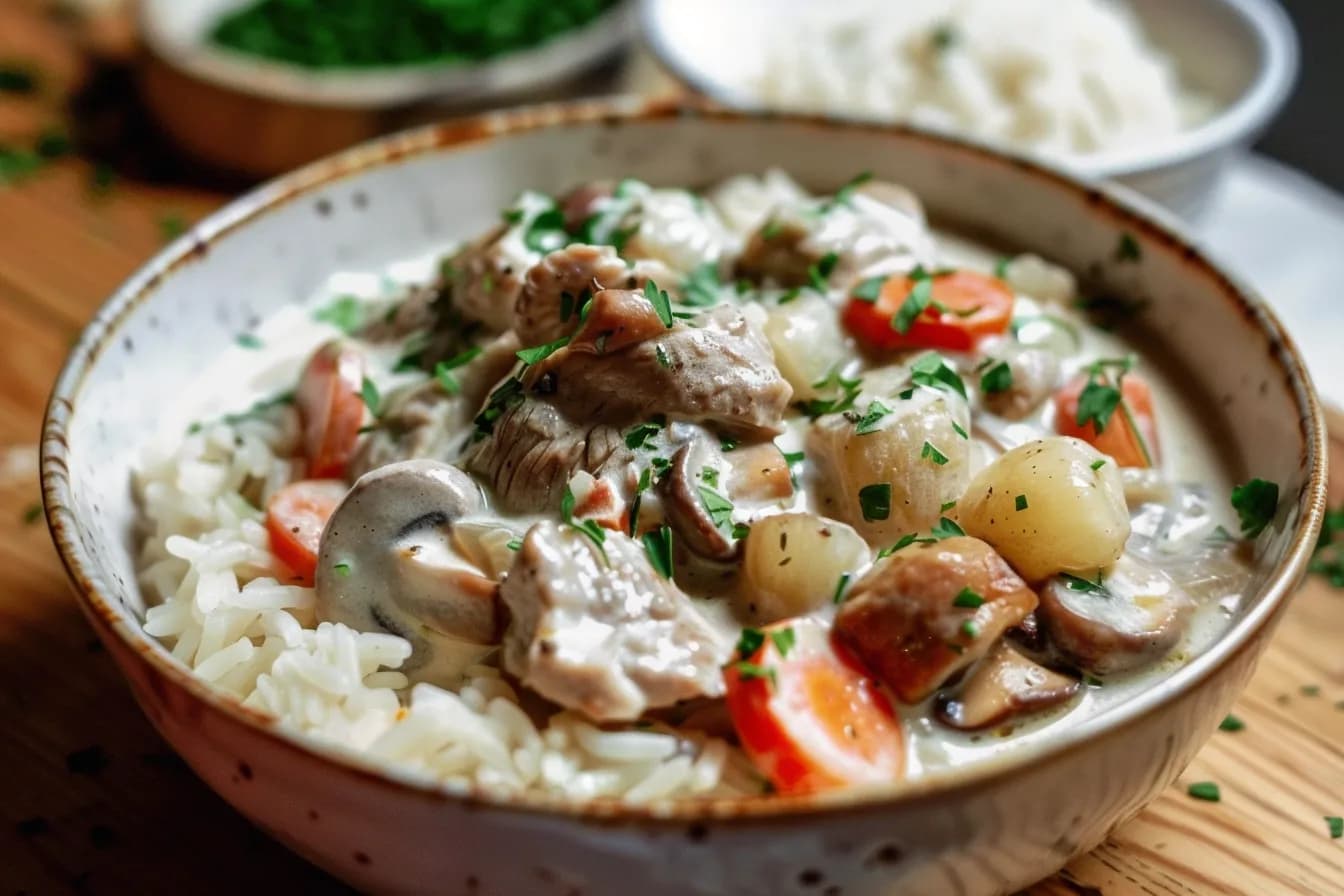
Blanquette de veau
Veal stew in a white sauce – the dish where the meat is deliberately not seared.