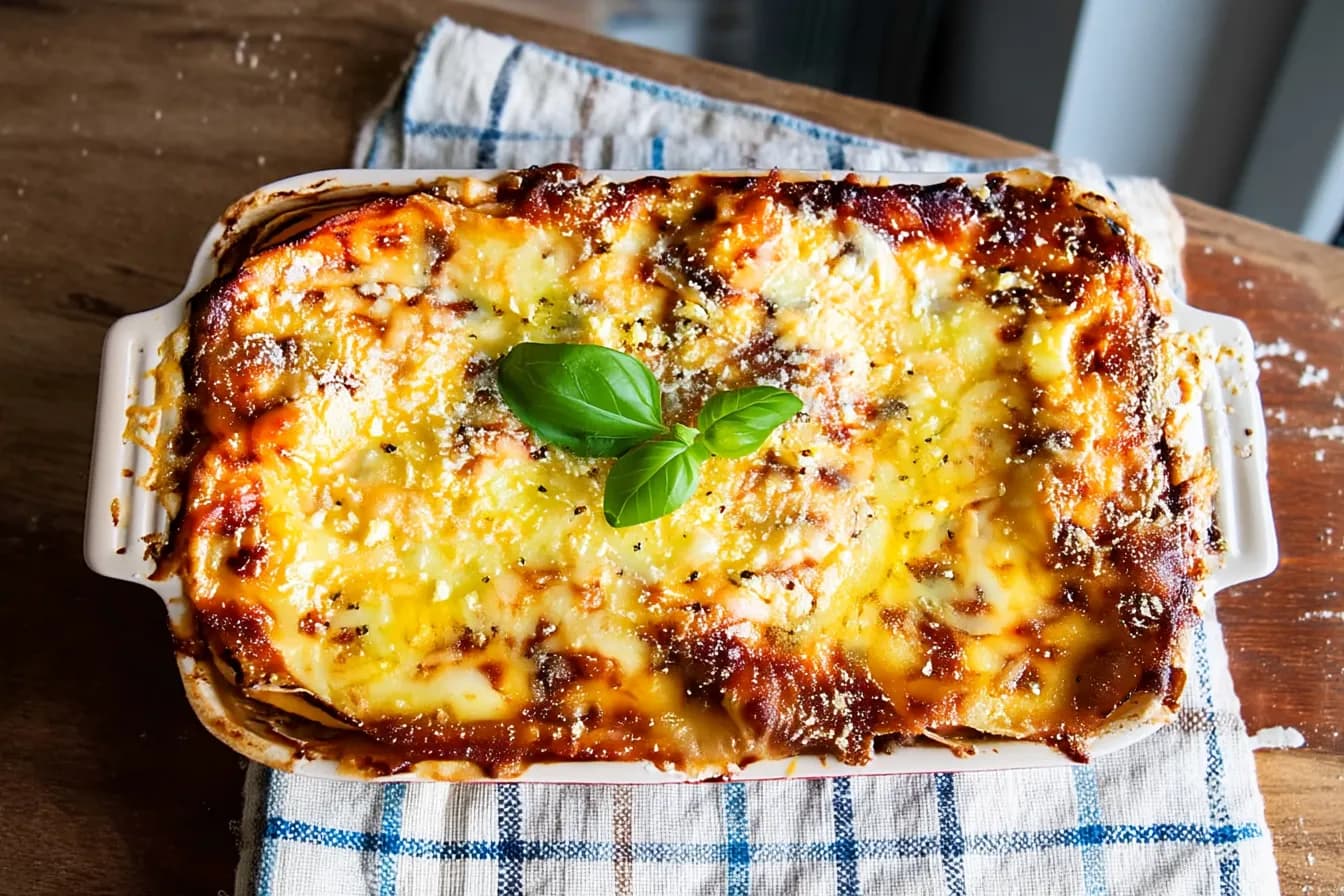
Shepherd's Pie
Minced lamb under a potato crust, and the difference to Cottage Pie is not the potato, but the animal.
- Preparation
- 30 min
- Cook/bake time
- 1 hr 15 min
- Total
- 1 hr 55 min
- Difficulty
- Easy
- Calories
- 775 kcal
- Servings
- 6
- Prep
- 30 min
- Cooking & baking
- 1 hr 15 min
- Resting
- 10 min
Only 1 hr 45 min of that is hands-on – the rest takes care of itself.
Minced lamb under a potato crust, and the difference to Cottage Pie is not the potato, but the animal. Shepherd means shepherd, and that is why lamb belongs in it; with beef, the same dish is called Cottage Pie. The potato crust is roughened with a fork so that it gets crispy peaks in the oven.
Why this works
The minced meat base must be significantly thicker than it appears in the pot, and the reason is the potato crust above it. It seals the casserole at the top so that hardly any moisture can escape during baking. A sauce that looks just right in the pot will be soupy after an hour in the oven and soften the crust from below. The potatoes, in turn, should be riced and not mashed. When mashing, the starch granules burst and release amylopectin, which makes the mixture sticky and tough. A potato ricer separates the cells without crushing them. Finally, roughening the surface with a fork increases the area where the Maillard reaction can take place. The peaks and edges brown while the valleys remain soft, and exactly this contrast makes the crust.
Step-by-step instructions
- 1
Sear the mince
Sear the minced lamb in olive oil in batches until deeply browned, without stirring it early. Then add onions, carrots and celery and sweat everything for ten minutes until soft. Add garlic in the last two minutes.
- 2
Roast tomato paste and deglaze
Roast the tomato paste and flour for two minutes, pour in the stock and stir in thyme and soy sauce. Let everything simmer uncovered for 25 minutes until the sauce is **significantly thicker** than it looks right. No more water can evaporate under the crust later.
- 3
Rice the potatoes
Boil the potatoes until soft, let them steam off briefly and press them through the ricer. Stir in butter, warm milk, egg yolk, salt and nutmeg. Do not mash and do not blend. This bursts the starch granules and the puree becomes sticky.
- 4
Layer and roughen
Fold the peas into the minced meat base, fill it into the casserole dish and distribute the mashed potatoes on top. Draw grooves and peaks with a fork and sprinkle the Cheddar over it. The roughened surface increases the browning area. Smoothed out, the crust remains pale.
- 5
Bake
Bake the pie at 200 °C for about 30 minutes until the peaks are golden brown and the sauce bubbles at the edge. Let it rest for ten minutes. Straight from the oven, the base will run out from under the crust.
Our best tips
- The minced meat base must be thicker than it looks right in the pot. Nothing evaporates under the potato crust anymore, and a barely right sauce becomes a soupy one.
- Rice potatoes instead of mashing. When mashing, the starch granules burst, and the crust becomes sticky instead of fluffy.
- Roughen with a fork. It is a ten-second move and the difference between a pale and a crispy surface.
Tasty variations
Cottage Pie
Minced beef instead of minced lamb. Same structure, different name. The difference lies solely in the meat, not in the preparation.
Vegetarian
Replace minced lamb with 500 g brown lentils and 300 g chopped mushrooms, beef stock with vegetable broth with an extra spoonful of soy sauce.
What is left over?
This recipe only uses the yolks. The whites keep for three days in the fridge and freeze well – nobody has to throw them out.
Nutrition facts
| Calories | 775 kcal |
|---|---|
| Protein | 37 g |
| Carbohydrates | 44 g |
| – of which sugar | 9 g |
| Fat | 48 g |
| Fiber | 8 g |
Where the 775 kcal come from
per serving
Calculated from the ingredients – how we do it
We add up reference values for every ingredient and divide by the number of servings. These assumptions are baked in:
- Reference values per 100 g – for the raw ingredient, exactly as listed.
- Tinned goods count at drained weight, bone-in meat at purchase weight: you eat about 70 per cent of a chicken thigh and leave the rest.
- Water evaporates as you cook. The energy stays in the pot, the weight does not – so the figure is per serving, not per 100 g of finished dish.
- Anything listed without a quantity – “salt and pepper” – is not counted.
A guide value, not a lab measurement: no two onions weigh the same, and fat content varies from pack to pack.
Frequently asked questions
What is the difference to Cottage Pie?
The meat. Shepherd's Pie is made with lamb, as "shepherd" means shepherd, and Cottage Pie with beef. Structure and preparation are identical.
How many calories does Shepherd's Pie have?
Around 775 kcal per serving for six servings. The potato crust with butter and Cheddar contributes about 320 kcal per serving.
Why does my potato crust become sticky?
The potatoes were mashed or blended. This bursts the starch granules and releases amylopectin, which makes the mixture tough. A ricer separates the cells without crushing them.
Can I prepare it in advance?
Very well. Completely layered, it keeps in the fridge for a day and can be frozen. Bake about ten minutes longer from the fridge, let thaw overnight if frozen.
Comments & ratings(0)
Sign in to rate and comment on this recipe.
You might also like
 Dinner
Sunday Roast
Roast beef with Yorkshire puddings and gravy, the British Sunday dinner, and the batter must go into smoking hot fat.
 Dinner
Gratin Dauphinois
Potato gratin without cheese and without egg: just potatoes, cream, garlic, and nutmeg, exactly as it should be in the Dauphiné region.
 Dinner
Blanquette de veau
Veal stew in a white sauce – the dish where the meat is deliberately not seared.