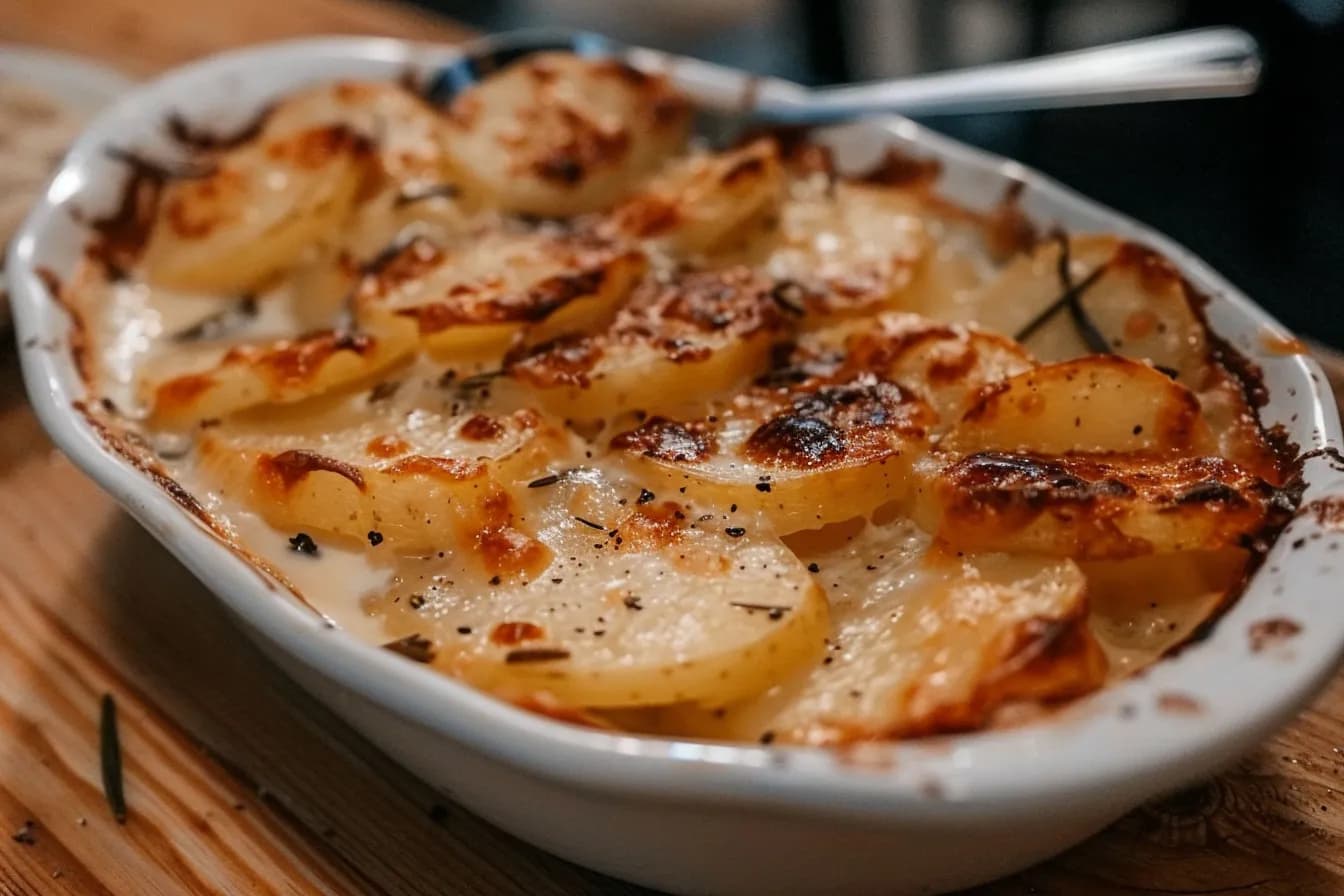
Gratin Dauphinois
Potato gratin without cheese and without egg: just potatoes, cream, garlic, and nutmeg, exactly as it should be in the Dauphiné region.
- Preparation
- 30 min
- Cook/bake time
- 1 hr 20 min
- Total
- 2 hr
- Difficulty
- Easy
- Calories
- 407 kcal
- Servings
- 6
- Prep
- 30 min
- Cooking & baking
- 1 hr 20 min
- Resting
- 10 min
Only 1 hr 50 min of that is hands-on – the rest takes care of itself.
Potato gratin without cheese and without egg: just potatoes, cream, garlic, and nutmeg, exactly as it should be in the Dauphiné region. What is often baked as a cheesy potato gratin in Germany is actually a completely different dish in its original form. The thickening comes solely from the potato starch, and for this reason, the slices must absolutely not be washed. Adding cheese on top is considered a mistake in the region.
Why this works
The thickening of a true Gratin dauphinois comes exclusively from the starch of the potatoes. During slow cooking at 160 degrees, it releases from the cut surfaces and thickens the cream into a luscious sauce that holds the slices together. This is why washing the sliced potatoes is the one mistake that ruins everything. For the same reason, the temperature must remain low. At 200 degrees, the milk protein coagulates before enough starch has been released, and the cream separates into fat and whey. Floury potatoes are the right choice here for once, because they contain more starch than waxy ones. Rubbing the baking dish with a garlic half instead of using chopped garlic is not just for convenience. Chopped garlic burns during the long baking time and becomes bitter, while the aroma on the walls of the dish is perfectly sufficient.
Step-by-step instructions
- 1
Prepare the dish
Rub a shallow baking dish thoroughly with the halved garlic clove and butter it afterwards. The garlic aroma on the walls is perfectly sufficient, as chopped garlic in the gratin will burn during the seventy minutes and become bitter.
- 2
Slice the potatoes, do not wash
Peel the potatoes and slice them into thin rounds about three millimeters thick. Absolutely do not wash them afterwards and do not place them in water. The starch on the cut surfaces is the only thickening agent in this recipe, and this is the step where most gratins fail.
- 3
Boil the cream
Heat the cream and milk with the grated garlic, salt, nutmeg, and white pepper until everything is just barely simmering. Pouring warm liquid over the potatoes noticeably shortens the baking time and ensures that the slices cook evenly right from the start.
- 4
Layer the potatoes
Arrange the potato slices in an overlapping shingle pattern in the dish and pour the hot cream mixture over them until they are just covered. Press the surface flat once, because slices that stick out will become leathery instead of creamy.
- 5
75 minutes at 160 °C
Bake the gratin at 160 °C top and bottom heat for about 75 minutes, until the surface is golden brown and a knife glides through without resistance. At a higher temperature, the cream will separate. Let it rest for ten minutes before slicing.
Our best tips
- Do not wash is the golden rule. If you rinse the slices or soak them in water, you wash away the exact starch that is supposed to thicken the gratin, and then no amount of extra cream will help.
- No cheese. What is taken for granted in Germany is considered a completely different dish in the Dauphiné region. If you want cheese, make a Gratin savoyard, which explicitly includes cheese and is wonderful in its own right.
- Use a shallow, wide dish instead of a deep one. With a layer height of more than four centimeters, the bottom layers will not cook through before the top ones burn.
Tasty variations
Gratin savoyard
Replace the cream with broth and sprinkle grated Beaufort or Comté between the layers. This variation from Savoy is significantly more savory and less creamy.
With thyme
Let two sprigs of thyme steep in the cream and remove them before pouring. This is an addition that is quite common in the region, unlike cheese.
Nutrition facts
| Calories | 407 kcal |
|---|---|
| Protein | 7 g |
| Carbohydrates | 34 g |
| – of which sugar | 5 g |
| Fat | 25 g |
| Fiber | 5 g |
Where the 407 kcal come from
per serving
Calculated from the ingredients – how we do it
We add up reference values for every ingredient and divide by the number of servings. These assumptions are baked in:
- Reference values per 100 g – for the raw ingredient, exactly as listed.
- Tinned goods count at drained weight, bone-in meat at purchase weight: you eat about 70 per cent of a chicken thigh and leave the rest.
- Water evaporates as you cook. The energy stays in the pot, the weight does not – so the figure is per serving, not per 100 g of finished dish.
- Anything listed without a quantity – “salt and pepper” – is not counted.
A guide value, not a lab measurement: no two onions weigh the same, and fat content varies from pack to pack.
Frequently asked questions
Is there really no cheese in a Gratin dauphinois?
No, not in the original. The thickening comes solely from the potato starch and the cream. A potato gratin with cheese is a Gratin savoyard, which is also delicious, but a different dish.
How many calories does Gratin dauphinois have?
Around 405 kcal per serving for six servings. The cream alone contributes about 205 kcal per serving. With half cream and half milk, the value drops to about 320 kcal, but the gratin will be less creamy.
Why shouldn't I wash the potatoes?
Because the starch on the cut surfaces is the only thickening agent. If rinsed off, you are left with a thin cream sauce in which the slices float, instead of a luscious, creamy texture.
Which potatoes are the right ones?
Floury potatoes, unlike in most potato dishes. They contain more starch, and that is exactly what the thickening relies on. Waxy potatoes result in a gratin that does not hold together.
Comments & ratings(0)
Sign in to rate and comment on this recipe.
You might also like
 Soups & Stews
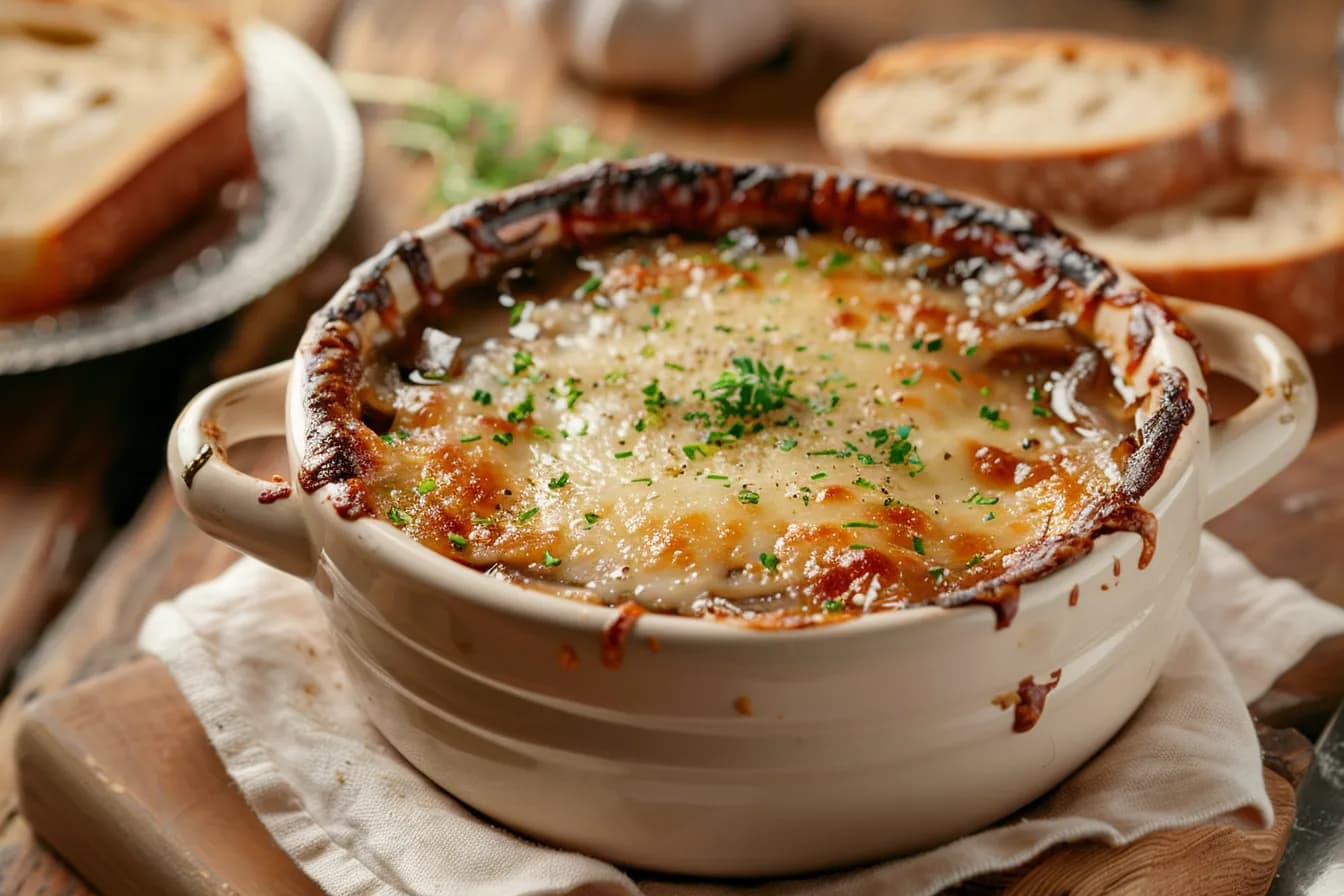
French Onion Soup
Deeply caramelized onions in a rich broth under a crust of bread and cheese.
 Dinner
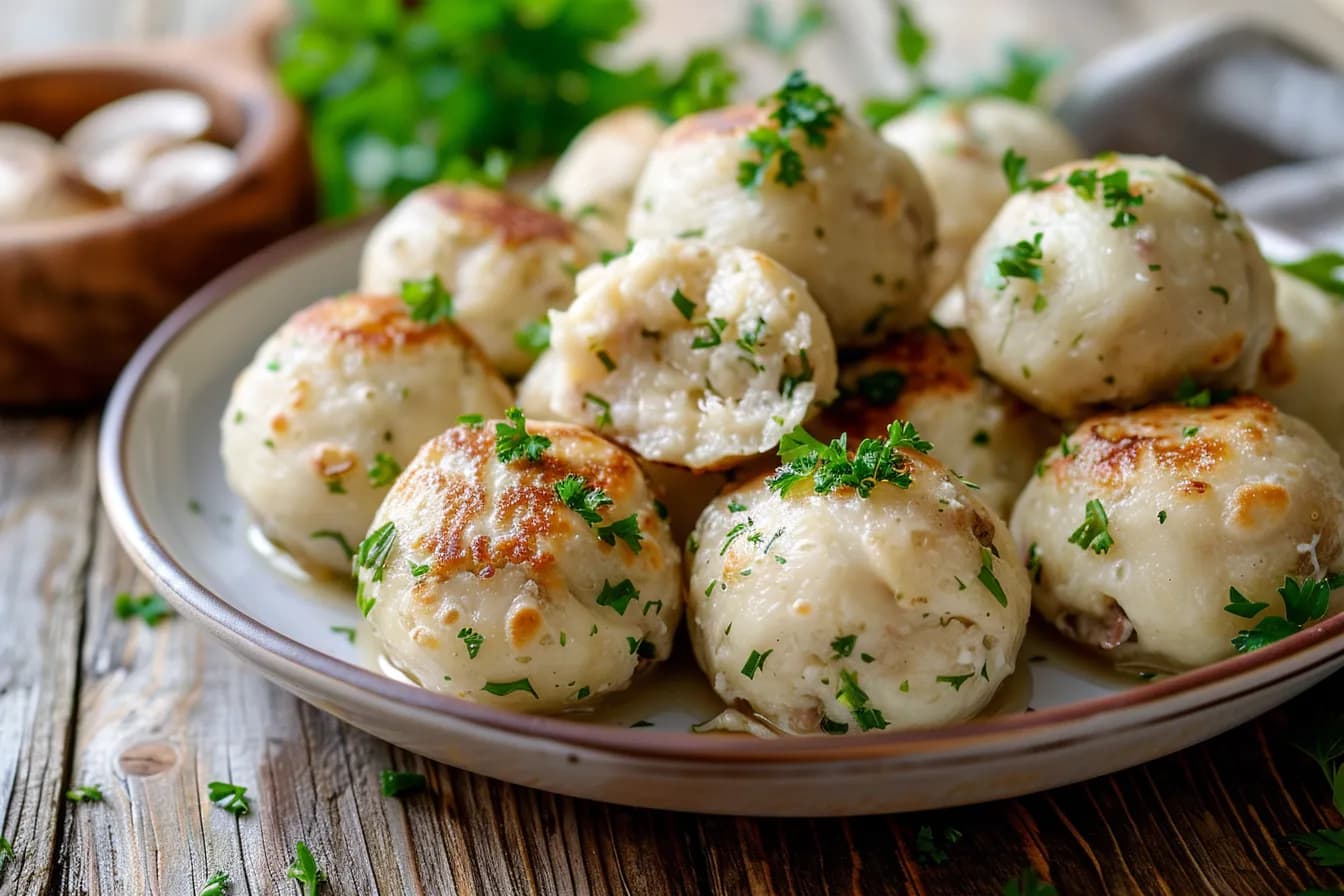
German Bread Dumplings
Let them soak for twenty minutes, then stop kneading. Bread dumplings fall apart because of how they are handled, not because of the recipe.
 Dinner
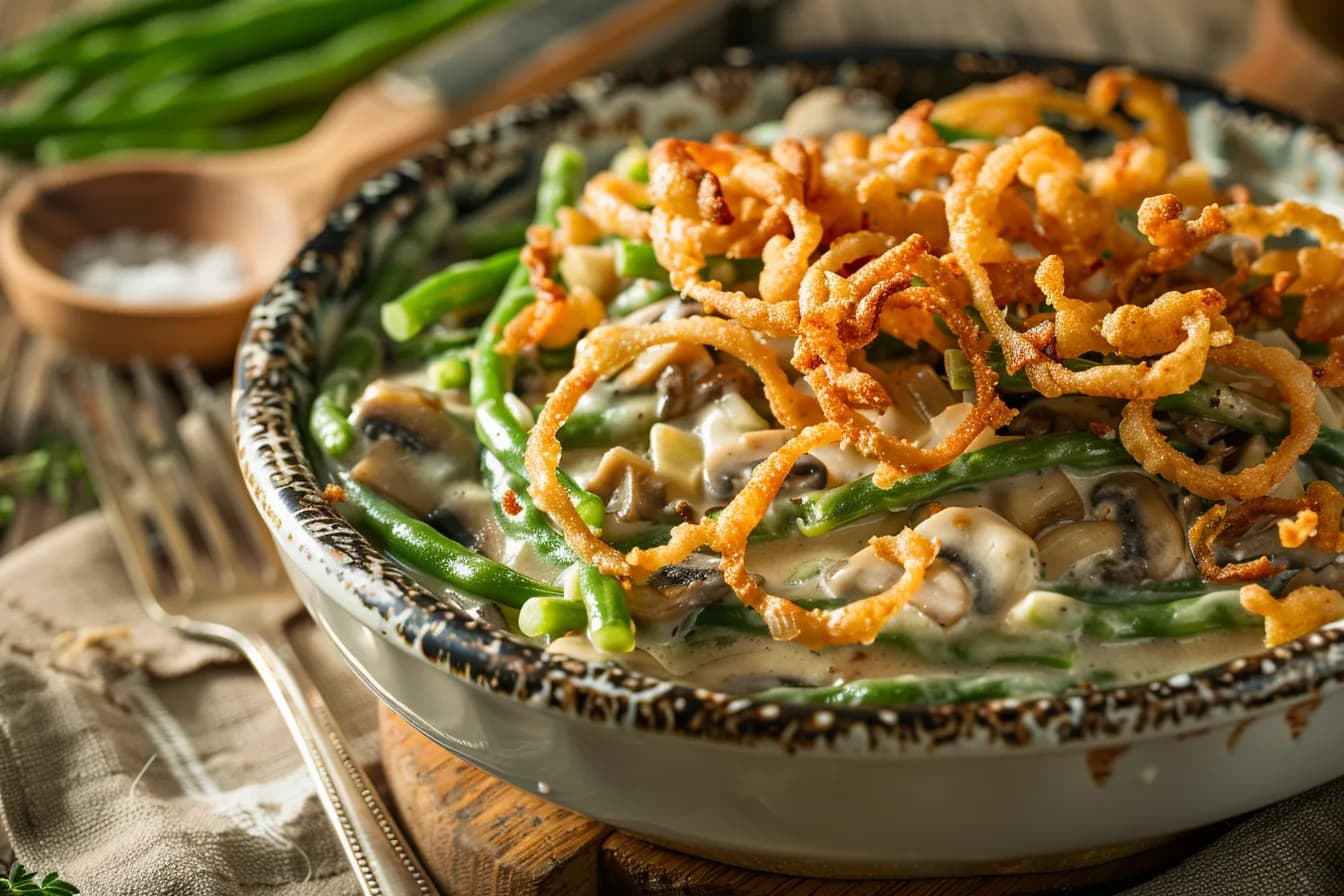
Green Bean Casserole
Green beans in a creamy mushroom sauce under a crown of crispy fried onions, made from scratch instead of from a can.