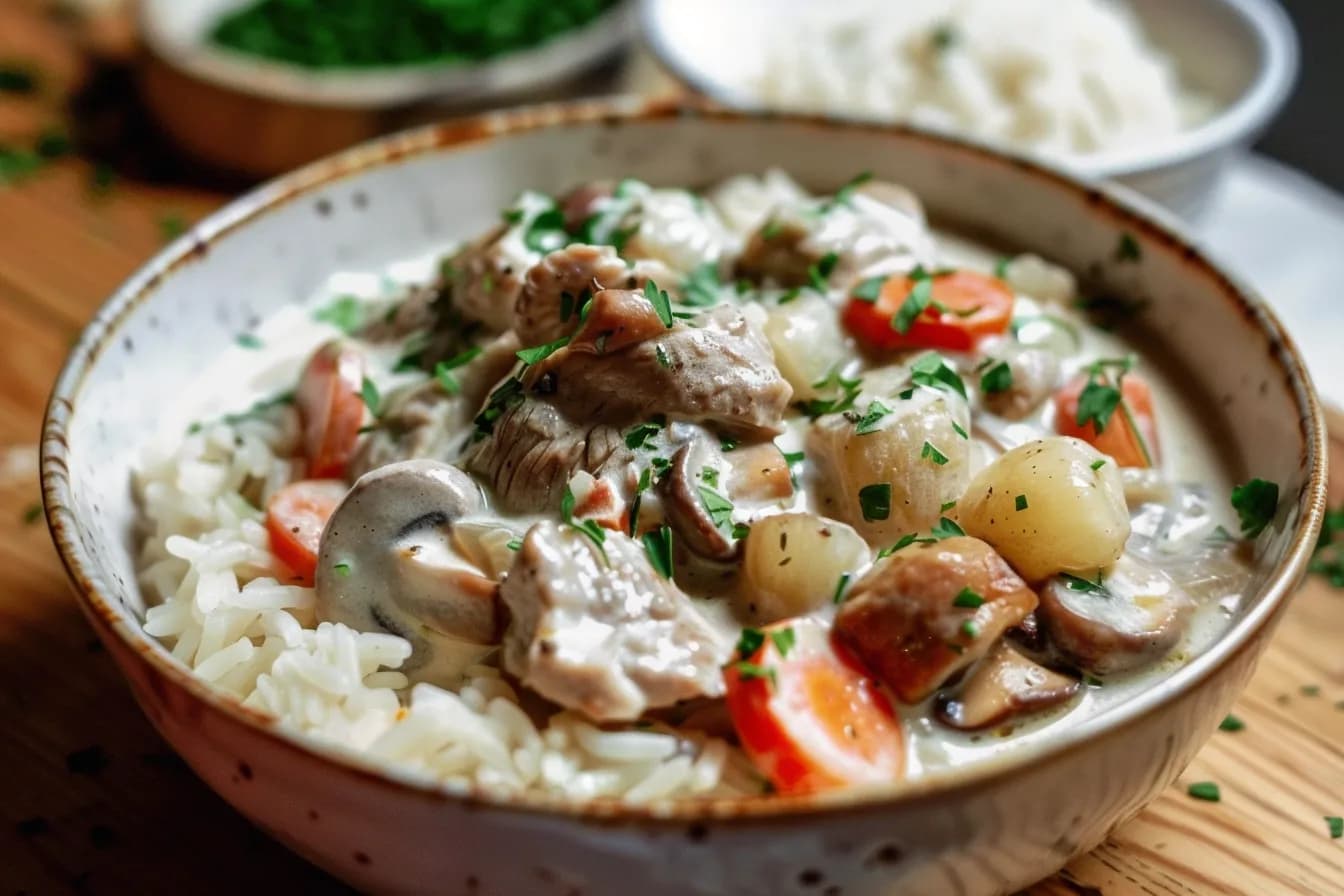
Veal stew in a white sauce – the dish where the meat is deliberately not seared. That is exactly the difference compared to any other braised dish: without roasted flavors, the sauce remains light and the natural flavor of the veal takes center stage. In France, blanquette is considered one of the benchmark dishes of home cooking.
Why this works
Blanquette means "the white one", and that is a program, not just a name: the meat is not seared because any Maillard reaction would create color and roasted flavors that would mask exactly what this is all about. Instead, the veal is started in cold water and heated slowly – this allows impurities and coagulated proteins to rise to the surface and be skimmed off, rather than dispersing in the liquid. The second building block is the liaison at the end: egg yolks mixed with heavy cream thicken the sauce, but only below 160 degrees Fahrenheit, because the egg yolks will curdle above that. That is why the pot is taken off the heat and the liaison is tempered with hot sauce before it goes back in – the same technique as with a hollandaise, just the other way around.
Step-by-step instructions
- 1
Start cold and skim
Place the veal in cold water and bring it slowly to a simmer. Skim off the gray foam as soon as it forms – it consists of coagulated protein, and if you leave it, you will get a cloudy sauce. Only when nothing more rises to the surface do you add the vegetables, bay leaves, and salt.
- 2
Simmer gently for 90 minutes
Let everything simmer covered over the lowest heat for 90 minutes until the meat is tender. It must not boil: bubbling water tears fat and impurities into the liquid and makes the sauce gray. The surface should just barely quiver.
- 3
Cook the garnish
Sweat the mushrooms and pearl onions in a little butter and a ladle of broth, covered, for ten minutes until they are soft, without taking on any color. The same applies here: no browning, otherwise color will get into a dish that is supposed to remain white.
- 4
White roux
Remove the meat and strain the broth. Melt the butter, stir in the flour, and cook it for just two minutes without letting it take on color – a white roux. Gradually pour in 800 ml of the hot broth and let the sauce simmer gently for ten minutes.
- 5
Thicken with liaison
Whisk the egg yolks and heavy cream, add two ladles of hot sauce while stirring, and then pour the mixture back into the pot, which is **no longer on the stove**. Above 160 degrees Fahrenheit, the egg yolks will curdle. Fold in the meat and garnish, and season to taste with lemon juice, salt, and white pepper.
Our best tips
- Do not sear. It feels wrong because almost every braised dish starts with it, but here it is the defining difference.
- The broth must never boil. A gentle quivering on the surface is right; anything above that makes the sauce cloudy and the meat stringy.
- The liaison goes into the pot off the heat, not on the heat. This is the only point where the blanquette can really fail.
Tasty variations
Blanquette de volaille
Replace the veal with chicken thighs and reduce the cooking time to 40 minutes. Significantly cheaper and at least as common in France.
With rice instead of potatoes
Traditionally, blanquette is served with rice, not potatoes. The rice absorbs the sauce without diluting it.
What is left over?
This recipe only uses the yolks. The whites keep for three days in the fridge and freeze well – nobody has to throw them out.
Nutrition facts
| Calories | 528 kcal |
|---|---|
| Protein | 47 g |
| Carbohydrates | 15 g |
| – of which sugar | 6 g |
| Fat | 30 g |
| Fiber | 3 g |
Where the 528 kcal come from
per serving
Calculated from the ingredients – how we do it
We add up reference values for every ingredient and divide by the number of servings. These assumptions are baked in:
- Reference values per 100 g – for the raw ingredient, exactly as listed.
- Tinned goods count at drained weight, bone-in meat at purchase weight: you eat about 70 per cent of a chicken thigh and leave the rest.
- Water evaporates as you cook. The energy stays in the pot, the weight does not – so the figure is per serving, not per 100 g of finished dish.
- Anything listed without a quantity – “salt and pepper” – is not counted.
A guide value, not a lab measurement: no two onions weigh the same, and fat content varies from pack to pack.
Frequently asked questions
Why is the meat not seared?
Because the sauce is supposed to stay white. Searing creates roasted flavors and color, both of which mask the mild natural flavor of the veal, which is what this dish is all about. "Blanquette" literally means "the white one".
How many calories does Blanquette de veau have?
Around 530 kcal per serving for six servings, without side dishes. Heavy cream and butter in the sauce together contribute about 180 kcal per serving.
Why did my sauce curdle?
The liaison of egg yolks and heavy cream went into a sauce that was too hot. The pot must be taken off the heat, and the liaison is first tempered with two ladles of hot sauce before being poured back in.
Can I use other meat?
Yes, chicken makes a blanquette de volaille, lamb a blanquette d'agneau. Beef works less well because its natural flavor is stronger and the white sauce then seems inappropriately mild.
Comments & ratings(0)
Sign in to rate and comment on this recipe.
You might also like
 Dinner
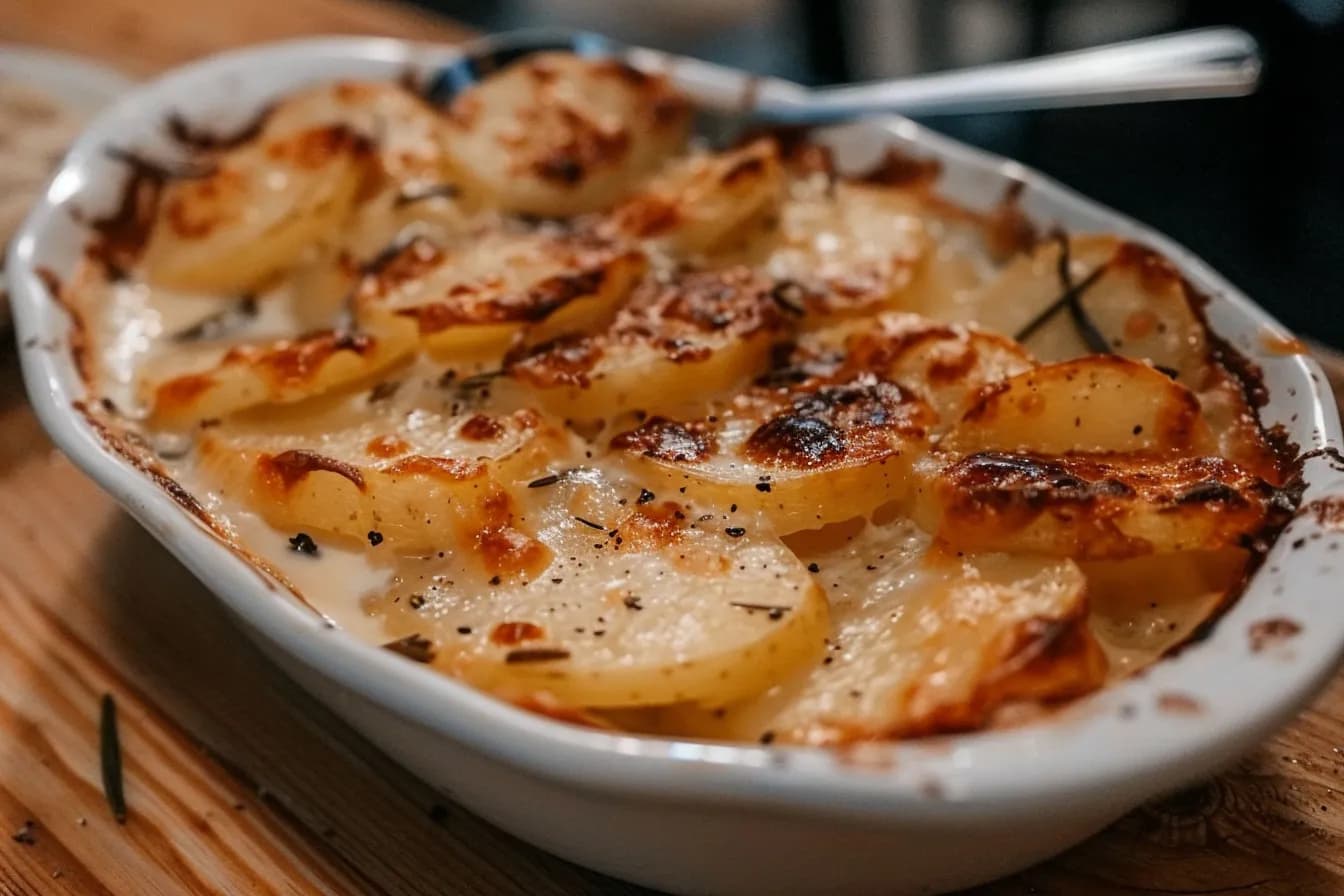
Gratin Dauphinois
Potato gratin without cheese and without egg: just potatoes, cream, garlic, and nutmeg, exactly as it should be in the Dauphiné region.
 Dinner
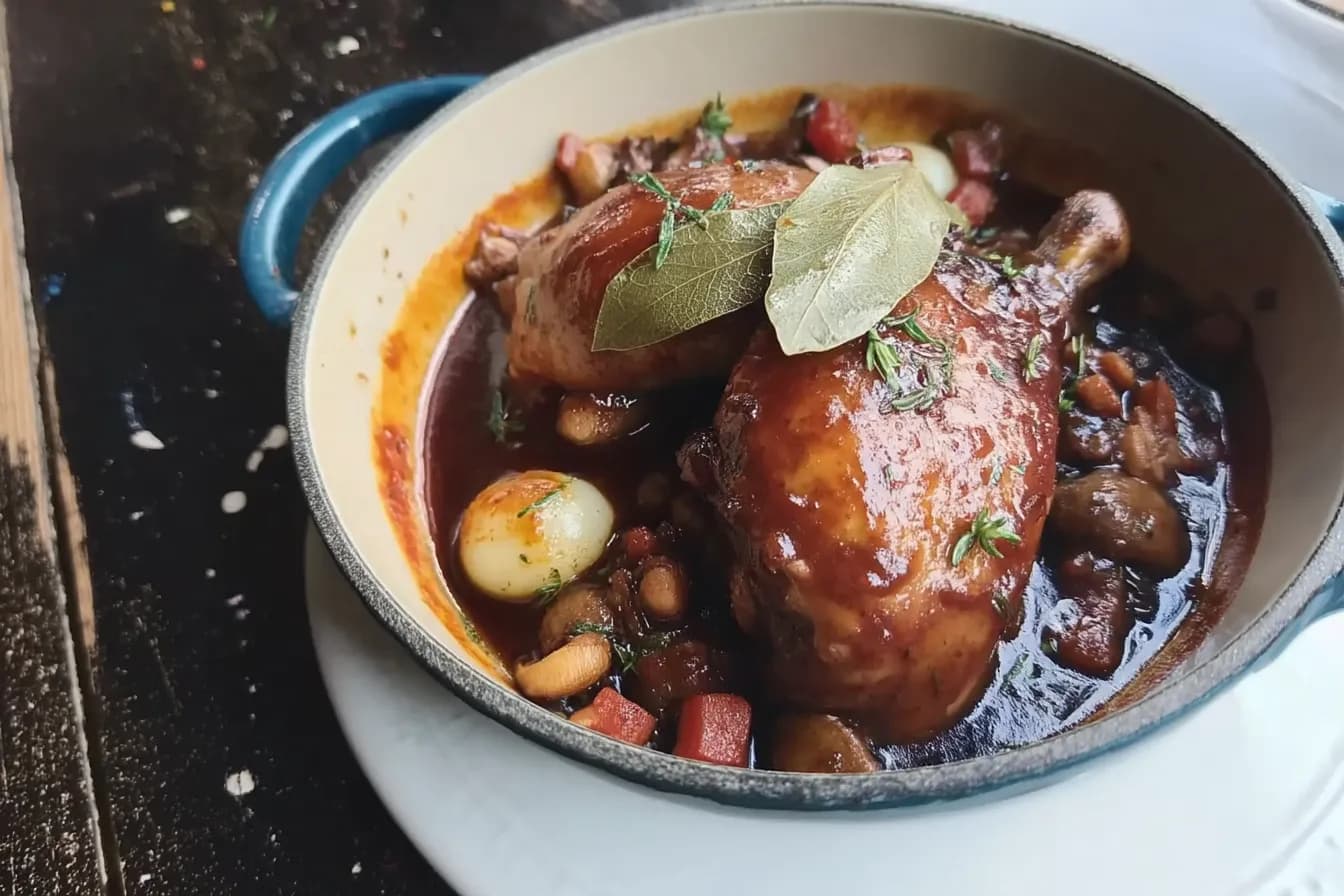
Coq au vin
Chicken in red wine with bacon, pearl onions, and mushrooms, the ultimate Burgundian braise.
 Dinner
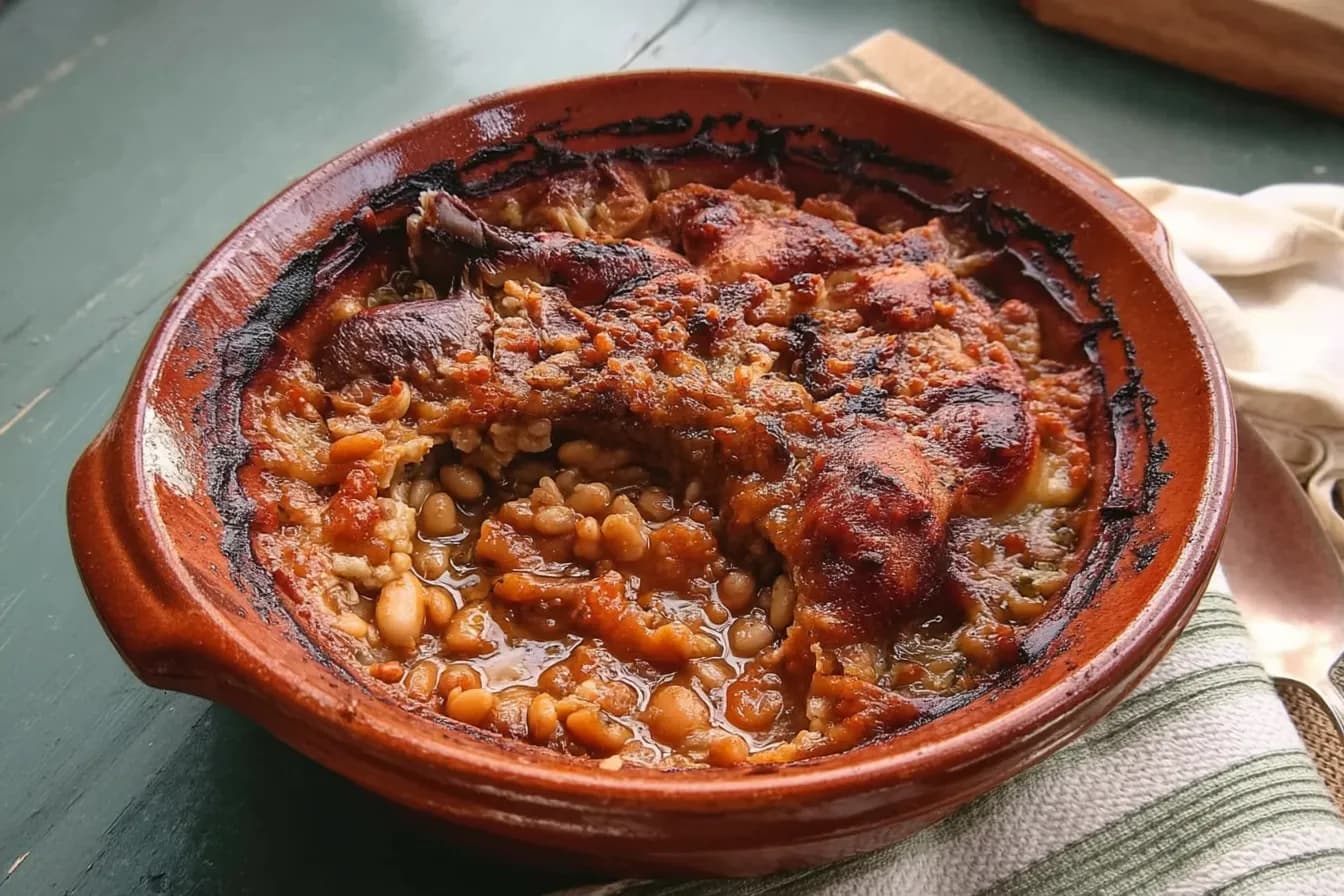
Cassoulet
Bean stew from the Languedoc with duck, sausage, and pork, and the crust that is pushed down seven times.