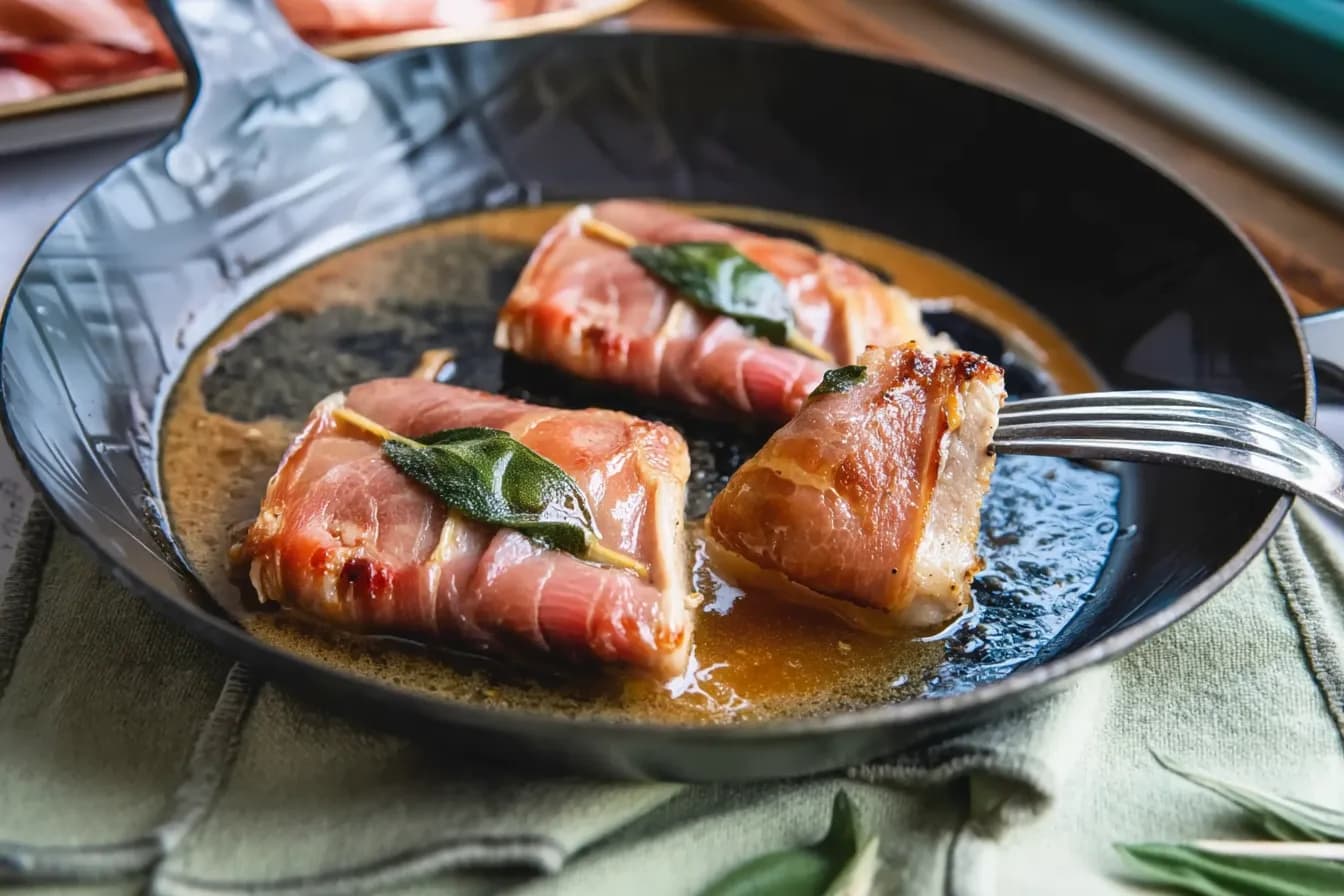
Saltimbocca alla Romana
Veal cutlets with sage and prosciutto, ready in ten minutes, and the sage goes face down.
- Preparation
- 15 min
- Cook/bake time
- 10 min
- Total
- 25 min
- Difficulty
- Easy
- Calories
- 492 kcal
- Servings
- 4
- Prep
- 15 min
- Cooking & baking
- 10 min
Veal cutlets with sage and prosciutto, ready in ten minutes, and the sage goes face down. "Saltimbocca" means "jumps in the mouth", and the name describes how fast the dish comes together. The only decision you have to make is which side goes into the pan first.
Why this works
The order in the pan determines the result, and it is counterintuitive: the side with prosciutto and sage goes face down first. The reason is the sage. Its essential oils are fat-soluble and only transfer into the butter upon direct contact with hot fat, where they then flavor the sauce. If the sage is on top, it just steams and releases hardly anything. At the same time, the thin prosciutto cooks in seconds and protects the veal underneath from the direct heat, keeping it juicy. The second side then only needs one minute. The white wine used for deglazing dissolves the fond and the flavor compounds bound within it; the cold butter at the end emulsifies into a creamy sauce without needing to be thickened.
Step-by-step instructions
- 1
Pound the cutlets
Place the veal cutlets between two layers of plastic wrap and pound them to about five millimeters thin. Thin is mandatory here: a thicker cutlet takes longer than the prosciutto can handle, which will then become dry and salty.
- 2
Top the meat
Pepper the cutlets, but do not salt them, as the prosciutto brings plenty of salt. Place a slice of ham and two sage leaves on each and secure everything with a toothpick. Rolling them up is a later invention; classically, they remain flat.
- 3
Dredge in flour
Dredge only the **meaty** side in flour and tap off the excess. The flour will lightly thicken the sauce later; on the ham side, it would only form a pasty layer.
- 4
Fry the ham side first
Heat the butter and oil and place the cutlets in the pan with the ham and sage side facing down. Fry for two minutes, then flip and cook for another minute. This sequence is the core of the recipe: it is the only way the sage releases its oils into the butter.
- 5
Sauce from the fond
Remove the cutlets and keep them warm. Deglaze the pan with white wine, scrape up the fond, and let it reduce by half. Remove the pan from the heat and swirl in the ice-cold butter until the sauce is creamy. Pour over the cutlets and serve immediately.
Our best tips
- Do not salt. The Prosciutto di Parma brings so much salt that additional salt makes the dish inedible, so taste it at the table first.
- The sage side goes face down first. It is the only step that distinguishes Saltimbocca from any other veal cutlet.
- Fresh sage, not dried. Dried sage has long lost its volatile oils and tastes like hay instead of sage.
Tasty variations
With mozzarella
Place a thin slice of mozzarella between the meat and the ham. Not Roman, but common in Northern Italy and more popular with children.
With chicken
Chicken breast sliced lengthwise and pounded instead of veal. Significantly cheaper, but needs one minute longer per side.
Nutrition facts
| Calories | 492 kcal |
|---|---|
| Protein | 38 g |
| Carbohydrates | 6 g |
| – of which sugar | 1 g |
| Fat | 32 g |
| Fiber | 1 g |
Where the 492 kcal come from
per serving
Calculated from the ingredients – how we do it
We add up reference values for every ingredient and divide by the number of servings. These assumptions are baked in:
- Reference values per 100 g – for the raw ingredient, exactly as listed.
- Tinned goods count at drained weight, bone-in meat at purchase weight: you eat about 70 per cent of a chicken thigh and leave the rest.
- Water evaporates as you cook. The energy stays in the pot, the weight does not – so the figure is per serving, not per 100 g of finished dish.
- Anything listed without a quantity – “salt and pepper” – is not counted.
A guide value, not a lab measurement: no two onions weigh the same, and fat content varies from pack to pack.
Frequently asked questions
Why does the sage go face down?
Because its essential oils are fat-soluble and only transfer into the sauce upon direct contact with the hot butter. If the sage is on top, it just steams and contributes hardly anything.
How many calories does Saltimbocca have?
Around 490 kcal per portion with two cutlets, without side dishes. Veal is lean, so the calories come mostly from the butter and Prosciutto di Parma.
Do I need to salt the cutlets?
No, on the contrary. Prosciutto di Parma is already heavily salted, and additional salt quickly makes the dish inedible. Just pepper and taste at the table.
Are Saltimbocca rolled or fried flat?
Classically flat, secured with a toothpick. The rolled version is a later invention. It looks prettier, but the sage no longer comes into contact with the pan.
Comments & ratings(0)
Sign in to rate and comment on this recipe.
You might also like
 Pasta
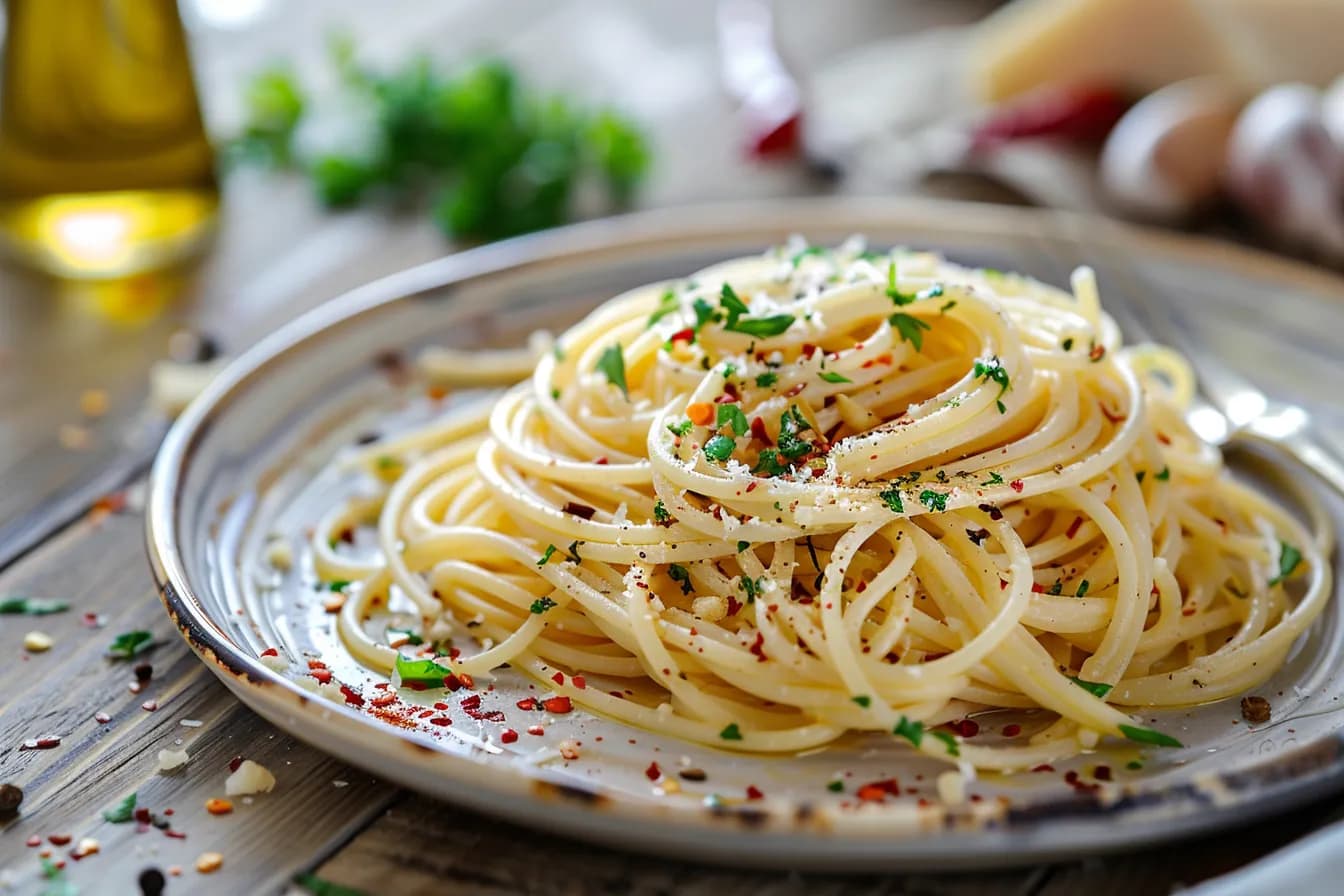
PastaSpaghetti Aglio e Olio
Garlic, good olive oil, chili, and parsley make this the fastest brilliant pasta dish ever.
 Pasta
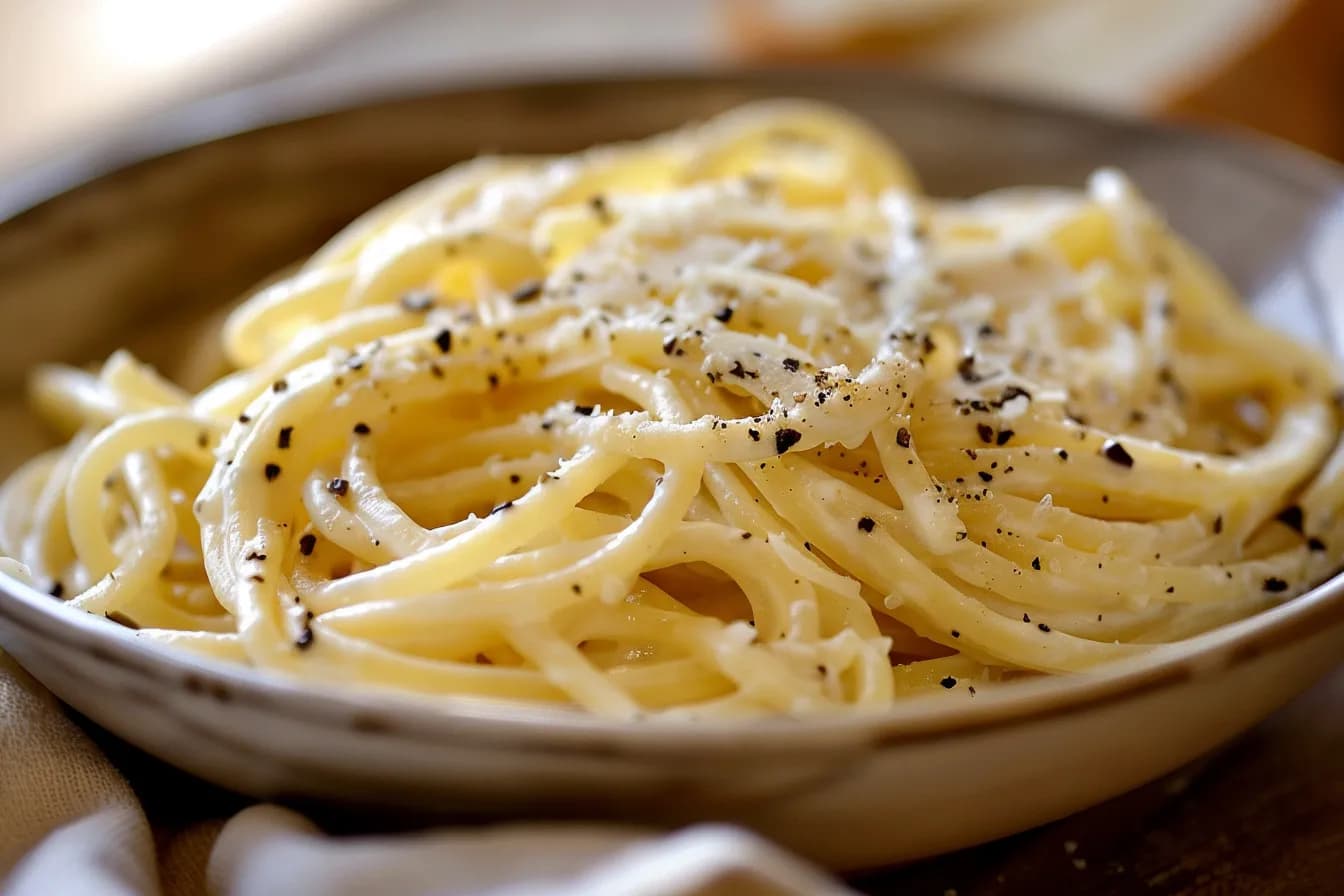
PastaCacio e Pepe
Just Pecorino, pepper, and pasta water, the high art of Roman simplicity.
 Dinner
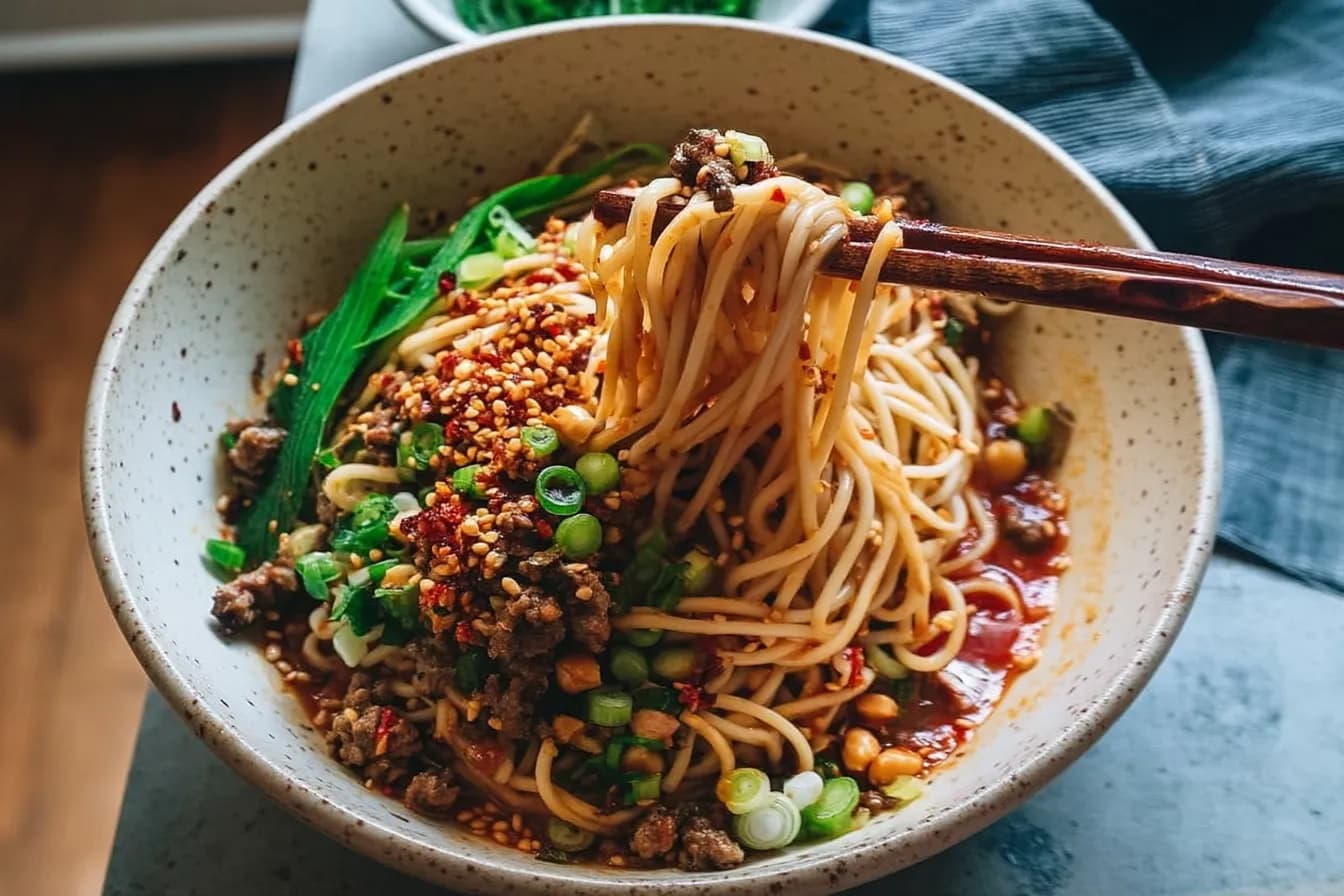
Dan Dan Noodles
Sichuan noodles with crispy minced pork and a sauce waiting at the bottom of the bowl, not served as a soup.