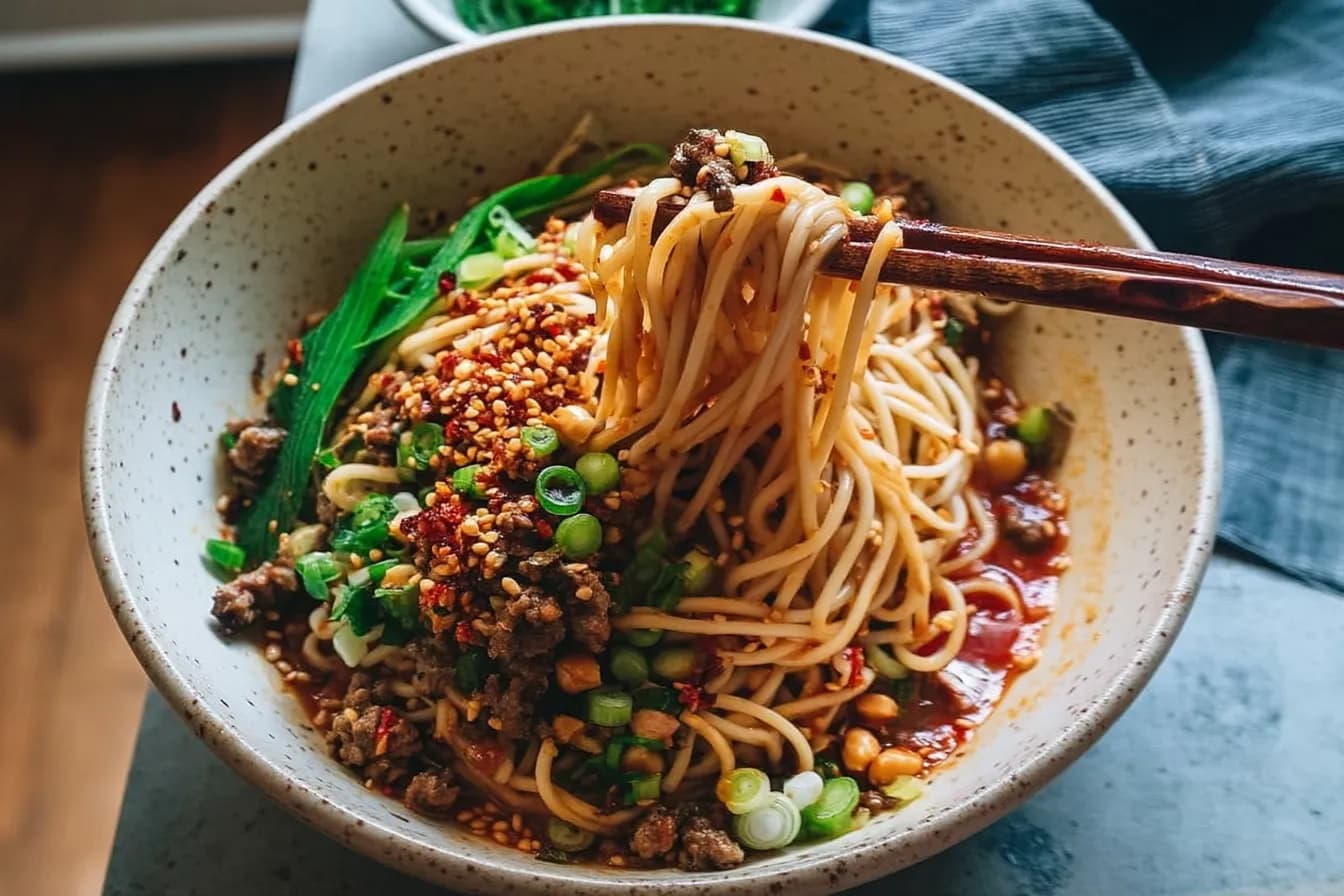
Dan Dan Noodles
Sichuan noodles with crispy minced pork and a sauce waiting at the bottom of the bowl, not served as a soup.
- Preparation
- 15 min
- Cook/bake time
- 15 min
- Total
- 30 min
- Difficulty
- Easy
- Calories
- 1093 kcal
- Servings
- 2
- Prep
- 15 min
- Cooking & baking
- 15 min
Sichuan noodles with crispy minced pork and a sauce waiting at the bottom of the bowl, not served as a soup. The original is a street food dish: a small amount of highly concentrated sauce at the bottom, hot noodles on top, and everything is tossed together at the table. The Sichuan pepper is not just one spice among many, but the actual sensation.
Why this works
Botanically, Sichuan pepper is not a pepper and does not work through heat. Its active compound, hydroxy-alpha-sanshool, stimulates touch receptors in the lips and on the tongue at a frequency of around fifty hertz, which the brain interprets as a tingling or slight numbness. This sensation is the reason why Sichuan cuisine is called 'málà', meaning 'numbing and spicy'. The tingling of the sanshool and the heat of the capsaicin from the chili are two different stimuli that amplify each other. The active compound is volatile, which is why pre-ground Sichuan pepper has almost none of it left after a few months. The minced meat is fried for a long time until it is truly crispy, because the dry, crispy crumbs are the only texture that the sauce does not soften.
Step-by-step instructions
- 1
Grind the Sichuan pepper
Dry-roast the Sichuan pepper in a pan for one minute until fragrant, then grind it finely in a mortar. Pre-ground Sichuan pepper has largely lost its volatile sanshool and barely tingles anymore. This single step determines whether the dish has its signature characteristic.
- 2
Fry the minced meat until crispy
Fry the minced pork in hot oil without moving it early on, then break it apart. Continue frying until it is truly crispy and dark brown, which normally takes eight minutes. Deglaze with soy sauce and Shaoxing wine, and let the liquid evaporate completely.
- 3
Sauce in the bowls
Mix the sesame paste, soy sauce, chili oil, Chinkiang vinegar, garlic, sugar, and Sichuan pepper, and divide the sauce between two bowls. It stays at the bottom, which is not a mistake but the very design of this dish.
- 4
Boil the noodles
Boil the noodles until al dente and blanch the Pak Choi along with them during the last 60 seconds. Save four tablespoons of the noodle water and stir it into the sauce. The hot, starchy water thins it to the right consistency and helps it cling to the noodles later.
- 5
Layer and serve
Place the drained noodles on top of the sauce, pile the crispy minced meat on top, and sprinkle with spring onions and peanuts. At the table, mix vigorously from the bottom up, as only then will the sauce be distributed.
Our best tips
- Buy whole Sichuan peppercorns and grind them yourself in a mortar. The active compound is volatile, and pre-ground products from the supermarket taste like wood instead of tingling.
- The minced meat can easily look too dark. Crispy crumbs are the goal, as soft minced meat disappears into the sauce and contributes nothing.
- Chinkiang vinegar is a dark rice vinegar with a malty note and can be surprisingly well replaced by balsamic vinegar. Light rice vinegar, on the other hand, does not fit.
Tasty variations
As a soup
Pour 300 ml of hot broth into the bowl before adding the noodles. This is the variation from which Japanese Tantanmen originated.
Vegetarian
Replace the minced pork with 200 g of finely chopped shiitake mushrooms and fry them until crispy for the same amount of time. The mushrooms bring additional umami.
Nutrition facts
| Calories | 1093 kcal |
|---|---|
| Protein | 45 g |
| Carbohydrates | 107 g |
| – of which sugar | 7 g |
| Fat | 54 g |
| Fiber | 8 g |
Where the 1,093 kcal come from
per serving
Calculated from the ingredients – how we do it
We add up reference values for every ingredient and divide by the number of servings. These assumptions are baked in:
- Reference values per 100 g – for the raw ingredient, exactly as listed.
- Tinned goods count at drained weight, bone-in meat at purchase weight: you eat about 70 per cent of a chicken thigh and leave the rest.
- Water evaporates as you cook. The energy stays in the pot, the weight does not – so the figure is per serving, not per 100 g of finished dish.
- Anything listed without a quantity – “salt and pepper” – is not counted.
A guide value, not a lab measurement: no two onions weigh the same, and fat content varies from pack to pack.
Frequently asked questions
What is the difference to Tantanmen?
Dan Dan is the Chinese original from Sichuan: not a soup, but a small amount of concentrated sauce at the bottom of the bowl, significantly spicier, and made with Sichuan pepper. Tantanmen is the Japanese adaptation as a mild, creamy ramen soup.
How many calories do Dan Dan noodles have?
Around 1,090 kcal per serving, making it a filling main course. Sesame paste and chili oil together contribute around 225 kcal per serving and are also the core of the dish.
Why doesn't my Sichuan pepper tingle?
It was pre-ground or too old. The active compound sanshool is volatile and loses its potency significantly within a few months. Buy whole peppercorns, roast them briefly, and grind them fresh.
Can I reduce the spiciness?
Yes, by adjusting the chili oil, as it carries the heat. The Sichuan pepper, however, should not be reduced. It is not spicy, but rather creates the tingling sensation that defines the dish.
Comments & ratings(0)
Sign in to rate and comment on this recipe.
You might also like
 Pasta
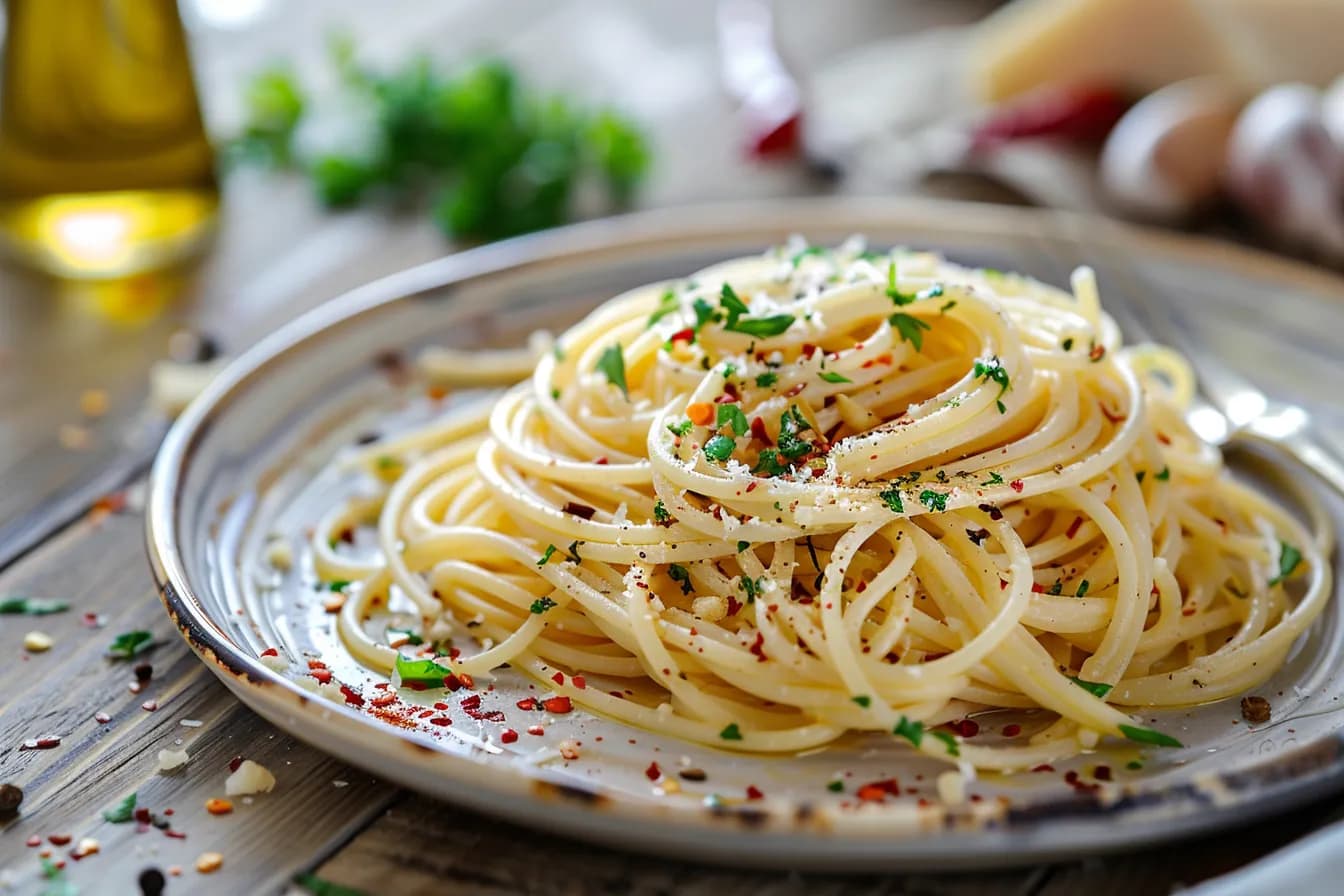
PastaSpaghetti Aglio e Olio
Garlic, good olive oil, chili, and parsley make this the fastest brilliant pasta dish ever.
 Pasta
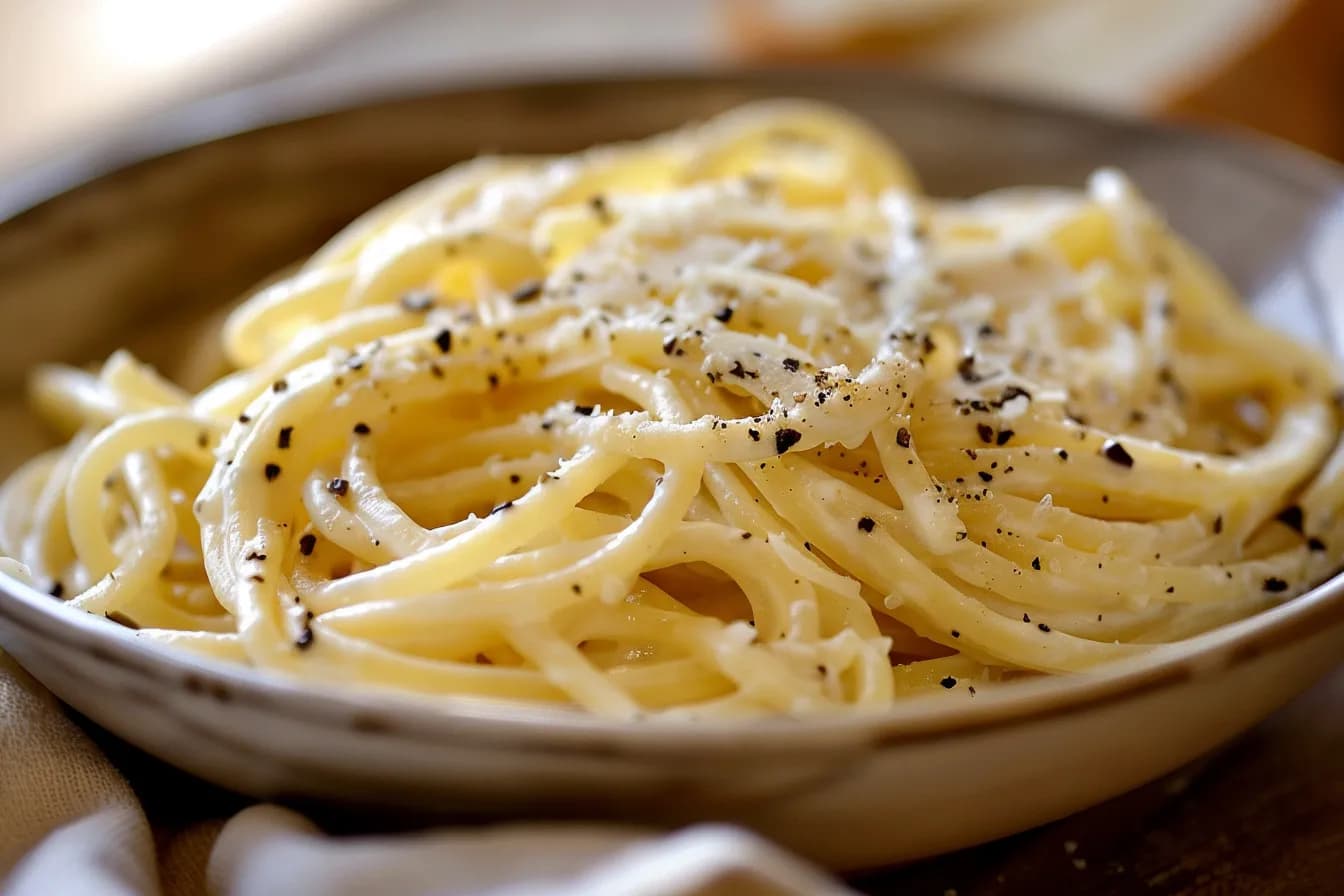
PastaCacio e Pepe
Just Pecorino, pepper, and pasta water, the high art of Roman simplicity.
 Quick Meals
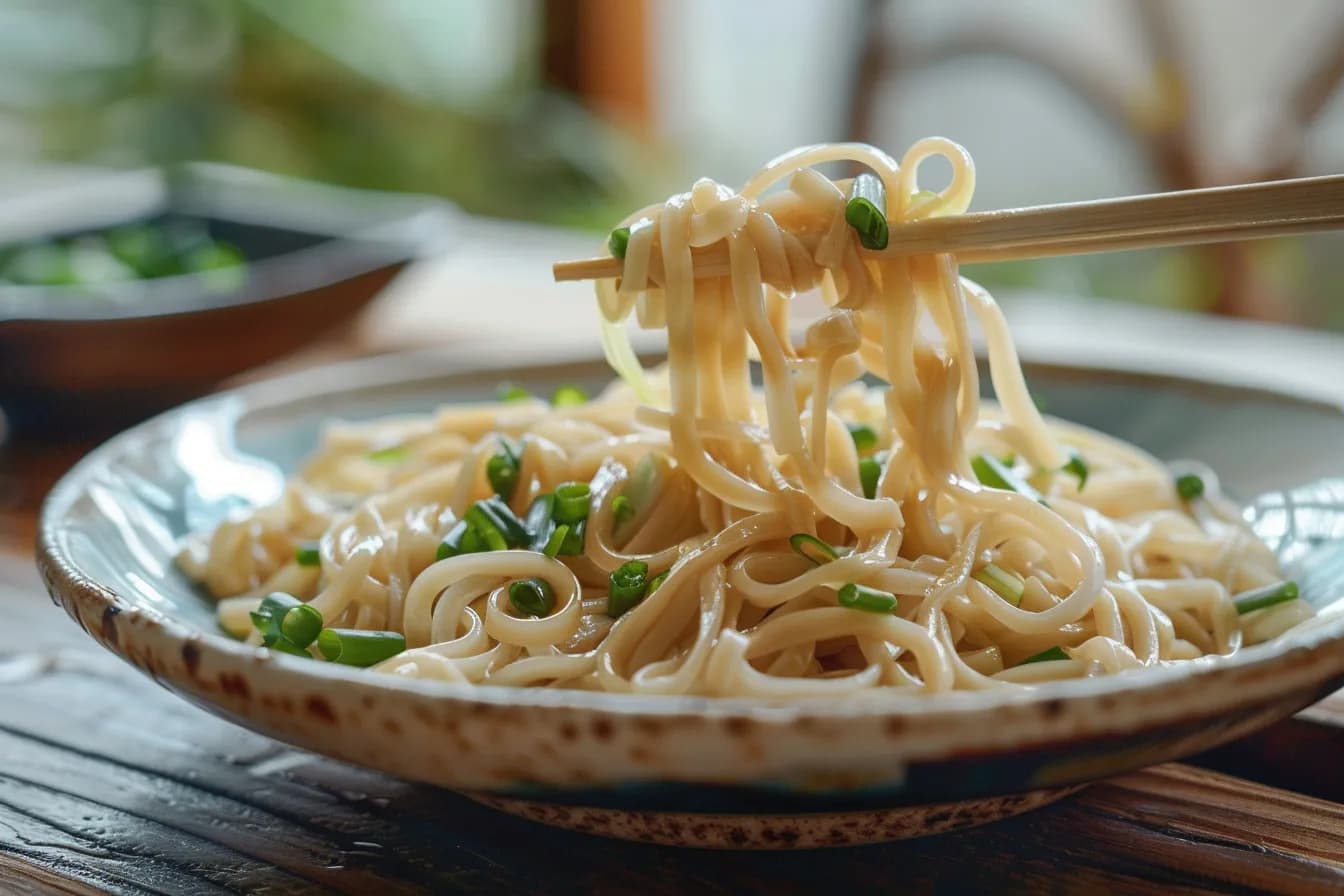
Longevity Noodles
Long, uncut wok noodles with pak choi and shiitake: the classic Chinese birthday dish.