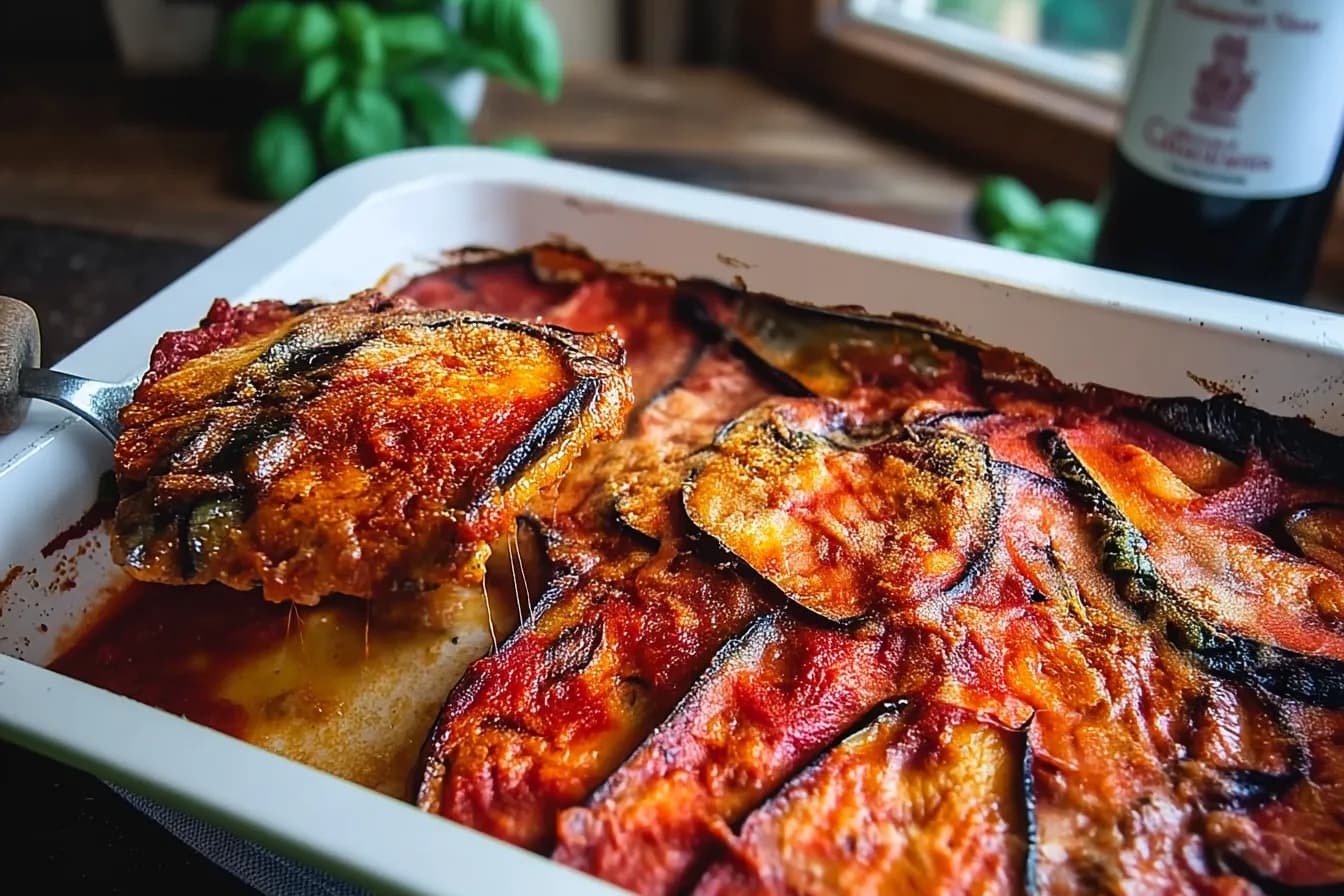
Parmigiana di melanzane
Eggplant casserole from southern Italy, and the reason why the slices are salted beforehand.
- Preparation
- 30 min
- Cook/bake time
- 1 hr 5 min
- Total
- 3 hr 5 min
- Difficulty
- Easy
- Calories
- 430 kcal
- Servings
- 6
- Prep
- 30 min
- Cooking & baking
- 1 hr 5 min
- Resting
- 1 hr 30 min
Only 1 hr 35 min of that is hands-on – the rest takes care of itself.
Eggplant casserole from southern Italy, and the reason why the slices are salted beforehand. Eggplants are a sponge when cut and absorb unlimited oil in the pan; salted and pressed, they absorb a fraction of it. Without this step, the Parmigiana is heavy and oily instead of juicy.
Why this works
Eggplant flesh consists of air-filled cells with a high water content. When cut, it acts like a sponge and absorbs practically unlimited oil in the pan. Salt solves this via osmosis: It draws water out of the cells, which collapse in the process, and the compacted sponge can subsequently absorb much less fat. The second effect is flavor-related, but hardly plays a role with modern varieties: Bitter substances are also lost with the escaping juice. Pre-baking in the oven instead of deep-frying works in the same direction. The dry heat causes the cells to collapse before they can absorb much fat, and with the same browning, only a fraction of the oil ends up in the casserole. The resting time after baking is not a courtesy: When warm, the Parmigiana is liquid and runs apart on the plate.
Step-by-step instructions
- 1
Drain the eggplants
Salt the eggplant slices on both sides and let them stand in a sieve for 45 minutes, weighted down with a plate. Juice visibly escapes, and the cell structure collapses, which is exactly what ensures that they later absorb a fraction of the oil. Then pat thoroughly dry.
- 2
Pre-bake in the oven
Brush the slices thinly with olive oil and bake them on trays at 220 °C for 20 minutes until they are soft and golden at the edges. Turn once. The oven version needs a fraction of the oil that the pan devours, and makes the casserole edible in the first place.
- 3
Cook the tomato sauce
Sweat the garlic in olive oil, add the tomatoes and let the sauce boil down uncovered for 25 minutes until it is thick. It really has to be thick, as a sauce that is too liquid makes the casserole soupy and it cannot be cut later. Fold in the basil only at the end.
- 4
Layering
In a baking dish, layer sauce, eggplants, mozzarella and Parmesan alternately, starting with sauce and ending with Parmesan. The mozzarella must be well drained: Its water is the second source of a watery casserole.
- 5
Bake and let rest
Bake the Parmigiana at 190 °C for about 40 minutes until the surface is deep golden brown. Then let it stand for at least 45 minutes, as lukewarm is the norm in southern Italy. Straight from the oven, every portion melts on the plate.
Our best tips
- Salting is the step that decides between heavy and juicy. 45 minutes is the minimum, an hour is better.
- Let the mozzarella drain really well, ideally for an hour in a sieve. Otherwise, together with the eggplants, it brings so much water that the casserole swims.
- Serve lukewarm, not hot. In southern Italy, Parmigiana often stands for an hour before it comes to the table, and only then does it hold its shape and taste rounder.
Tasty variations
With zucchini
Replace half of the eggplants with zucchini. Zucchini do not need to be salted, but also need pre-baking, otherwise they water in the casserole.
Without cheese
Replace mozzarella and Parmesan with a thick béchamel made from oat milk and season with nutritional yeast. Not classic, but the eggplant technique carries the dish.
Nutrition facts
| Calories | 430 kcal |
|---|---|
| Protein | 23 g |
| Carbohydrates | 14 g |
| – of which sugar | 11 g |
| Fat | 29 g |
| Fiber | 9 g |
Where the 430 kcal come from
per serving
Calculated from the ingredients – how we do it
We add up reference values for every ingredient and divide by the number of servings. These assumptions are baked in:
- Reference values per 100 g – for the raw ingredient, exactly as listed.
- Tinned goods count at drained weight, bone-in meat at purchase weight: you eat about 70 per cent of a chicken thigh and leave the rest.
- Water evaporates as you cook. The energy stays in the pot, the weight does not – so the figure is per serving, not per 100 g of finished dish.
- Anything listed without a quantity – “salt and pepper” – is not counted.
A guide value, not a lab measurement: no two onions weigh the same, and fat content varies from pack to pack.
Frequently asked questions
Do I really have to salt the eggplants?
Yes, but not because of the bitter substances, which modern varieties hardly have anymore. The salt draws water out of the cells, which collapse in the process, and the compacted slices subsequently absorb significantly less oil.
How many calories does Parmigiana have?
Around 430 kcal per portion for six portions. Mozzarella and Parmesan together make up a good half, while the eggplants themselves only contribute about 60 kcal per portion.
Why is my Parmigiana watery?
Usually tomato sauce that is too liquid or undrained mozzarella. Both bring water that cannot escape in the closed casserole. The sauce must be thick enough that the spoon leaves a trail.
Is Parmesan included because it is called "Parmigiana"?
The name is disputed. One derivation traces it back to the Sicilian "parmiciana" for shutters, whose overlapping slats are reminiscent of the layered eggplants, so Parmesan would then only be a coincidence.
Comments & ratings(0)
Sign in to rate and comment on this recipe.
You might also like
 Basic Recipes
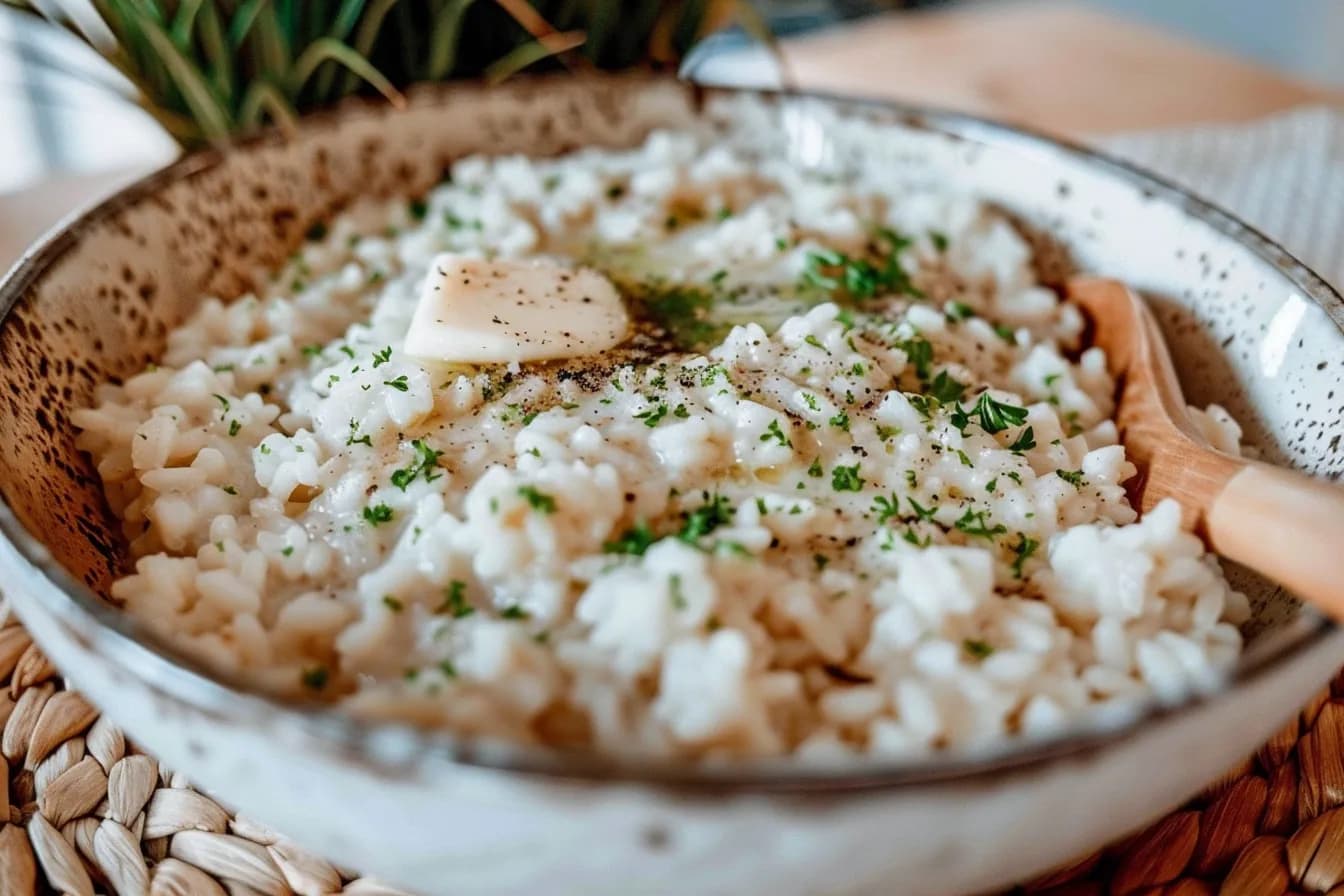
Risotto
The basic technique for any risotto, along with the explanation of why cold butter is added at the end.
 Dinner
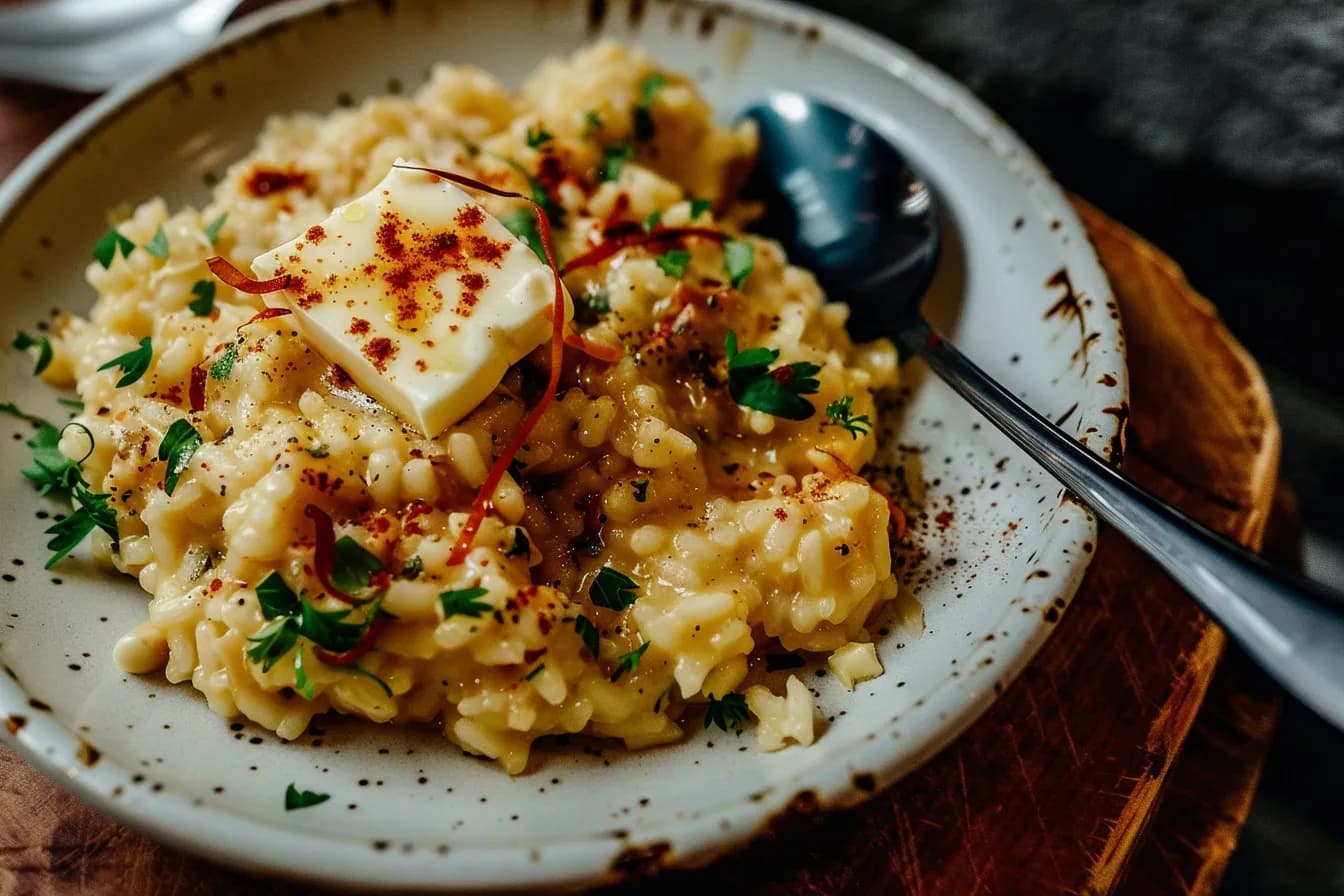
Risotto alla Milanese
Saffron risotto from Milan, golden yellow, with beef marrow, and the classic accompaniment to ossobuco.
 Pasta
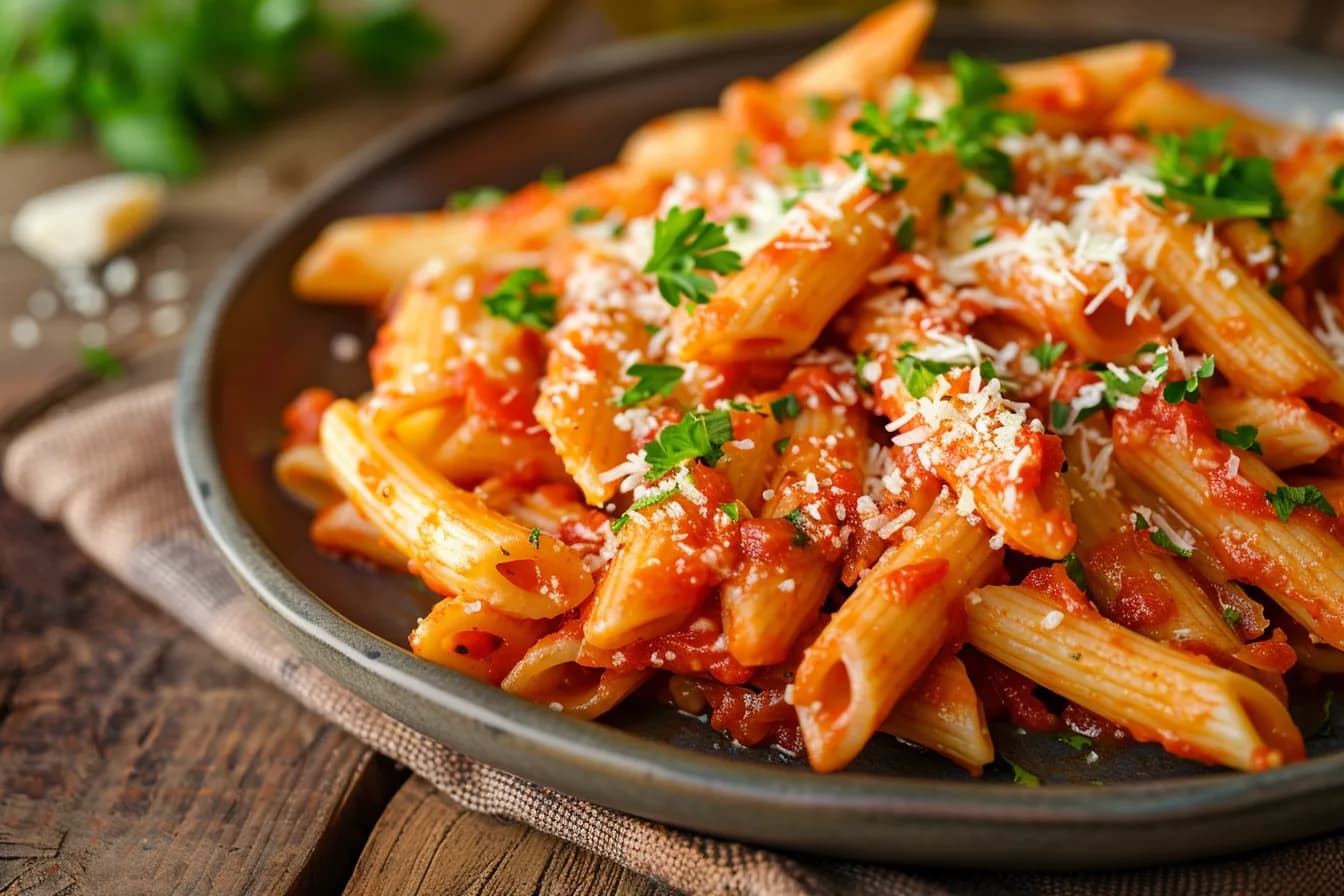
PastaPenne all'Arrabbiata
Fiery tomato sauce with garlic and chili, Roman, spicy, and ready in 20 minutes.