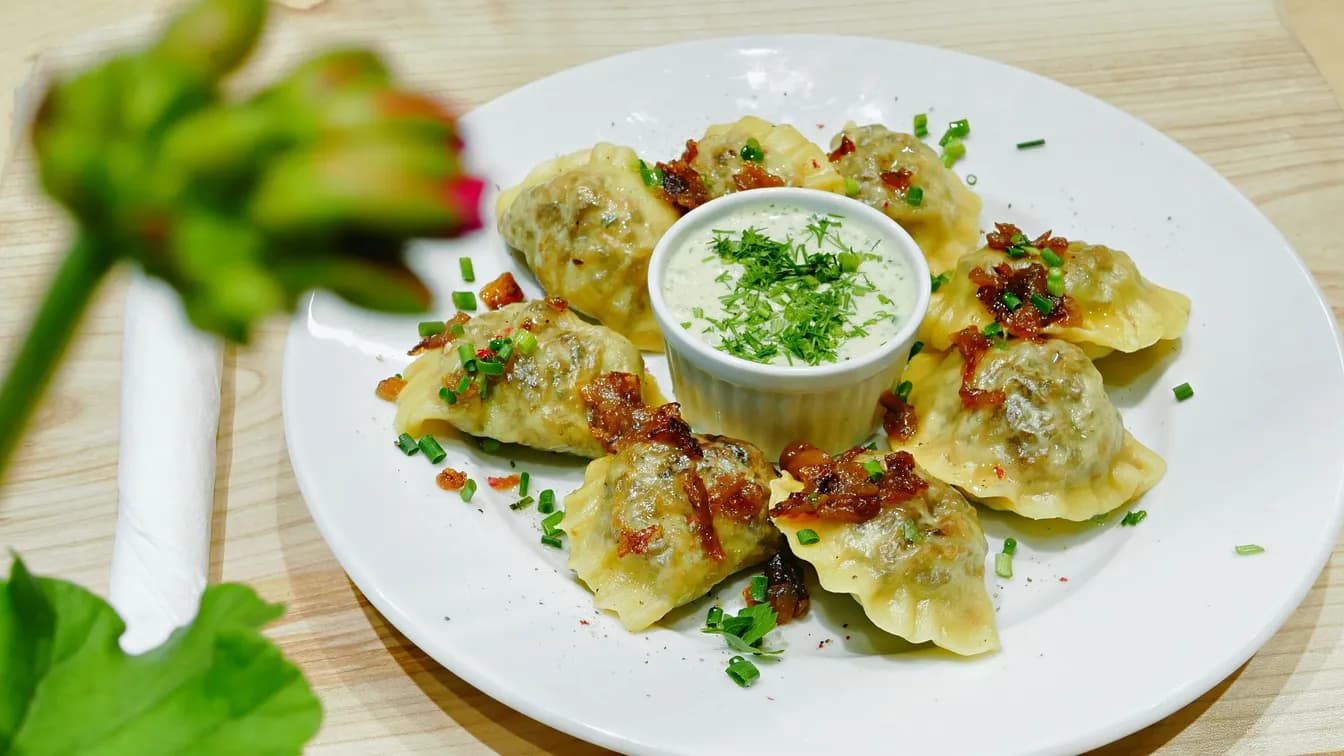
Pierogi Ruskie
Polish dumplings with a potato and quark filling, and the dough requires boiling hot water, not cold.
- Preparation
- 1 hr 5 min
- Cook/bake time
- 25 min
- Total
- 2 hr
- Difficulty
- Medium
- Calories
- 825 kcal
- Servings
- 4
- Prep
- 1 hr 5 min
- Cooking & baking
- 25 min
- Resting
- 30 min
Only 1 hr 30 min of that is hands-on – the rest takes care of itself.
Polish dumplings with a potato and quark filling, and the dough requires boiling hot water, not cold. Hot water dough is significantly more elastic and doesn't tear when rolled out, which makes all the difference with dumplings. By the way, "Ruskie" doesn't mean Russian, but refers to Red Ruthenia in the present-day border region with Ukraine.
Why this works
Hot water dough is the reason why Polish dumplings can be rolled out so thinly without tearing. Boiling water immediately gelatinizes some of the flour starch, the starch granules burst and bind water, making the dough pliable and stretchy instead of springing back elastically. At the same time, gluten development is slowed down because some of the water is already bound by the starch. The result is a dough that can be shaped like modeling clay and still holds together when boiled. The filling, in turn, must be completely cooled before it is used: warm filling creates steam in the closed dumpling, which expands during boiling and bursts the seam.
Step-by-step instructions
- 1
Prepare the hot water dough
Put the flour and salt in a bowl and pour the **boiling** water with the oil over it. Stir first with a spoon, then knead for ten minutes as soon as the dough is lukewarm. It should be smooth and soft like modeling clay. Let rest covered for thirty minutes.
- 2
Prepare the filling
Mash the boiled potatoes, roast the diced onions in butter until golden brown and mix both with the well-drained quark. Season heavily with salt and pepper, the filling must taste significantly more seasoned than it should on its own, because the neutral dough dilutes it. **Let cool completely.**
- 3
Roll out and cut
Roll out the dough in batches to two millimeters and cut out circles of eight centimeters. Keep the rest under a damp cloth, hot water dough dries quickly in the air, and dry edges no longer seal.
- 4
Fill and seal
Place a teaspoon of cold filling on each circle, fold it over and press the edge firmly together, first with your fingers, then with a fork. Make sure that no air remains trapped: it expands in the boiling water and bursts the seam.
- 5
Boil and fry
Boil the pierogi in batches in bubbling salted water. They are done when they float to the top, plus two minutes. Lift them out and briefly fry them in butter with the onion rings, boiled alone they are common in Poland, fried is the widespread second use. Serve with sour cream.
Our best tips
- Boiling water, not cold. Hot water dough can be rolled out thinner and doesn't tear, the difference is immediately noticeable with dumplings.
- The filling must be cold. Warm filling creates steam in the closed pocket, and the seam bursts open in the cooking water.
- Pierogi freeze excellently: pre-freeze raw on a tray, then into the bag. Frozen directly into boiling water, two minutes longer.
Tasty variations
Pierogi z kapustą i grzybami
Filling made of sauerkraut and dried wild mushrooms instead of potato and quark. The classic fasting variation, mandatory in Poland on Christmas Eve.
Sweet with berries
Filling made of blueberries or cherries with a little sugar and starch. Are only boiled, not fried, and served with sour cream and sugar.
Nutrition facts
| Calories | 825 kcal |
|---|---|
| Protein | 25 g |
| Carbohydrates | 106 g |
| – of which sugar | 12 g |
| Fat | 31 g |
| Fiber | 9 g |
Where the 825 kcal come from
per serving
Calculated from the ingredients – how we do it
We add up reference values for every ingredient and divide by the number of servings. These assumptions are baked in:
- Reference values per 100 g – for the raw ingredient, exactly as listed.
- Tinned goods count at drained weight, bone-in meat at purchase weight: you eat about 70 per cent of a chicken thigh and leave the rest.
- Water evaporates as you cook. The energy stays in the pot, the weight does not – so the figure is per serving, not per 100 g of finished dish.
- Anything listed without a quantity – “salt and pepper” – is not counted.
A guide value, not a lab measurement: no two onions weigh the same, and fat content varies from pack to pack.
Frequently asked questions
Why boiling water for the dough?
Boiling water immediately gelatinizes some of the flour starch. This makes the dough pliable and stretchy instead of elastic, it can be rolled out to two millimeters without springing back or tearing.
How many calories do Pierogi Ruskie have?
Around 825 kcal per serving for four servings, with butter, roasted onions and sour cream. Only boiled and without side dishes, a serving is around 510 kcal.
Does "Ruskie" mean Russian?
No. The name refers to Red Ruthenia, a historical region in the present-day border area between Poland and Ukraine. The dish has nothing to do with Russia.
Can I freeze them?
Very well, raw. Pre-freeze individually on a tray so they don't stick together, then transfer to a bag. Put frozen directly into boiling water and boil for two minutes longer.
Comments & ratings(0)
Sign in to rate and comment on this recipe.
You might also like
 Dinner
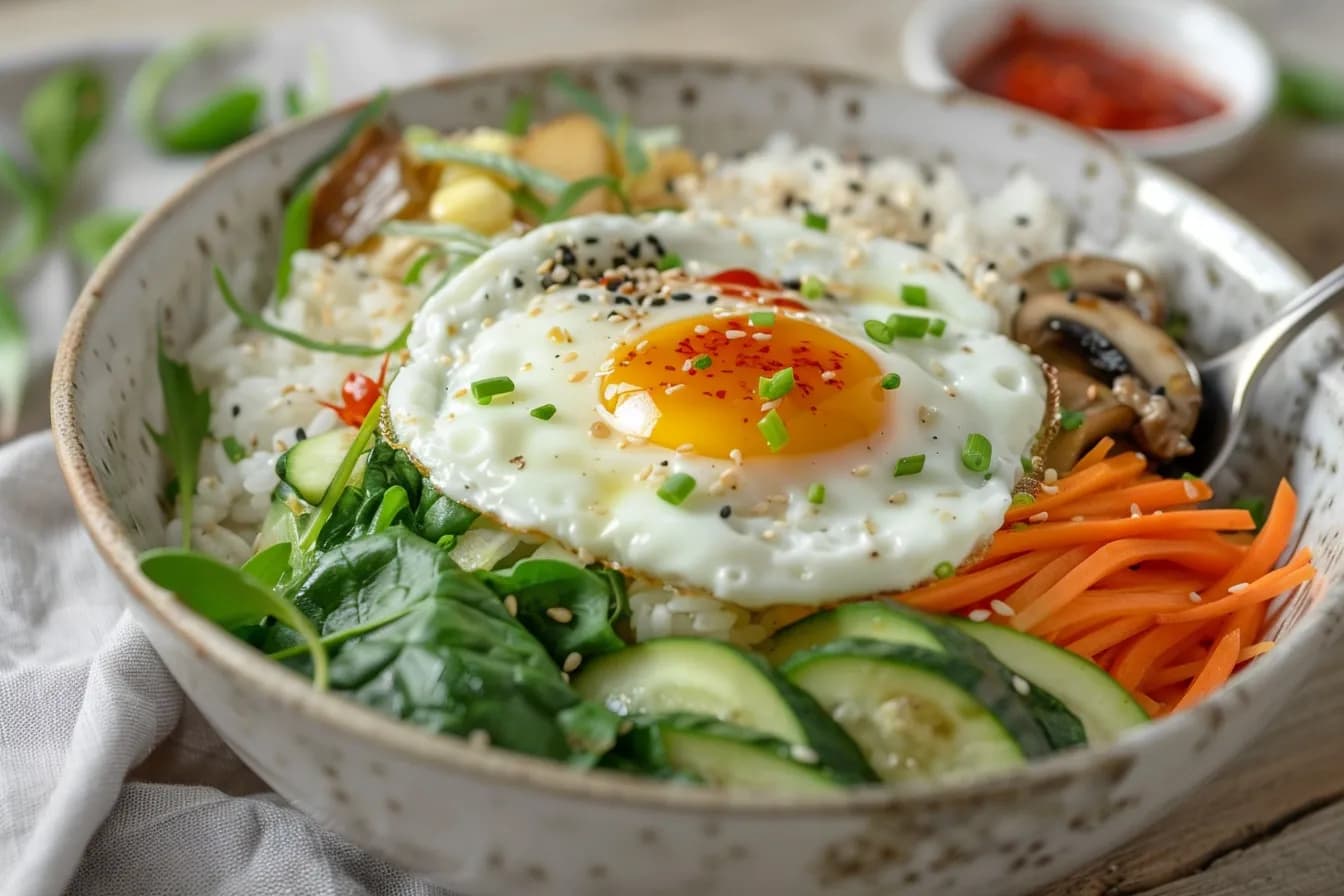
Bibimbap
Korean rice bowl with five individually seasoned vegetables, egg, and gochujang, meaning "mixed rice", and that is meant literally.
 Dinner
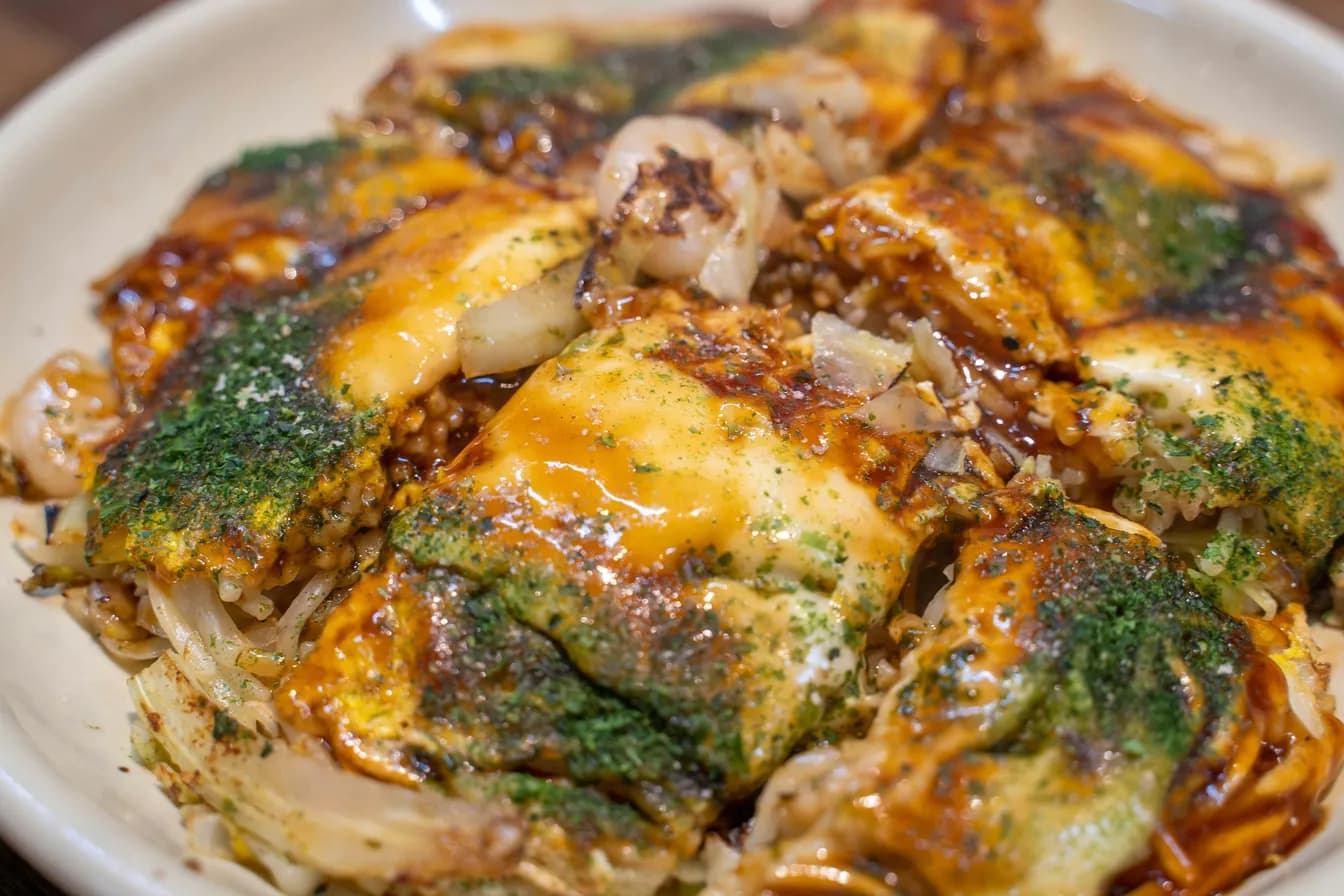
Okonomiyaki
Savory Japanese pancake with white cabbage, "grill what you like", and the cabbage makes it juicy instead of heavy.
 Basic Recipes
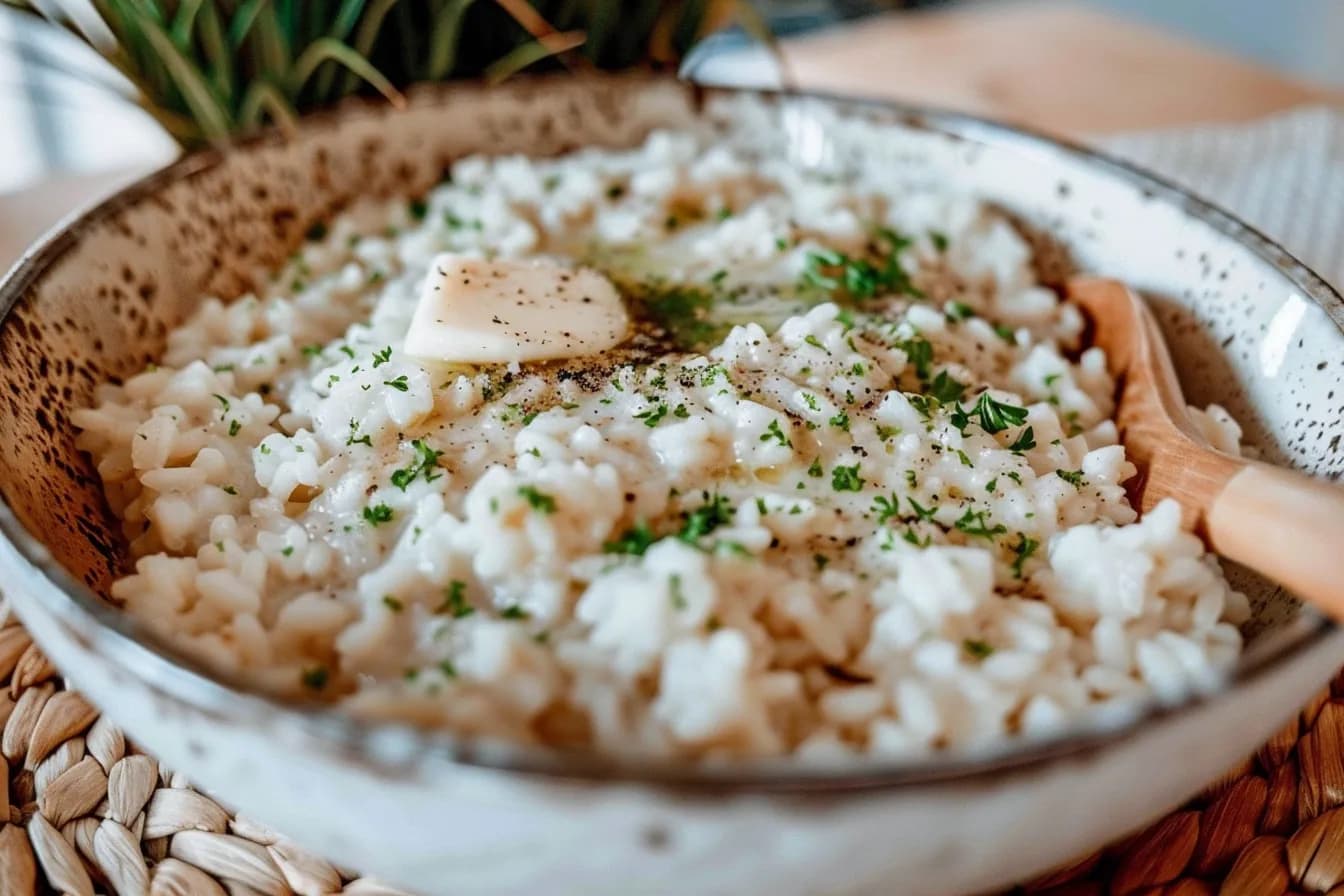
Risotto
The basic technique for any risotto, along with the explanation of why cold butter is added at the end.