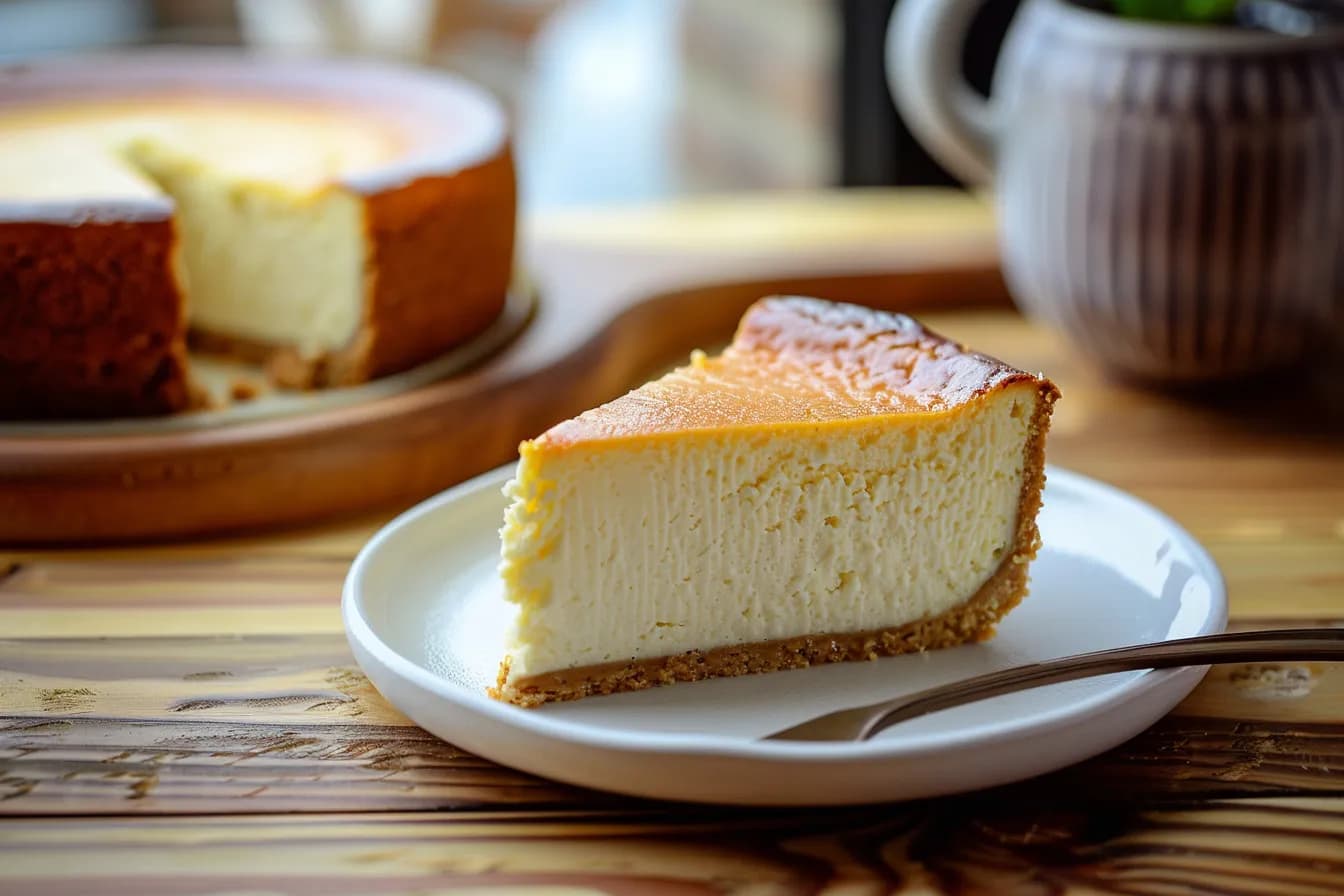
New York Cheesecake
Tall, dense cheesecake on a butter cookie crust, creamy and without a single crack.
- Preparation
- 30 min
- Cook/bake time
- 1 hr 25 min
- Total
- 9 hr 55 min
- Difficulty
- Medium
- Calories
- 484 kcal
- Servings
- 12
- Prep
- 30 min
- Cooking & baking
- 1 hr 25 min
- Resting
- 8 hr
Only 1 hr 55 min of that is hands-on – the rest takes care of itself.
Tall, dense cheesecake on a butter cookie crust, creamy and without a single crack. The water bath and slow cooling in the turned-off oven are not inconveniences, but exactly the two steps that prevent cracks. A cake that needs a day of rest and in return dominates any coffee table.
Why this works
Cracks occur because the egg whites get too hot during baking, contract, and the mixture holds onto the edges, which are already firm. The water bath keeps the temperature around the pan at 100 °C and thus the mixture in the gentle range; the slow cooling prevents the surface from shrinking faster than the core. Room temperature cream cheese is the third point: cold from the fridge, it remains in lumps that could later only be dissolved by overmixing, and overmixing beats in air, which causes the cake to rise and then crack.
Step-by-step instructions
- 1
Prepare the crust
Mix the cookie crumbs with melted butter, sugar, and salt, and press the mixture firmly into a 24 cm springform pan using the bottom of a glass, pulling up a small edge. Pre-bake the crust at 175 °C for ten minutes and let it cool. Then wrap the outside of the pan twice in aluminum foil so that no water enters in the water bath.
- 2
Whip the cream cheese
Whip the room temperature cream cheese with the sugar on low speed for two minutes until creamy, scraping down the sides of the bowl several times. All ingredients must really be at room temperature, because cold cream cheese forms lumps that will not dissolve later and will destroy the smooth texture.
- 3
Finish the mixture
Stir in the sour cream, cornstarch, vanilla extract, lemon juice, and salt. Then add the eggs one at a time and stir after each only until just incorporated. From now on, the rule is to beat in as little air as possible, because air bubbles expand in the oven and tear the surface open.
- 4
Bake in a water bath
Pour the mixture onto the pre-baked crust and tap the pan a few times on the work surface so that air bubbles rise. Place it in a deep roasting pan and pour boiling water up to half the height of the pan. Bake the cake at 160 °C for 70 to 75 minutes, until the edge is firm and the center still jiggles over a diameter of about 8 cm.
- 5
Cool slowly
Turn off the oven, wedge a wooden spoon handle in the door, and let the cake stand in the oven for an hour. Then another hour at room temperature and after that at least six hours, preferably overnight, in the refrigerator. Every shortened step in this chain significantly increases the risk of cracks.
Our best tips
- Really use all ingredients at room temperature. This is the most common reason for lumpy cheesecake mixtures.
- Hardly stir at all after adding the eggs. Beaten-in air is the second most common cause of cracks.
- The cake is done when the center still jiggles. If baked until firm, it will become dry and cracked as it cools.
Tasty variations
With berry sauce
Simmer 300 g of berries with 3 tablespoons of sugar and a little lemon juice, and serve cold with the cake.
Chocolate crust
Replace the butter cookies with chocolate cookies and reduce the amount of butter to 90 g.
Nutrition facts
| Calories | 484 kcal |
|---|---|
| Protein | 9 g |
| Carbohydrates | 43 g |
| – of which sugar | 34 g |
| Fat | 30 g |
| Fiber | 0 g |
Where the 484 kcal come from
per serving
Calculated from the ingredients – how we do it
We add up reference values for every ingredient and divide by the number of servings. These assumptions are baked in:
- Reference values per 100 g – for the raw ingredient, exactly as listed.
- Tinned goods count at drained weight, bone-in meat at purchase weight: you eat about 70 per cent of a chicken thigh and leave the rest.
- Water evaporates as you cook. The energy stays in the pot, the weight does not – so the figure is per serving, not per 100 g of finished dish.
- Anything listed without a quantity – “salt and pepper” – is not counted.
A guide value, not a lab measurement: no two onions weigh the same, and fat content varies from pack to pack.
Frequently asked questions
Why does my cheesecake still crack?
Usually too much air in the mixture or cooling down too quickly. A crack is purely visual, by the way, it changes nothing in taste, and a berry sauce covers it reliably.
Can I skip the water bath?
Possible, but then you bake at 150 °C and place a bowl of water on the oven floor. The texture will be slightly less creamy and cracks are more likely.
How long does the cake keep?
Five days in the refrigerator, well covered. It can also be frozen in slices and thaws in the refrigerator overnight.
Comments & ratings(0)
Sign in to rate and comment on this recipe.
You might also like
 Cakes & Pastries
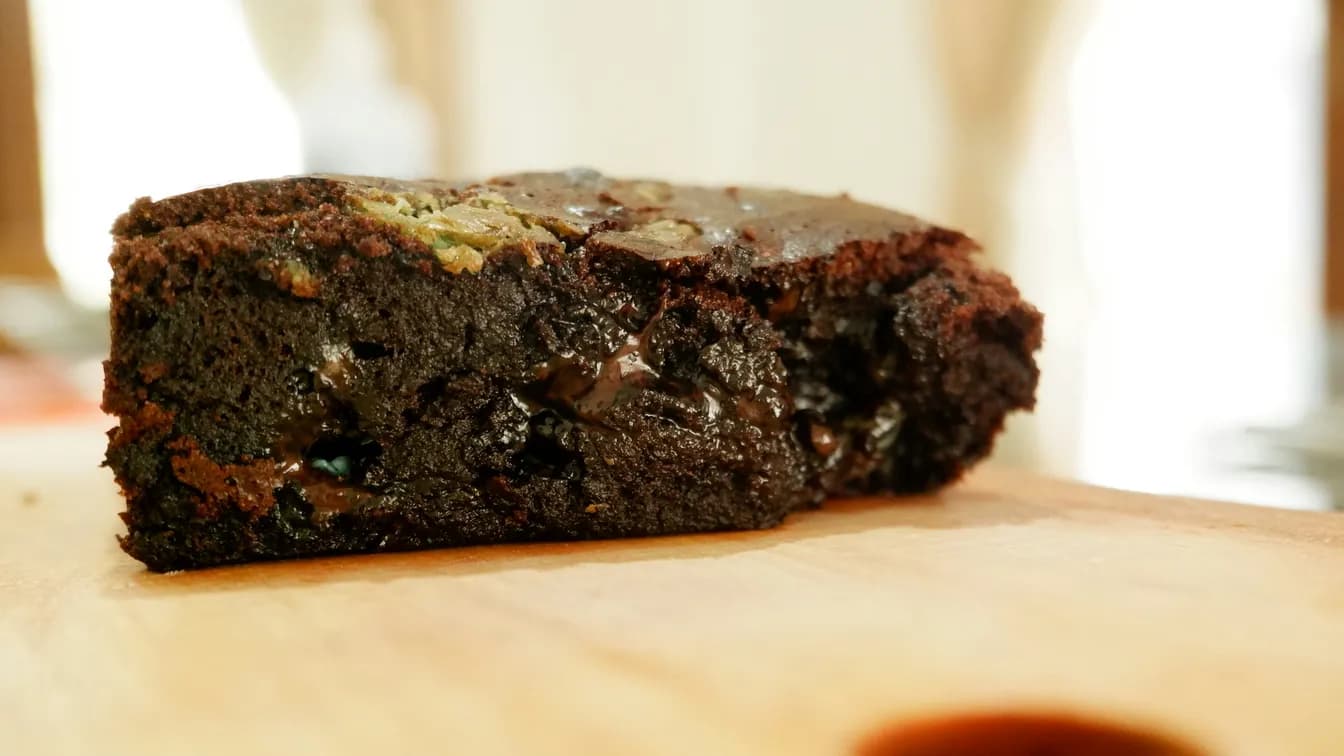
Zucchini Brownies
A whole zucchini in the batter, and nobody notices it: instead, they stay moist for three days.
 Desserts
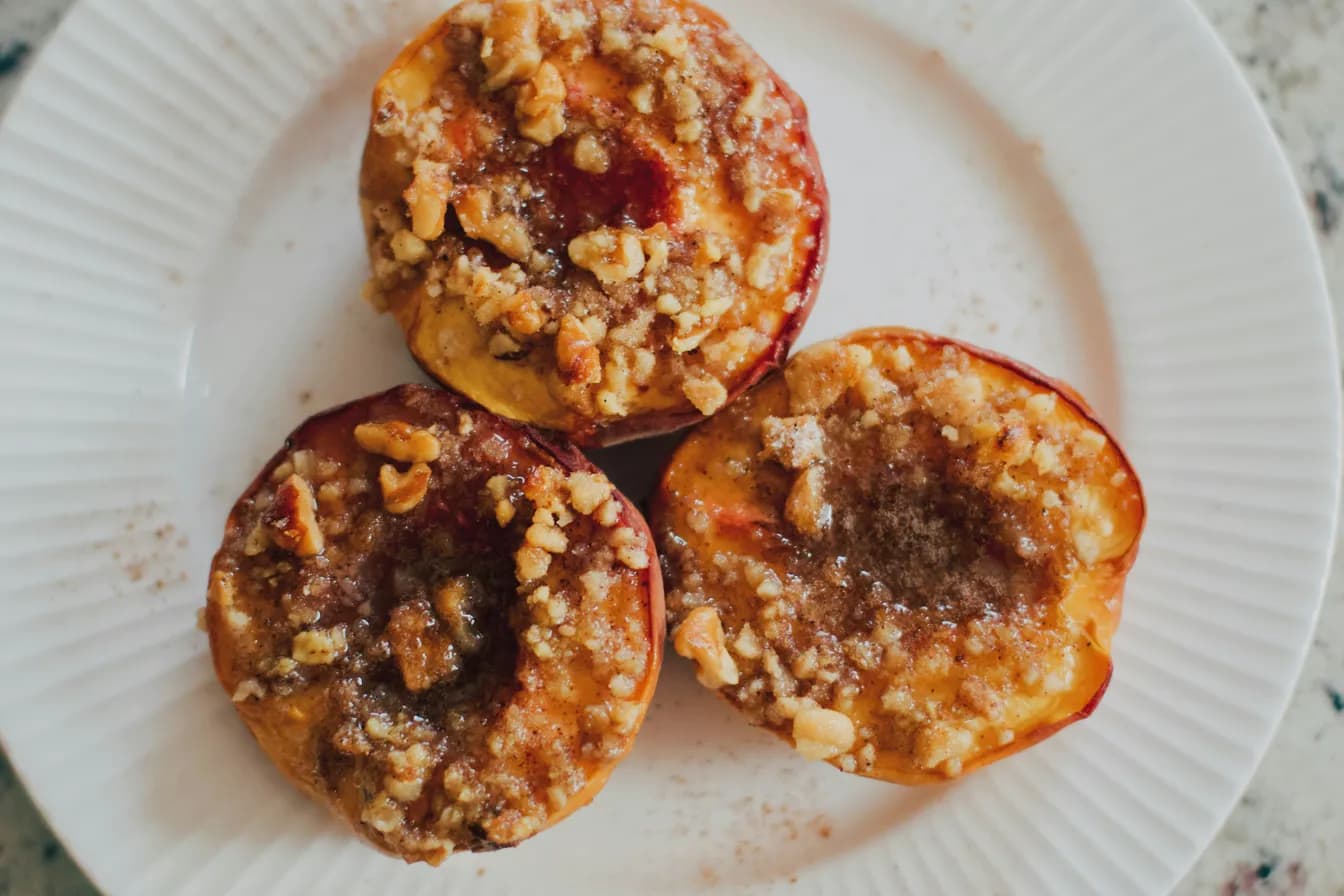
Peach Crumble with Oat Streusel
One kilo of peaches, one baking dish, forty minutes, and streusel that still crunches the next day.
 Cakes & Pastries
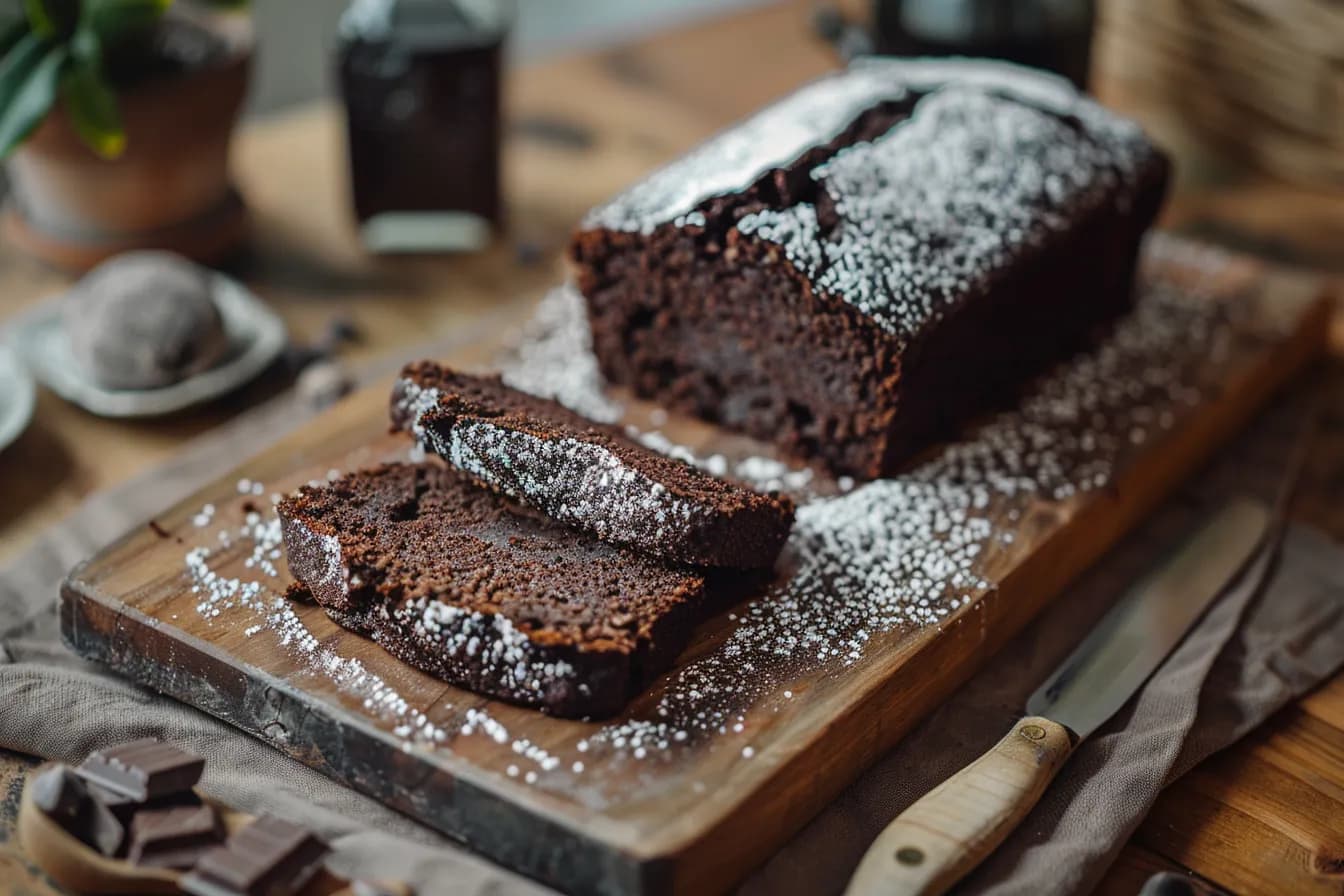
Eggless Loaf Cake
Vinegar and baking soda replace the egg, creating carbon dioxide and a moist, fluffy result.