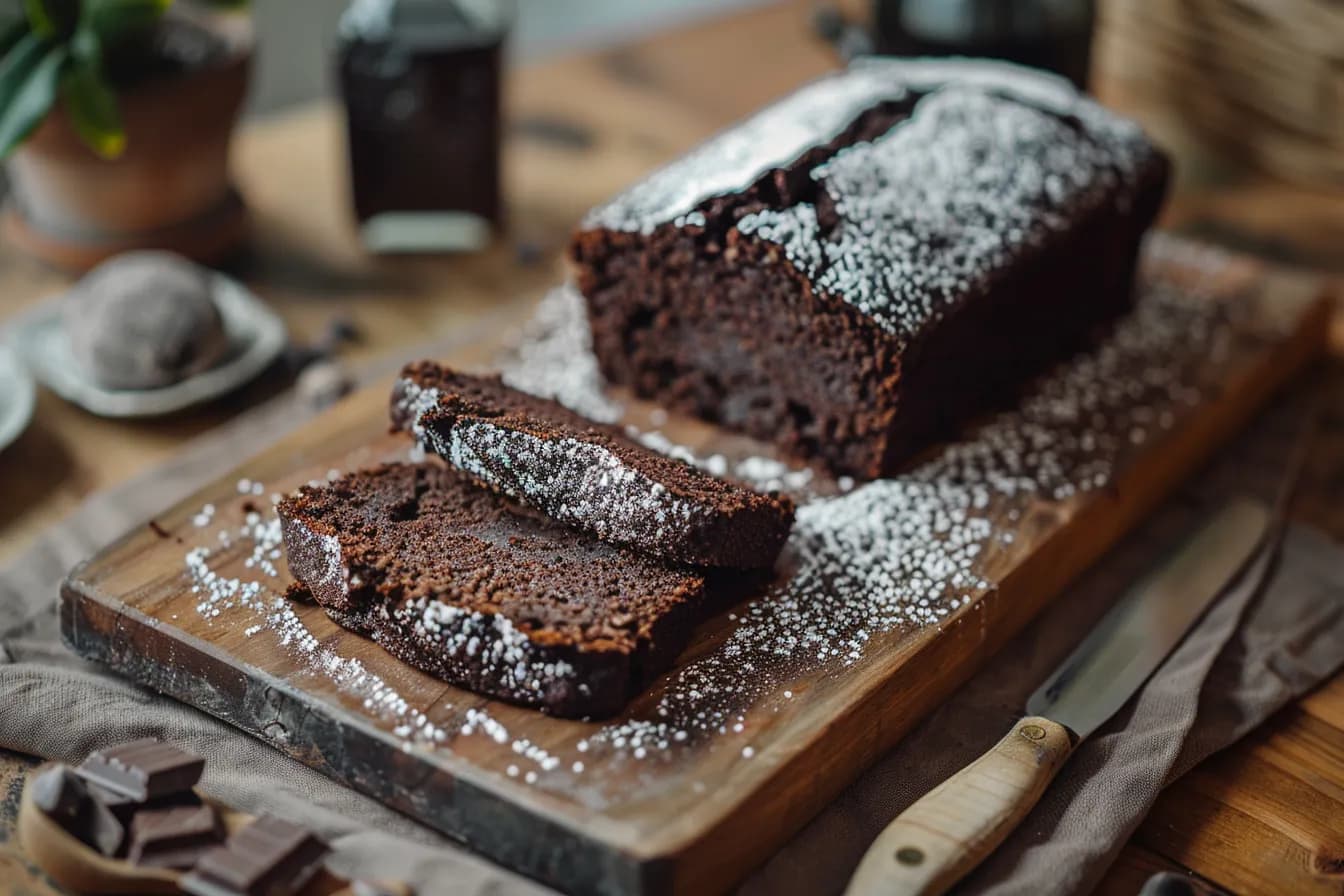
Eggless Loaf Cake
Vinegar and baking soda replace the egg, creating carbon dioxide and a moist, fluffy result.
- Preparation
- 15 min
- Cook/bake time
- 55 min
- Total
- 2 hr 10 min
- Difficulty
- Easy
- Calories
- 252 kcal
- Servings
- 12 slices
- Prep
- 15 min
- Cooking & baking
- 55 min
- Resting
- 1 hr
Only 1 hr 10 min of that is hands-on – the rest takes care of itself.
Vinegar and baking soda replace the egg, creating carbon dioxide and a moist, fluffy result. An egg does three things in a loaf cake: it leavens, binds, and retains moisture. All three can be replaced, and the most famous proof is called Wacky Cake, a cake from the rationing era that still works perfectly today.
Why this works
Baking soda is a base and reacts with acid to form carbon dioxide, the exact same reaction that makes a school science experiment foam up. In the batter, it creates fine gas bubbles that leaven the cake, and this begins the moment the vinegar and baking soda meet. This is why the batter must go into the oven immediately. If you let it sit for twenty minutes, you will bake a cake whose leavening agent is already spent. The second job of the egg, binding, is taken over here by the flour starch and oil together. Using oil instead of butter is not about saving money. Oil is liquid at room temperature and stays that way even in the cooled cake, which is why egg-free oil cakes are still moist on the third day while butter cakes become firm.
Step-by-step instructions
- 1
Ofen vorheizen
Heiz den Ofen auf 180 °C Ober-/Unterhitze vor und fette eine Kastenform von 30 cm. Der Ofen muss vor dem Teig fertig sein – die Triebreaktion startet sofort und wartet nicht.
- 2
Trockenes sieben
Sieb Mehl, Zucker, Kakao, Natron und Salz zusammen in eine Schüssel. Sieben ist beim Kakao Pflicht: Seine Klümpchen lösen sich im Rührteig nicht mehr auf und bleiben als bittere Punkte stehen.
- 3
Feuchtes dazu
Gieß Wasser, Öl, Essig und Vanille dazu und rühr nur, bis kein trockenes Mehl mehr zu sehen ist – etwa 30 Sekunden. Der Teig darf klumpig aussehen. Längeres Rühren macht den Kuchen zäh statt zart.
- 4
Sofort backen
Füll den Teig in die Form und schieb ihn ohne Umweg in den Ofen. Jede Minute Wartezeit ist verbrauchtes Triebmittel. Backe 50 bis 60 Minuten, bis ein Holzstäbchen aus der Mitte sauber herauskommt.
- 5
Auskühlen lassen
Lass den Kuchen 10 Minuten in der Form stehen, dann stürz ihn auf ein Gitter. Schneide ihn erst an, wenn er kalt ist – warm bröselt er, weil das Öl noch flüssig in der Krume steht.
Our best tips
- Into the oven immediately. Vinegar and baking soda react from the very first second, and a batter left standing for twenty minutes has already used up its leavening power.
- Stir only until combined, about thirty seconds. Stirring longer develops gluten and makes the cake tough.
- Sift the cocoa. Its lumps will not dissolve in a batter and will remain as bitter spots.
Tasty variations
Lemon Cake
Omit the cocoa, and instead add 50 g more flour, the zest of two lemons, and the juice of one lemon instead of a tablespoon of vinegar. The lemon juice completely takes over the role of the acid.
As Muffins
Pour the batter into twelve muffin cups and bake for twenty minutes. Because the pieces are smaller, the heat reaches the leavening reaction faster, which makes them rise even a little higher.
Nutrition facts
| Calories | 252 kcal |
|---|---|
| Protein | 3 g |
| Carbohydrates | 35 g |
| – of which sugar | 17 g |
| Fat | 10 g |
| Fiber | 2 g |
Where the 252 kcal come from
per serving
Calculated from the ingredients – how we do it
We add up reference values for every ingredient and divide by the number of servings. These assumptions are baked in:
- Reference values per 100 g – for the raw ingredient, exactly as listed.
- Tinned goods count at drained weight, bone-in meat at purchase weight: you eat about 70 per cent of a chicken thigh and leave the rest.
- Water evaporates as you cook. The energy stays in the pot, the weight does not – so the figure is per serving, not per 100 g of finished dish.
- Anything listed without a quantity – “salt and pepper” – is not counted.
A guide value, not a lab measurement: no two onions weigh the same, and fat content varies from pack to pack.
Frequently asked questions
Can you taste the vinegar?
No. It is completely neutralized in the reaction with the baking soda, leaving only carbon dioxide, water, and a salt at the end. What you would taste is too much baking soda without enough acid, which is soapy and metallic. This is why the ratio here is fixed.
Can I use baking powder instead of baking soda?
Yes, just use three teaspoons of baking powder instead of baking soda and omit the vinegar. The result is slightly less fluffy because baking powder brings its own bound acid and reacts more slowly. The advantage is that the batter can then sit for a short time.
How long does the cake keep?
Four days, wrapped in foil at room temperature, and it often gets better on the second day. This is due to the oil. It remains liquid at room temperature, while butter becomes solid. This is exactly why egg-free oil cakes are superior to butter cakes for keeping in the pantry.
Comments & ratings(0)
Sign in to rate and comment on this recipe.
You might also like
 Cakes & Pastries
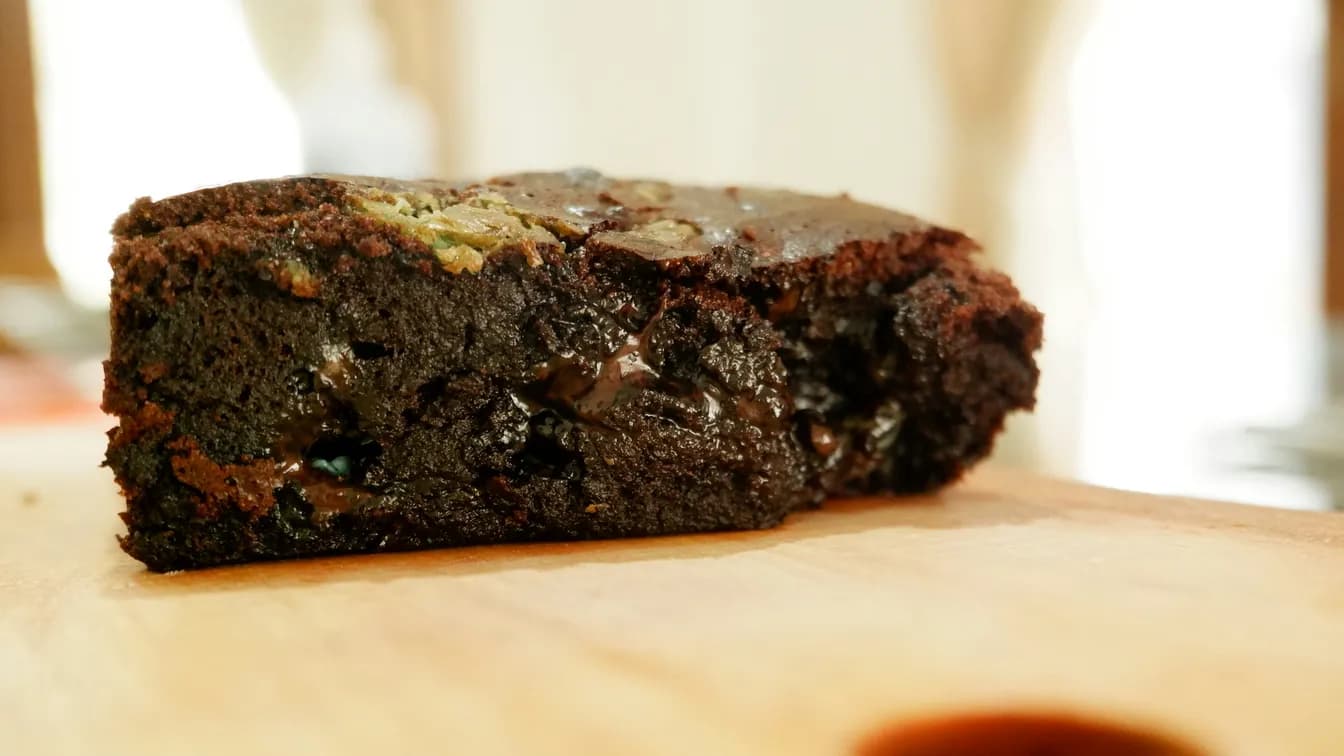
Zucchini Brownies
A whole zucchini in the batter, and nobody notices it: instead, they stay moist for three days.
 Desserts
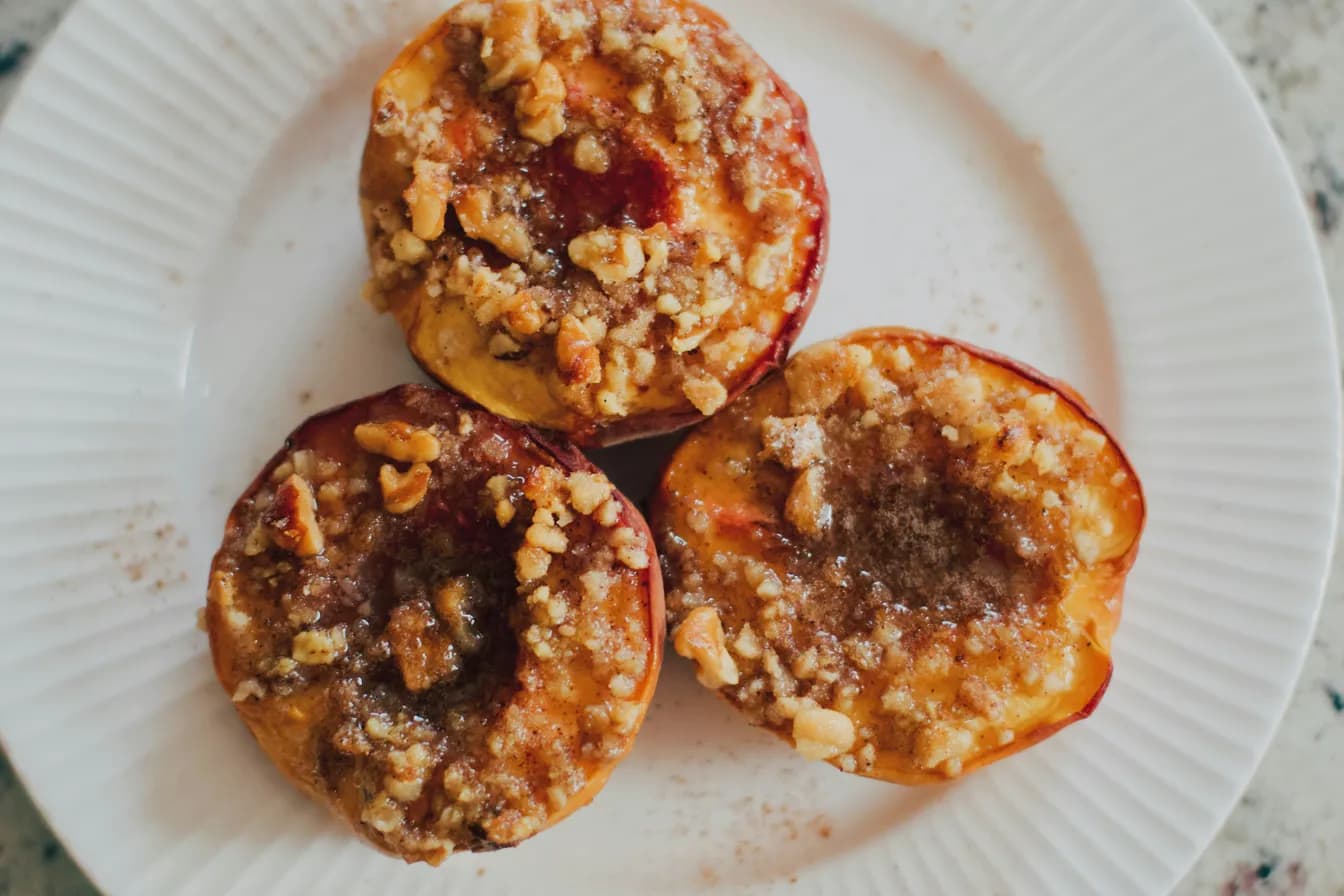
Peach Crumble with Oat Streusel
One kilo of peaches, one baking dish, forty minutes, and streusel that still crunches the next day.
 Cakes & Pastries
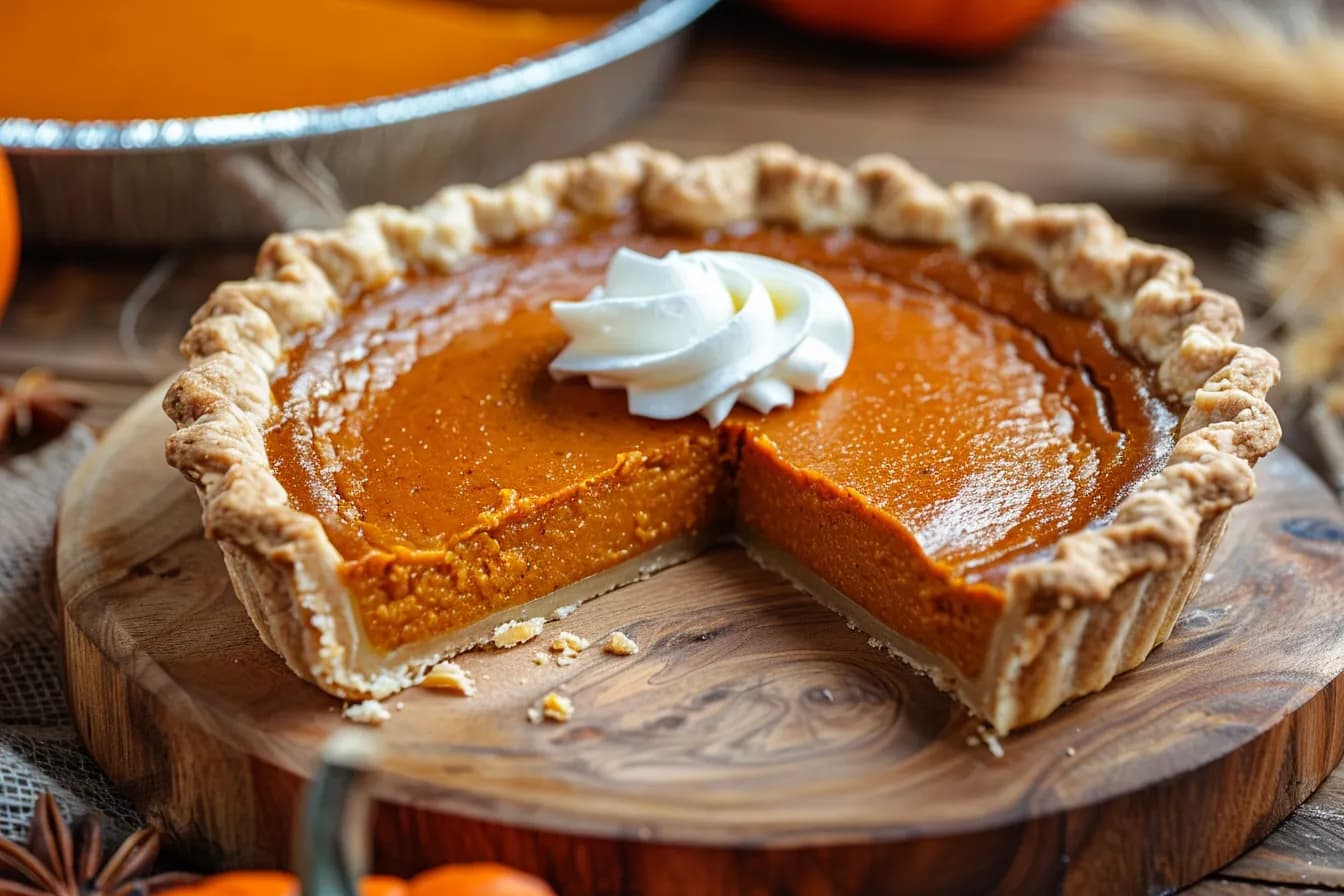
Pumpkin Pie
American pumpkin pie with cinnamon, ginger, and cloves in a blind-baked shortcrust pastry base.