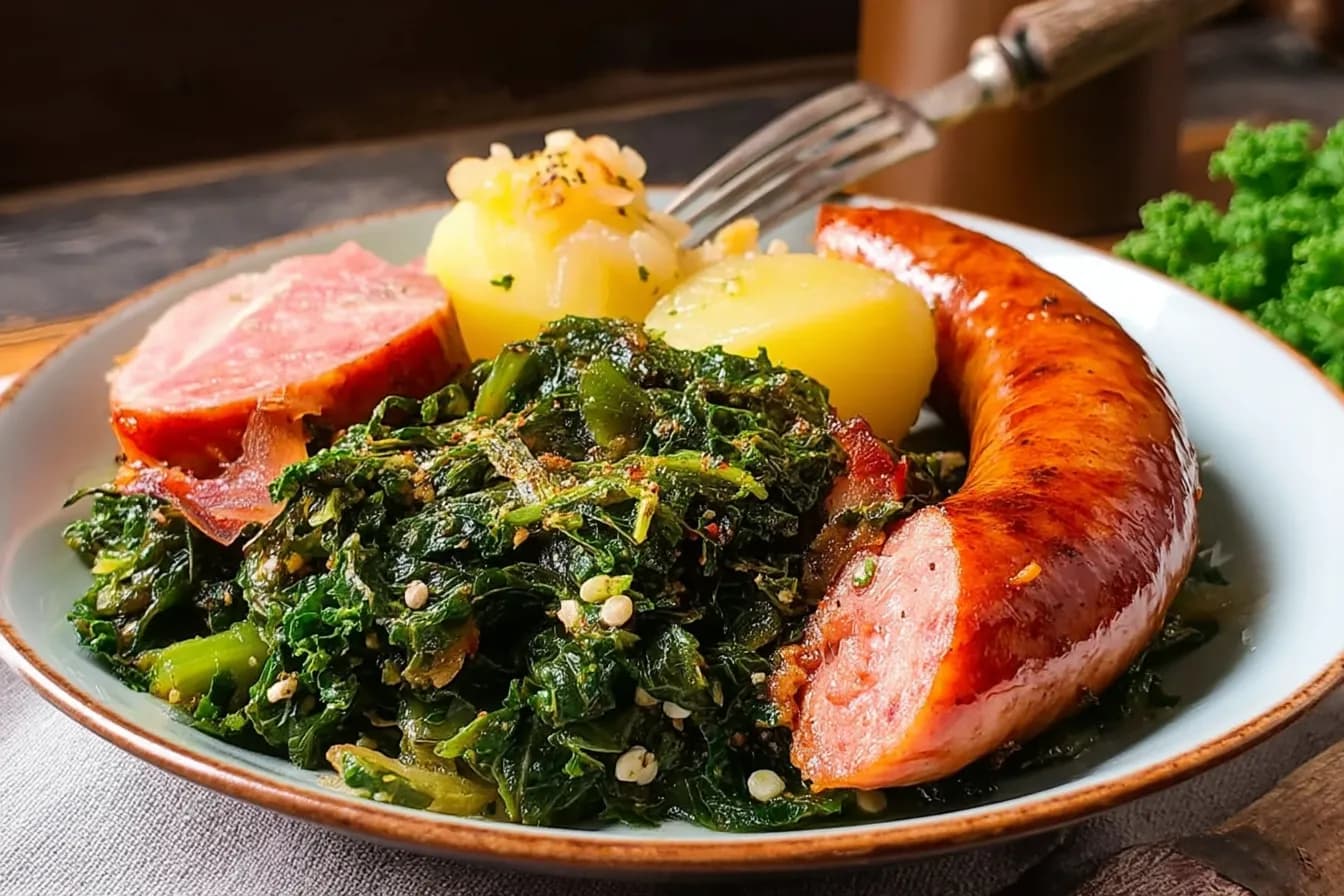
A Northern German winter classic, and the kale needs frost or a long cooking time, not both. Frost breaks down the starch in the leaf into sugar and makes the kale sweet and tender; if you don't want to wait for it, buy it frozen and achieve the same result. Two hours of braising are still non-negotiable.
Why this works
Kale becomes sweeter through frost, and that is not a farmer's tale but plant physiology. At temperatures around freezing, the plant converts its starch reserves into sugar because dissolved sugar lowers the freezing point of the cell sap and protects the cells from freezing. Exactly this sugar makes the kale mild and tender. Frozen kale has gone through the same process during industrial freezing and is therefore a perfect substitute. The long cooking time has another reason. Kale leaves have particularly tough cell walls made of cellulose and lignin, which only break down after one to two hours of heat. Briefly cooked kale remains chewy and bitter, no matter how much frost it had. The oat groats in the Pinkel sausage play a third role. They break down during braising and thicken the cooking liquid, which is why the kale becomes creamy without flour.
Step-by-step instructions
- 1
Prepare the kale
Pluck the leaves of fresh kale from the stems, wash them thoroughly and blanch them for three minutes. Then let them drain and chop them roughly. Frozen kale can be used directly, as it has already been blanched.
- 2
Bacon and onions
Render the bacon in lard and sweat the onions in it until translucent. The rendered fat contributes a significant part of the flavor to this dish, as kale alone is tart and needs this counterbalance.
- 3
Start the kale
Add the kale, let it wilt and pour in the broth. Stir in the mustard and sugar. Mustard is standard in Northern Germany and takes away the bitterness of the kale, while the sugar enhances the sweetness brought by the frost.
- 4
Braise for two hours
Place the Kassler and Pinkel sausage on top and let everything braise covered over low heat for two hours. The oat groats in the Pinkel break down and thicken the broth, which is why this dish needs no flour.
- 5
Remove the meat and season
Remove the Kassler and sausage, slice the Kassler and season the kale with salt and pepper. Only salt now, as the bacon, Kassler and Pinkel bring plenty of salt into the pot over two hours. Serve classically with boiled potatoes.
Our best tips
- Frozen kale is not a compromise. Industrial freezing causes the same starch breakdown as a night frost in the field.
- Only salt at the end. Kassler, bacon and Pinkel release significant amounts of salt over two hours.
- It is better on the second day. In Northern Germany, reheated kale is considered the real deal, which is why it is traditionally cooked in large quantities.
Tasty variations
Without Pinkel
With Kochwurst and Mettenden instead of Pinkel. Then the oat groats that thicken the kale are missing, so braise two tablespoons of rolled oats as a substitute.
Vegetarian
Omit the meat, use smoked tofu, smoked paprika powder and three tablespoons of rolled oats for thickening instead. The smoky note is what matters.
Nutrition facts
| Calories | 734 kcal |
|---|---|
| Protein | 48 g |
| Carbohydrates | 13 g |
| – of which sugar | 8 g |
| Fat | 52 g |
| Fiber | 12 g |
Where the 734 kcal come from
per serving
Calculated from the ingredients – how we do it
We add up reference values for every ingredient and divide by the number of servings. These assumptions are baked in:
- Reference values per 100 g – for the raw ingredient, exactly as listed.
- Tinned goods count at drained weight, bone-in meat at purchase weight: you eat about 70 per cent of a chicken thigh and leave the rest.
- Water evaporates as you cook. The energy stays in the pot, the weight does not – so the figure is per serving, not per 100 g of finished dish.
- Anything listed without a quantity – “salt and pepper” – is not counted.
A guide value, not a lab measurement: no two onions weigh the same, and fat content varies from pack to pack.
Frequently asked questions
Does kale really need frost?
Frost makes it sweeter because the plant converts starch into sugar to protect itself from freezing. Frozen kale has gone through the same process and is a perfect substitute.
How many calories does kale with Pinkel have?
Around 730 kcal per portion for six portions, without potatoes. Bacon, Kassler and Pinkel make up the majority, while the kale itself contributes about 70 kcal per portion.
What is Pinkel?
A smoked groat sausage from Northern Germany with oat or barley groats, bacon and onions. The groats break down during braising and thicken the kale, which is why it is more than just a sausage on the side.
Why braise for so long?
Kale leaves have particularly tough cell walls that only break down after one to two hours of heat. Cooked briefly, it remains chewy and bitter, regardless of whether it had frost.
Comments & ratings(0)
Sign in to rate and comment on this recipe.
You might also like
 Dinner
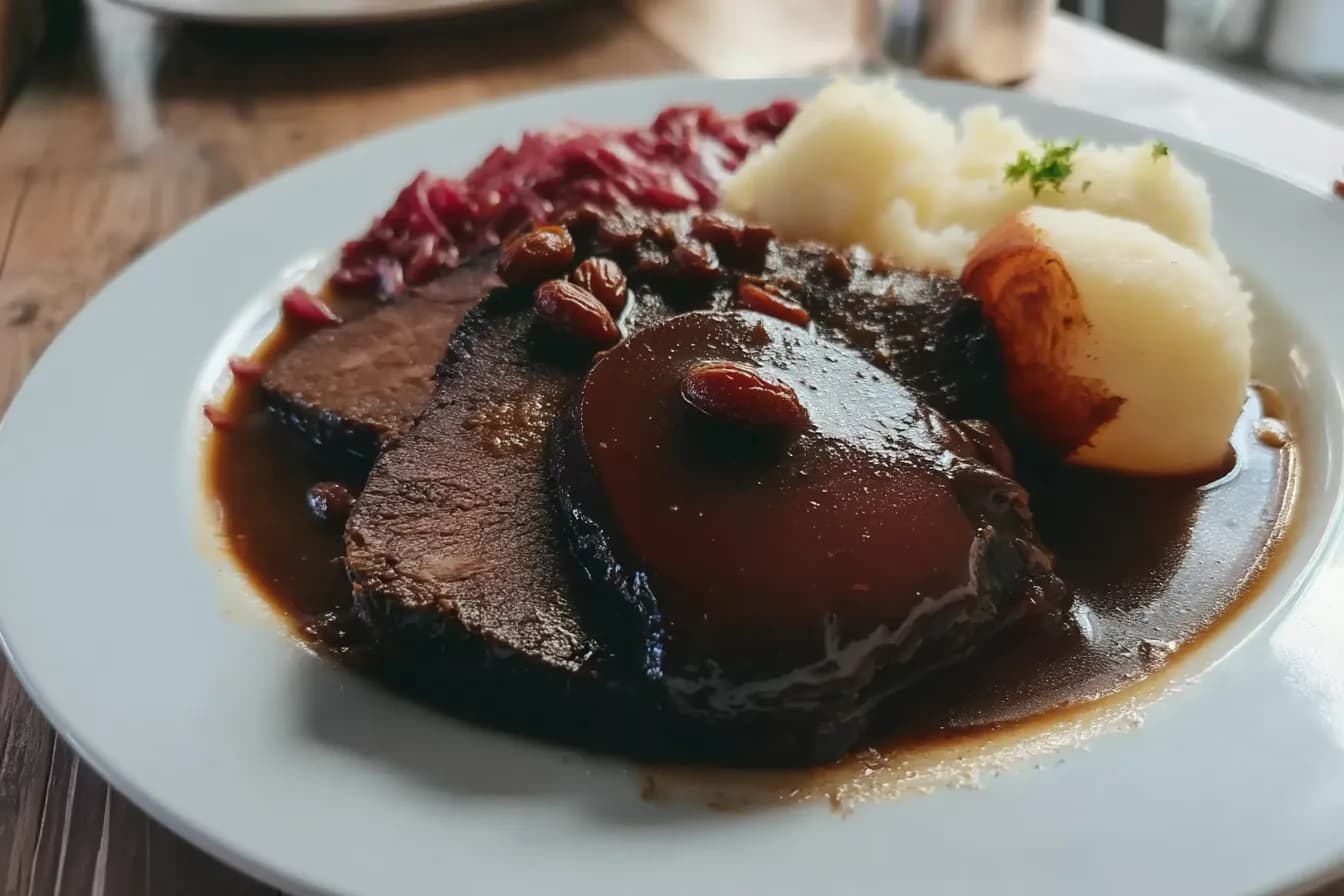
Rhenish Sauerbraten
Beef roast, marinated in vinegar for four days, and the sauce is thickened with raisins and gingerbread.
 Dinner
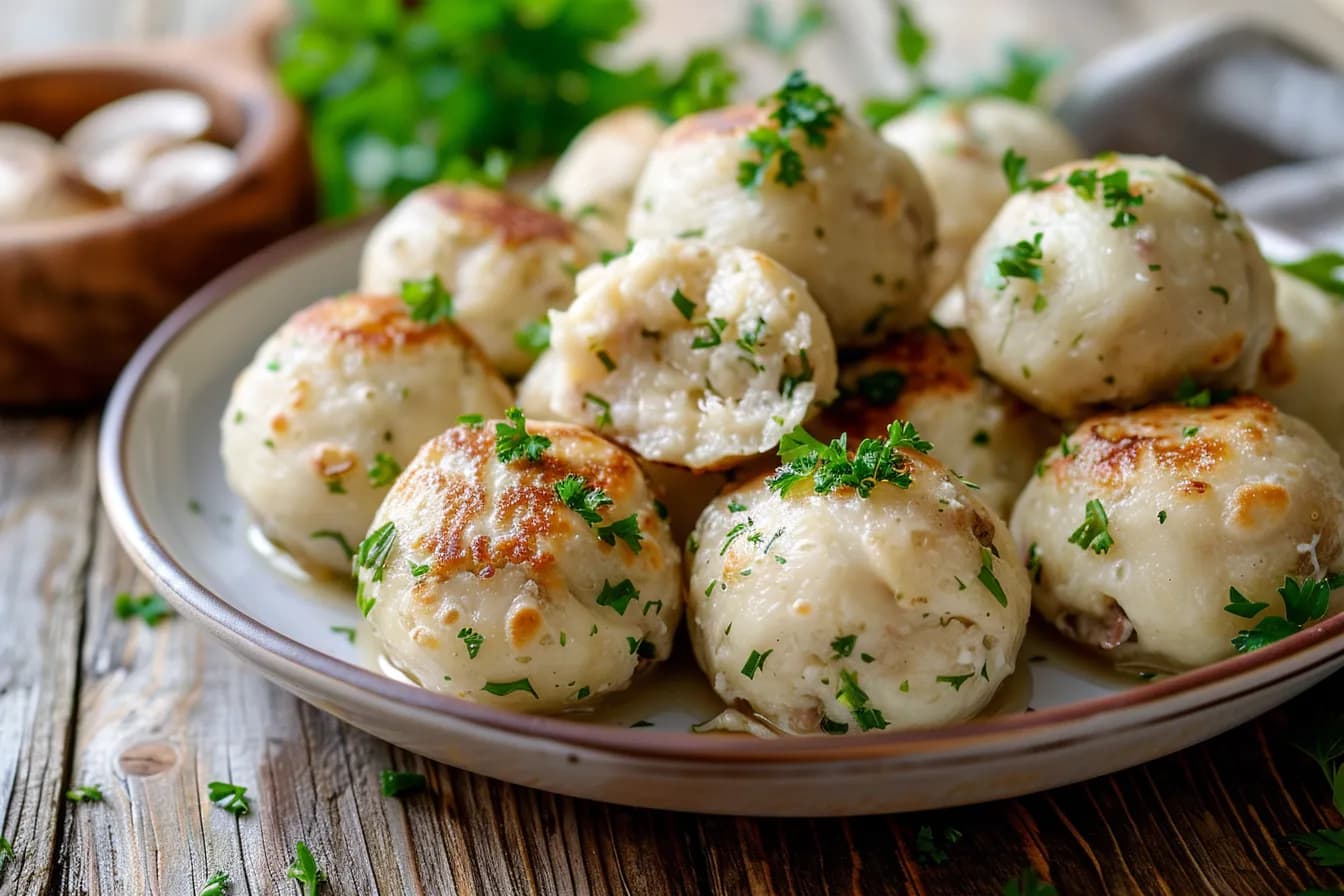
German Bread Dumplings
Let them soak for twenty minutes, then stop kneading. Bread dumplings fall apart because of how they are handled, not because of the recipe.
 Dinner
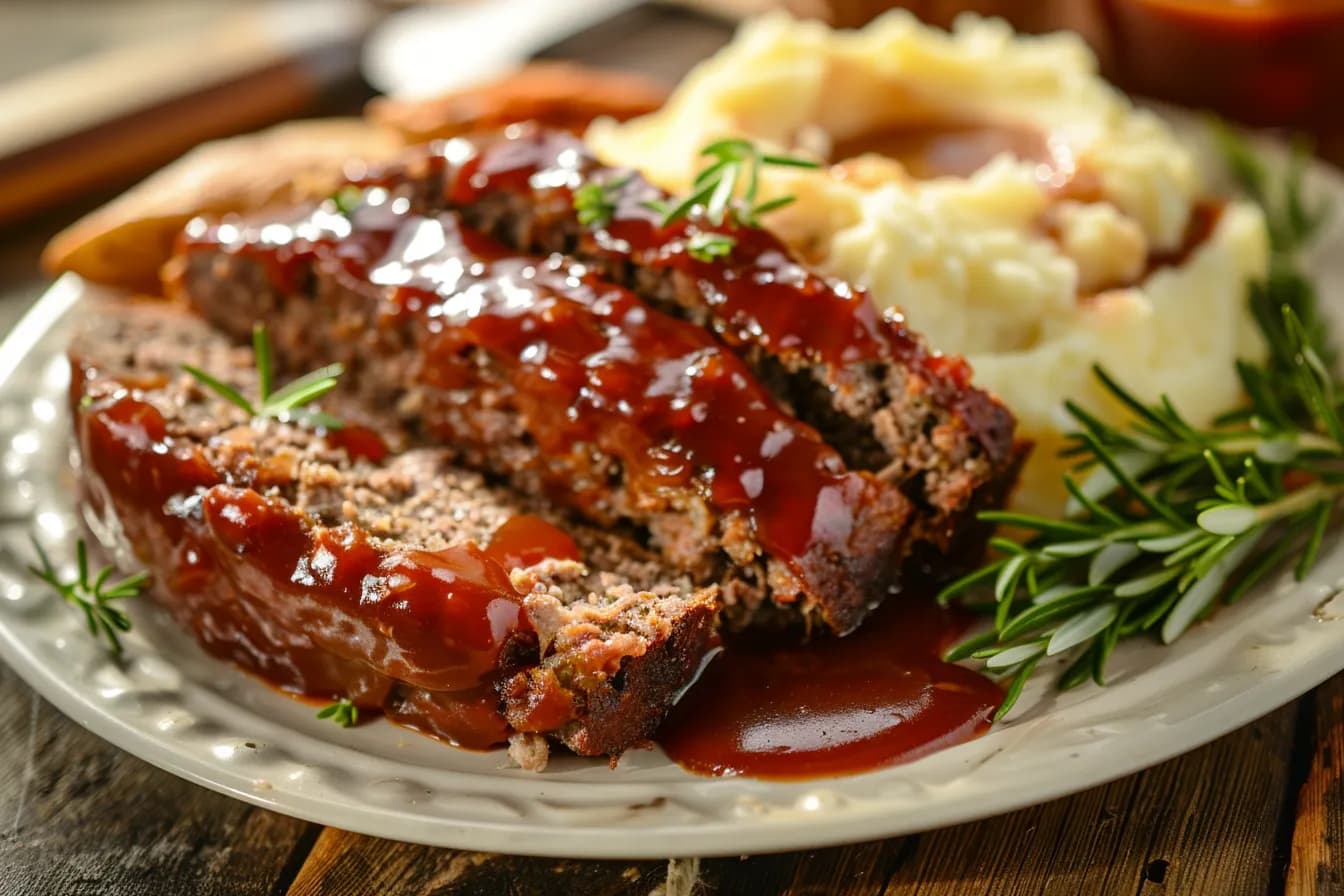
Meatloaf with Mashed Potatoes
Juicy meatloaf with a glazed ketchup crust, served with creamy mashed potatoes and gravy.