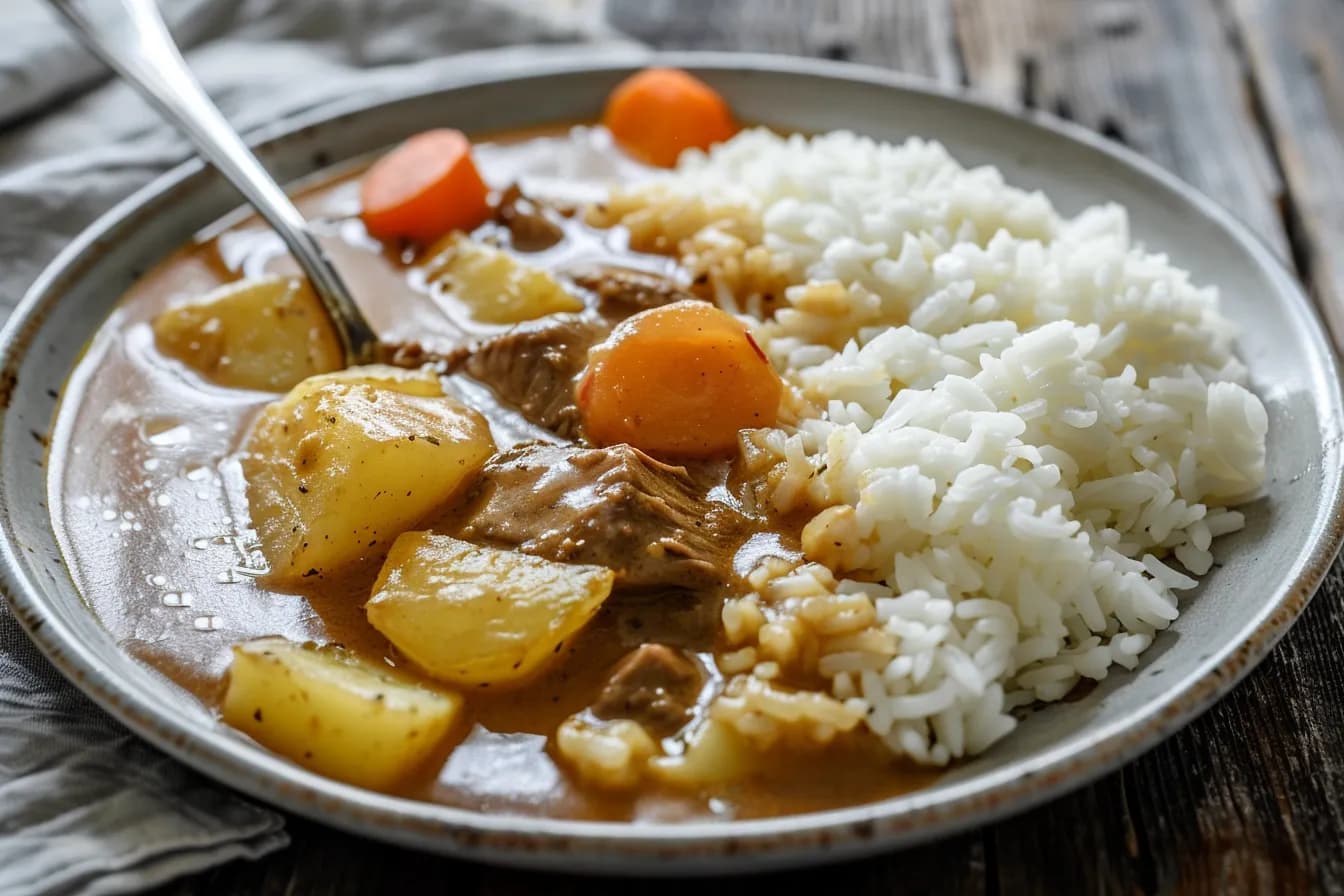
Kare Raisu: thick, mildly sweet curry with potatoes and carrots, thickened with a homemade curry roux. Japanese curry has little in common with Indian curry: it arrived in the country via the British Navy and retained their roux, which is why it is creamy rather than liquid. The ready-made curry block from the Asian supermarket can be made from scratch in ten minutes and tastes significantly better.
Why this works
Japanese curry thickens via a roux, which is browned butter with flour, and that is exactly where its thick, smooth consistency comes from. Indian curry, on the other hand, thickens via onions, tomatoes, and yogurt and remains more liquid. When browning the roux, two things happen: the starch granules in the flour are partially broken down, which lowers their thickening power but prevents lumps, and at the same time, the Maillard reaction creates nutty roasted aromas that give the curry its depth. That is why the roux is browned, but not too dark: beyond a certain brownness, it hardly thickens at all. The grated apple and the spoonful of honey are not a concession to children, but part of the original. The mild sweetness is the distinguishing feature of Kare Raisu.
Step-by-step instructions
- 1
Prepare the roux
Melt the butter in a pan, stir in the flour, and toast it over medium heat for 8 to 10 minutes, stirring constantly, until it is hazelnut brown and smells nutty. Remove the pan from the heat, stir in the curry powder, Garam Masala, turmeric, and cayenne, and let everything cool down. Spices in the hot pan would burn and become bitter.
- 2
Sear the meat
Sear the meat cubes in oil in batches until browned all over, and only salt them afterwards. Doing it in batches is important: an overcrowded pot lowers the temperature, causing the meat to draw water and boil instead of browning, and the roasted flavors are the foundation of the taste here.
- 3
Vegetables and broth
Add the onions and fry them for 5 minutes, then add the carrots, potatoes, grated apple, honey, and soy sauce. Pour in the broth, bring everything to a simmer, and let it cook covered for 30 minutes until the meat is tender.
- 4
Thicken with roux
Take two ladles of hot broth from the pot, stir the cooled roux into it until smooth, and pour the mixture back in. This detour prevents lumps more reliably than any stirring in the pot. Let the curry simmer uncovered for another 10 minutes until it thickens significantly.
- 5
Season to taste
Season to taste with salt and pepper. Japanese curry should be thick enough that a spoon leaves a trail in it. If it is too thin, let it boil down uncovered for another 5 minutes. It is classically served next to, not over, the rice.
Our best tips
- The roux must cool down before it goes into the hot broth. Hot on hot clumps immediately, cold on hot dissolves smoothly.
- It is better on the second day. Japanese curry is explicitly considered a next-day dish in Japan because the starch from the potatoes continues to thicken overnight.
- Use large vegetable pieces. Small ones disintegrate completely during the braising time, and Kare Raisu relies on recognizing potato and carrot as pieces.
Tasty variations
Katsu Curry
Pour the curry over a breaded, deep-fried cutlet. This is the most famous variation outside of Japan and goes well with the existing recipe for Chicken Katsu.
Vegetarian
Omit the meat, use 300 g mushrooms and 200 g chickpeas instead. The roux and the apple carry the dish, the meat is the most replaceable part.
Nutrition facts
| Calories | 686 kcal |
|---|---|
| Protein | 33 g |
| Carbohydrates | 48 g |
| – of which sugar | 16 g |
| Fat | 38 g |
| Fiber | 8 g |
Where the 686 kcal come from
per serving
Calculated from the ingredients – how we do it
We add up reference values for every ingredient and divide by the number of servings. These assumptions are baked in:
- Reference values per 100 g – for the raw ingredient, exactly as listed.
- Tinned goods count at drained weight, bone-in meat at purchase weight: you eat about 70 per cent of a chicken thigh and leave the rest.
- Water evaporates as you cook. The energy stays in the pot, the weight does not – so the figure is per serving, not per 100 g of finished dish.
- Anything listed without a quantity – “salt and pepper” – is not counted.
A guide value, not a lab measurement: no two onions weigh the same, and fat content varies from pack to pack.
Frequently asked questions
What is the difference to Indian curry?
Japanese curry came to Japan via the British Navy and retained their roux. It is thick, creamy, and mildly sweet. Indian curries thicken via onions, tomatoes, or yogurt, are more liquid, and are significantly spicier.
How many calories does Japanese curry have?
Around 685 kcal per serving, without rice. With a serving of rice, about 250 kcal are added. A third of the energy comes from the pork neck. With lean meat, the value drops significantly.
Do I really not need ready-made curry blocks?
No. The homemade roux takes ten minutes and contains neither palm fat nor flavor enhancers. It can be prepared in double the amount and frozen in portions, then it is just as fast as the block.
Why is my curry lumpy?
The roux went directly into the hot pot. Always remove two ladles of broth, stir the cooled roux into it until smooth, and then pour the mixture back.
Comments & ratings(0)
Sign in to rate and comment on this recipe.
You might also like
 Meal Prep
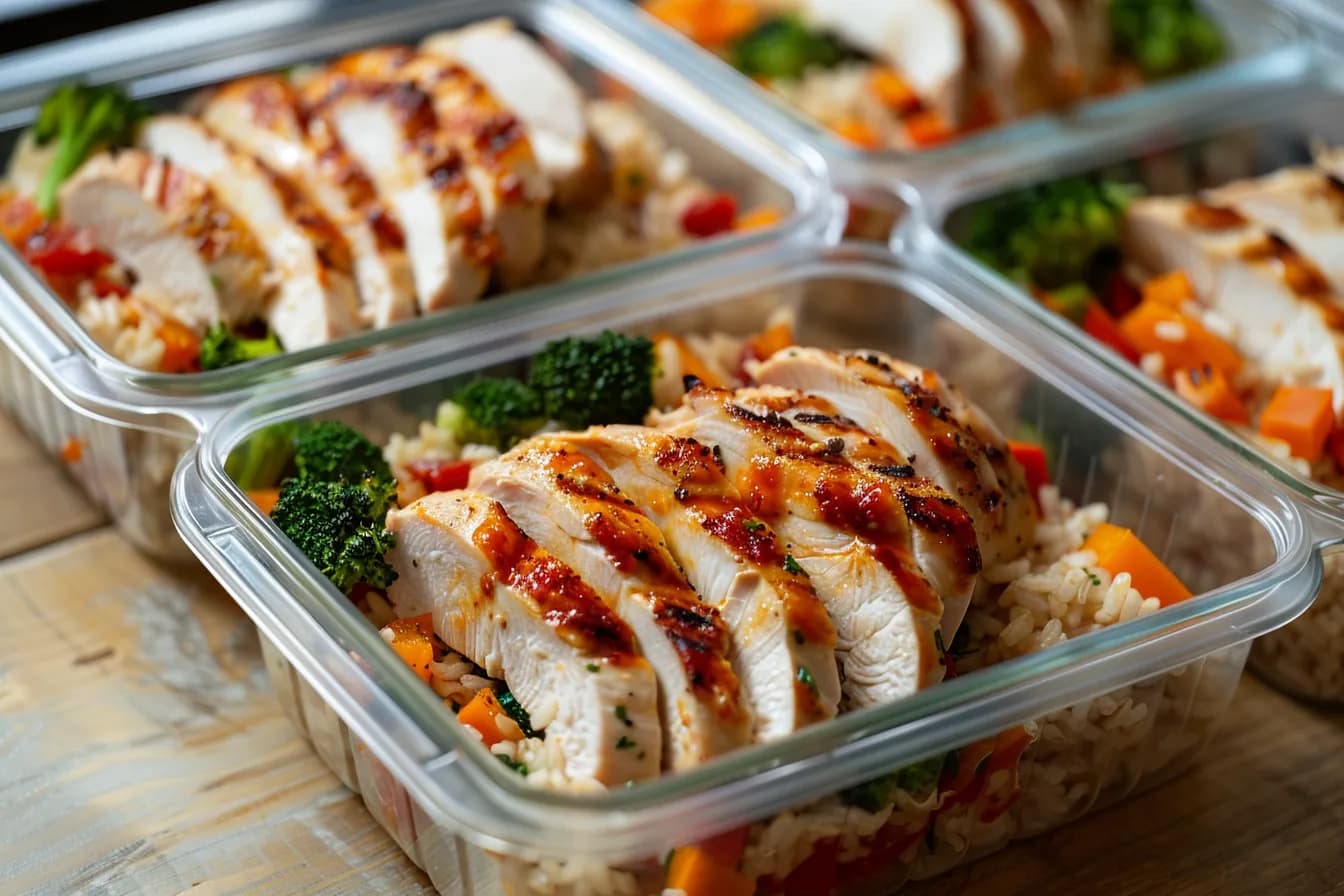
Chicken Meal Prep Boxes
Four boxes for the week in forty minutes, with the trick that prevents chicken from being dry on the third day.
 Dinner
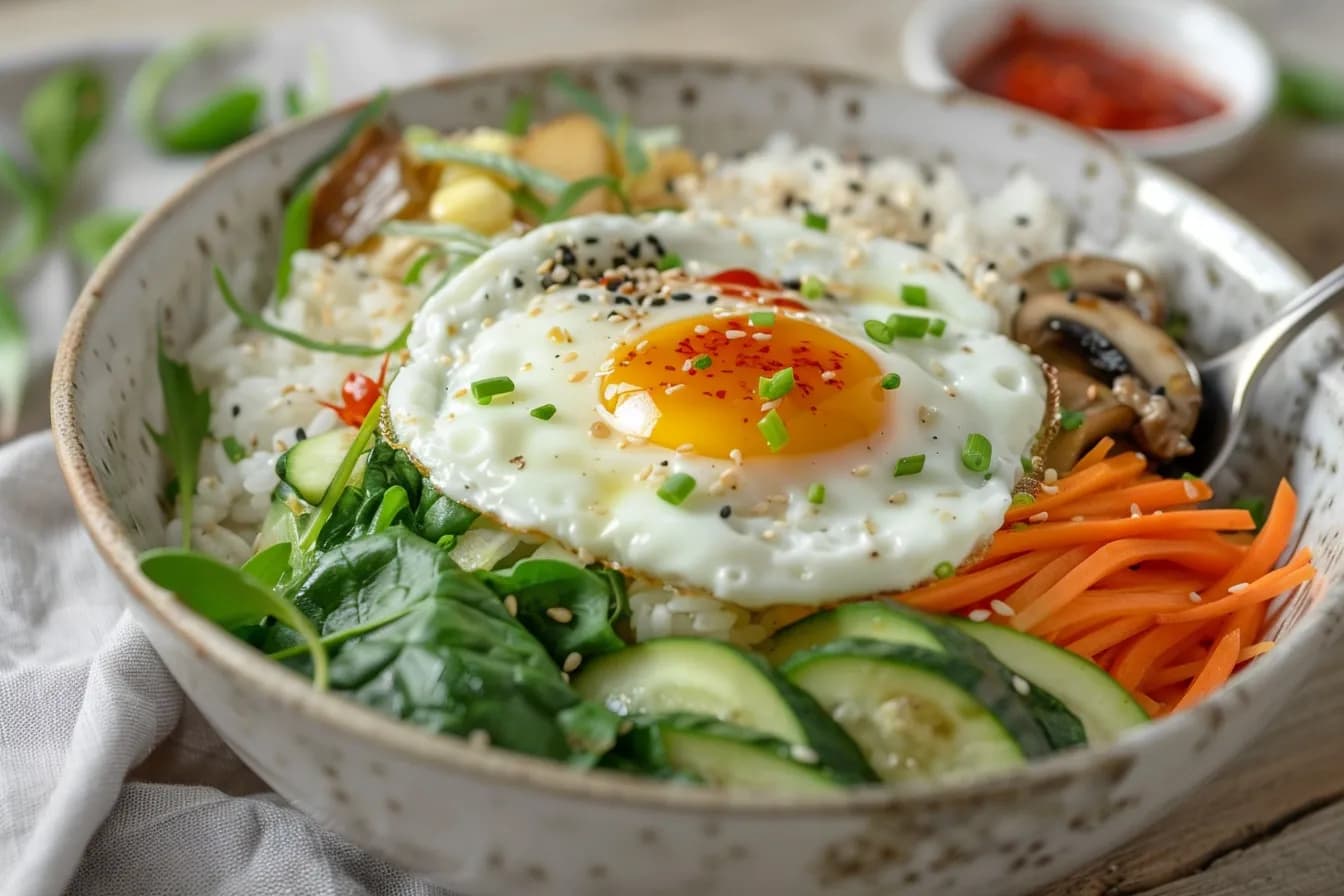
Bibimbap
Korean rice bowl with five individually seasoned vegetables, egg, and gochujang, meaning "mixed rice", and that is meant literally.
 Dinner
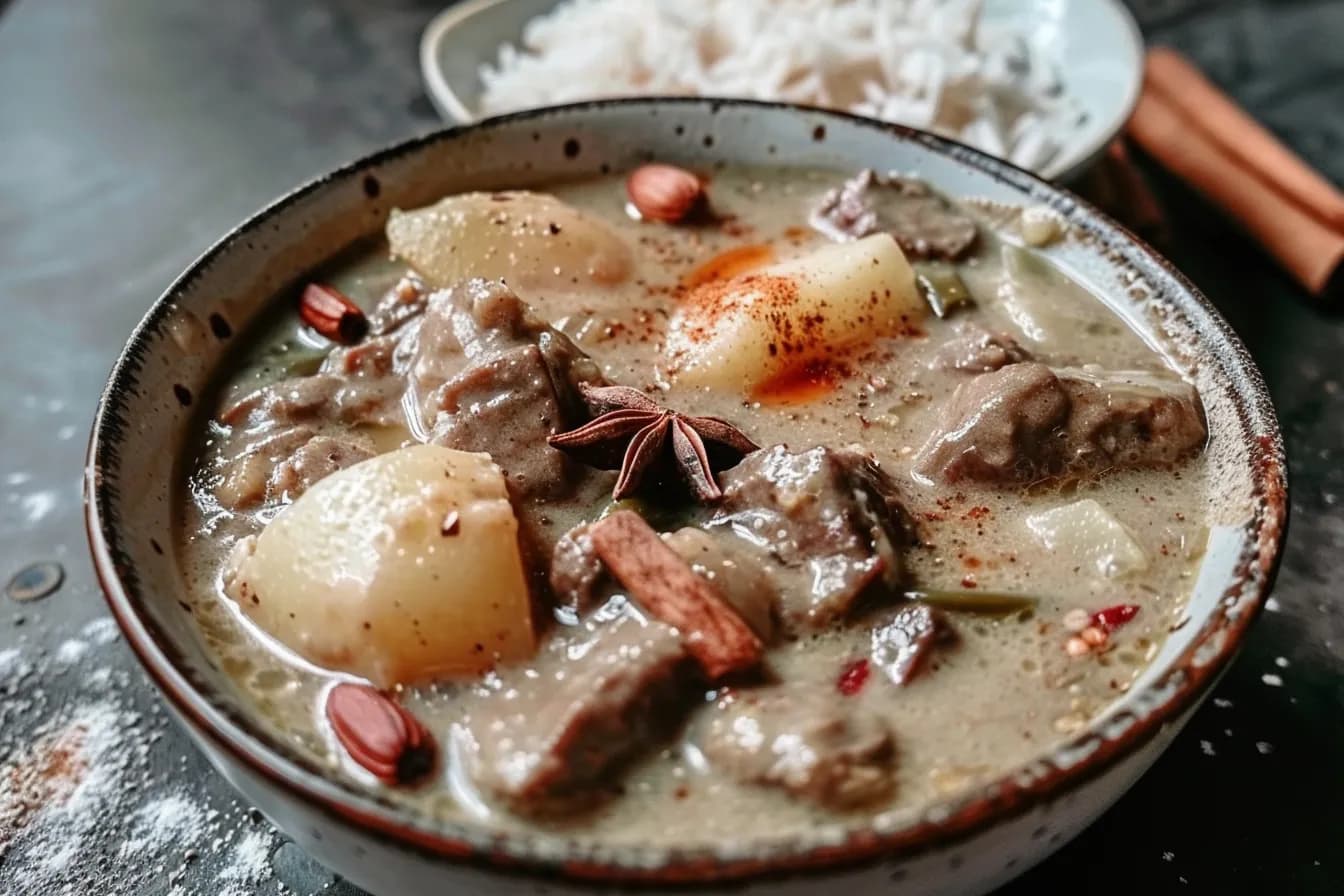
Massaman Curry
The mildest Thai curry, featuring potatoes, peanuts, and cinnamon, a legacy of Persian traders.