
Crispy Zucchini Fritters
From 800 g zucchini comes a good 200 ml of water, and that is exactly the difference between crispy and mushy.
- Preparation
- 15 min
- Cook/bake time
- 20 min
- Total
- 55 min
- Difficulty
- Easy
- Calories
- 411 kcal
- Servings
- 4 servings
- Prep
- 15 min
- Cooking & baking
- 20 min
- Resting
- 20 min
Only 35 min of that is hands-on – the rest takes care of itself.
From 800 g zucchini comes a good 200 ml of water, and that is exactly the difference between crispy and mushy. Salt them, let them sit for twenty minutes, and wring them out in a towel: without this step, the fritters will steam in the pan instead of frying. After that, an egg, a little flour, and Parmesan are all you need, and dinner is on the table in twenty minutes.
Why this works
Zucchini consists of about 95 percent water, and this water is the enemy here. As long as it sits in the batter, it evaporates in the pan, and evaporation costs energy. The surface of the fritter therefore gets stuck at 100 °C and does not reach the roughly 140 °C where the Maillard reaction creates color and roasted flavors. An unpressed zucchini fritter does not fry, it steams itself, and you can taste that as a pale, soft center. The salt solves this via osmosis: it is more highly concentrated outside the cells than inside, so water migrates out, and after twenty minutes it can be wrung out. From 800 g zucchini comes a good 200 ml, a quarter of the weight. Only then do the egg and flour take effect. The egg coagulates during frying and holds the shreds together, while the flour binds the residual moisture. Adding more flour is not a solution for a batter that is too wet, but merely a shift: it makes the fritters pasty instead of making them crispy. By the way, anyone baking zucchini brownies does exactly the opposite. There, the same water is the liquid of the batter and is expressly not squeezed out.
Step-by-step instructions
- 1
Grate coarsely and salt
Wash the zucchini and grate them on the coarse side of the grater. Do this expressly coarsely, because the shreds should still be recognizable as strands in the finished fritter. Mix in the teaspoon of salt, put everything in a sieve, and let it stand for twenty minutes. The salt is not a spice at this point, but a tool: it draws the water out of the cells, and in the bowl underneath you can see how much it is.
- 2
Wring out: harder than you think
Tip the shreds in portions into a clean kitchen towel, fold it up, and twist it tightly with both hands. From 800 g zucchini comes a good 200 ml of water. When you think nothing more will come out, twist it again. This step decides the whole recipe, and it is the only one you must not skimp on.
- 3
Mix the batter
Mix the squeezed shreds with the eggs, flour, Parmesan, scallions, garlic, and pepper to form a mass that just holds together. No more salt is added, as the zucchini has retained enough from the draining process, and the Parmesan brings its own. If the batter is still wet, the wringing was too timid: it is better to put it back in the towel than to add more flour.
- 4
Fry in hot oil
Heat two tablespoons of oil in a wide pan over medium to high heat and drop in tablespoon-sized mounds, pressing them flat. Fry a maximum of four pieces at a time: every cold fritter draws temperature from the pan, and a full pan falls below the browning threshold. Fry for 3 to 4 minutes per side, and only turn them when the edge is visibly brown, otherwise the fritter will tear.
- 5
Onto a wire rack, not paper towels
Place the finished fritters on a wire cooling rack instead of paper towels. On paper, the steam gets trapped under the fritter and softens the exact crust that has just formed. Meanwhile, stir the sour cream, dill, and lemon juice together to make the dip, and salt it lightly.
Our best tips
- Do not pour away the water from the zucchini. It is salted vegetable broth and goes well in any soup, any risotto, and any pasta dough. The zucchini glut provides liters of it anyway.
- Grate coarsely, not finely. Fine shreds disintegrate into mush when wrung out, and the fritter becomes a uniform mass without any bite. The coarse side of the grater is the right one here.
- Reheat in the oven, never in the microwave. Ten minutes at 180 °C on a wire rack will make them crispy again. In the microwave, the same fritter becomes soft and leathery.
Tasty variations
With Feta instead of Parmesan
Replace 50 g Parmesan with 100 g crumbled feta and add a teaspoon of dried oregano. The feta does not melt completely and leaves soft spots in the fritter, which is intentional, but provides a different bite.
From the oven
Place mounds on a baking sheet lined with parchment paper, press them flat, brush with oil, and bake for 20 to 25 minutes at 200 °C convection, turning halfway through. They brown more evenly, but will never be as crispy as in the pan. On the plus side, you do not have to stand next to the stove.
Gluten-free with chickpea flour
Replace the 80 g flour with 70 g chickpea flour. It binds more strongly than wheat flour and brings a slightly nutty flavor of its own that goes well with zucchini.
Zucchini and Potato Fritters
Replace half of the zucchini with coarsely grated, floury potatoes. The potato starch provides additional binding, and the fritters become firmer. The potatoes are squeezed out as well, but not salted or left to stand beforehand, otherwise they will turn gray.
Nutrition facts
| Calories | 411 kcal |
|---|---|
| Protein | 15 g |
| Carbohydrates | 22 g |
| – of which sugar | 7 g |
| Fat | 29 g |
| Fiber | 3 g |
Where the 411 kcal come from
per serving
Calculated from the ingredients – how we do it
We add up reference values for every ingredient and divide by the number of servings. These assumptions are baked in:
- Reference values per 100 g – for the raw ingredient, exactly as listed.
- Tinned goods count at drained weight, bone-in meat at purchase weight: you eat about 70 per cent of a chicken thigh and leave the rest.
- Water evaporates as you cook. The energy stays in the pot, the weight does not – so the figure is per serving, not per 100 g of finished dish.
- Anything listed without a quantity – “salt and pepper” – is not counted.
A guide value, not a lab measurement: no two onions weigh the same, and fat content varies from pack to pack.
What can go wrong
The points where this recipe most often goes sideways – and what to do about it.
- The fritters fall apart in the pan
- The batter was too wet. A wrung-out zucchini fritter holds together with two eggs and 80 g flour for 800 g zucchini. If there is still water in it, no binding can take hold. Put it back in the towel and wring it out again. This is still possible at this point and better than pouring in more flour.
- They do not brown, but remain pale
- Three reasons, usually together: too little oil, a pan that is too full, or turned too early. Every cold fritter cools the pan down, and below about 140 °C no browning takes place. Fry a maximum of four pieces at a time, letting the pan get hot again in between. And only turn the fritter when the edge is visibly brown.
- They are mushy on the inside, crispy on the outside
- Not wrung out enough. The remaining water does not evaporate inwards, but keeps the center at 100 °C, while the crust on the outside is already done. Next time, wring them out until absolutely nothing more comes out, and press the fritters thinner, to about one centimeter.
- They taste pasty and floury
- Too much flour, almost always as an emergency solution against a batter that is too wet. Flour does bind the water, but it stays in the fritter and becomes a sticky layer when fried. The amount should be capped: 80 g for 800 g zucchini, and the rest is solved via the towel.
Frequently asked questions
Do I have to squeeze the zucchini for fritters?
Yes, and that is the most important step in the recipe. From 800 g grated zucchini comes a good 200 ml of water after twenty minutes of salting, which is a quarter of the weight. If it stays in, the fritters will steam in the pan instead of frying. Conversely, this does not apply everywhere: in zucchini brownies, the same water is the liquid of the batter and is expressly left in.
Why are my zucchini fritters not getting crispy?
Usually there is too much water in the batter, and more rarely it is due to the pan. Browning only starts at about 140 °C. As long as water evaporates, the surface stays at 100 °C. Added to this are two classic mistakes: a pan that is too full and cools down, and paper towels for draining, under which steam accumulates. A wire cooling rack is better.
Do I have to peel the zucchini?
No. The skin contains most of the color and holds the shreds together when wringing them out. Only with very large specimens with a firm skin and pronounced seeds is it worth removing both. Those are more watery anyway and the worse choice for fritters.
Can I prepare zucchini fritters in advance or freeze them?
Not the batter, as it draws water again while standing and becomes liquid after half an hour. The finished fritters, on the other hand, keep well: two days in the fridge, three months frozen. Always reheat them in the oven, ten minutes at 180 °C on a wire rack, and never in the microwave.
How many calories do zucchini fritters have?
Around 411 kcal per serving of three fritters including the herb dip. The largest single item is not the zucchini, but the frying oil with around 90 kcal per serving, followed by the sour cream in the dip. If you replace the dip with yogurt, you save about 90 kcal.
Can zucchini fritters also be made in the air fryer?
Yes, at 190 °C for about 14 minutes, turned halfway through, placing the mounds on parchment paper with an edge. They brown more evenly than in the pan, but are drier and less crispy, as the crust lacks the fat it otherwise swims in.
What can I replace the flour with?
Chickpea flour binds even better and fits the flavor profile, and 70 g of it is enough. Breadcrumbs also work, using 100 g. Oatmeal does not work: it soaks up the residual moisture and makes the fritter soft instead of crispy.
Comments & ratings(0)
Sign in to rate and comment on this recipe.
You might also like
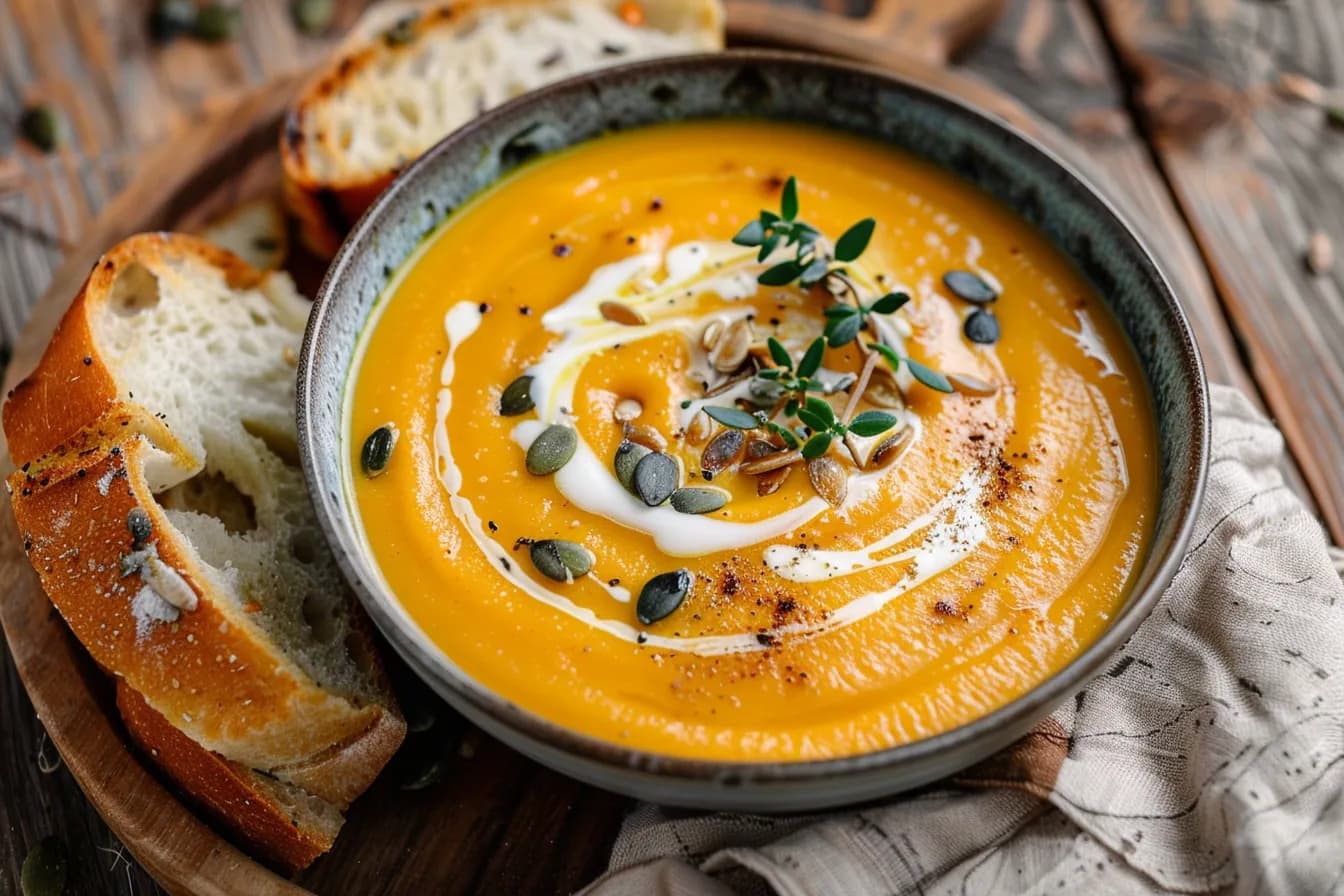 Soups & Stews
Any-Vegetable Soup
One kilo of vegetables, one onion, one liter of broth: the rest is just deciding how creamy and how spicy you want it.
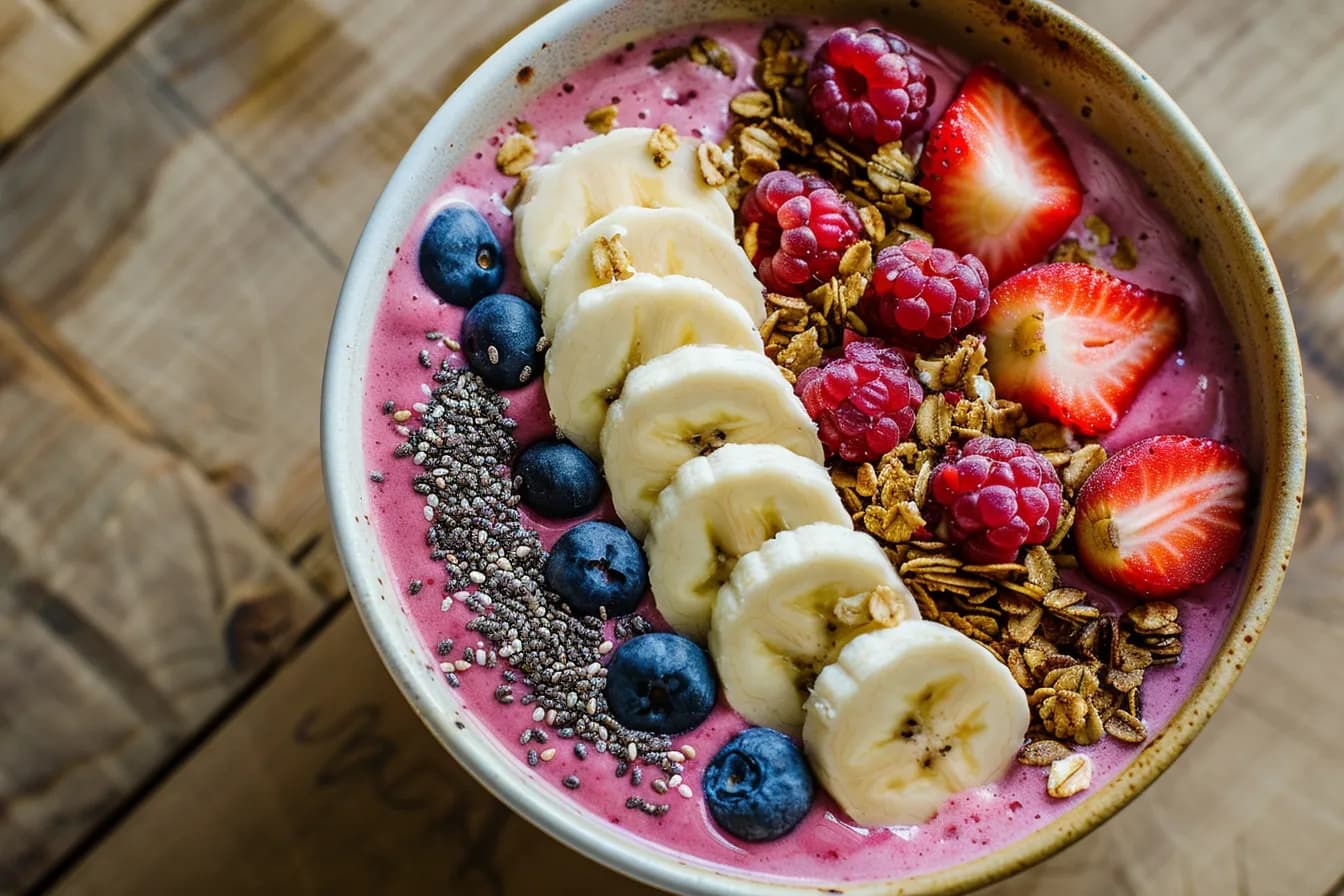 Breakfast
Smoothie Bowl
Thick, spoonable berry and banana base topped with granola, fruit, and seeds.
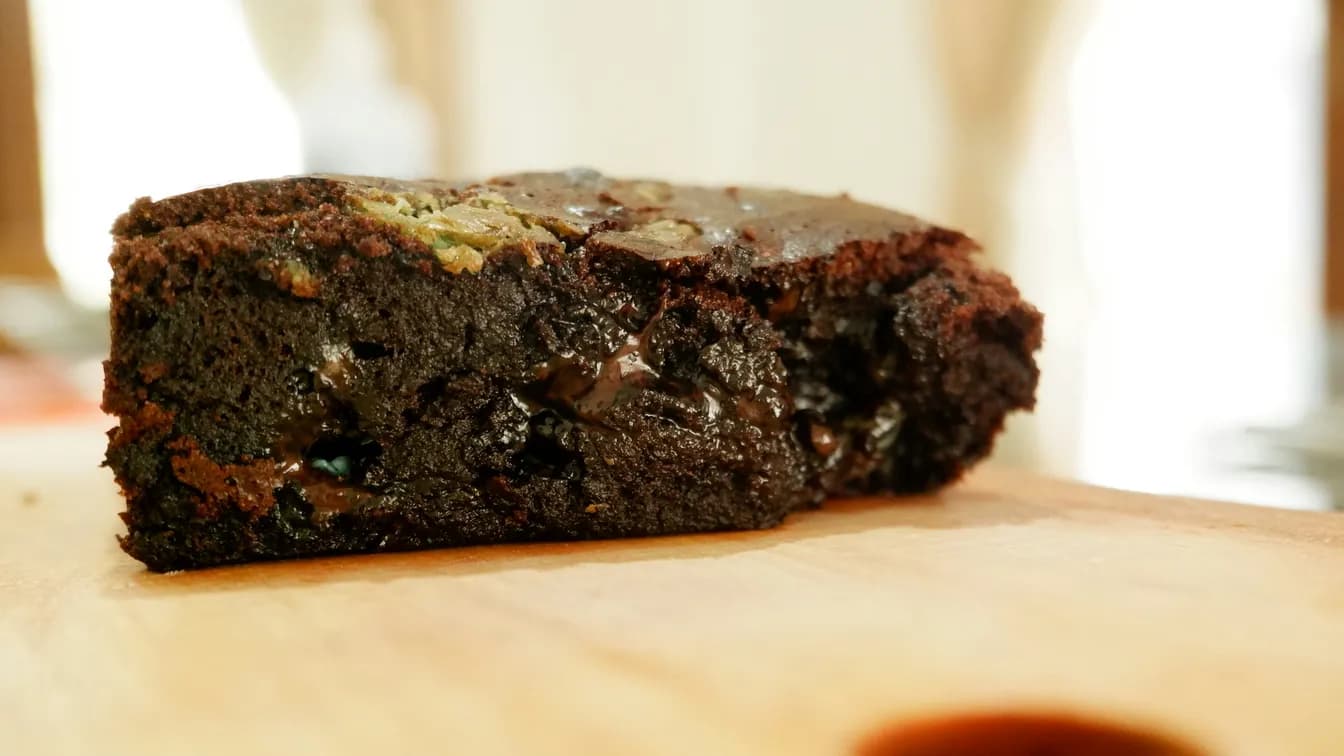 Cakes & Pastries
Zucchini Brownies
A whole zucchini in the batter, and nobody notices it: instead, they stay moist for three days.