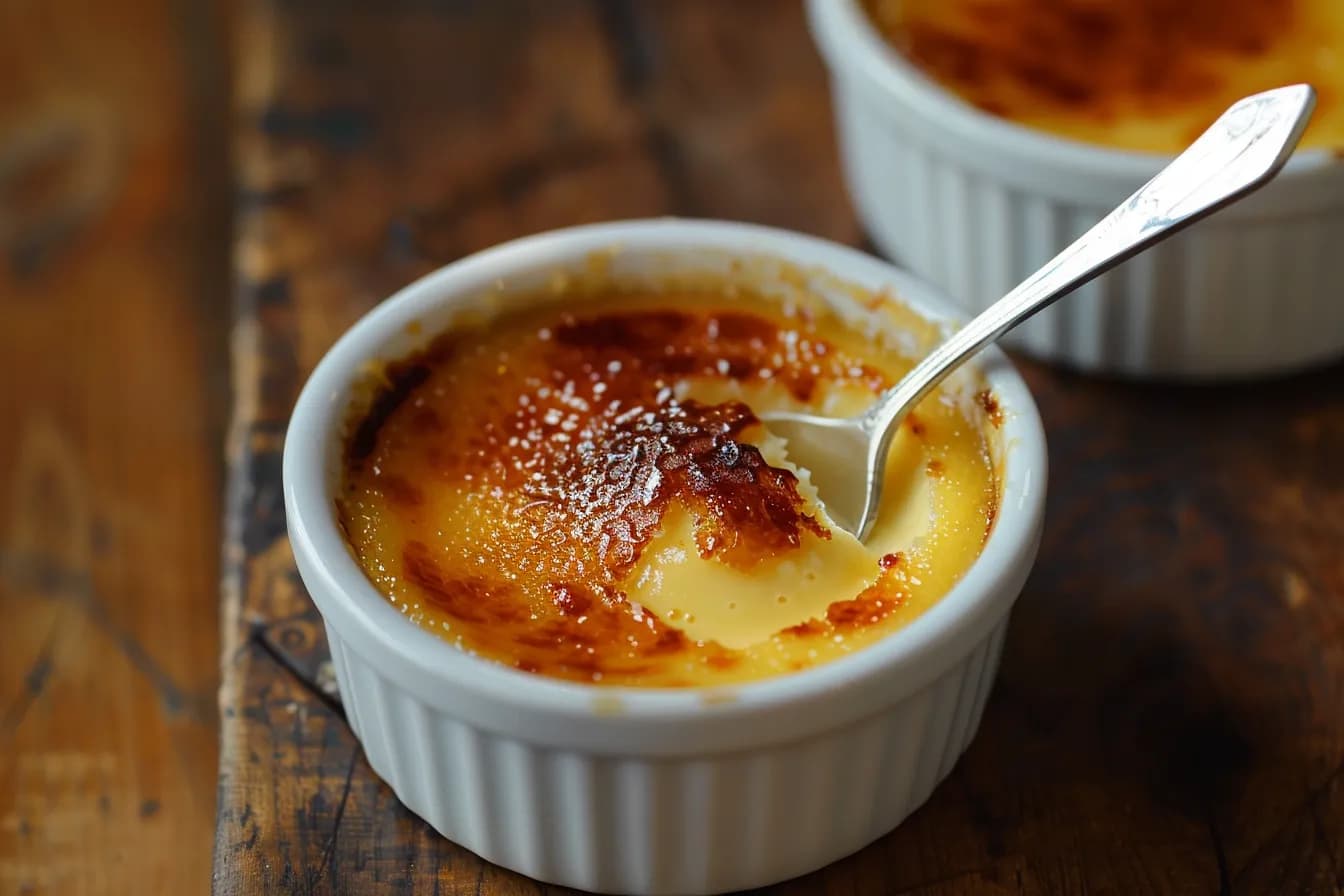
Crème brûlée
Silky vanilla custard beneath a glassy caramel crust that shatters when tapped.
- Preparation
- 20 min
- Cook/bake time
- 50 min
- Total
- 5 hr 10 min
- Difficulty
- Medium
- Calories
- 400 kcal
- Servings
- 6
- Prep
- 20 min
- Cooking & baking
- 50 min
- Resting
- 4 hr
Only 1 hr 10 min of that is hands-on – the rest takes care of itself.
Silky vanilla custard beneath a glassy caramel crust that shatters when tapped. The custard is baked in a water bath so it sets evenly and without bubbles, and it must be completely chilled before caramelizing. A dessert that is excellent to prepare the day before.
Why this works
Egg yolks bind between 80 and 85 °C. Above that, they curdle into small lumps, and the custard becomes grainy instead of silky. This is a window of just a few degrees. The water bath keeps the temperature around the ramekins constant just below the critical point, because water does not rise above 100 °C and buffers temperature fluctuations in the oven. The fact that the center still jiggles when you take it out is correct: the residual heat finishes cooking it over the next few minutes.
Step-by-step instructions
- 1
Flavor the cream
Scrape the seeds from the vanilla bean and add them along with the pod, the cream, and the milk to a saucepan. Heat everything until it steams slightly at the edges, but do not let it boil, and then remove it from the heat. Let the mixture steep covered for twenty minutes so the vanilla flavor dissolves completely.
- 2
Whisk the egg yolks
Whisk the egg yolks, sugar, and the pinch of salt in a bowl just until the sugar has dissolved and the mixture is pale yellow. Whip in as little air as possible, because air bubbles will turn into a porous surface in the oven and disrupt the smooth texture.
- 3
Temper
Pour the warm cream in a thin stream into the egg yolks while stirring constantly. If you pour too quickly, the egg will curdle and you will get scrambled eggs instead of custard. Then pour the mixture through a fine mesh strainer, which removes the vanilla pod and any egg white strands.
- 4
Bake in a water bath
Divide the custard among six shallow ramekins and place them in a deep roasting pan. Pour in enough boiling water so the ramekins are halfway submerged. Bake everything at 150 °C for 40 to 45 minutes, until the custard is set at the edges and still jiggles slightly in the center like gelatin.
- 5
Chill and caramelize
Remove the ramekins from the water bath, let them cool, and place them in the refrigerator for at least four hours, preferably overnight. Just before serving, sprinkle one teaspoon of sugar evenly over each and caramelize it with a kitchen torch until it is dark brown and glassy.
Our best tips
- The custard must come out of the oven while the center still jiggles. If baked until firm, it will become grainy as it cools.
- Torch the sugar crust only immediately before serving, otherwise it will soften within twenty minutes.
- Shallow, wide ramekins yield a better ratio of crust to custard than tall, narrow ones.
Tasty variations
Without a kitchen torch
Place the ramekins under the preheated oven broiler for two minutes, directly under the heating element, and do not walk away.
With tonka bean
Instead of vanilla, let half a grated tonka bean steep in the cream, which gives a warm, almond-like flavor.
What is left over?
This recipe only uses the yolks. The whites keep for three days in the fridge and freeze well – nobody has to throw them out.
Nutrition facts
| Calories | 400 kcal |
|---|---|
| Protein | 5 g |
| Carbohydrates | 21 g |
| – of which sugar | 21 g |
| Fat | 33 g |
| Fiber | 0 g |
Where the 400 kcal come from
per serving
Calculated from the ingredients – how we do it
We add up reference values for every ingredient and divide by the number of servings. These assumptions are baked in:
- Reference values per 100 g – for the raw ingredient, exactly as listed.
- Tinned goods count at drained weight, bone-in meat at purchase weight: you eat about 70 per cent of a chicken thigh and leave the rest.
- Water evaporates as you cook. The energy stays in the pot, the weight does not – so the figure is per serving, not per 100 g of finished dish.
- Anything listed without a quantity – “salt and pepper” – is not counted.
A guide value, not a lab measurement: no two onions weigh the same, and fat content varies from pack to pack.
What can go wrong
The points where this recipe most often goes sideways – and what to do about it.
- The custard is firm and has bubbles
- Baked too hot. The custard should only set, not boil. That is why the water bath is used, and the oven stays at 100 to 120 °C. It is done when it still trembles slightly in the center when nudged; it will only become firm in the refrigerator.
- The sugar does not get crispy, but chewy
- The custard was still warm or moist. It must be chilled through for at least four hours, and the surface should be briefly dabbed with paper towels before sugaring. And caramelizing is done right before serving. After twenty minutes, the sugar will have drawn moisture and become soft again.
Frequently asked questions
Why is my custard grainy?
It was baked too hot or too long. The water bath and 150 °C are crucial, as is taking it out while the center still jiggles.
Can I do it without a kitchen torch?
Under the oven broiler yes, but the custard will warm up slightly. A small kitchen torch is the more reliable solution and costs little.
How long does crème brûlée keep?
Without the crust, three days in the refrigerator, covered. Caramelizing is always done right before serving.
Comments & ratings(0)
Sign in to rate and comment on this recipe.
You might also like
 Cakes & Pastries
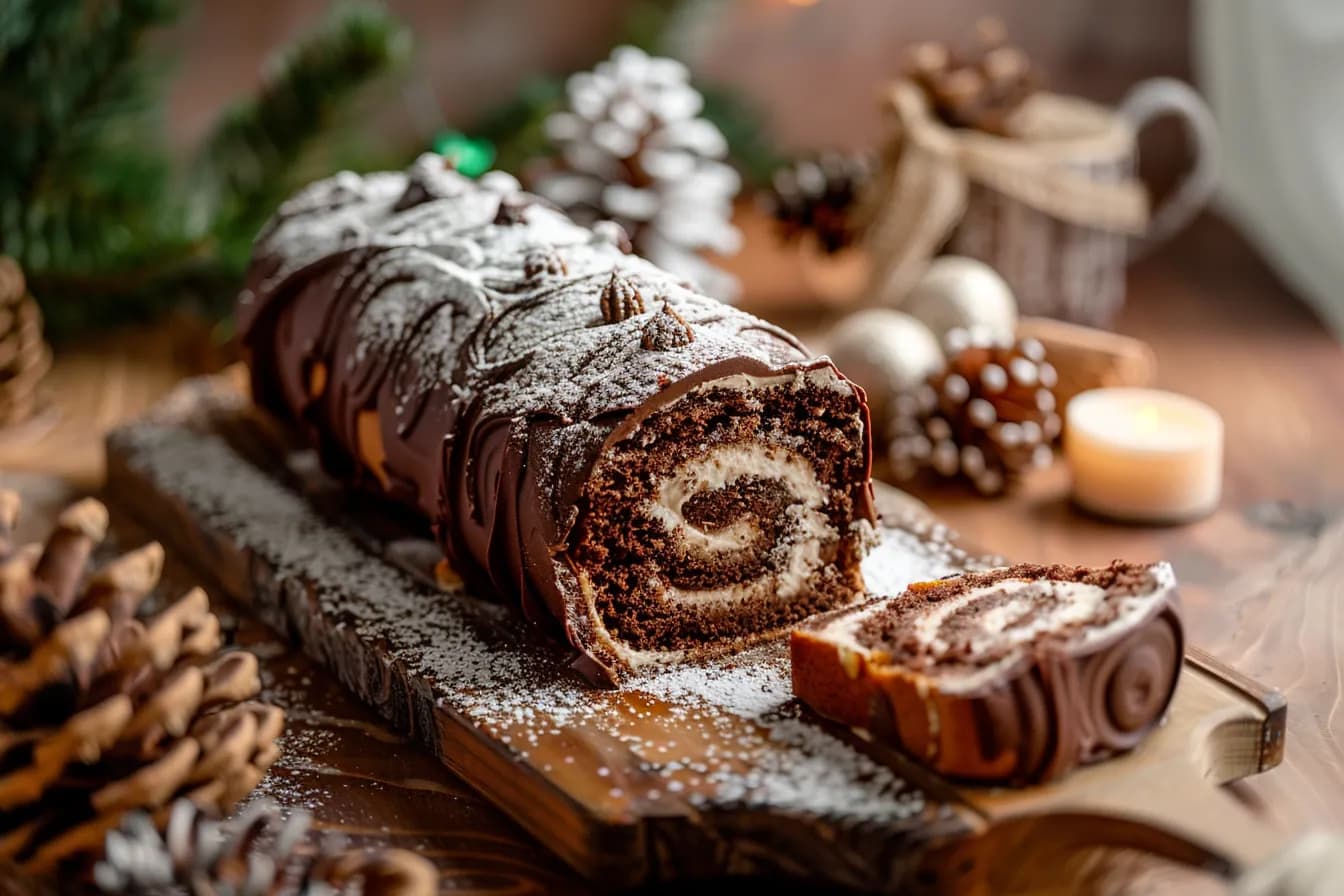
Bûche de Noël (Yule Log)
French Yule log: chocolate sponge cake with buttercream, decorated to look like tree bark.
 Cakes & Pastries
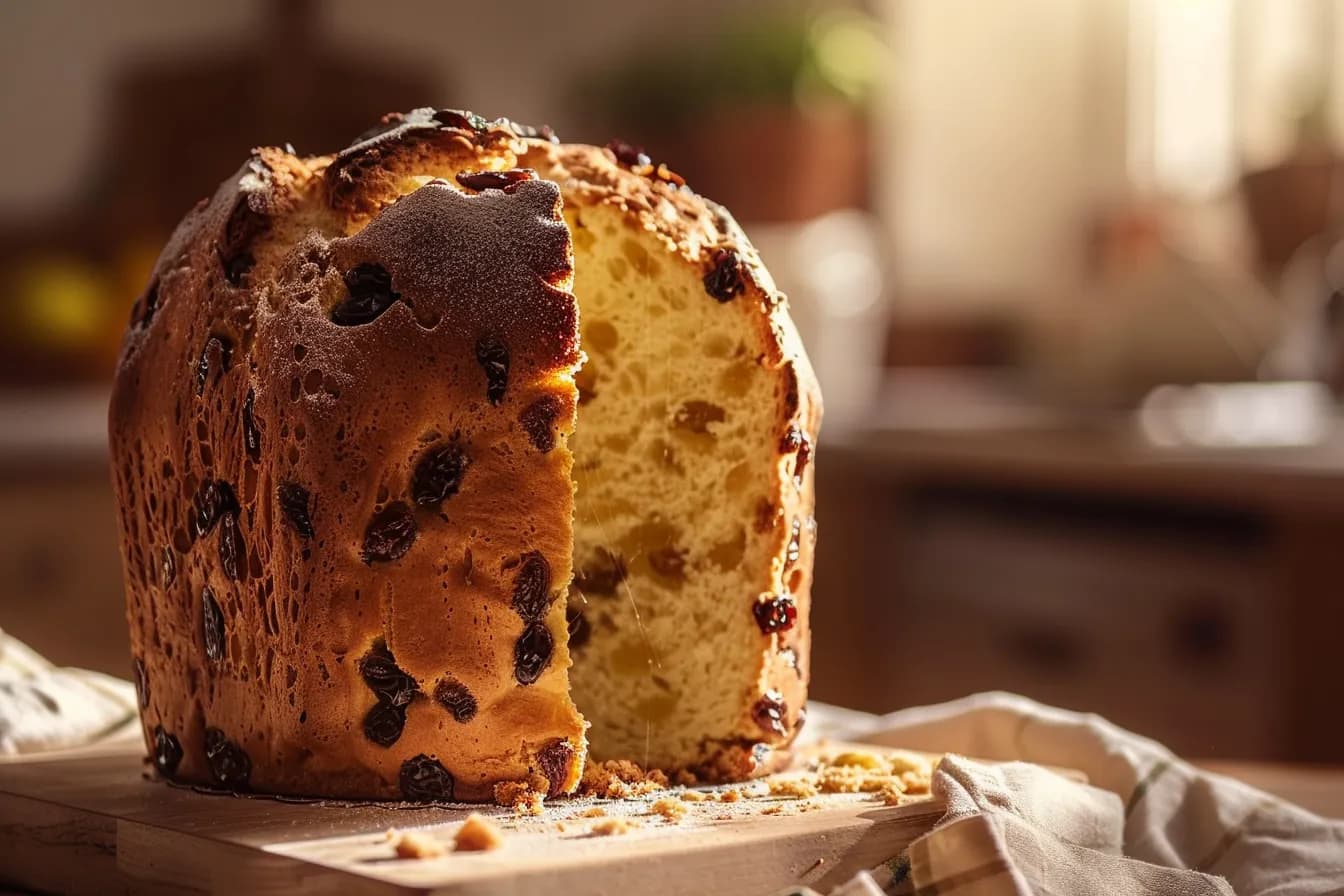
Panettone
The Milanese Christmas cake: tall, airy, tearable into shreds, and the result of two days of patience.
 Cakes & Pastries
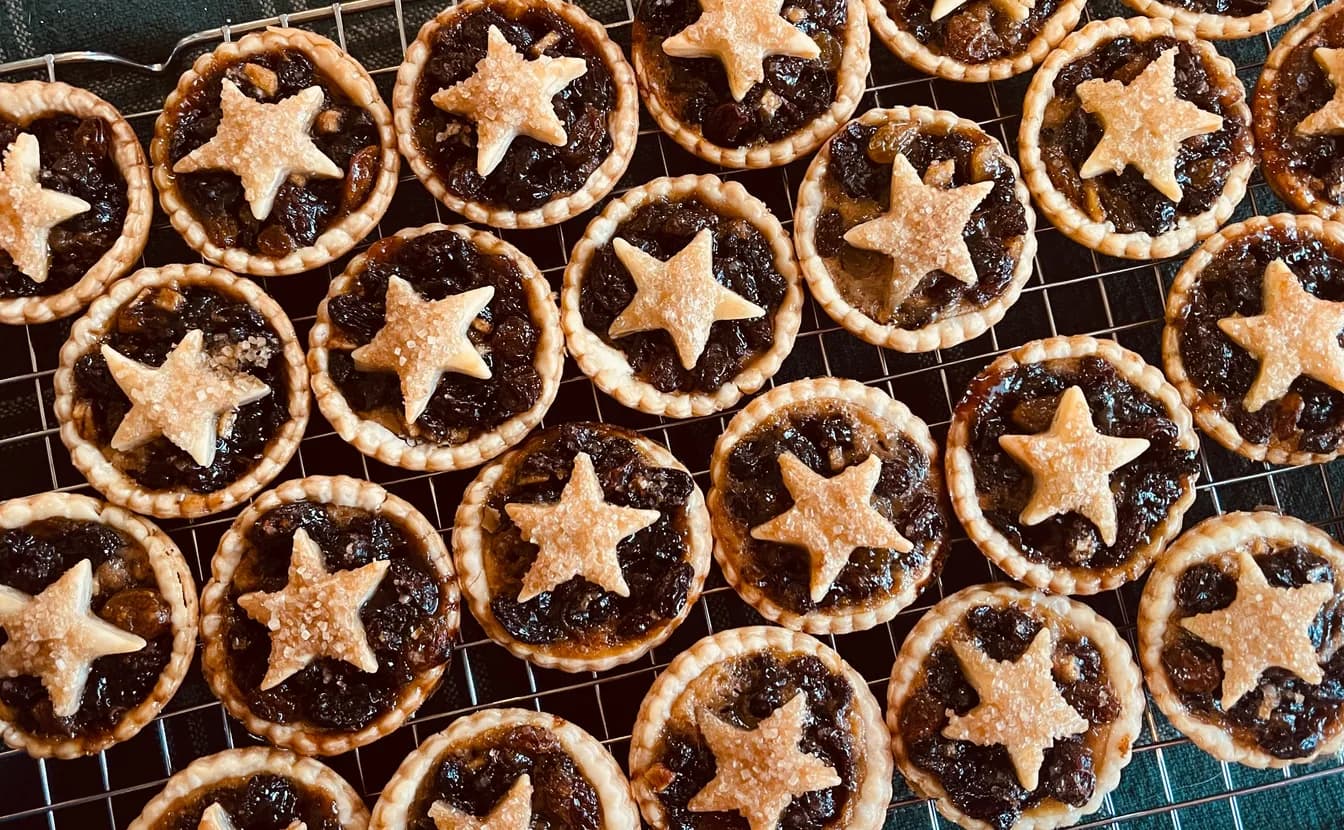
Mince Pies
Small British Christmas tarts with a dried fruit filling, meat-free for two hundred years despite the name.