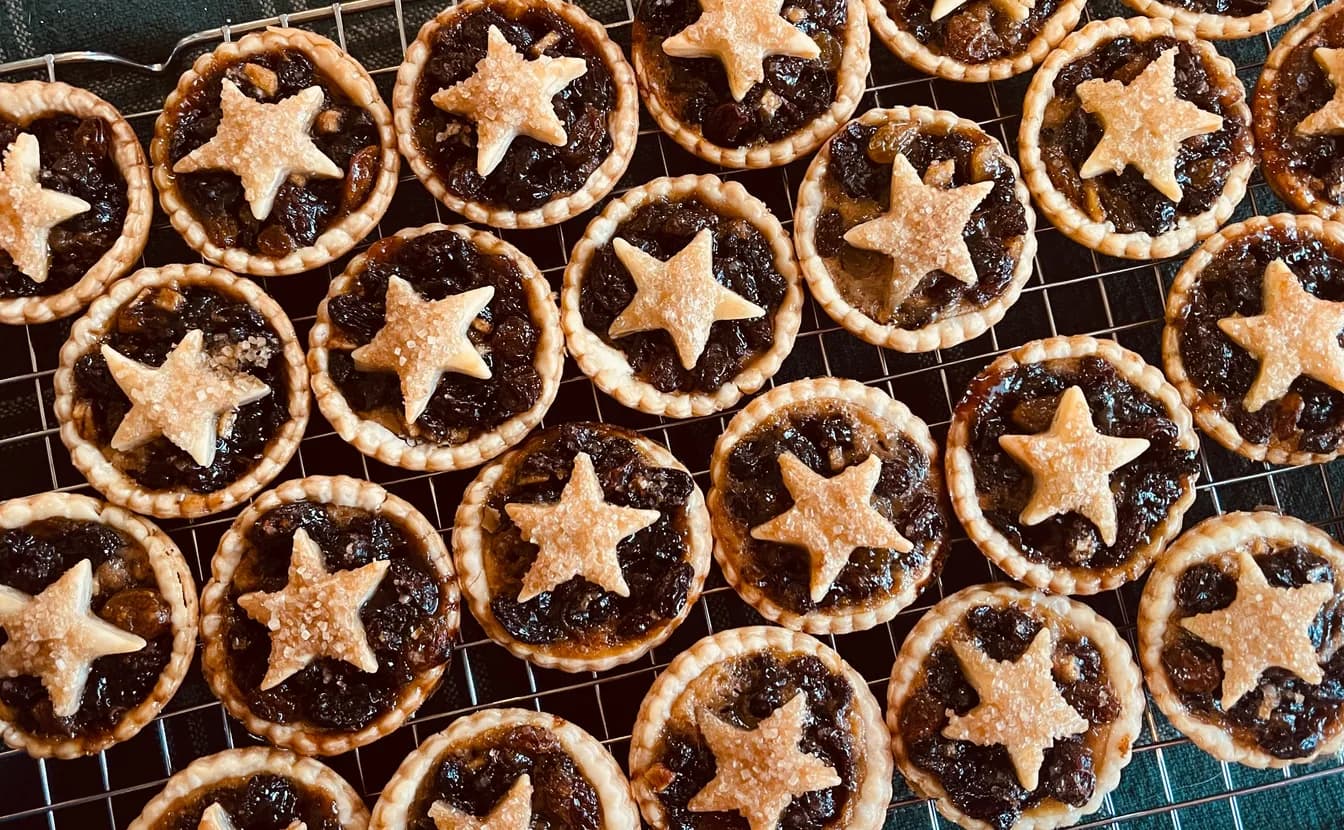
Mince Pies
Small British Christmas tarts with a dried fruit filling, meat-free for two hundred years despite the name.
- Preparation
- 45 min
- Cook/bake time
- 1 hr
- Total
- 2 hr 45 min
- Difficulty
- Medium
- Calories
- 306 kcal
- Servings
- 18 pieces
- Prep
- 45 min
- Cooking & baking
- 1 hr
- Resting
- 1 hr
Only 1 hr 45 min of that is hands-on – the rest takes care of itself.
Small British Christmas tarts with a dried fruit filling, meat-free for two hundred years despite the name. The name recalls the medieval original, in which minced meat was preserved with fruits and spices; the fruits, the spices, and the name have remained. In Great Britain, they are as much a part of Christmas as cookies are here.
Why this works
Shortcrust pastry becomes crumbly because the fat coats the flour particles and prevents them from absorbing water and forming gluten during kneading. The less gluten that forms, the more tenderly the dough breaks. That is why the butter must be cold and the dough worked briefly: warm butter absorbs into the flour instead of coating it, and long kneading builds exactly the network you do not want. The filling, on the other hand, needs no cooking time at all; it has long been preserved by sugar and alcohol. The twenty minutes in the oven are therefore solely for the dough, and because the filling does not need to cook, it is filled cold and the oven can be hot.
Step-by-step instructions
- 1
Cook the mincemeat
Put all the filling ingredients except the rum in a saucepan and let them simmer over low heat for twenty minutes until the apples break down and the mixture is thick. Remove from the heat, stir in the rum, and let cool completely. Warm filling would soften the shortcrust pastry before it goes into the oven.
- 2
Knead the shortcrust pastry
Knead the flour, ice-cold butter cubes, powdered sugar, egg, and salt only until the dough just holds together, a maximum of one minute. The shorter, the crumblier the result will be. Wrap it in foil and chill for an hour.
- 3
Cut out
Roll out the dough to about 3 mm thin and cut out eighteen large circles for the bases and eighteen smaller ones for the lids. Place the bases in a greased muffin tin and press them in gently. Work quickly: as soon as the butter in the dough softens, it will tear when inserted.
- 4
Fill and close
Put a heaping teaspoon of cold filling into each base, but only fill them three-quarters full. Put the lids on, press the edges firmly with a fork, and prick each lid once so the steam can escape. Without this hole, the lids will lift off in the oven.
- 5
Bake
Brush the lids thinly with milk and bake the tarts at 200 °C top/bottom heat for 18 to 20 minutes until golden brown. Let them stand in the tin for five minutes before removing them; when hot, they are still too soft and will break. Serve dusted with powdered sugar.
Our best tips
- The filling can be made weeks in advance and stored in jars in a cool place. It gets better in the process, just like Christmas pudding; many British households cook it in October.
- Do not overfill. The mixture expands in the heat, runs over the edge, and sticks the tarts in the tin. Three quarters is the limit.
- Instead of a closed lid, a star can also be cut out and placed on top. Looks more Christmassy and solves the steam problem by itself.
Tasty variations
With crumble topping
Instead of pastry lids, top with crumbles made from 80 g flour, 50 g butter, and 40 g sugar. A bit more rustic and much faster than cutting out the lids.
Alcohol-free
Replace the rum with apple juice and add an extra teaspoon of lemon juice. The filling will then keep refrigerated for about two weeks instead of several months.
Nutrition facts
| Calories | 306 kcal |
|---|---|
| Protein | 4 g |
| Carbohydrates | 41 g |
| – of which sugar | 24 g |
| Fat | 14 g |
| Fiber | 2 g |
Where the 306 kcal come from
per serving
Calculated from the ingredients – how we do it
We add up reference values for every ingredient and divide by the number of servings. These assumptions are baked in:
- Reference values per 100 g – for the raw ingredient, exactly as listed.
- Tinned goods count at drained weight, bone-in meat at purchase weight: you eat about 70 per cent of a chicken thigh and leave the rest.
- Water evaporates as you cook. The energy stays in the pot, the weight does not – so the figure is per serving, not per 100 g of finished dish.
- Anything listed without a quantity – “salt and pepper” – is not counted.
A guide value, not a lab measurement: no two onions weigh the same, and fat content varies from pack to pack.
Frequently asked questions
Is there really no meat in it?
No, not since the 19th century. The name dates back to the Middle Ages, when minced meat was preserved with sugar, fruits, and spices. All that remains of the meat is the beef suet in traditional recipes, and even that is mostly replaced by butter today.
How many calories does a mince pie have?
Around 305 kcal per piece. A good half comes from the shortcrust pastry, which is one-third butter; the filling itself mainly contributes sugar from the dried fruits.
How long do mince pies keep?
Baked in a tin for about a week, frozen for three months. The unbaked filling, on the other hand, lasts for months and is the part you should prepare in advance.
Why does my shortcrust pastry get hard instead of crumbly?
Kneaded too long or the butter was too warm. Both lead to gluten forming, exactly the opposite of crumbly. The dough can still look slightly crumbly when it goes into the foil.
Comments & ratings(0)
Sign in to rate and comment on this recipe.
You might also like
 Cakes & Pastries
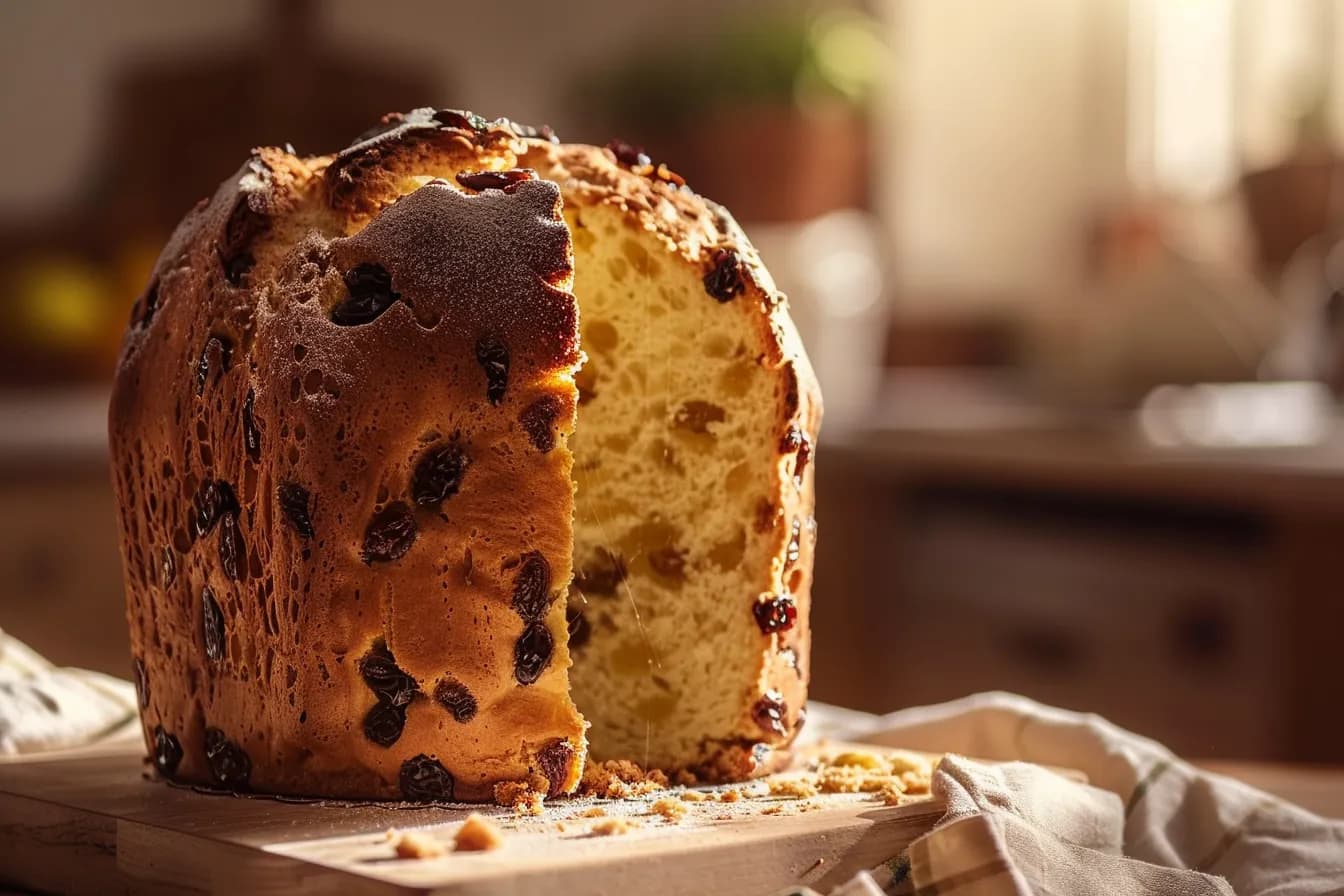
Panettone
The Milanese Christmas cake: tall, airy, tearable into shreds, and the result of two days of patience.
 Cakes & Pastries
Cut-Out Cookies with Royal Icing
Cut-out cookies with sharp edges and colorful royal icing, the American Christmas classic.
 Cakes & Pastries
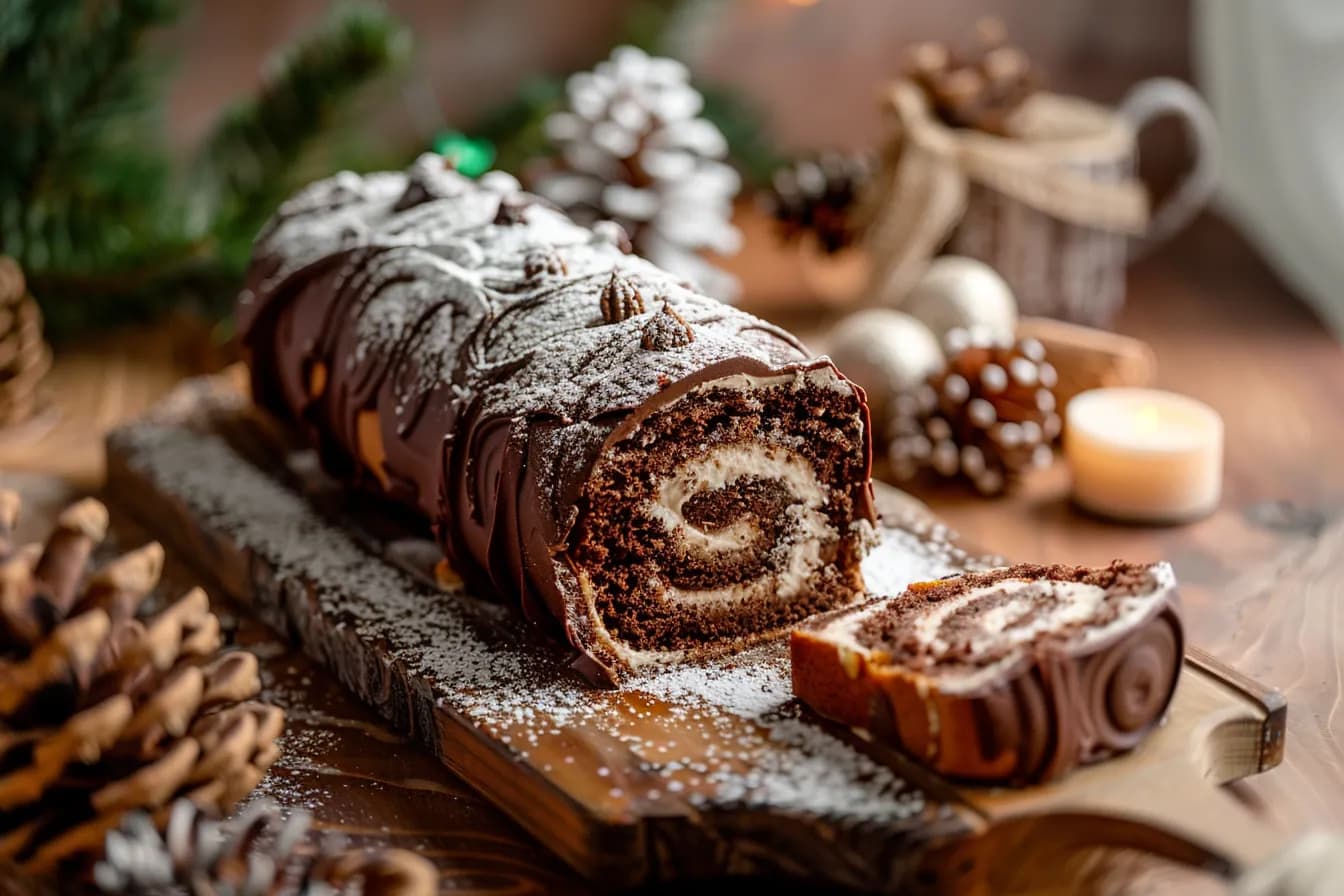
Bûche de Noël (Yule Log)
French Yule log: chocolate sponge cake with buttercream, decorated to look like tree bark.