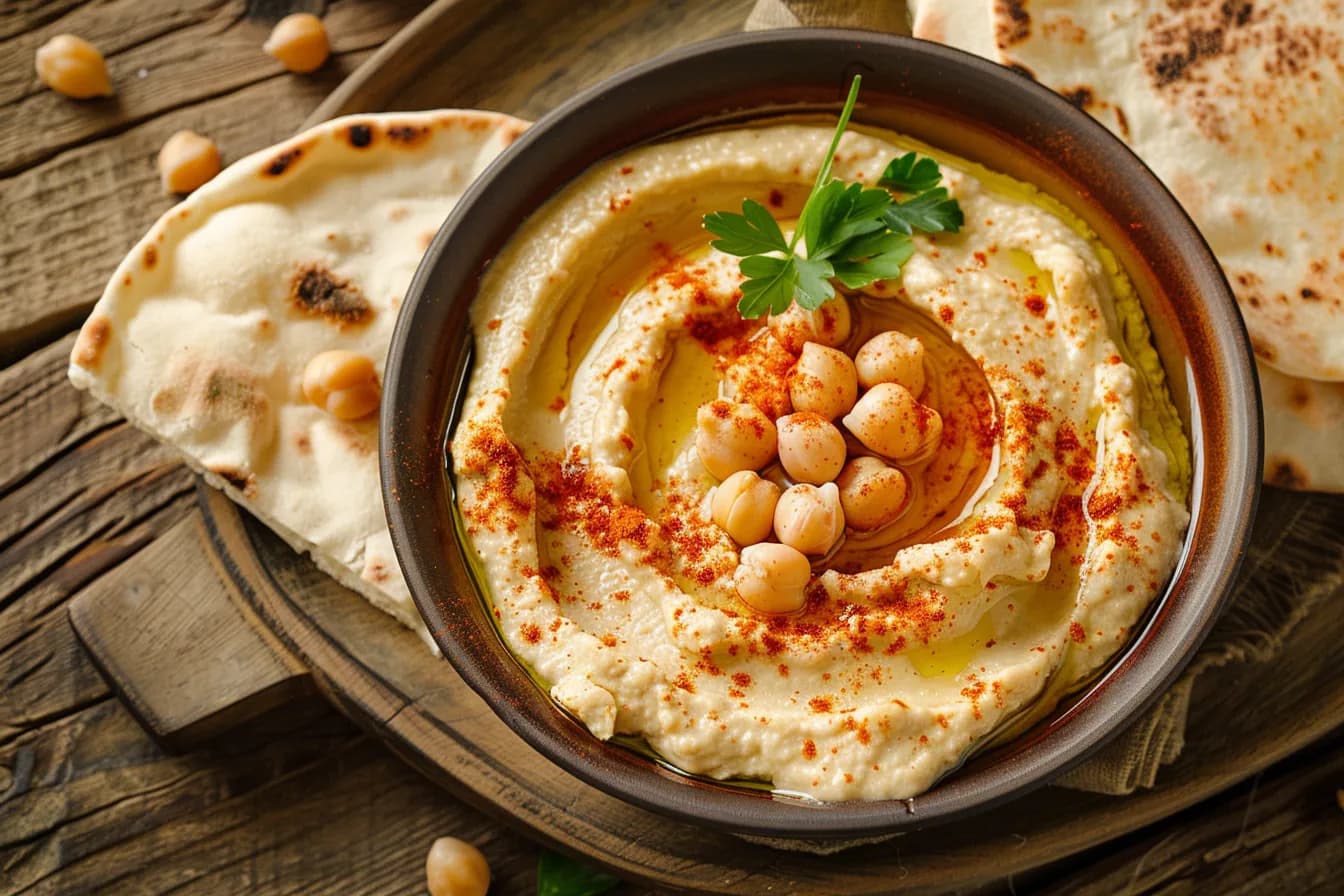
Creamy Hummus
Velvety chickpea cream with tahini and lemon, as smooth as in a Lebanese restaurant.
- Preparation
- 15 min
- Cook/bake time
- 40 min
- Total
- 12 hr 55 min
- Difficulty
- Easy
- Calories
- 365 kcal
- Servings
- 6
- Prep
- 15 min
- Cooking & baking
- 40 min
- Resting
- 12 hr
Only 55 min of that is hands-on – the rest takes care of itself.
Velvety chickpea cream with tahini and lemon, as smooth as in a Lebanese restaurant. The difference between grainy homemade hummus and a truly silky cream lies in two tricks: baking soda when boiling and ice water when blending. Both cost nothing and completely change the result.
Why this works
Baking soda makes the cooking water alkaline, and in an alkaline environment, the pectin between the cell walls of the chickpea dissolves much faster. The peas almost fall apart on their own when cooking. The skins detach, and with them the main cause of grainy hummus. The ice water when blending, in turn, causes the sesame paste to emulsify and whips in air, which makes the hummus light and fluffy.
Step-by-step instructions
- 1
Boil the chickpeas
Pour off the soaking water and boil the chickpeas with the baking soda in plenty of fresh water for 35 to 45 minutes until they crush effortlessly between your fingers. They really must be overcooked, a firm bite is a mistake here. The baking soda loosens the skins and makes the peas soft much faster.
- 2
Remove the skins
Stir the cooked chickpeas vigorously in the pot and pour cold water over them, the skins will then float to the top and can be skimmed off. This is the most tedious but most effective step for a truly smooth cream. If this is too much for you, skip it and blend longer instead.
- 3
Whip the tahini
Put the tahini, lemon juice, garlic, and salt in the blender and let everything run for thirty seconds. The mixture will initially become firm and light, which is completely normal. Whipping this tahini base beforehand makes the finished hummus much fluffier than if you blend everything at the same time.
- 4
Incorporate the chickpeas
Add the still warm chickpeas and the cumin and blend everything for 3 to 4 minutes on the highest setting. Really let the blender run that long, this is no exaggeration. Warm chickpeas break down better than cold ones and result in a smoother texture.
- 5
Pour in the ice water
With the blender running, pour in the ice water spoonful by spoonful until the hummus is light, fluffy, and silky. It should fall thickly from the spoon and thicken slightly as it stands. Spread it into a bowl with the back of a spoon, make a well, pour in olive oil, and sprinkle with paprika powder and parsley.
Our best tips
- Baking soda in the cooking water is the most important trick. It makes the chickpeas tender and the hummus creamy as a result.
- Ice water instead of normal water. The cold makes the tahini emulsion lighter and fluffier.
- Blend longer than you think. Three to four minutes are normal, thirty seconds result in grainy hummus.
Tasty variations
From the can
Boil 800 g of canned chickpeas for 15 minutes with 1 teaspoon of baking soda, then continue as described.
Hummus with roasted bell pepper
Blend in two roasted, peeled bell peppers, this results in a bright red, sweetish variation.
Nutrition facts
| Calories | 365 kcal |
|---|---|
| Protein | 12 g |
| Carbohydrates | 31 g |
| – of which sugar | 5 g |
| Fat | 23 g |
| Fiber | 10 g |
Where the 365 kcal come from
per serving
Calculated from the ingredients – how we do it
We add up reference values for every ingredient and divide by the number of servings. These assumptions are baked in:
- Reference values per 100 g – for the raw ingredient, exactly as listed.
- Tinned goods count at drained weight, bone-in meat at purchase weight: you eat about 70 per cent of a chicken thigh and leave the rest.
- Water evaporates as you cook. The energy stays in the pot, the weight does not – so the figure is per serving, not per 100 g of finished dish.
- Anything listed without a quantity – “salt and pepper” – is not counted.
A guide value, not a lab measurement: no two onions weigh the same, and fat content varies from pack to pack.
Frequently asked questions
Do I really have to remove the skins?
For maximum creaminess yes, but it is optional. Boiled with baking soda and blended for a long time, the hummus will also be good with skins, just not quite as silky.
Which tahini should I buy?
Light tahini made from hulled sesame seeds, ideally from Lebanon or Israel. Dark tahini made from unhulled sesame tastes significantly more bitter.
How long does hummus keep?
Four to five days in the refrigerator, with a layer of olive oil on top even a week. Stir before serving and let it come to room temperature.
Comments & ratings(0)
Sign in to rate and comment on this recipe.
You might also like
 Salads
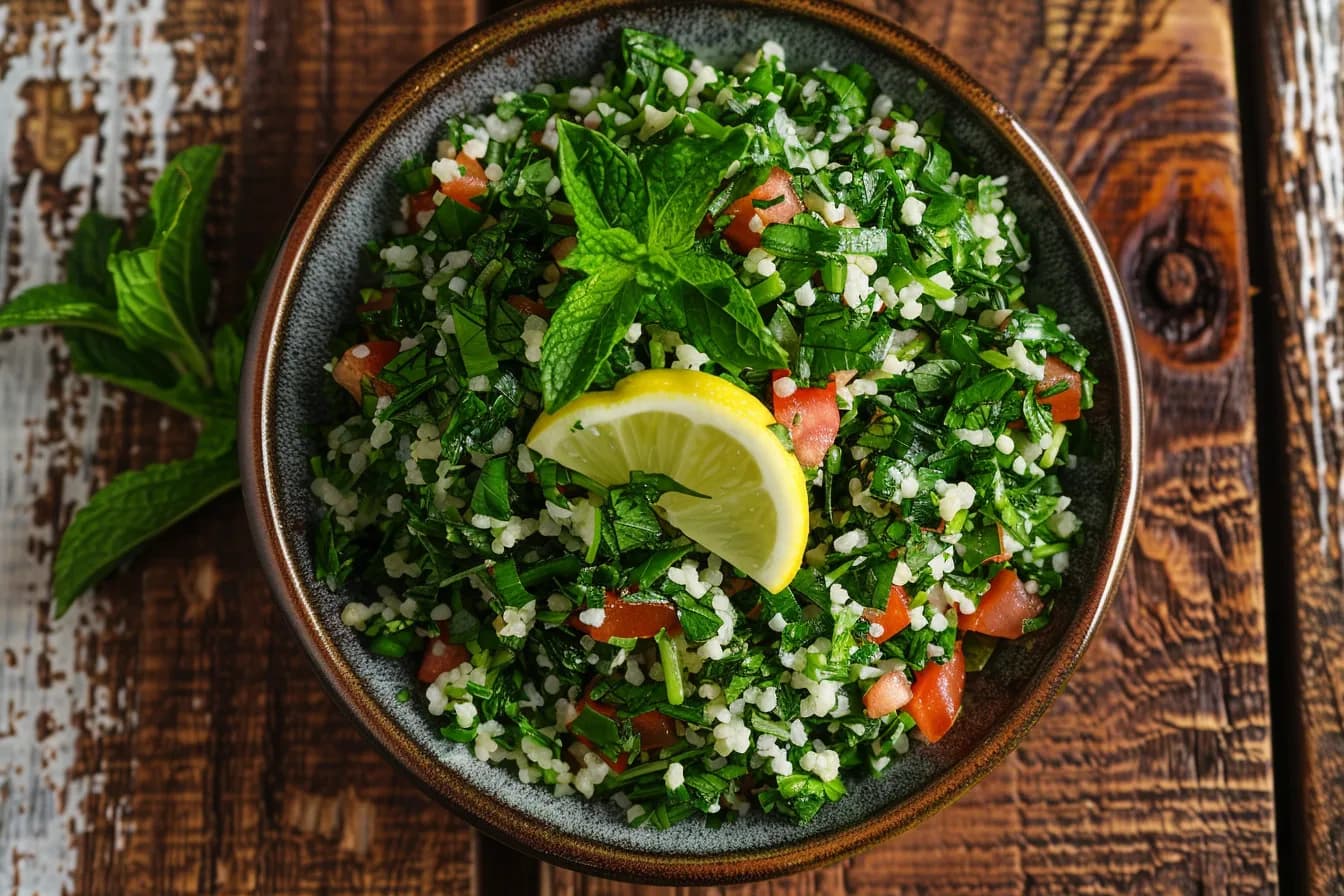
Tabbouleh
Herb salad with lots of parsley, a little bulgur, tomato, and plenty of lemon.
 Vegetarian
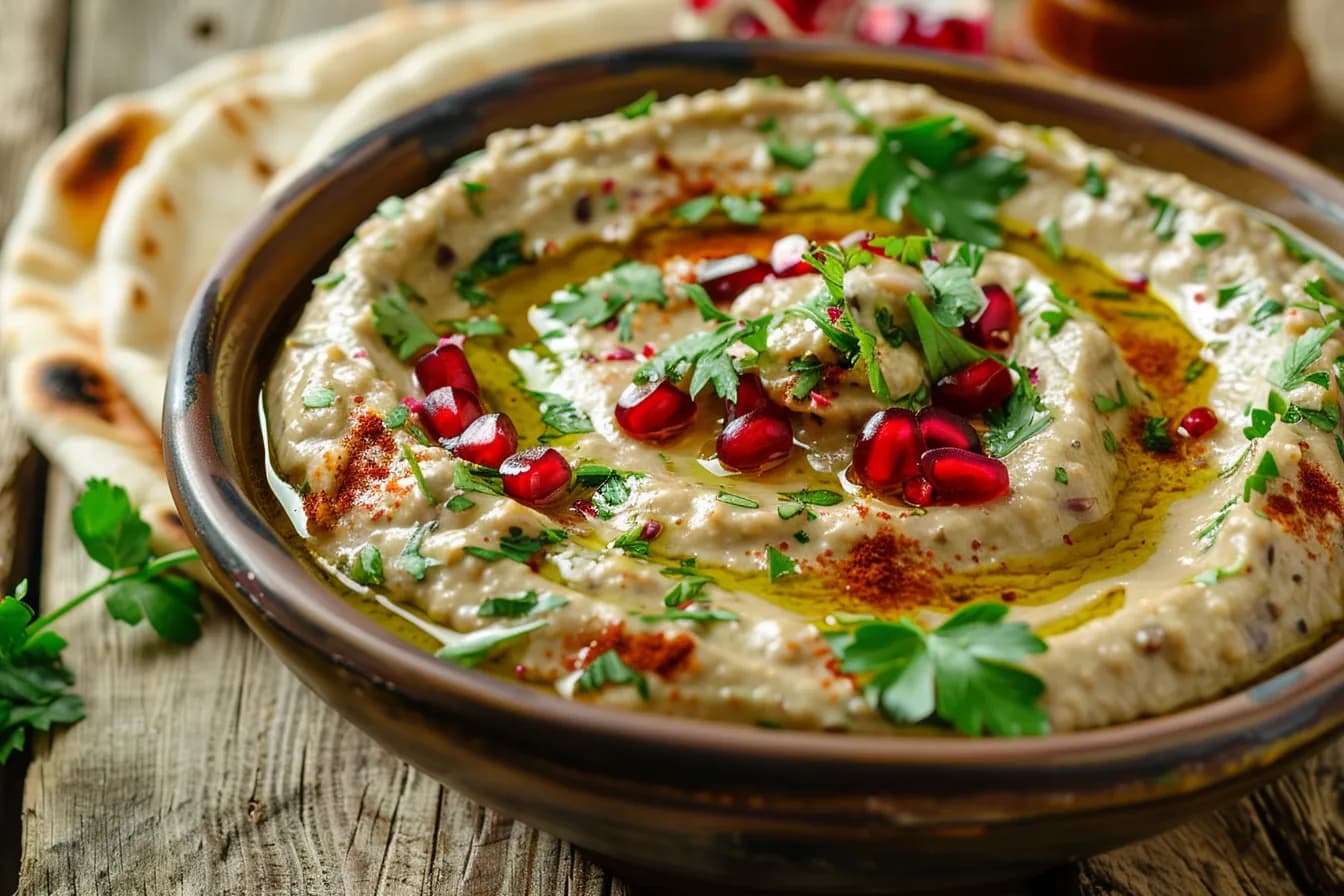
Baba Ganoush
Smoky eggplant dip with tahini, garlic and lemon, roasted over an open flame.
 Salads
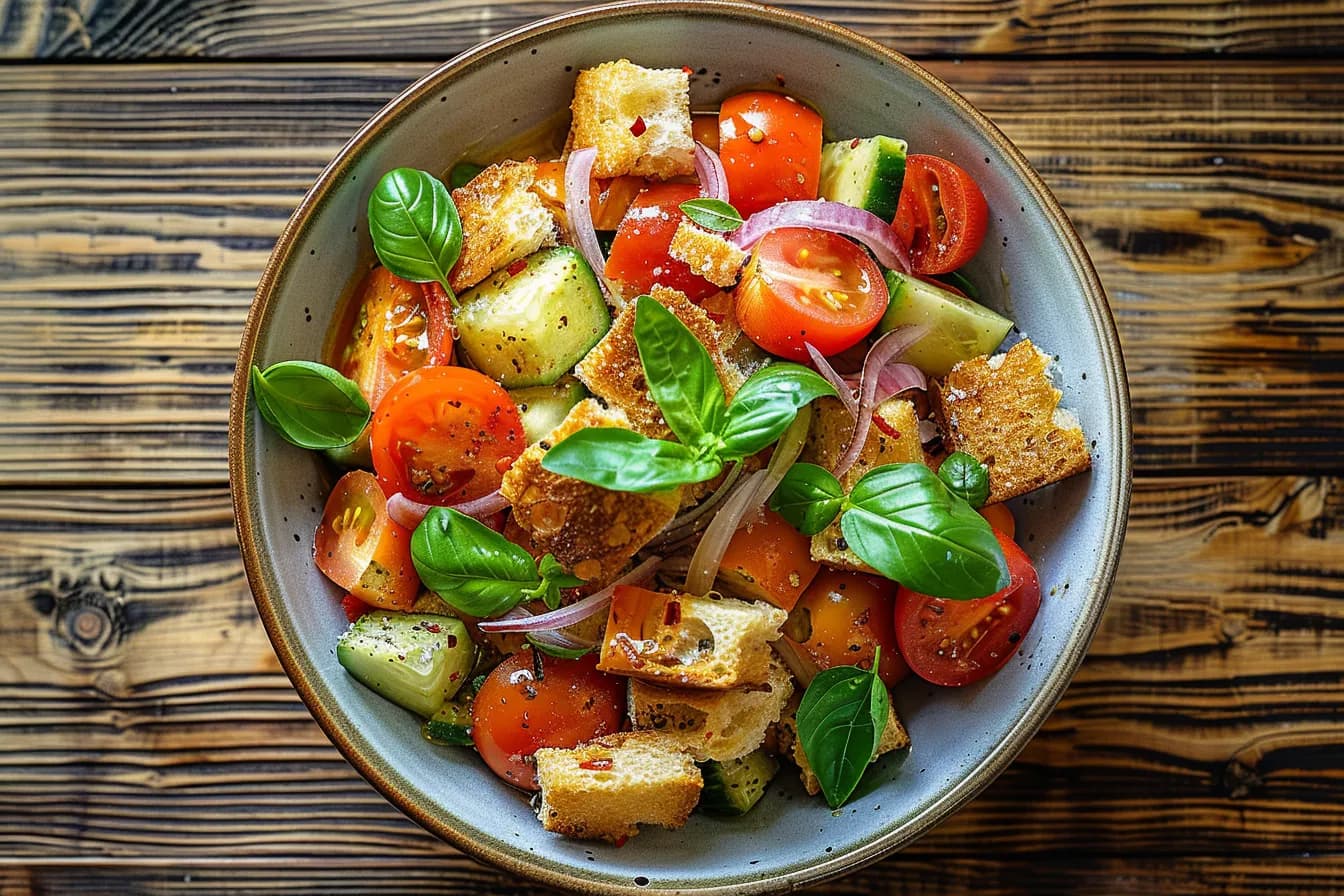
Panzanella
The salad that makes stale bread the main ingredient, and gives tomato juice a purpose.