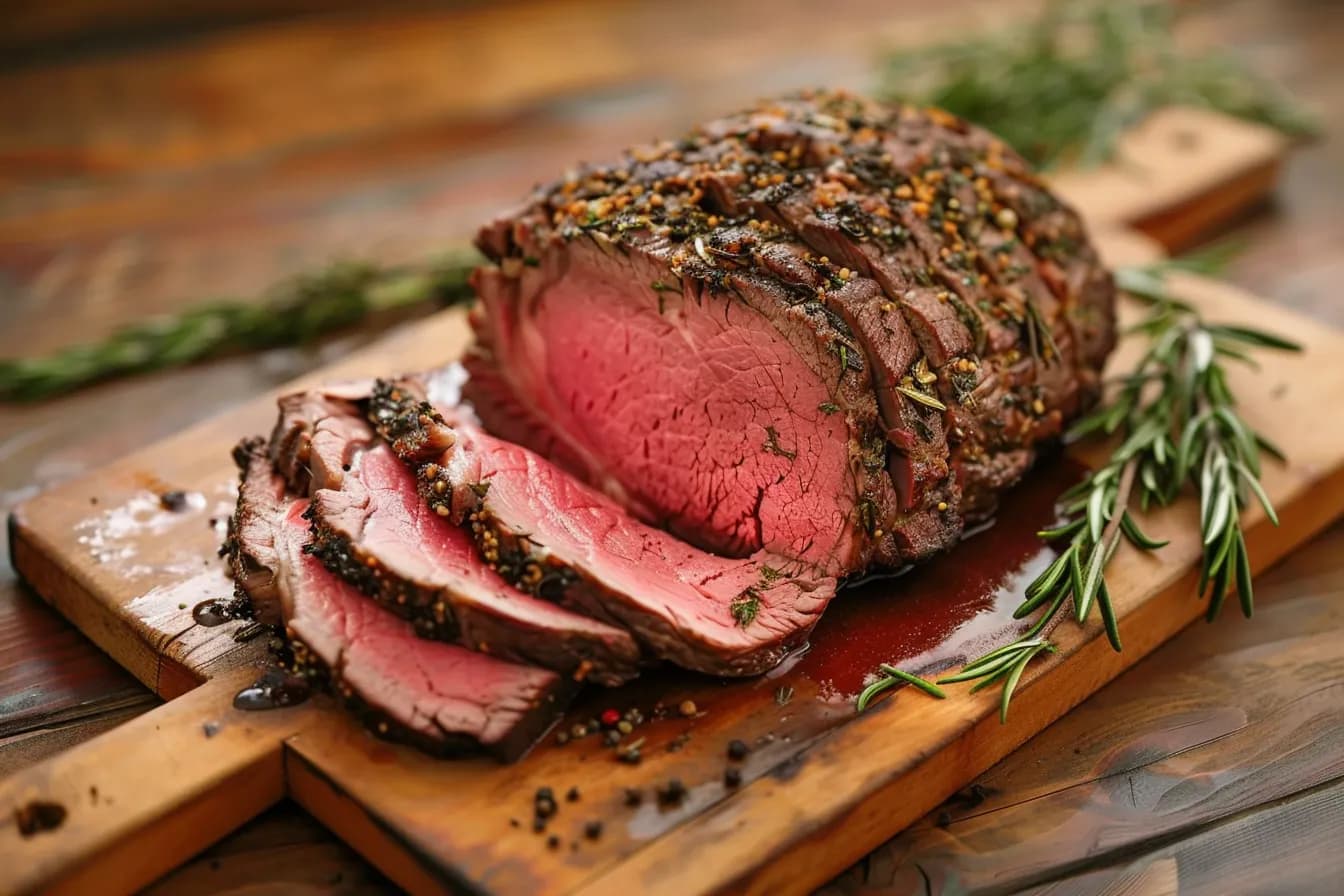
Christmas Roast Beef
Beef loin with an herb crust, cooked at a low temperature to a perfect pink.
- Preparation
- 25 min
- Cook/bake time
- 1 hr 40 min
- Total
- 4 hr 35 min
- Difficulty
- Medium
- Calories
- 533 kcal
- Servings
- 8
- Prep
- 25 min
- Cooking & baking
- 1 hr 40 min
- Resting
- 2 hr 30 min
Only 2 hr 5 min of that is hands-on – the rest takes care of itself.
Beef loin with an herb crust, cooked at a low temperature to a perfect pink. At 120 degrees in the oven, the difference between the edge and the core is small, so the meat becomes almost uniformly pink instead of cooking in zones. The quick, hard sear beforehand doesn't seal anything in, it creates roasted flavors.
Why this works
Roast beef is purely about temperature control. At a low 120 °C in the oven, the difference between the edge and the core is small, so the meat cooks from the outside in almost uniformly pink instead of in zones. The quick, hard sear beforehand doesn't seal anything in, a myth that has persisted for over a hundred years, but rather creates the roasted flavors via the Maillard reaction that make a roast taste like a roast. The half-hour resting time afterwards is not carryover cooking, but pressure equalization: during cooking, the juices are forced into the center, and only when cooling down do they distribute again. If you cut too early, the juices will end up on the board instead of in the meat.
Step-by-step instructions
- 1
Temper and salt the meat
Take the roast beef out of the fridge two hours before cooking, pat it dry, and season it all over with salt and pepper. Room-temperature meat cooks more evenly because the oven doesn't have to overcome the fridge temperature first. It must be dry, otherwise it won't sear, but steam.
- 2
Sear hard
Heat the oil in a heavy pan until it smokes slightly, and sear the meat vigorously on all sides for two minutes each, including the ends. Take it out and let it cool briefly. This crust provides the roasted flavors, they no longer develop in the oven at 120 °C.
- 3
Apply the herb crust
Mix the butter, rosemary, thyme, and garlic. Brush the seared meat thinly with Dijon mustard, it acts as a glue and adds acidity, and press the herb butter onto it. Place the meat on a rack over a roasting pan and distribute the onion underneath.
- 4
Cook at 120 degrees to core temperature
Slide the roast into the oven at 120 °C top/bottom heat and cook it to the desired core temperature: 52 °C for rare, 55 to 56 °C for medium rare, 60 °C for medium. For 1.5 kg, this takes about eighty to ninety minutes. The clock is an estimate here, the thermometer is the decision.
- 5
Let rest and make jus
Place the meat on a board, cover it loosely with foil, and let it rest for thirty minutes. The core temperature will rise by another two to three degrees, so plan for that. In the meantime, deglaze the pan drippings with the red wine, boil it down almost completely, pour in the stock, and reduce everything by half. Finally, stir in the cold butter and slice the roast thinly against the grain.
Our best tips
- An instant-read thermometer decides this dish. Time estimates per kilogram are worthless for pieces of varying thickness.
- The core temperature will rise by another two to three degrees during the resting time. So take the roast out correspondingly earlier.
- Always slice against the grain. Sliced lengthwise, even perfectly cooked roast beef seems tough.
Tasty variations
With Yorkshire Pudding
Whisk a thin batter from 140 g flour, 4 eggs, and 200 ml milk, let it rest for an hour, and bake in very hot roasting fat at 220 °C for twenty minutes. The classic British side dish.
Reverse seared
First cook at 120 °C to a 50 °C core temperature, and then sear in a red-hot pan for one minute per side. The crust becomes more even, the gray band disappears almost completely.
Nutrition facts
| Calories | 533 kcal |
|---|---|
| Protein | 41 g |
| Carbohydrates | 4 g |
| – of which sugar | 1 g |
| Fat | 38 g |
| Fiber | 1 g |
Where the 533 kcal come from
per serving
Calculated from the ingredients – how we do it
We add up reference values for every ingredient and divide by the number of servings. These assumptions are baked in:
- Reference values per 100 g – for the raw ingredient, exactly as listed.
- Tinned goods count at drained weight, bone-in meat at purchase weight: you eat about 70 per cent of a chicken thigh and leave the rest.
- Water evaporates as you cook. The energy stays in the pot, the weight does not – so the figure is per serving, not per 100 g of finished dish.
- Anything listed without a quantity – “salt and pepper” – is not counted.
A guide value, not a lab measurement: no two onions weigh the same, and fat content varies from pack to pack.
Frequently asked questions
Which cut of meat do I need?
Roast beef from the beef loin, so prime rib or a whole rump steak piece, ideally with a fat cap. Calculate 180 to 200 g per person plus a reserve for leftovers.
Why is my roast gray at the edge?
The oven temperature was too high. The hotter the oven, the greater the difference between the edge and the core. At 120 °C, this band remains narrow, and with reverse searing, it almost disappears.
Can I prepare the roast in advance?
You can do the searing and crust two hours beforehand. Not the cooking itself: reheated roast beef continues to cook and is then well done. Leftovers are eaten cold, sliced thinly.
Comments & ratings(0)
Sign in to rate and comment on this recipe.
You might also like
 Air Fryer
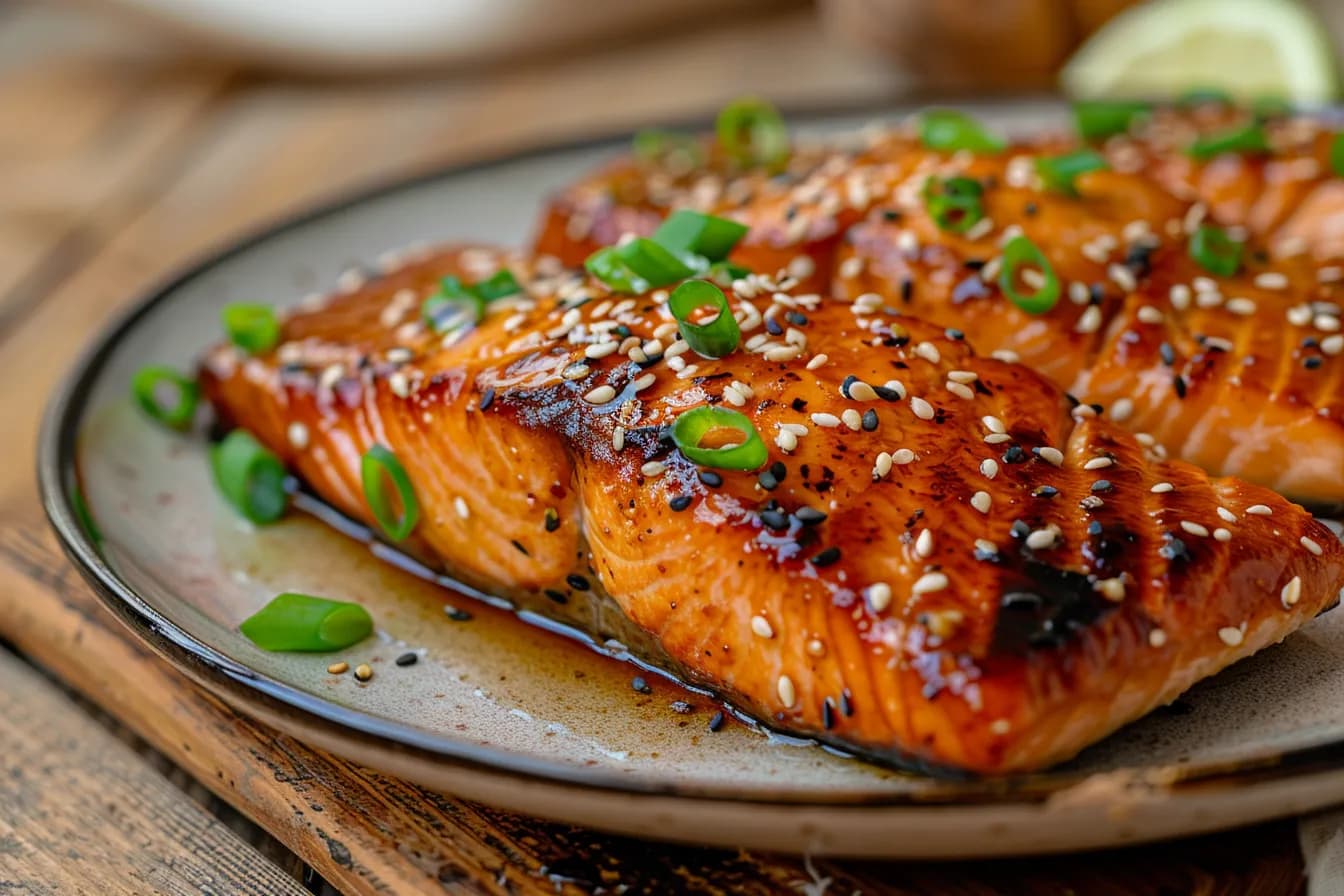
Air Fryer Salmon
Eight minutes at 200 degrees, skin side up, and the salmon stays translucent in the middle.
 Low Carb
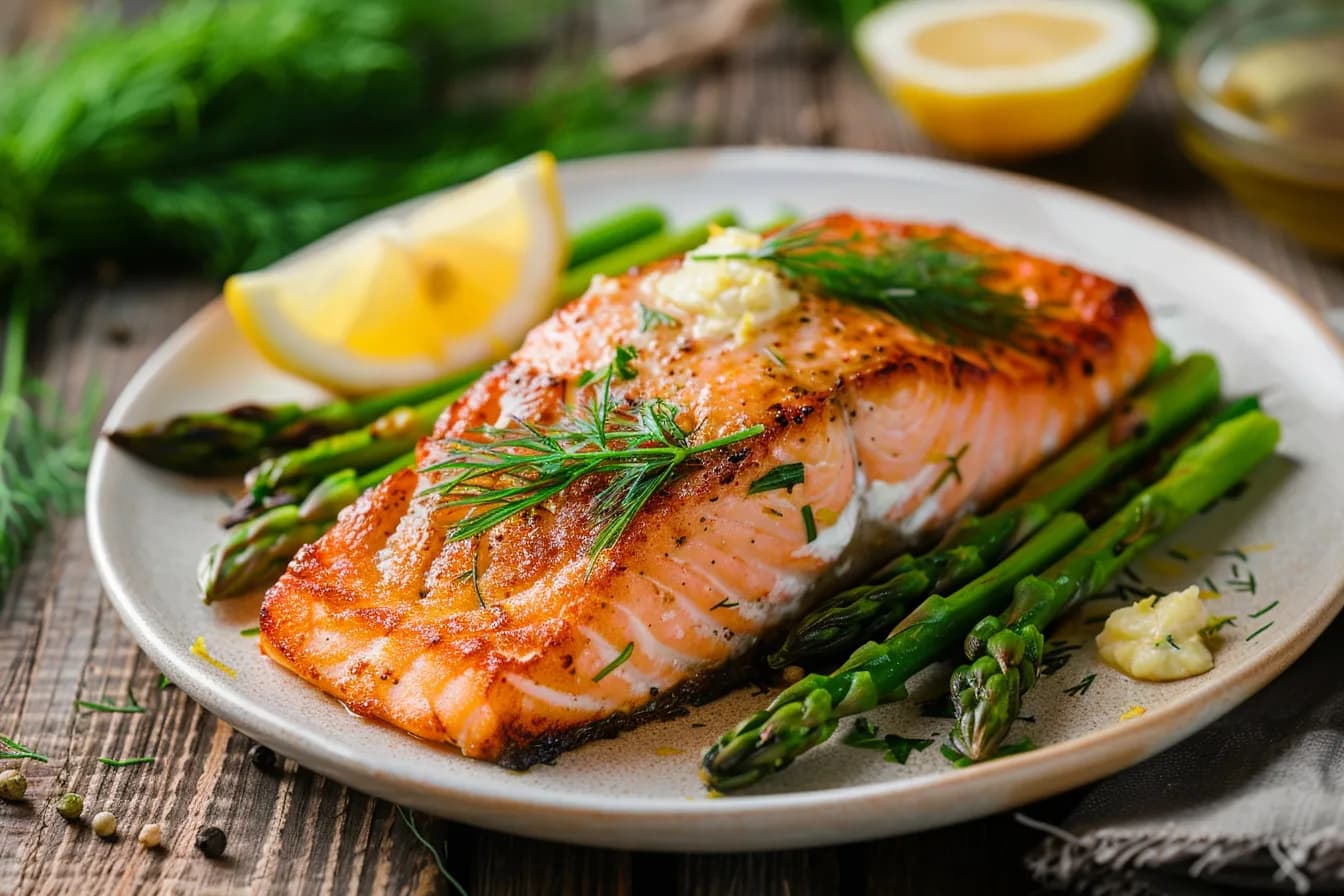
Baked Salmon with Lemon Butter & Green Asparagus
Tender pink baked salmon with frothy lemon butter, a 30-minute dish that tastes like a restaurant meal.
 Grilling & BBQ
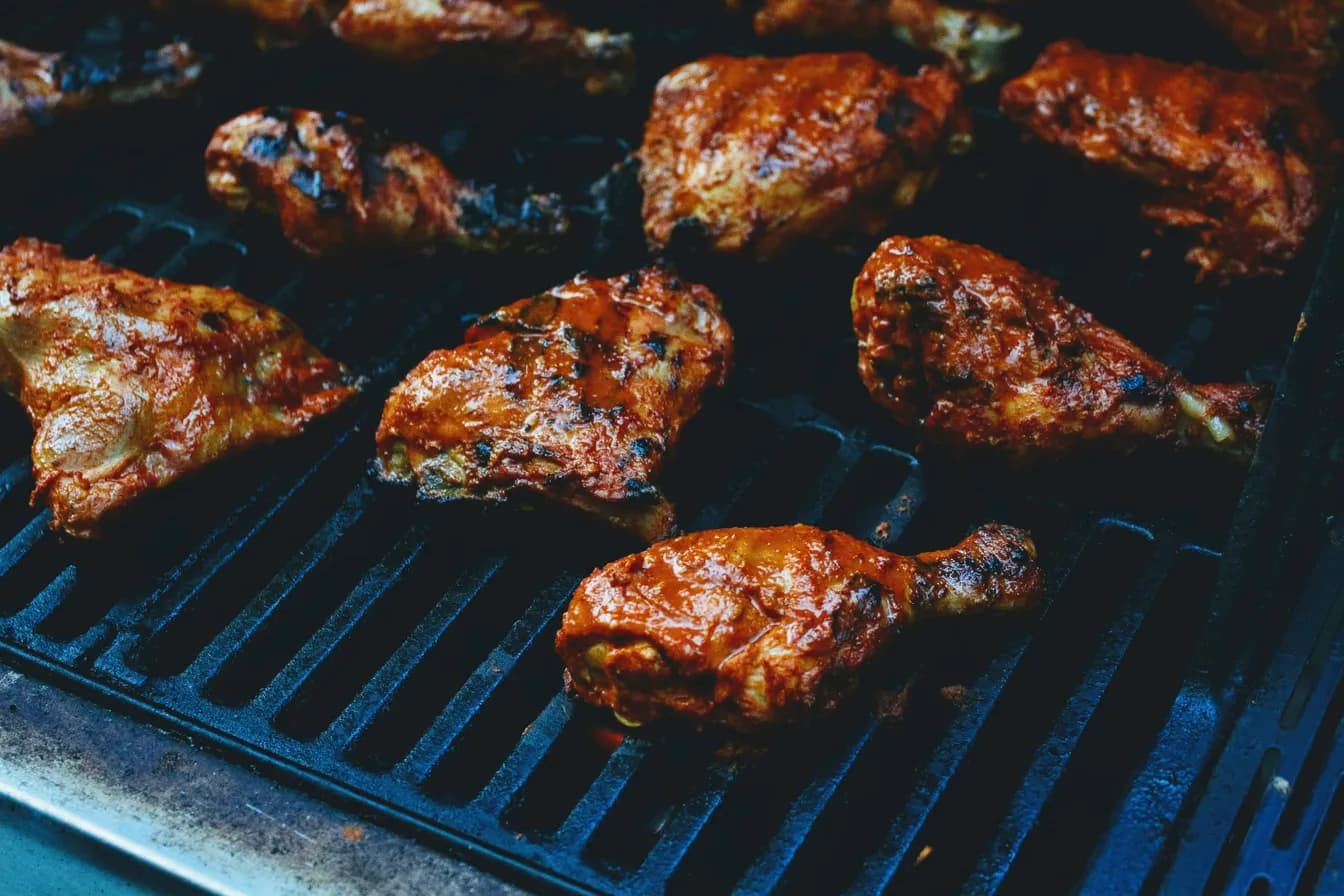
Chicken Marinade for Grilling
Four flavor profiles, one ratio, and chicken that comes off the grill still juicy on the inside.