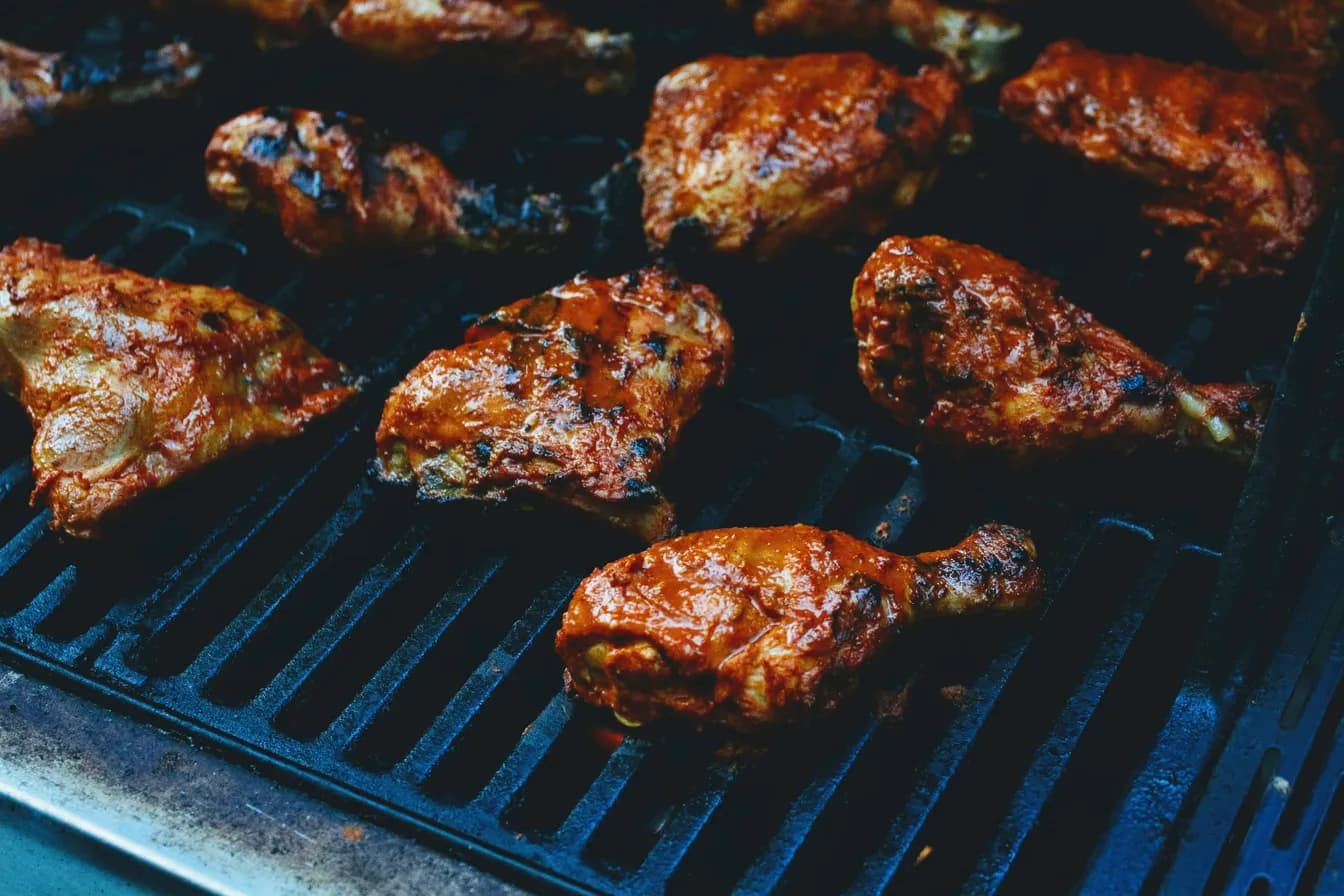
Chicken Marinade for Grilling
Four flavor profiles, one ratio, and chicken that comes off the grill still juicy on the inside.
- Preparation
- 15 min
- Cook/bake time
- 25 min
- Total
- 2 hr 40 min
- Difficulty
- Easy
- Calories
- 451 kcal
- Servings
- 4 servings
- Prep
- 15 min
- Cooking & baking
- 25 min
- Resting
- 2 hr
Only 40 min of that is hands-on – the rest takes care of itself.
Four marinades for chicken: lemon-garlic, BBQ, yogurt-tandoori, and soy-honey-ginger, plus grilling times for breast fillets, thighs, drumsticks, and wings. By salting from the start, adding sugar only at the end, and aiming for 72 °C in the center, the meat turns out juicy instead of dry, and you'll learn exactly how much time your marinade needs.
Why this works
The most persistent myth about marinating is that the marinade penetrates the meat. It barely does: muscle tissue is almost impermeable to the large flavor molecules from garlic, herbs, and spices, and even after twelve hours, it only penetrates a few millimeters deep. Exactly one ingredient is small enough to truly migrate: salt. It dissolves the structural proteins in the muscle so they bind more water, and that is why a chicken salted two hours beforehand comes off the grill juicier than one seasoned right on the grates. That is why salt is in the first step here, not the last. Everything else works on the surface, and that is not a weakness: that is where the roasted flavors develop during grilling anyway. The oil dissolves the fat-soluble flavor compounds and keeps them on the meat, while the acid loosens the top protein layers, and overdoes it if you let it: after six hours in lemon juice, the surface becomes mealy instead of tender. Sugar belongs at the end for the same reason. It caramelizes at around 160 °C and burns shortly above that, long before the center reaches 72 °C.
Build your own
Pick one option per row. Ingredients, steps, cook mode and shopping list adapt instantly.
Your pick: Lemon & Garlic · Chicken Breast Fillet
Sign in to save your combinations. Sign in
Step-by-step instructions
- 1
Mix the marinade
Put the fat in a bowl and stir in the spices first, then the acid. The order is not cosmetic: the flavor compounds in garlic, paprika, and herbs are fat-soluble and only dissolve in oil. Sprinkled on dry meat, the same spices remain ineffective on top. Stir vigorously at the end until the marinade looks slightly cloudy and bound; it is a coarse emulsion and will separate again when left standing.
- 2
Salt, marinate, refrigerate
Add salt and pepper now, not at the grill, which is the most important difference from most grilling recipes. Turn the chicken in the marinade until every side is covered, cover the bowl, and place it in the fridge. Two hours is the minimum. What you want to avoid is the window in between: after twenty minutes, the salt has drawn water to the surface but hasn't pulled it back in yet, meaning wet meat goes on the grates and won't brown.
- 3
Lemon marinade: two to four hours
Lemon juice has a pH around 2.3 and breaks down the top protein layers over time. Two to four hours are ideal, six the upper limit. Overnight, the meat becomes mealy and dry on the outside; that is not a flavor gain you buy, but pure damage.
- 4
Set up two zones
Push the coals to one half of the grill, or leave one burner off on a gas grill. This cooler zone is not optional for chicken: poultry needs 72 to 85 °C in the center, and it won't reach that over open coals before the surface burns. Wipe off excess marinade before the meat goes on the grates; dripping oil ignites, and the flare-up will soot the meat black instead of browning it. Brush the grates hot beforehand and rub briefly with oil.
- 5
Breast fillet: eight to twelve minutes
Pound the thick end of the fillets flat until the piece is the same height everywhere; unevenly thick fillets are the most common reason for breast that is dry on the outside and raw on the inside. Then three to four minutes per side directly over the coals, then to the cool side until the thermometer reads 72 °C. Breast has barely any fat to catch a forgotten minute.
- 6
Glaze, if at all, now
If you want a sweet, sticky crust, brush the meat with honey, maple syrup, or BBQ sauce in the last three to five minutes, never earlier. Use leftover marinade that you set aside before adding the meat: anything that has touched raw poultry no longer belongs on the finished piece, nor as a sauce on the plate.
- 7
Measure the core temperature, then let rest
Measure at the thickest part without touching the bone: breast is done at 72 °C, thighs and wings can go up to 80 to 85 °C. Take the meat off the grill and let it rest for five minutes, loosely covered with foil. If you cut immediately, you lose the juices onto the board, and that is exactly what the entire marinating time secured.
Our best tips
- Salt belongs in the marinade and not on the finished meat. After one to two hours, it has altered the surface proteins so that they hold more water during grilling, the same principle as brining, just shorter. The only bad time is twenty to forty minutes beforehand: then the water is on the surface and hasn't migrated back yet.
- Marinade that held raw chicken goes neither as a sauce on the plate nor as a glaze on the finished meat. If you want both, set aside a few tablespoons before adding the meat.
- Mix a double batch and put half with raw chicken in a freezer bag: it marinates itself while thawing overnight in the fridge. This is the only way a long marinating time costs nothing at all.
Tasty variations
As a dry rub
Mix only the seasoning components with the salt and a tablespoon of brown sugar and rub on dry, at least two hours beforehand. Often the better choice for drumsticks and wings: the skin stays dry and becomes significantly crispier than under an oil marinade.
For skewers
Cut the meat into 3-cm cubes first and then marinate; the doubled surface area halves the time, one hour is enough. Use metal skewers or soak wooden skewers for 30 minutes beforehand.
Without a grill, in the oven
200 °C convection: breast fillet 18 minutes, thigh fillet 25, drumsticks 35 to 40. The last three minutes under the broiler, otherwise the crust is missing. The marinating times do not change.
The same marinade without meat
Halloumi, cauliflower slices, mushrooms, and eggplants can handle any of the four flavor profiles and only need an hour. Vegetables have no muscle fibers that the acid could damage, but they dry out faster, so use double the amount of oil.
Nutrition facts
| Calories | 451 kcal |
|---|---|
| Protein | 62.4 g |
| Carbohydrates | 1.8 g |
| – of which sugar | 0.3 g |
| Fat | 19.9 g |
| Fiber | 0.7 g |
Where the 451 kcal come from
per serving
Calculated from the ingredients – how we do it
We add up reference values for every ingredient and divide by the number of servings. These assumptions are baked in:
- Reference values per 100 g – for the raw ingredient, exactly as listed.
- Tinned goods count at drained weight, bone-in meat at purchase weight: you eat about 70 per cent of a chicken thigh and leave the rest.
- Water evaporates as you cook. The energy stays in the pot, the weight does not – so the figure is per serving, not per 100 g of finished dish.
- Anything listed without a quantity – “salt and pepper” – is not counted.
- For build-your-own recipes the figure applies to the default choice. A different combination shifts it, sometimes considerably.
A guide value, not a lab measurement: no two onions weigh the same, and fat content varies from pack to pack.
What can go wrong
The points where this recipe most often goes sideways – and what to do about it.
- Black on the outside, still raw on the inside
- The meat was over the coals the whole time. Poultry needs 72 to 85 °C in the center, and a thigh won't reach that over open heat before the surface burns. Build a cool zone, coals to one side, one burner off on a gas grill, and let the meat finish cooking there with the lid closed. Burnt parts can only be cut off.
- Flare-ups as soon as the meat is on the grates
- Oil is dripping into the coals. Wipe off the marinade thoroughly before placing it on the grill; it has done its job in the fridge, on the grates it is just fuel. If it still flares up, move the piece to the indirect side and close the lid; oxygen deprivation extinguishes faster than water, which only kicks up ash.
- The surface is mealy, although the meat is juicy inside
- The marinade was acidic for too long. Lemon juice breaks down the top protein layers, and after about six hours, you can taste it. Next time, halve the amount of acid or switch to the yogurt variation, whose lactic acid works much more gently. The surface itself cannot be saved.
- The breast is dry at one end and raw at the other
- The fillet was unevenly thick. Pound the thick end flat before marinating or butterfly it lengthwise so the piece is the same height everywhere. A one-centimeter difference in height means about a three-minute difference in cooking time, exactly the three minutes that make the thin end tough.
Frequently asked questions
How long does chicken need to marinate?
At least two hours so the salt can work. The upper limit is decided by the acid: lemon marinade a maximum of six hours, soy marinade six, BBQ with vinegar up to twelve, yogurt up to twenty-four. Longer doesn't make the meat more flavorful, just mealy on the outside.
What core temperature does grilled chicken need?
Breast fillet 72 °C, thighs and wings 80 to 85 °C. The higher number is not a safety margin, but for taste: thigh meat contains connective tissue that only becomes tender there. Poultry is safely cooked from 70 °C, provided this temperature is held for two minutes.
Should the salt go in the marinade or only afterwards?
In the marinade, if you have at least an hour. Salt first draws water out of the surface and then pulls it back in with it; after that, the meat holds more juice during grilling. Salted only twenty to forty minutes beforehand, exactly the opposite happens: the surface is wet and browns poorly.
Does the marinade really penetrate the meat?
Only a few millimeters. Muscle tissue is barely permeable to large flavor molecules, only salt truly migrates deep. Everything else happens on the surface, exactly where the roasted flavors develop during grilling. A thin layer overnight therefore does no more than a thick one over two hours.
Can I freeze chicken in the marinade?
Yes, and that is the most convenient way. Raw meat with the marinade in a freezer bag keeps for up to three months. It marinates itself while thawing overnight in the fridge. Once thawed, do not refreeze.
Which selection do the nutritional values apply to?
For the standard selection: lemon-garlic with chicken breast fillet. The entire marinade is calculated, although a part of it remains in the bowl, so the number is rather too high than too low. The yogurt variation is around 90 kcal lower per serving because yogurt has far less fat than oil.
Does the marinade also work for fish or vegetables?
Yes, but not with the same times. Fish can handle a maximum of fifteen minutes in an acidic marinade, after which the fillet becomes mealy; vegetables and halloumi need about an hour and double the amount of oil because they dry out faster on the grates.
Comments & ratings(0)
Sign in to rate and comment on this recipe.
You might also like
 Low Carb
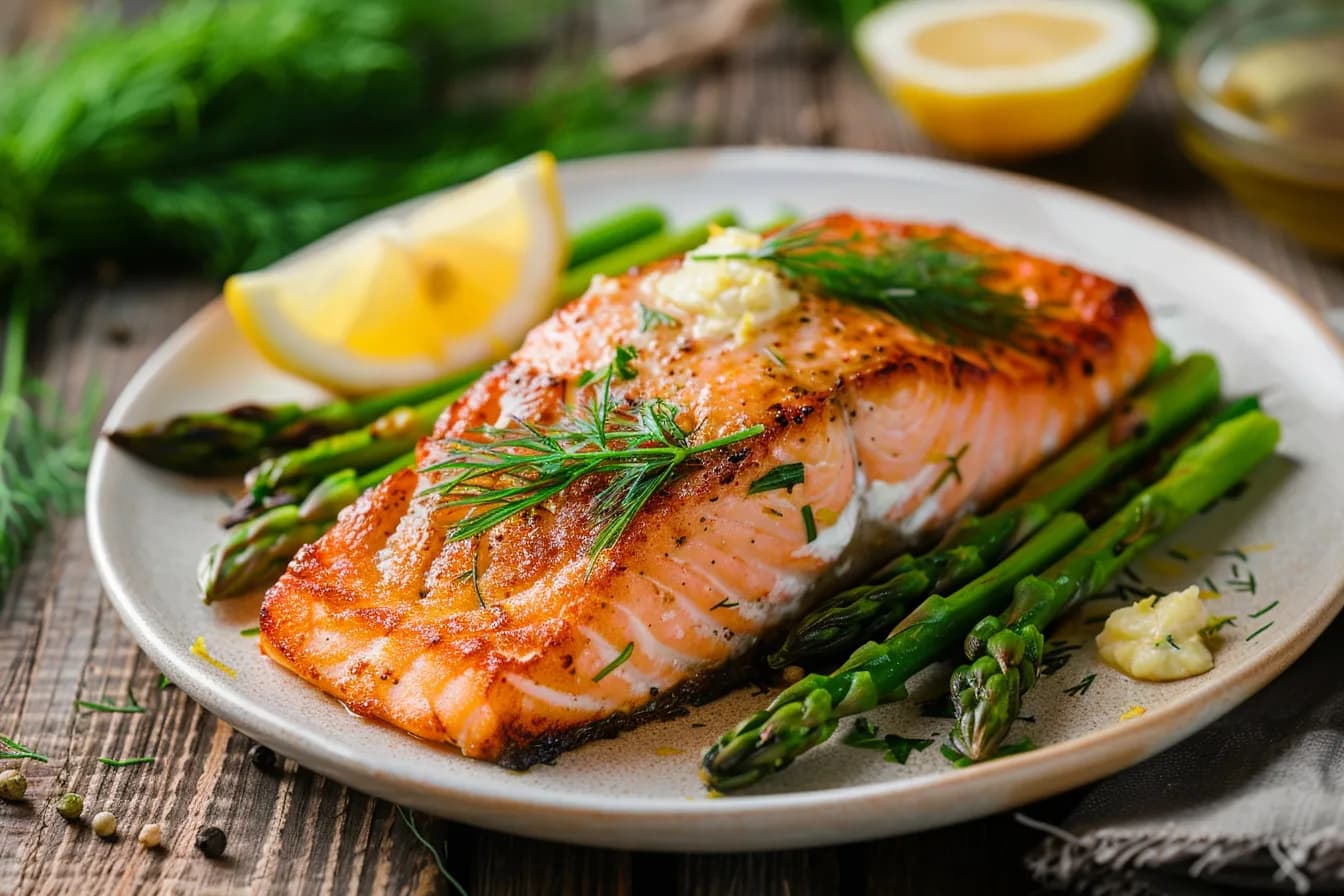
Baked Salmon with Lemon Butter & Green Asparagus
Tender pink baked salmon with frothy lemon butter, a 30-minute dish that tastes like a restaurant meal.
 Dinner
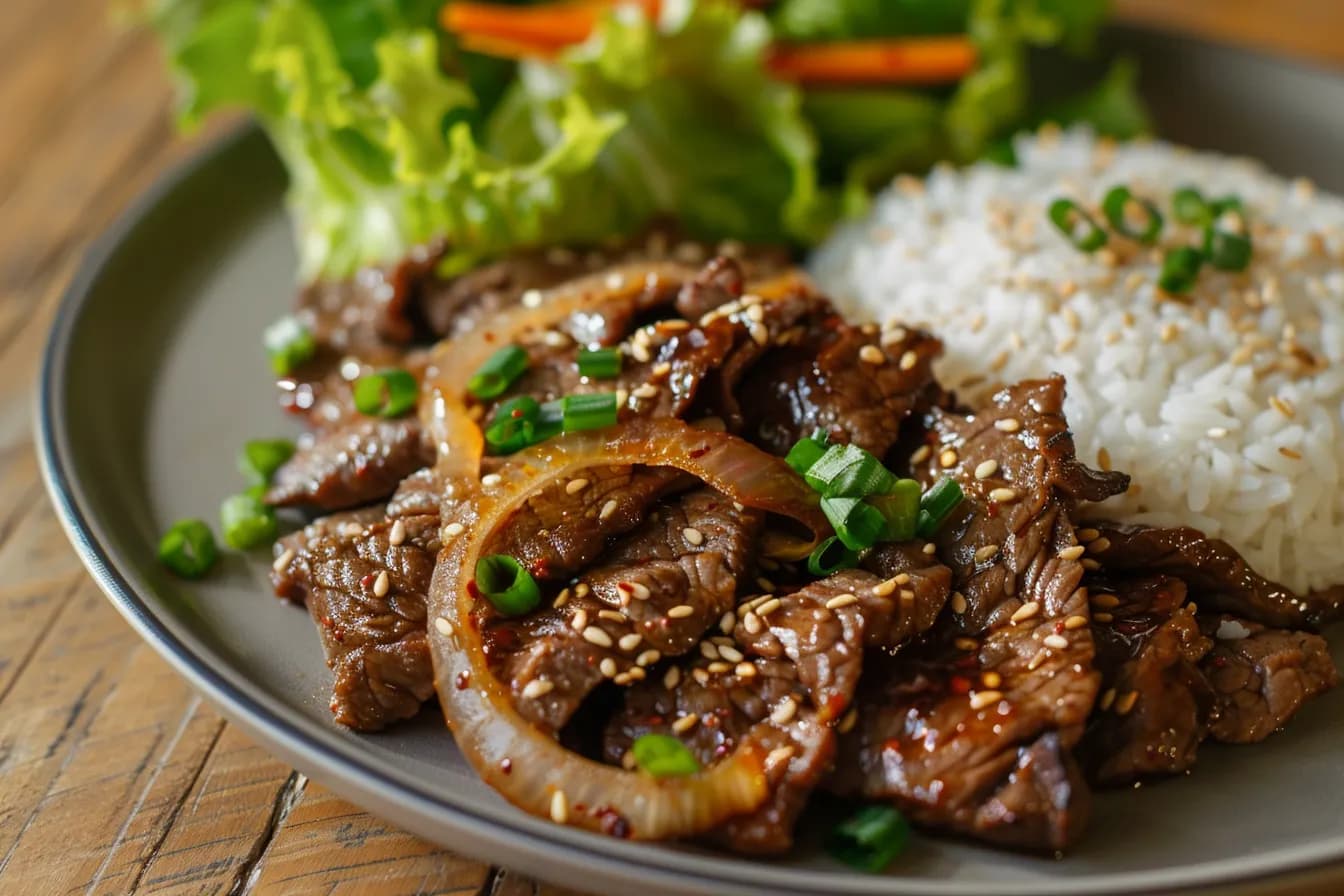
Beef Bulgogi
Wafer-thin beef in a sweet and salty pear marinade, caramelized in minutes.
 Dinner
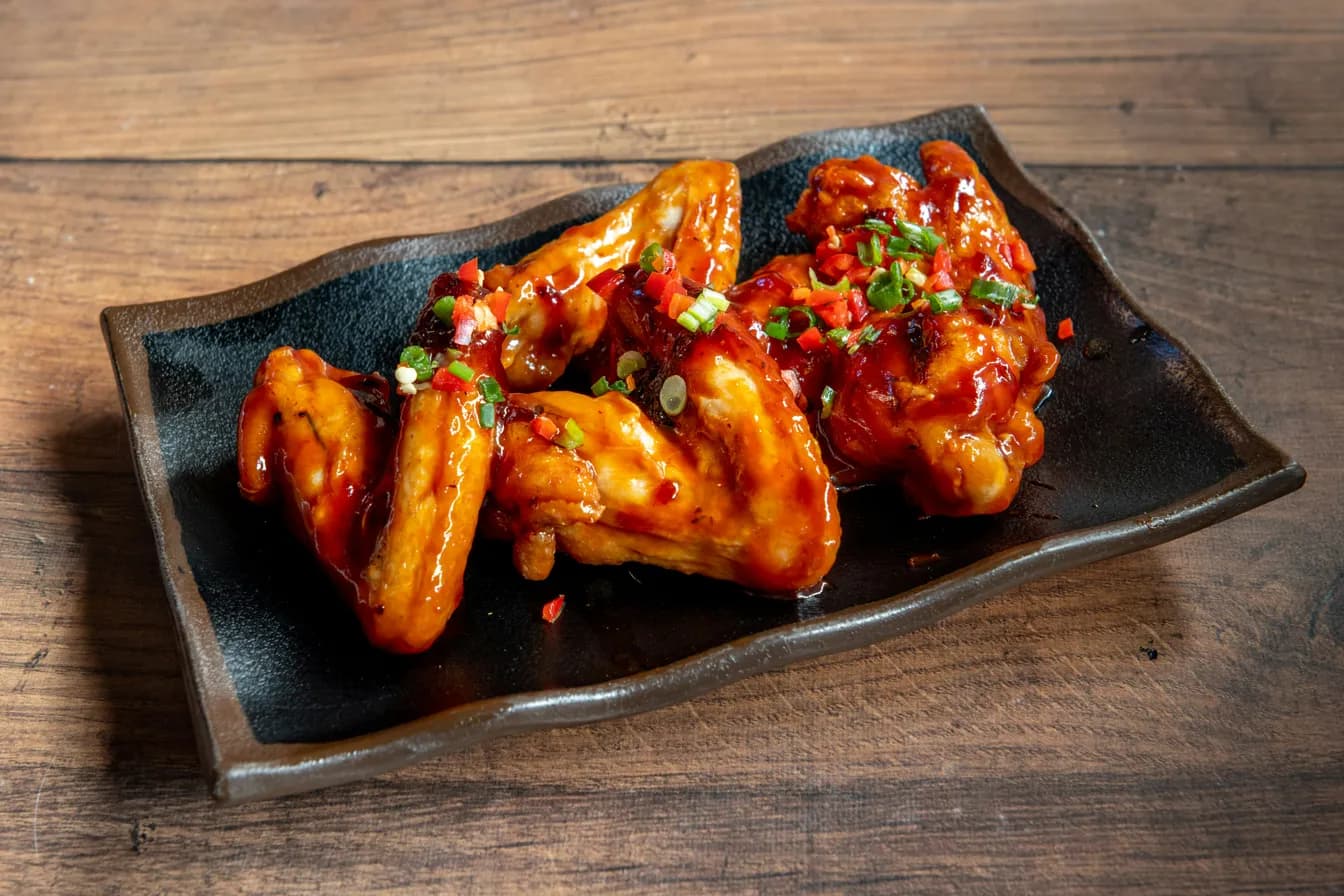
Buffalo Wings with Blue Cheese Dip
Crispy chicken wings in a spicy, buttery Buffalo sauce, served with a cool blue cheese dip.