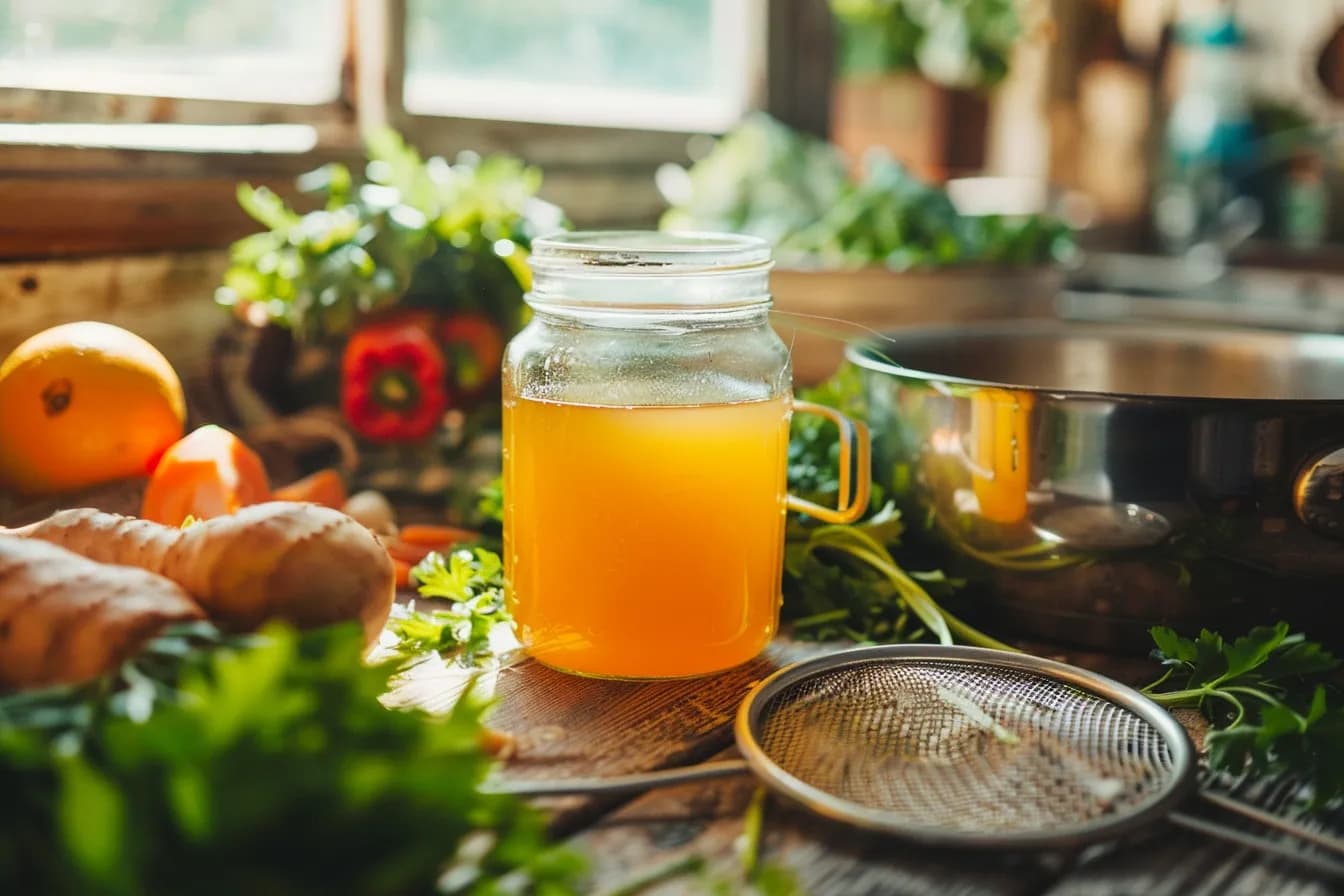
Homemade Chicken Broth
A whole chicken, cold water, three hours at 90 degrees, and never a rolling boil.
- Preparation
- 20 min
- Cook/bake time
- 3 hr 25 min
- Total
- 3 hr 45 min
- Difficulty
- Easy
- Calories
- 42 kcal
- Servings
- 8 servings
- Prep
- 20 min
- Cooking & baking
- 3 hr 25 min
A whole chicken, cold water, three hours at 90 degrees, and never a rolling boil. The difference between a crystal clear golden broth and a cloudy one lies not in the ingredients, but in the temperature. What you get is the foundation for soups, risotto, sauces, and half the rest of this site.
Why this works
A broth becomes cloudy because proteins from the meat and bones are broken up during a rolling boil and distributed as fine suspended particles in the water. At 85 to 90 degrees, when a bubble rises only every few seconds, that same protein coagulates into larger flakes that float to the top and can be skimmed off. That is the whole trick. The second point is the cold start. In cold water, water-soluble flavors are slowly extracted before the protein on the outside coagulates and seals the pores. And the salt is left out until the broth is finished. Three liters boil down to two, and a broth that is correctly salted at the beginning will be inedible by the end.
Step-by-step instructions
- 1
Start cold
Place the chicken in a large pot and pour the cold water over it until it is covered by two fingers. Starting cold is not a minor detail. In warm water, the protein on the surface coagulates immediately and seals it, which keeps the flavor in the meat instead of going into the broth.
- 2
Heat slowly and skim
Bring the pot slowly to a simmer over medium heat, which takes a good twenty minutes. During this time, gray foam collects on the surface. Skim it off with a ladle until hardly any more appears. This is coagulated protein, and stirring it in will result in a cloudy broth.
- 3
Add vegetables and steep for three hours
Only now add the vegetables and spices. The onion skin stays on, as it colors the broth golden brown. Keep the pot at 85 to 90 degrees for three hours. A single bubble may rise to the surface every few seconds, but no more. Do not cover it, otherwise the temperature will rise.
- 4
Strain and degrease
Remove the chicken and pour the broth through a fine sieve without pressing the vegetable pieces. Pressed vegetables will cloud the broth in seconds. Chill it in the fridge. The fat will solidify on top and can be lifted off as a disc the next day. Only salt it now.
Our best tips
- Never bring to a rolling boil. Exactly one bubble every few seconds is perfect. Any higher heat turns a clear broth into a cloudy one, and there is no going back.
- Salt only at the end. Three liters boil down to two, and what was correctly salted at the beginning will be too salty at the end.
- Do not throw the meat away. It is fully cooked after three hours and falls apart on its own, providing enough for two more meals.
Tasty variations
Asian base broth
Omit the celery and bay leaves, and instead let a thumb-sized piece of ginger, four scallions, and one star anise steep in the liquid. This is a great base for ramen and pho.
From scraps instead of a whole chicken
The carcass of a roasted chicken plus two legs yield two liters of rich broth. Carcasses can be collected and frozen until you have enough for a pot.
What is left over?
Once the stock is done, the meat is left. It is cooked through and falls apart on its own.
Nutrition facts
| Calories | 42 kcal |
|---|---|
| Protein | 5 g |
| Carbohydrates | 1 g |
| – of which sugar | 1 g |
| Fat | 2 g |
| Fiber | 0 g |
Estimated, not calculated – why
Here some of the ingredients never reach the plate: most frying oil stays in the pan, and in a stock the solids are strained off. How much of it ends up in the food cannot be calculated – counting a litre of oil would quintuple the figure, leaving it out would describe a dish baked without fat. So this is an editorial estimate rather than a total that would look dependable without being so.
A guide value, not a lab measurement: no two onions weigh the same, and fat content varies from pack to pack.
Frequently asked questions
Why did my broth turn cloudy?
It boiled instead of simmered. Bubbling water breaks the coagulated protein into fine suspended particles that can no longer be skimmed off. The second most common cause is pressing the vegetables when straining. Both are not a problem in terms of taste, only visually.
What is the best way to freeze broth?
Boil it down to half and fill it into ice cube trays. This way, double the supply fits in the freezer and you can take it out in portions. To use, dilute with the same amount of water. One cube corresponds to about 30 ml of finished broth.
Stewing hen or roasting chicken?
A stewing hen is an older bird with more connective tissue and yields a richer, more gelatinous broth, which is recognizable by the fact that it gels in the refrigerator. A young roasting chicken also works, but only needs two hours and provides less body.
Comments & ratings(0)
Sign in to rate and comment on this recipe.
You might also like
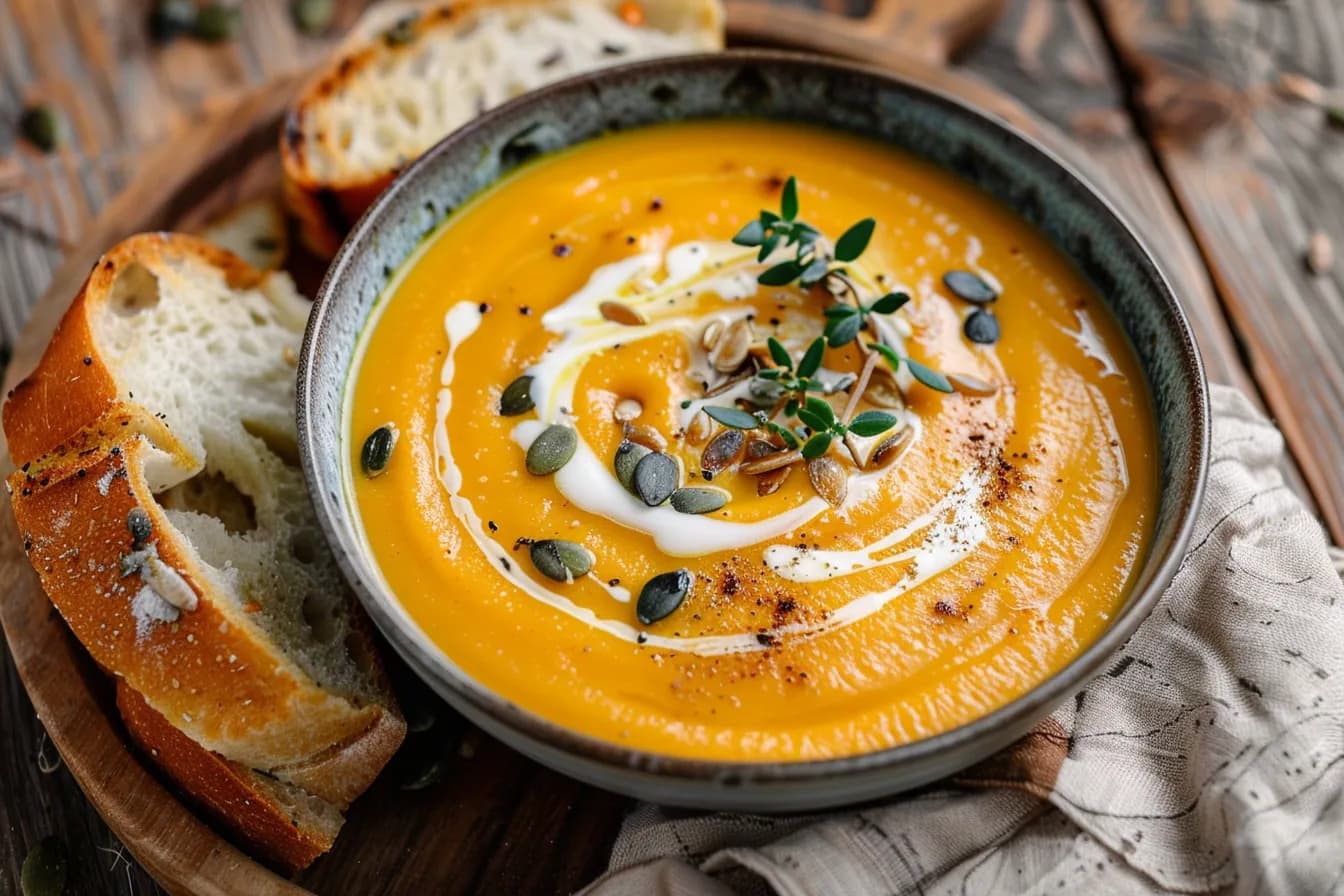 Soups & Stews
Any-Vegetable Soup
One kilo of vegetables, one onion, one liter of broth: the rest is just deciding how creamy and how spicy you want it.
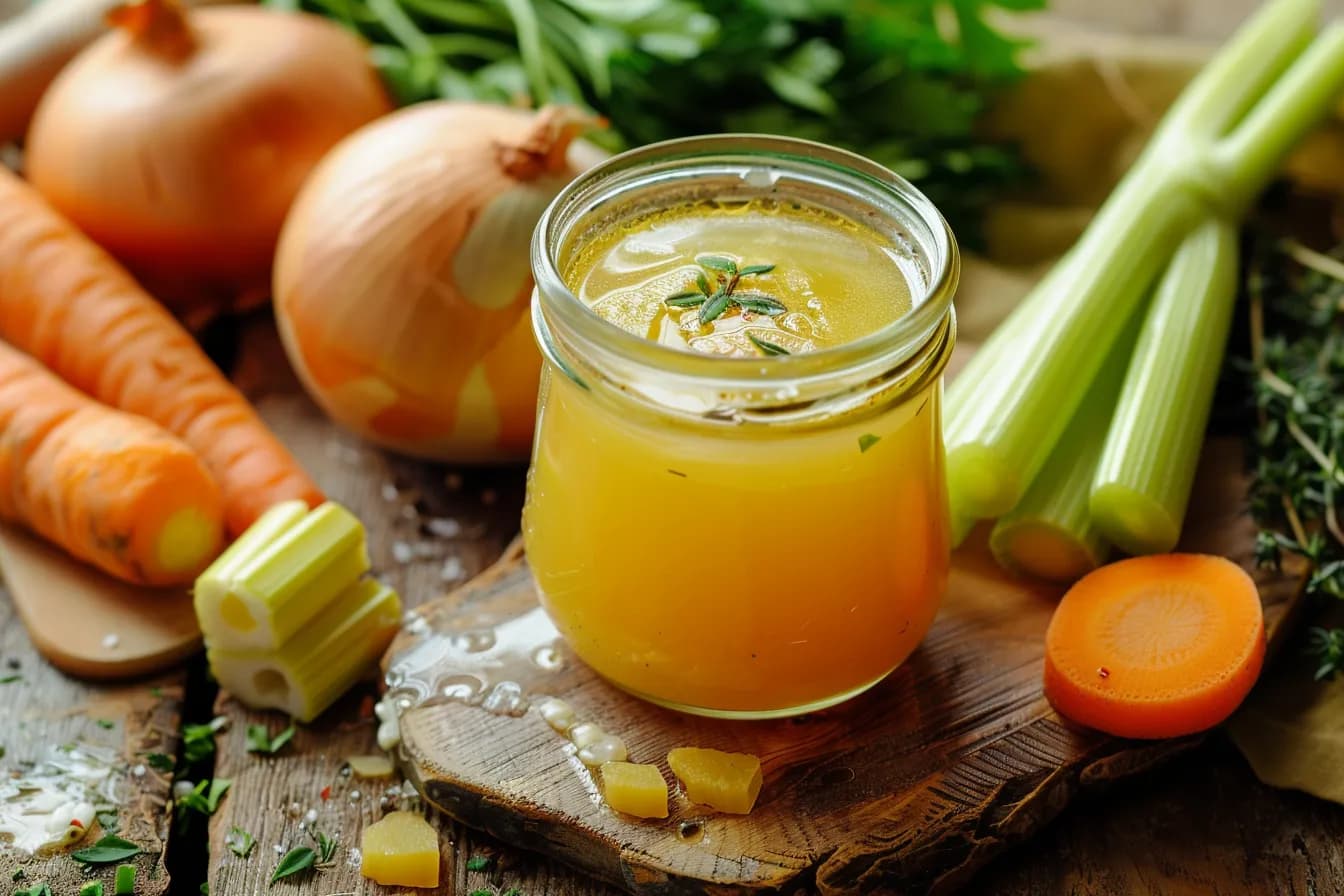 Basic Recipes
Homemade Vegetable Broth
Ready in 45 minutes. Cooked longer, it does not get stronger, but bitter.
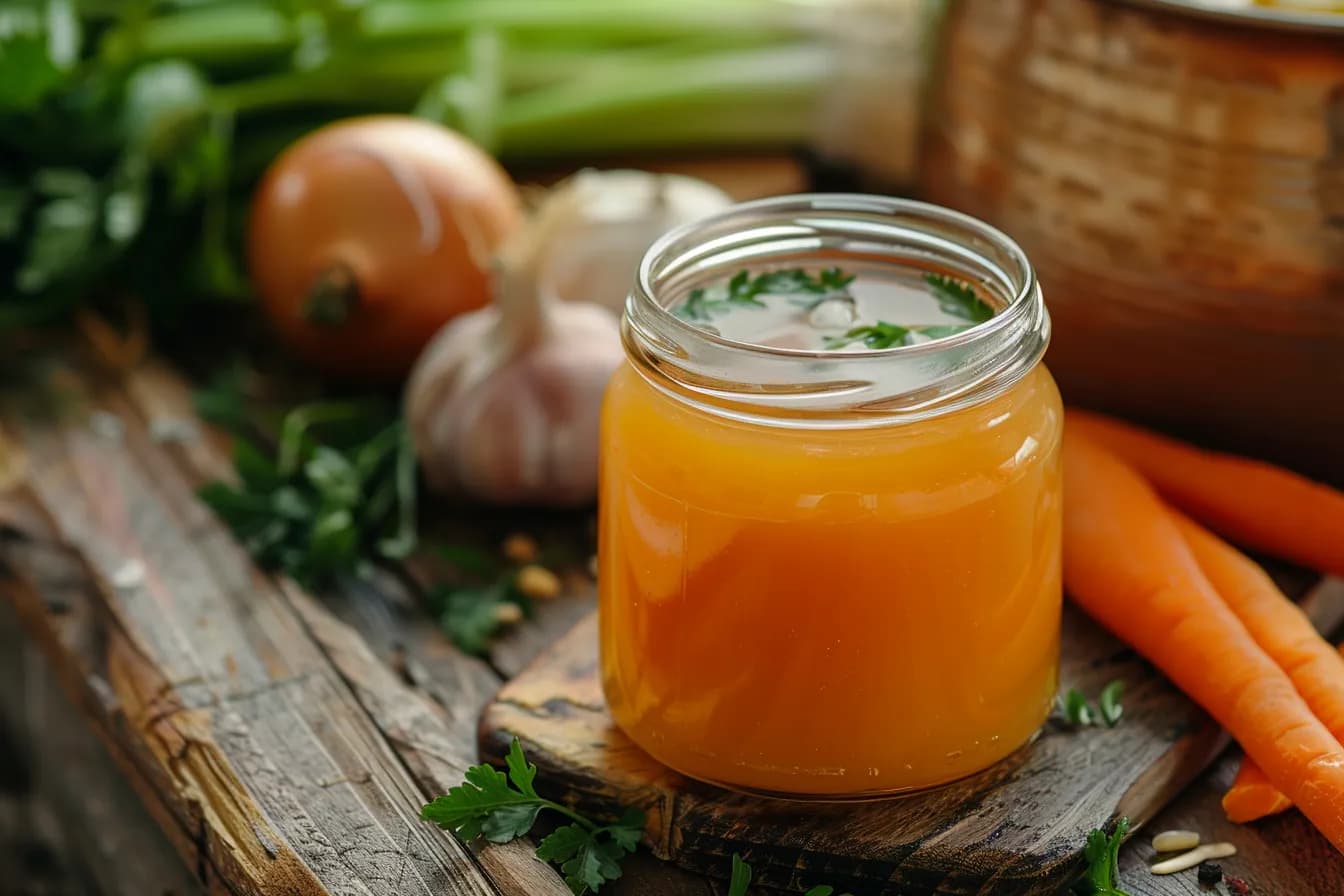 Basic Recipes
Vegetable Scrap Broth
The freezer bag next to the ice compartment collects scraps until it is full, and then the broth costs nothing.