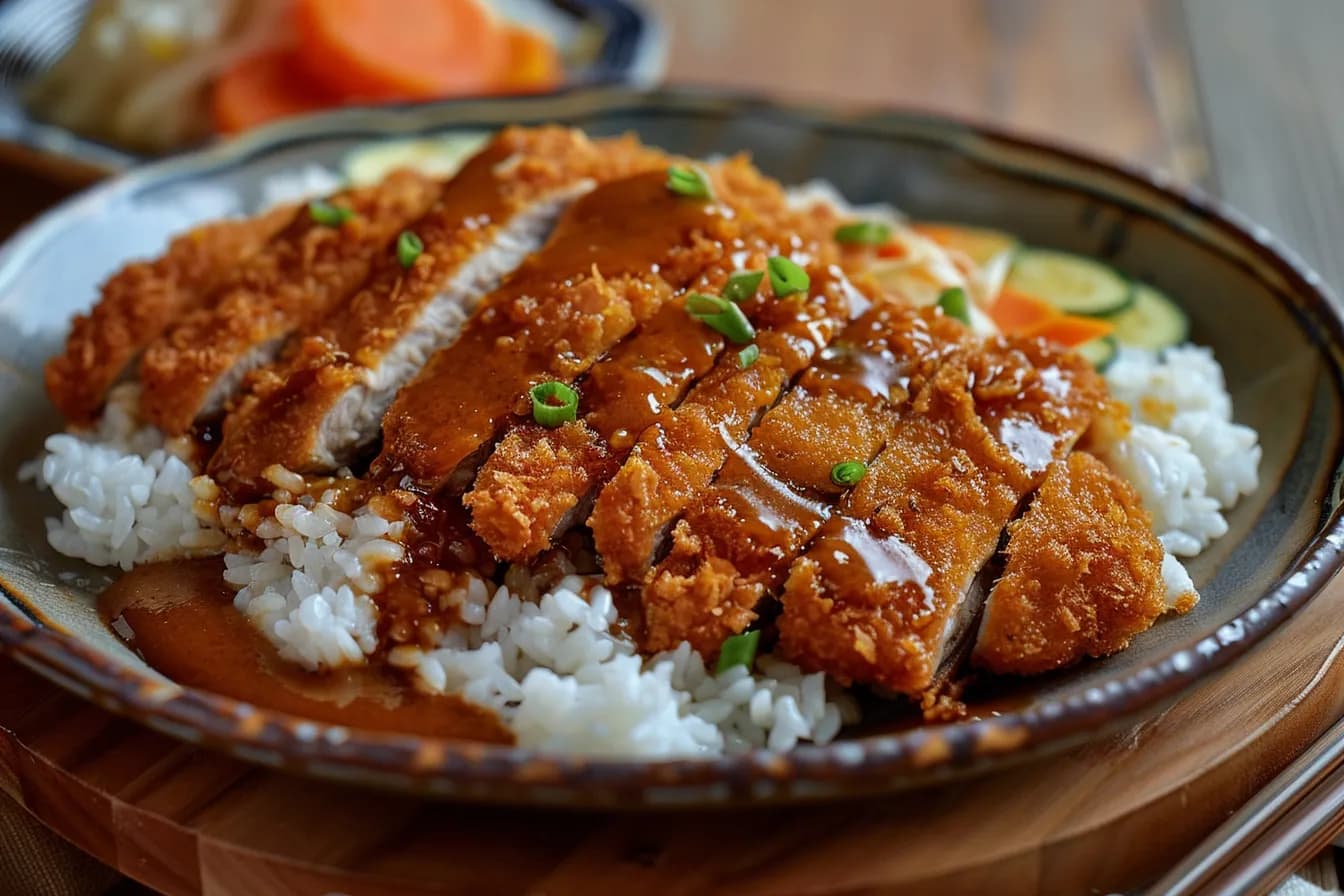
Crispy breaded chicken on rice, smothered in a velvety Japanese curry sauce. Japanese curry is milder and sweeter than Indian curry and gets its creaminess from a classic roux. Together with the panko crust, this is one of Japan's most popular dishes and reliably comforts on bad days.
Why this works
Japanese curry thickens via a roux: the fat coats the flour particles so they can disperse individually in the liquid and swell instead of clumping. Panko, on the other hand, is baked from crustless bread using electricity instead of heat, which keeps it coarse-pored and splintery, absorbing less fat during frying than fine breadcrumbs. That is exactly where the airy, long-lasting crispy crust comes from.
Step-by-step instructions
- 1
Sweat the vegetables
Melt the butter in a pot and sauté the onions and carrots over medium heat for about eight minutes until the onions are really soft and slightly golden. Take your time, because these slow-cooked onions are the flavor foundation of the entire sauce and cannot be made up for later.
- 2
Roux and spices
Sprinkle the flour, curry powder, and Garam Masala over the vegetables and stir everything well. Let the mixture toast for two minutes over medium heat so the raw flour taste disappears and the spices bloom in the fat. This creates a thick, fragrant paste that makes up the typical velvety character of Japanese curry.
- 3
Simmer the sauce
Gradually pour in the broth while stirring constantly so no lumps form. Stir in the soy sauce, honey, and grated apple, and let the sauce simmer gently over low heat for fifteen minutes until it has thickened significantly and coats the back of a spoon. Season it with salt to taste and keep it warm.
- 4
Bread and fry the chicken
Salt and pepper the pounded fillets and dredge them one after the other in flour, egg, and panko. Press the panko on lightly so it adheres well and forms a thick crust. Fry the cutlets in about 1 cm of oil over medium heat for three to four minutes per side until golden brown. Panko browns faster than normal breadcrumbs, so stay close by.
- 5
Serve
Let the katsu drain briefly on a wire rack and then cut them crosswise into strips about 2 cm wide without pushing them apart. Put the rice on one side of the plate, place the sliced cutlet next to it, and pour the curry sauce generously over it or half next to it so part of the crust stays crispy.
Our best tips
- Panko cannot be replaced by normal breadcrumbs if you want the typical airy crust. It is now available in most supermarkets.
- The sauce thickens significantly as it cools. It is better to leave it a little thinner and thin it out with a splash of broth when reheating.
- Pound the fillets flat to about 1.5 cm before breading, then they will cook in the same time it takes for the crust to brown.
Tasty variations
Katsu Curry with Vegetables
Cook sweet potato cubes in the sauce for the last 10 minutes, which makes the dish more filling.
Vegetarian
Use breaded eggplant slices or firm tofu instead of chicken, and replace the broth with vegetable broth.
Nutrition facts
| Calories | 782 kcal |
|---|---|
| Protein | 48 g |
| Carbohydrates | 88 g |
| – of which sugar | 12 g |
| Fat | 26 g |
| Fiber | 5 g |
Estimated, not calculated – why
Here some of the ingredients never reach the plate: most frying oil stays in the pan, and in a stock the solids are strained off. How much of it ends up in the food cannot be calculated – counting a litre of oil would quintuple the figure, leaving it out would describe a dish baked without fat. So this is an editorial estimate rather than a total that would look dependable without being so.
A guide value, not a lab measurement: no two onions weigh the same, and fat content varies from pack to pack.
Frequently asked questions
Can I use ready-made curry blocks?
Yes, Japanese curry roux blocks from the Asian supermarket work and save time. But homemade tastes fresher and you control the heat and sweetness yourself.
Why is Japanese curry so different from Indian curry?
It came to Japan via Great Britain and is based on a French roux. This makes it creamier, milder, and significantly sweeter.
Can I freeze the curry?
The sauce yes, it keeps for three months. You should always fry the breaded chicken fresh, otherwise the crust completely loses its texture.
Comments & ratings(0)
Sign in to rate and comment on this recipe.
You might also like
 Dinner
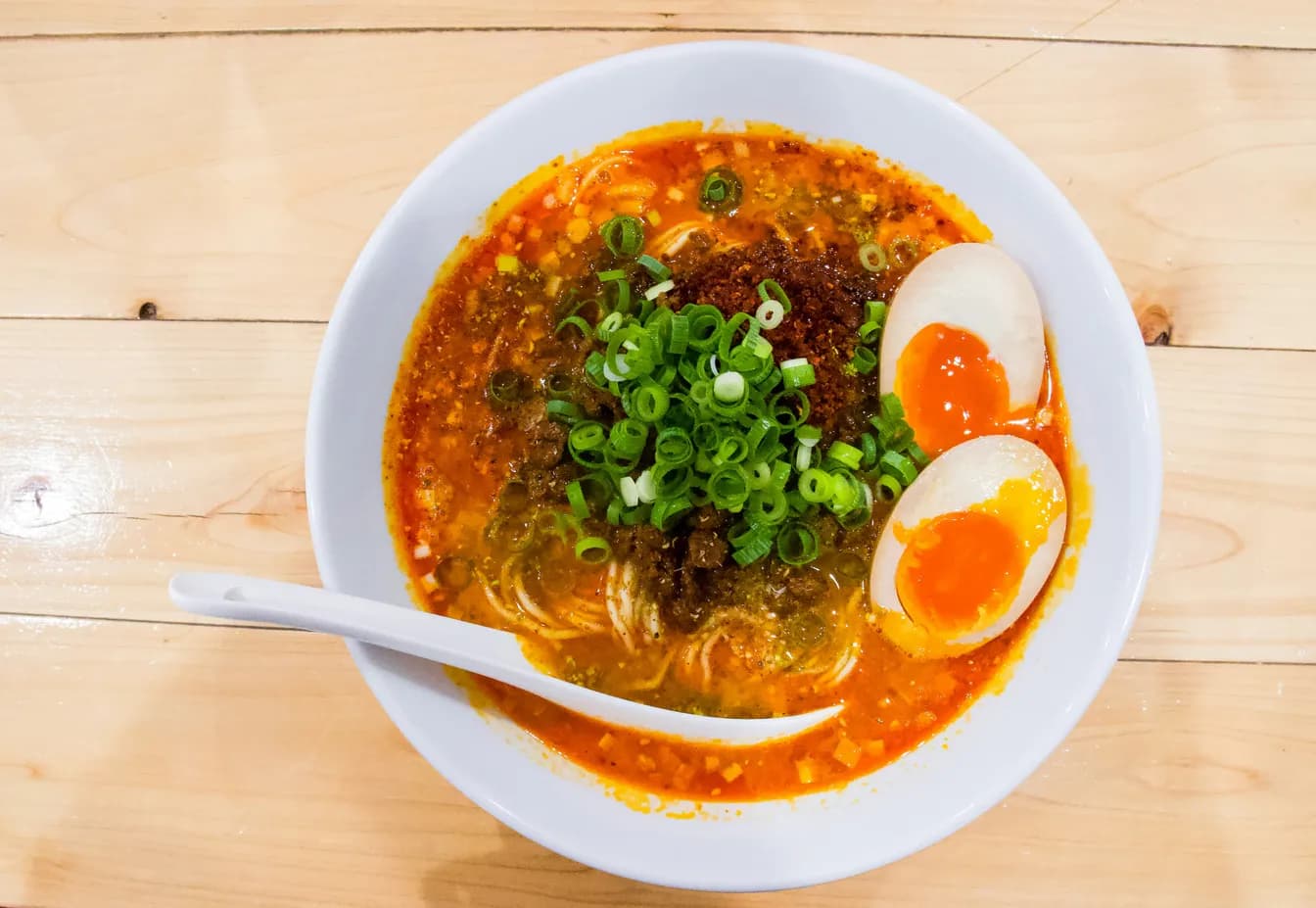
Tantanmen
Japanese ramen with sesame paste and chili oil, the Japanese answer to Sichuan dan dan noodles.
 Dinner
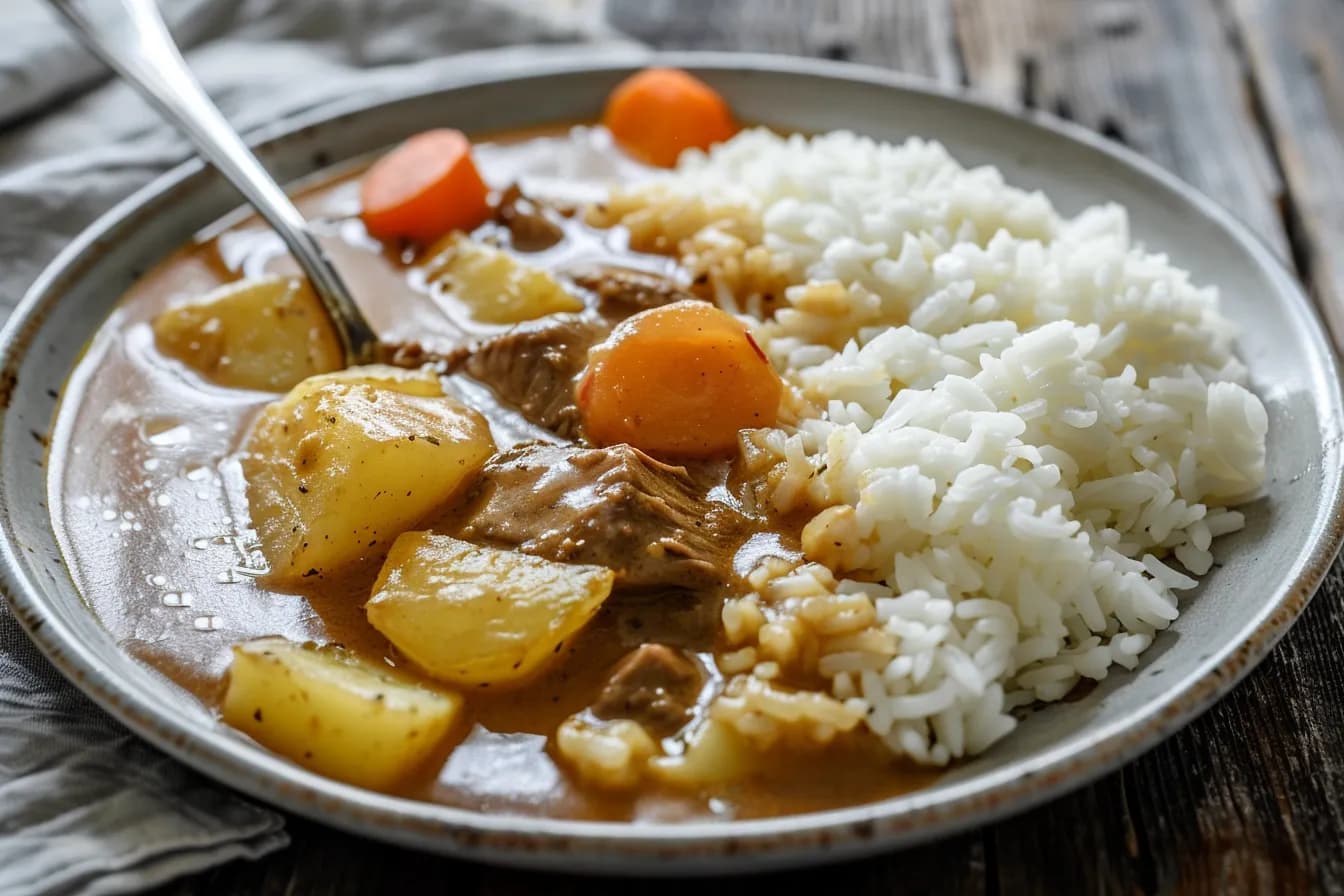
Japanese Curry
Kare Raisu: thick, mildly sweet curry with potatoes and carrots, thickened with a homemade curry roux.
 Dinner
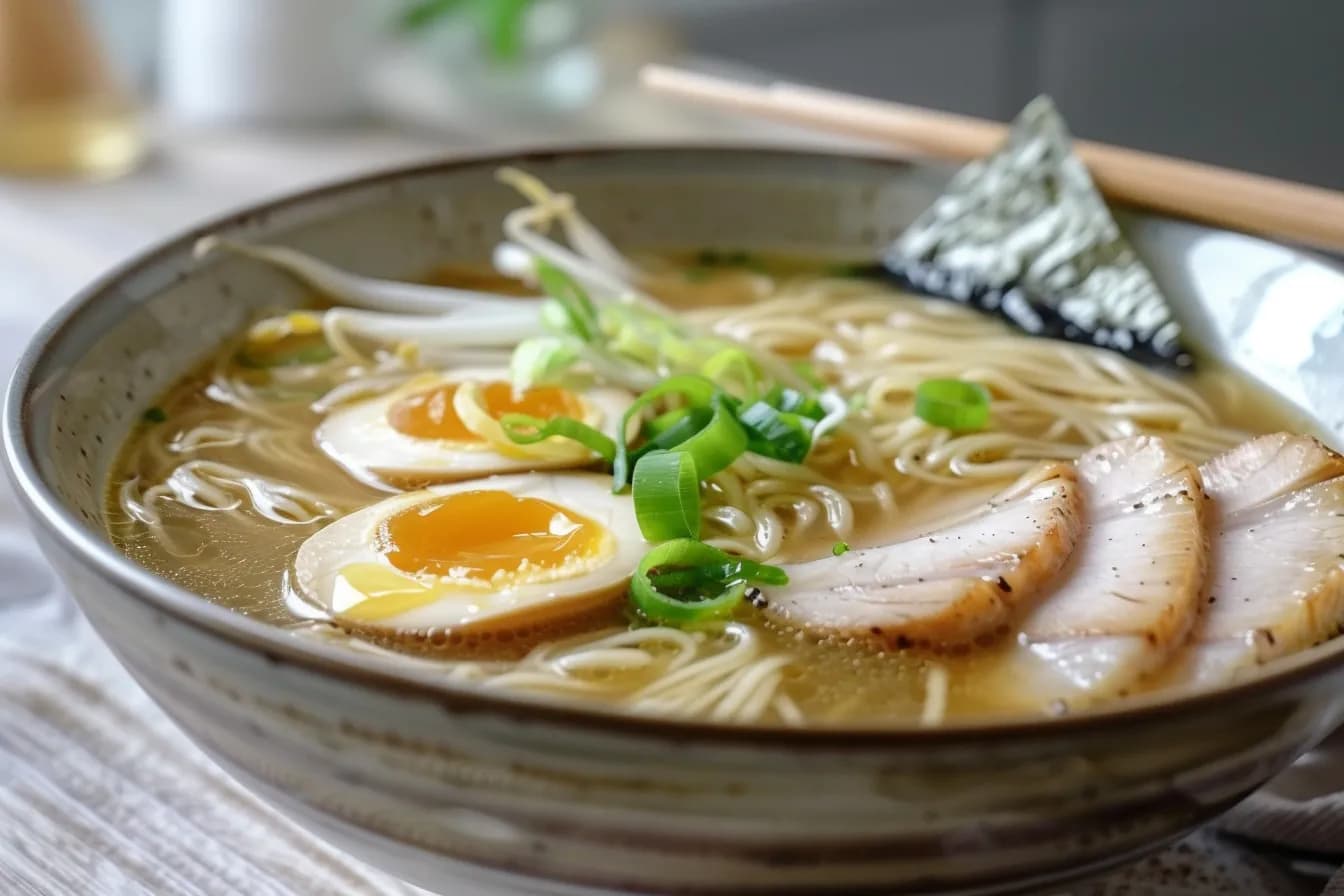
Shoyu Ramen
Clear soy sauce ramen with a marinated egg, the ramen bowl where you learn the craft.