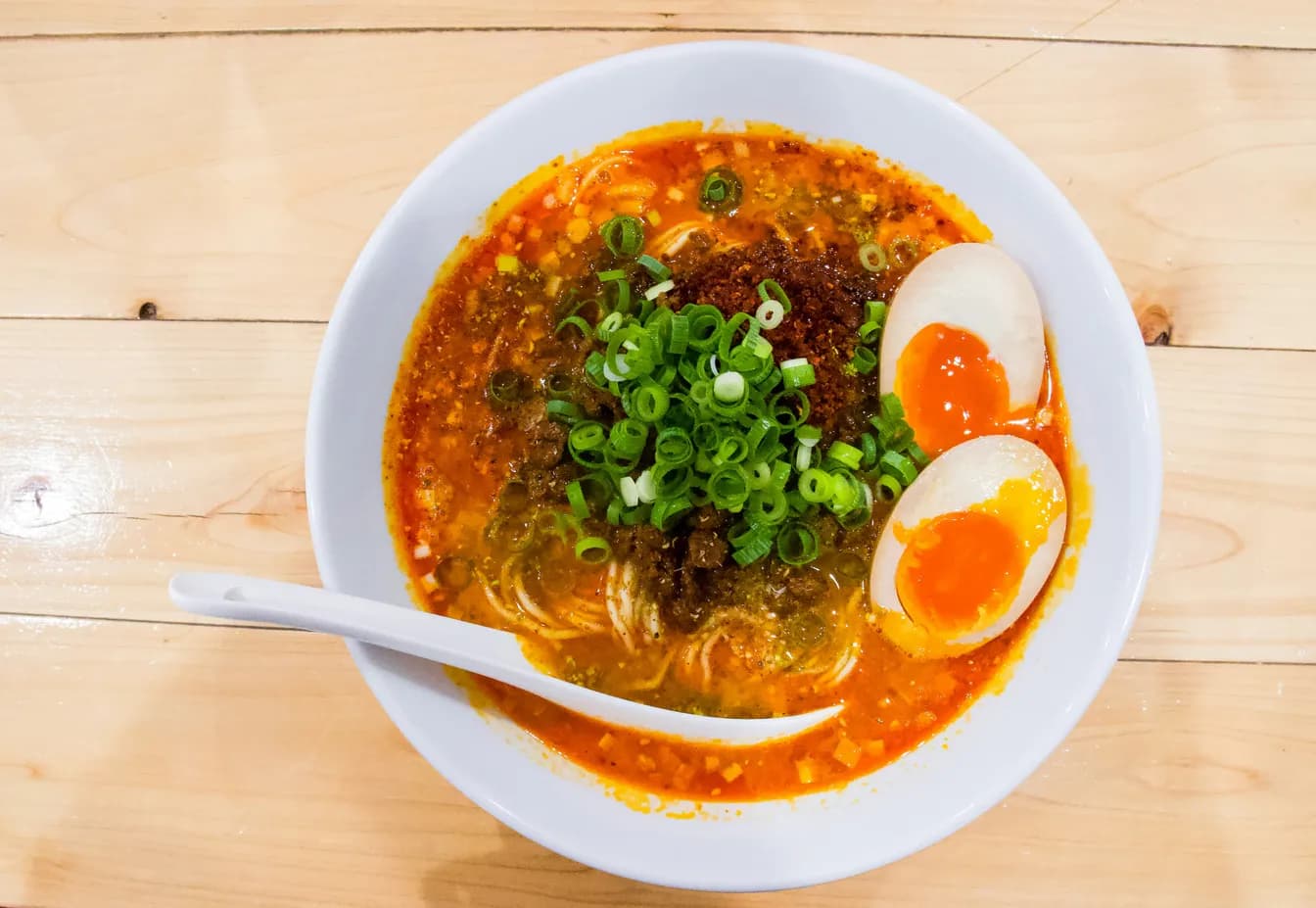
Tantanmen
Japanese ramen with sesame paste and chili oil, the Japanese answer to Sichuan dan dan noodles.
- Preparation
- 20 min
- Cook/bake time
- 25 min
- Total
- 45 min
- Difficulty
- Medium
- Calories
- 1015 kcal
- Servings
- 2
- Prep
- 20 min
- Cooking & baking
- 25 min
Japanese ramen with sesame paste and chili oil, the Japanese answer to Sichuan dan dan noodles. Unlike the Chinese original, tantanmen is a true soup: the sesame paste is emulsified in broth to create a creamy, nutty base that carries the heat. The sauce is what matters, not the noodle.
Why this works
The creamy broth is an emulsion, not a cream-based sauce, and it only forms if the sesame paste is first stirred smooth with a little hot broth and diluted afterward. The reason is concentration: sesame paste consists of a good half oil, and oil only disperses in water if there are enough emulsifiers per volume. In a small amount of liquid, the proteins and phospholipids from the sesame are sufficient for this. If you dump the paste into the full pot instead, they are hopelessly diluted and the oil separates as a film. This same principle applies to any mayonnaise. The chili oil is added to the finished bowl for the same reason. It should float as drops on the surface and release its aroma as you drink, rather than being stirred in.
Step-by-step instructions
- 1
Sear the ground meat
Sear the ground pork in hot oil without stirring it too early, as it should first form a brown crust and then be broken up. Deglaze with soy sauce and stir in the sesame oil. Set it aside, as it will be added later as a crown on the soup.
- 2
Mix the tare
Mix the sesame paste, soy sauce, rice vinegar, sugar, garlic, and ginger in a bowl to form a thick paste. It is perfectly fine if it seems stiff. This is the seasoning base, known in Japan as tare, which carries the actual flavor in every bowl of ramen.
- 3
Build the emulsion
Add two ladles of hot stock to the tare and whisk them together until a light brown, creamy liquid forms. Only when this emulsion is stable do you pour in the remaining stock. The reverse order is the only reason why tantanmen sometimes turns out oily instead of creamy.
- 4
Cook the noodles and vegetables
Cook the ramen noodles according to the package instructions in plenty of water, not in the soup, because the starch would cloud the broth and break the emulsion. Blanch the Pak Choi along with them during the last 60 seconds.
- 5
Serve
Divide the noodles between two bowls, pour the hot sesame broth over them, and top with the ground meat, halved eggs, Pak Choi, and scallions. Finally, drizzle the chili oil over the top and dust with Sichuan pepper. Both belong on top and should not be stirred in.
Our best tips
- Japanese Neri Goma is made from roasted sesame and is significantly darker and nuttier than tahini. Tahini works, but then an additional teaspoon of sesame oil is worthwhile.
- Always cook noodles separately. If you cook them in the soup, you will get a mealy, cloudy broth, and the emulsion will not survive the released starch.
- Sichuan pepper is not actually pepper, nor is it simply spicy. It creates a slight tingling sensation on the tongue that lightens up the sesame cream. If you leave it out, you will get a noticeably heavier soup.
Tasty variations
Vegetarian
Replace the ground meat with 200 g of crumbled firm tofu, and the stock with vegetable broth mixed with a spoonful of miso paste. The sesame base carries the dish anyway.
Without heat
Replace the chili oil with toasted sesame oil and omit the Sichuan pepper. What remains is a nutty sesame ramen that children will also eat.
Nutrition facts
| Calories | 1015 kcal |
|---|---|
| Protein | 45 g |
| Carbohydrates | 93 g |
| – of which sugar | 5 g |
| Fat | 53 g |
| Fiber | 6 g |
Where the 1,015 kcal come from
per serving
Calculated from the ingredients – how we do it
We add up reference values for every ingredient and divide by the number of servings. These assumptions are baked in:
- Reference values per 100 g – for the raw ingredient, exactly as listed.
- Tinned goods count at drained weight, bone-in meat at purchase weight: you eat about 70 per cent of a chicken thigh and leave the rest.
- Water evaporates as you cook. The energy stays in the pot, the weight does not – so the figure is per serving, not per 100 g of finished dish.
- Anything listed without a quantity – “salt and pepper” – is not counted.
A guide value, not a lab measurement: no two onions weigh the same, and fat content varies from pack to pack.
Frequently asked questions
What is the difference to dan dan noodles?
Sichuan dan dan noodles are originally not a soup, but noodles with a small amount of very concentrated sauce at the bottom of the bowl. Tantanmen is the Japanese adaptation of this: a full-fledged ramen soup with sesame broth that is milder and creamier.
How many calories does tantanmen have?
Around 1,015 kcal per serving. This is a complete main meal. The sesame paste alone contributes about 180 kcal per serving, but it is exactly what makes the soup so special.
Why is my broth separating?
The sesame paste was added directly to the full pot. It must first be whisked into an emulsion with two ladles of hot broth. In the small amount, the emulsifiers from the sesame are sufficient, but not in the whole pot.
Can I prepare the tare in advance?
Yes, it keeps in the refrigerator for a week and tastes even more rounded after a few days. Only the emulsion with the hot broth needs to be made fresh.
Comments & ratings(0)
Sign in to rate and comment on this recipe.
You might also like
 Dinner
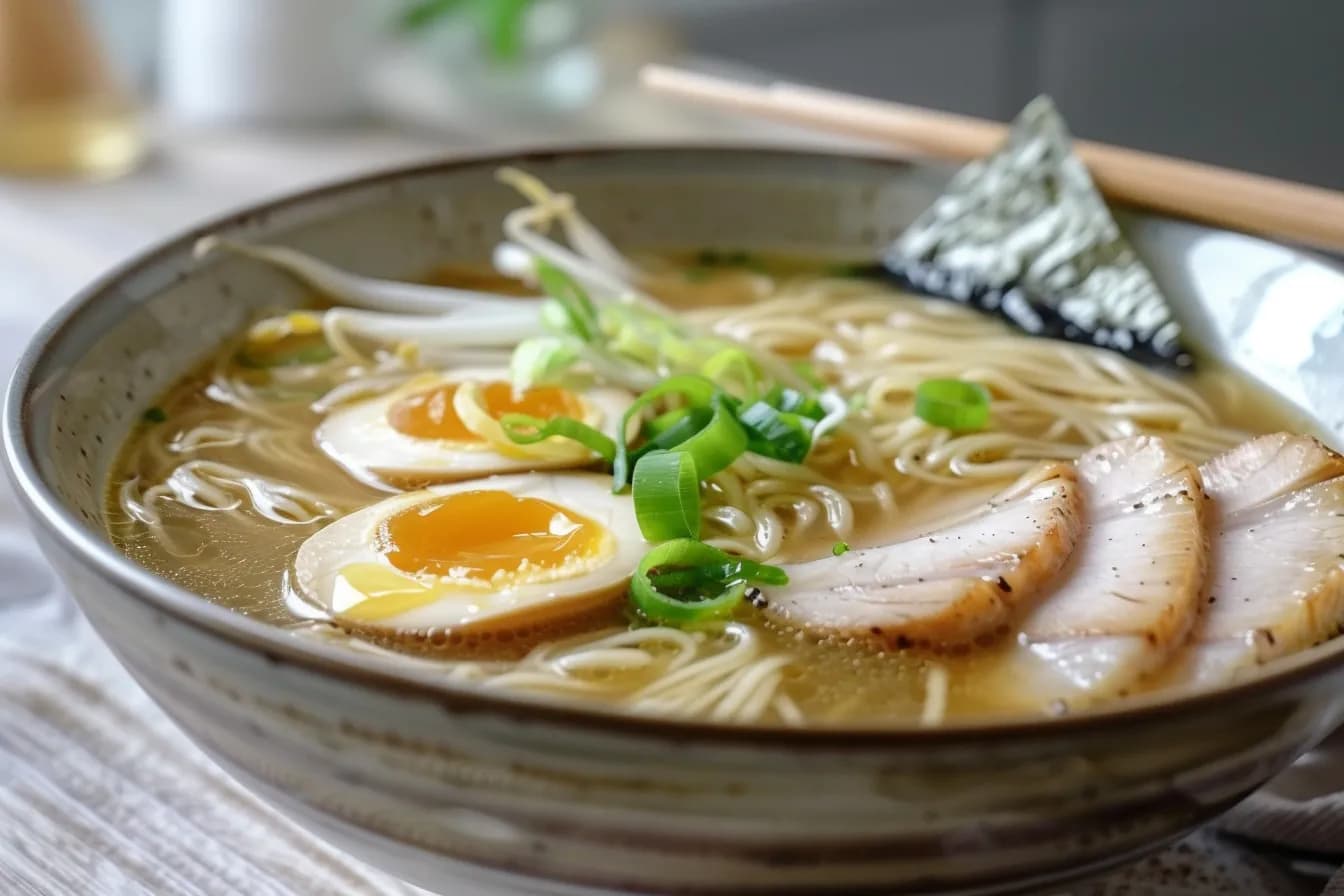
Shoyu Ramen
Clear soy sauce ramen with a marinated egg, the ramen bowl where you learn the craft.
 Dinner
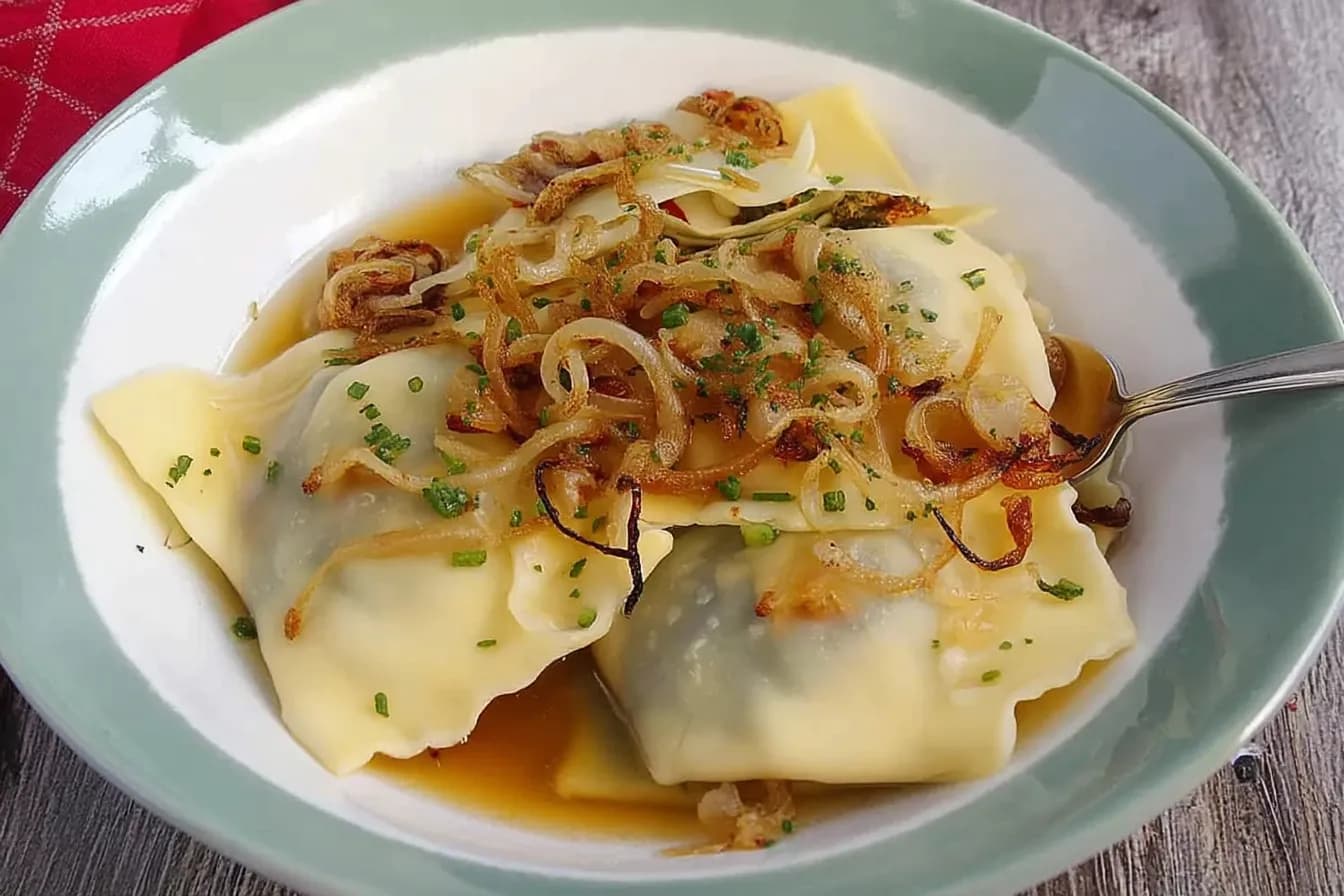
Maultaschen
Swabian dumplings with sausage meat and spinach, and the dough needs plenty of egg to hold the filling.
 Soups & Stews
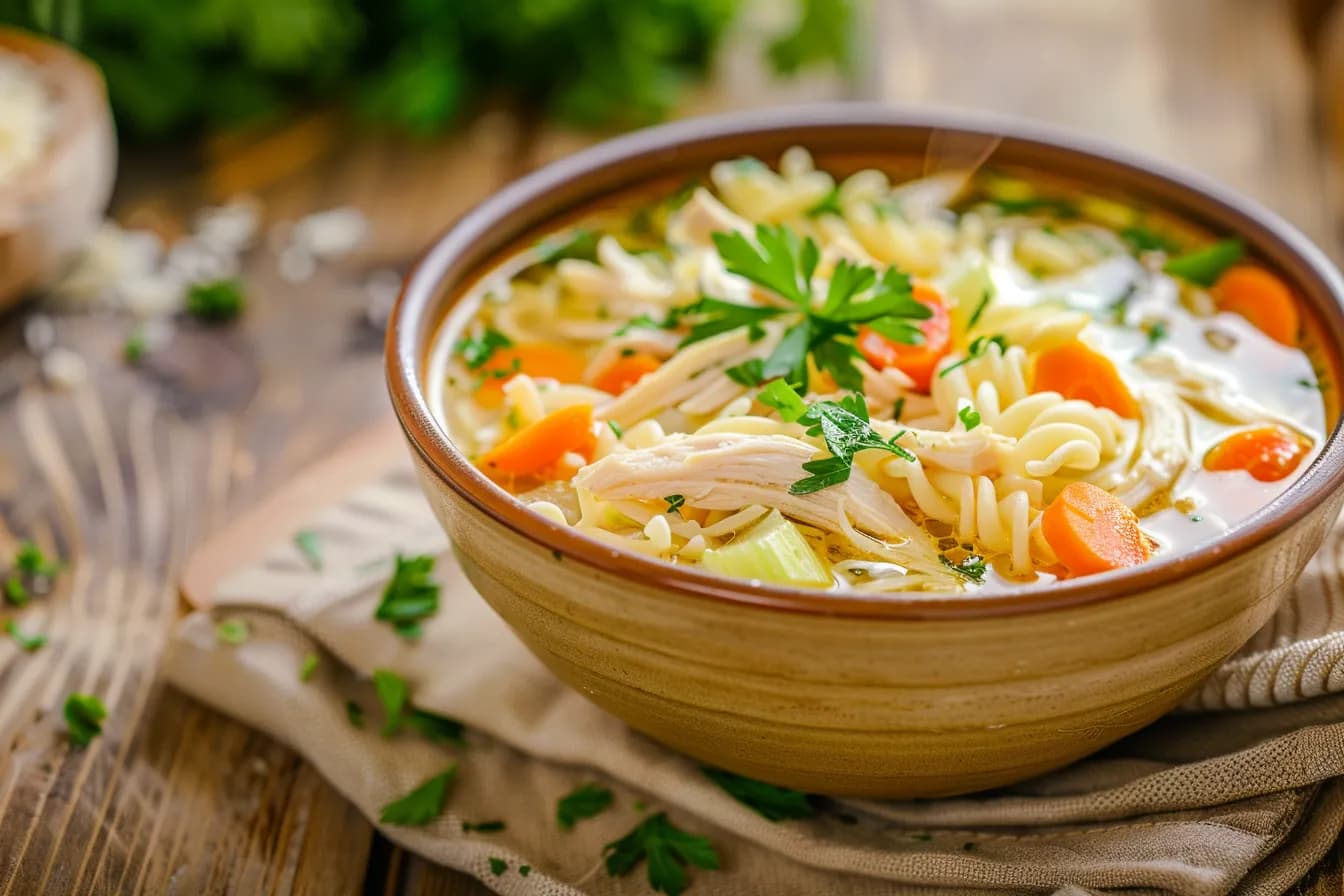
Chicken Noodle Soup
Clear chicken broth with tender meat, noodles and lots of vegetables, the ultimate comfort food.