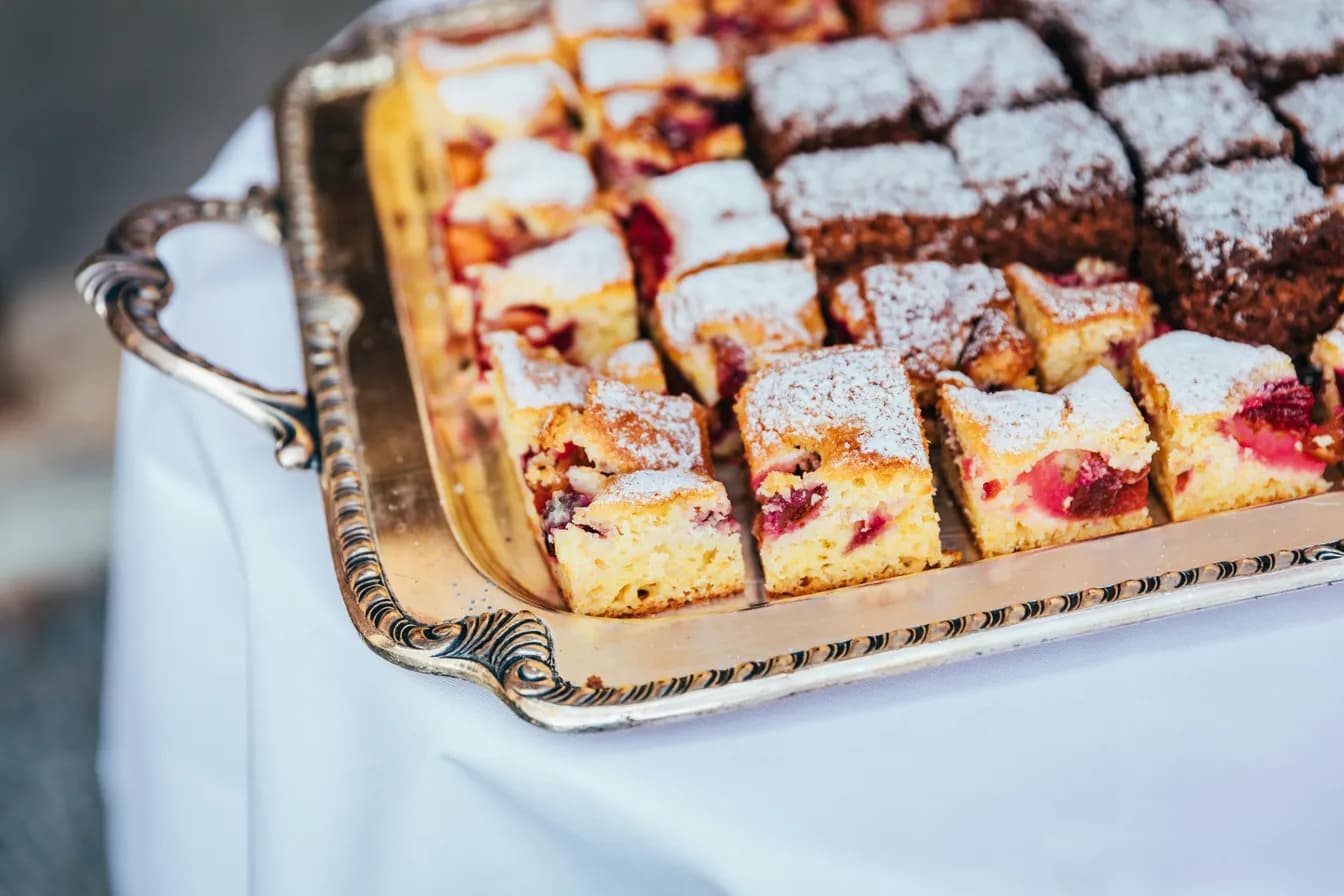
Zwetschgendatschi
Bavarian sheet cake made of yeast dough, densely topped with Italian prune plums, the pastry that marks the end of late summer.
- Preparation
- 40 min
- Cook/bake time
- 40 min
- Total
- 2 hr 35 min
- Difficulty
- Medium
- Calories
- 269 kcal
- Servings
- 12 pieces
- Prep
- 40 min
- Cooking & baking
- 40 min
- Resting
- 1 hr 15 min
Only 1 hr 20 min of that is hands-on – the rest takes care of itself.
Bavarian sheet cake made of yeast dough, densely topped with Italian prune plums, the pastry that marks the end of late summer. The crucial part is that the plums stand upright and close together: this way they release their juices upwards instead of into the dough, and the base remains firm despite the amount of fruit. Italian prune plums are not regular plums, and for this recipe, the difference is the whole point.
Why this works
Italian prune plums have significantly less water and more pectin than round plums, and their flesh separates from the pit instead of clinging to it, both of which are the reasons why only they work. The second reason lies in the arrangement: if you place the quarters upright and close together, the skin seals the bottom and the escaping juice evaporates upwards, where it reduces and shines. If, on the other hand, they lie flat with the cut side up, the same juice runs directly into the yeast dough and softens it. The yeast dough itself is deliberately kept lean: a rich, sweet dough would become heavy and dense under the fruit acid, while a lean one remains airy and supports the quantity.
Step-by-step instructions
- 1
Prepare the yeast dough
Dissolve the yeast in the lukewarm milk and add it to a bowl with the flour, sugar, egg, butter, salt, and lemon zest. Knead until the dough is smooth and pulls away from the sides of the bowl, at least eight minutes. It should be soft but not sticky, a dough that is too firm will not rise well and will become dry.
- 2
Let rise for one hour
Cover the bowl and place it in a warm spot until the dough has visibly doubled in size. Depending on the room temperature, this takes 45 to 75 minutes. Go by volume, not by the clock: yeast works twice as fast at 24 degrees Celsius as it does at 18.
- 3
Prepare the plums
Wash the plums, halve them lengthwise, remove the pits, and score each half again without cutting all the way through, this allows them to be opened up later and stand better. Italian prune plums separate cleanly from the pit unlike regular plums, so this goes quickly.
- 4
Roll out and sprinkle
Roll out the dough on a greased baking sheet and stretch it into the corners. Sprinkle the breadcrumbs evenly over it, they are not a makeshift solution but a barrier layer that absorbs the juice that penetrates downwards despite the upright arrangement.
- 5
Top densely
Place the plum quarters upright and close together like roof tiles on the dough, with the cut side up and at an angle. Really dense: the topping shrinks during baking, and gaps become holes in the oven. Let the cake stand for another fifteen minutes.
- 6
Bake and sugar
Bake the cake at 190 degrees Celsius top and bottom heat for 35 to 40 minutes on the second rack from the bottom, until the tips of the plums are dark and the edges are golden brown. Mix the sugar and cinnamon and sprinkle both over the still-hot cake, it will dissolve on the hot juice and form a thin glaze.
Our best tips
- The sugar is only added to the fruit after baking. If sprinkled beforehand, it draws water out of the plums and floods the dough, which does exactly the opposite of what you want.
- Too little fruit is the most common mistake. One and a half kilos on a baking sheet sounds like a lot and is the right amount, the topping shrinks by about a third in the oven.
- It tastes better on the second day than on the first because the juice has soaked into the breadcrumb layer. Store in a cool place, but bring to room temperature before eating.
Tasty variations
With streusel
Knead 150 g flour, 100 g butter, and 80 g sugar into streusel and sprinkle over the plums. The rule in Franconia, almost heresy in Old Bavaria, both are good.
With almonds
Sprinkle 50 g sliced almonds over the cake in the last ten minutes. They become crispy and give the very fruity topping a second texture.
Nutrition facts
| Calories | 269 kcal |
|---|---|
| Protein | 6 g |
| Carbohydrates | 47 g |
| – of which sugar | 22 g |
| Fat | 6 g |
| Fiber | 3 g |
Where the 269 kcal come from
per serving
Calculated from the ingredients – how we do it
We add up reference values for every ingredient and divide by the number of servings. These assumptions are baked in:
- Reference values per 100 g – for the raw ingredient, exactly as listed.
- Tinned goods count at drained weight, bone-in meat at purchase weight: you eat about 70 per cent of a chicken thigh and leave the rest.
- Water evaporates as you cook. The energy stays in the pot, the weight does not – so the figure is per serving, not per 100 g of finished dish.
- Anything listed without a quantity – “salt and pepper” – is not counted.
A guide value, not a lab measurement: no two onions weigh the same, and fat content varies from pack to pack.
Frequently asked questions
How many calories are in a piece of Zwetschgendatschi?
About 270 kcal per piece for twelve pieces from the sheet. The lion's share comes from the yeast dough and the sugar, the plums themselves only contribute around 60 kcal.
Can I use regular plums instead of Italian prune plums?
Possible, but the result is different. Regular plums are rounder, have more water, and separate less easily from the pit, the cake will be significantly juicier and the base softer. If you must, reduce the amount by a fifth and double the breadcrumb layer.
Why is my base soggy?
Three possible reasons: the plums were lying flat instead of upright, the breadcrumbs were missing, or the sugar was added to the fruit before baking. All three cause the juice to run downwards instead of evaporating upwards.
Can I freeze the cake?
Yes, in pieces and well wrapped for up to three months. To thaw, place in the oven at 150 degrees Celsius for about ten minutes, then the base will be firm again. It will become soft in the microwave.
When are Italian prune plums in season?
From late July to early October, with the best time being late August to mid-September. Only then do they have enough sugar and can be cleanly separated from the pit.
Comments & ratings(0)
Sign in to rate and comment on this recipe.
You might also like
 Cakes & Pastries
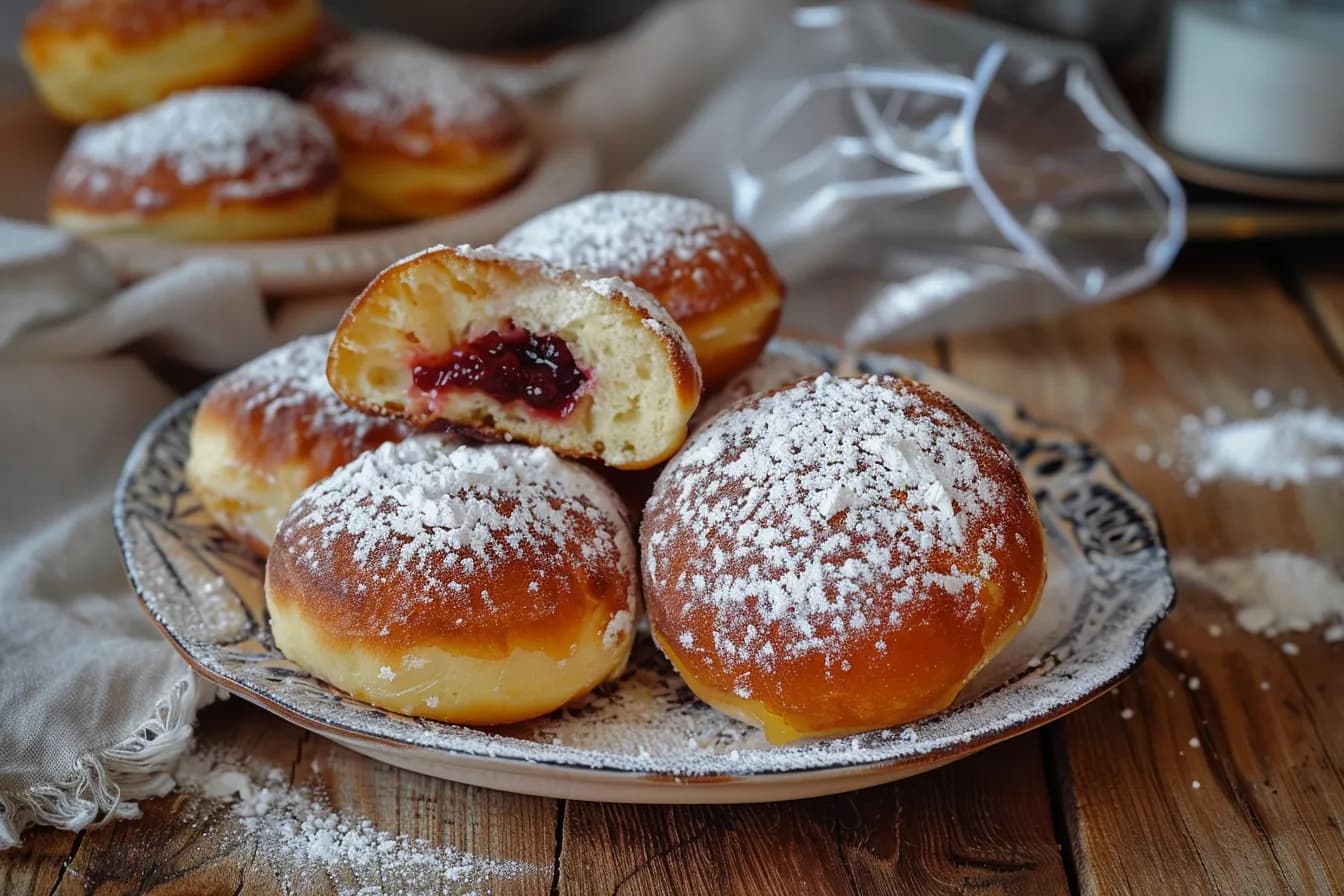
Berliner
The carnival classic with the white ring: golden brown on the outside, airy on the inside, filled with jam.
 Cakes & Pastries
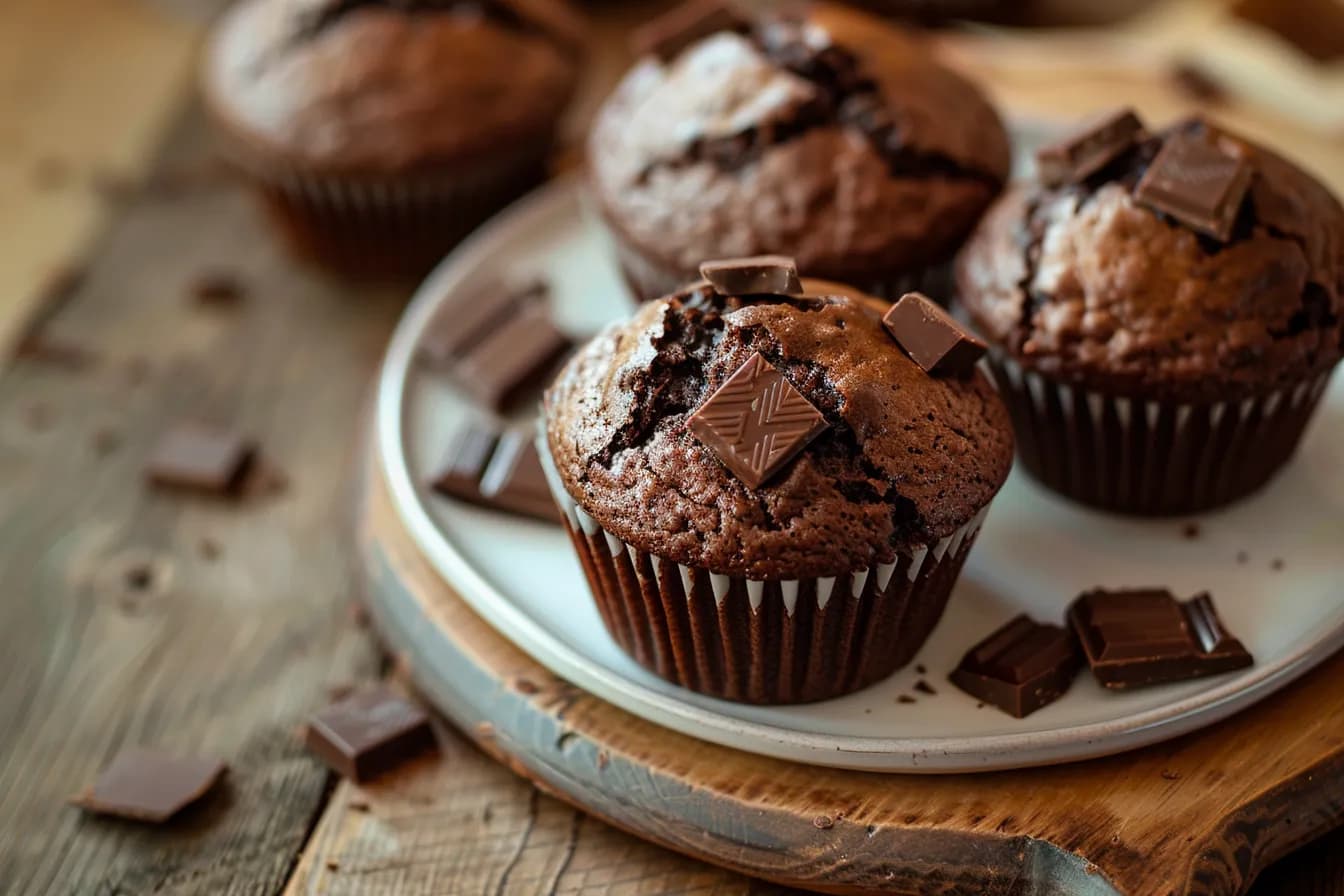
Chocolate Muffins
Dark, moist muffins with a domed top and melted chocolate chunks.
 Cakes & Pastries
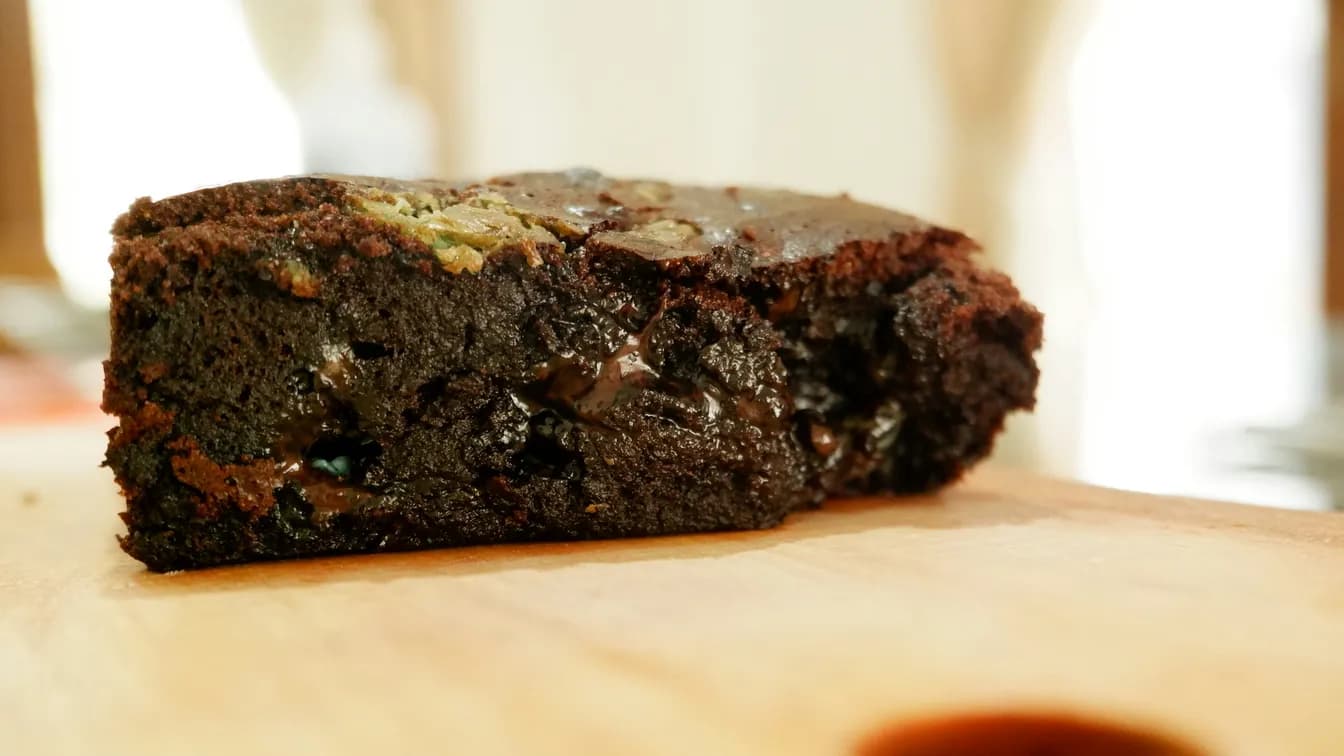
Zucchini Brownies
A whole zucchini in the batter, and nobody notices it: instead, they stay moist for three days.