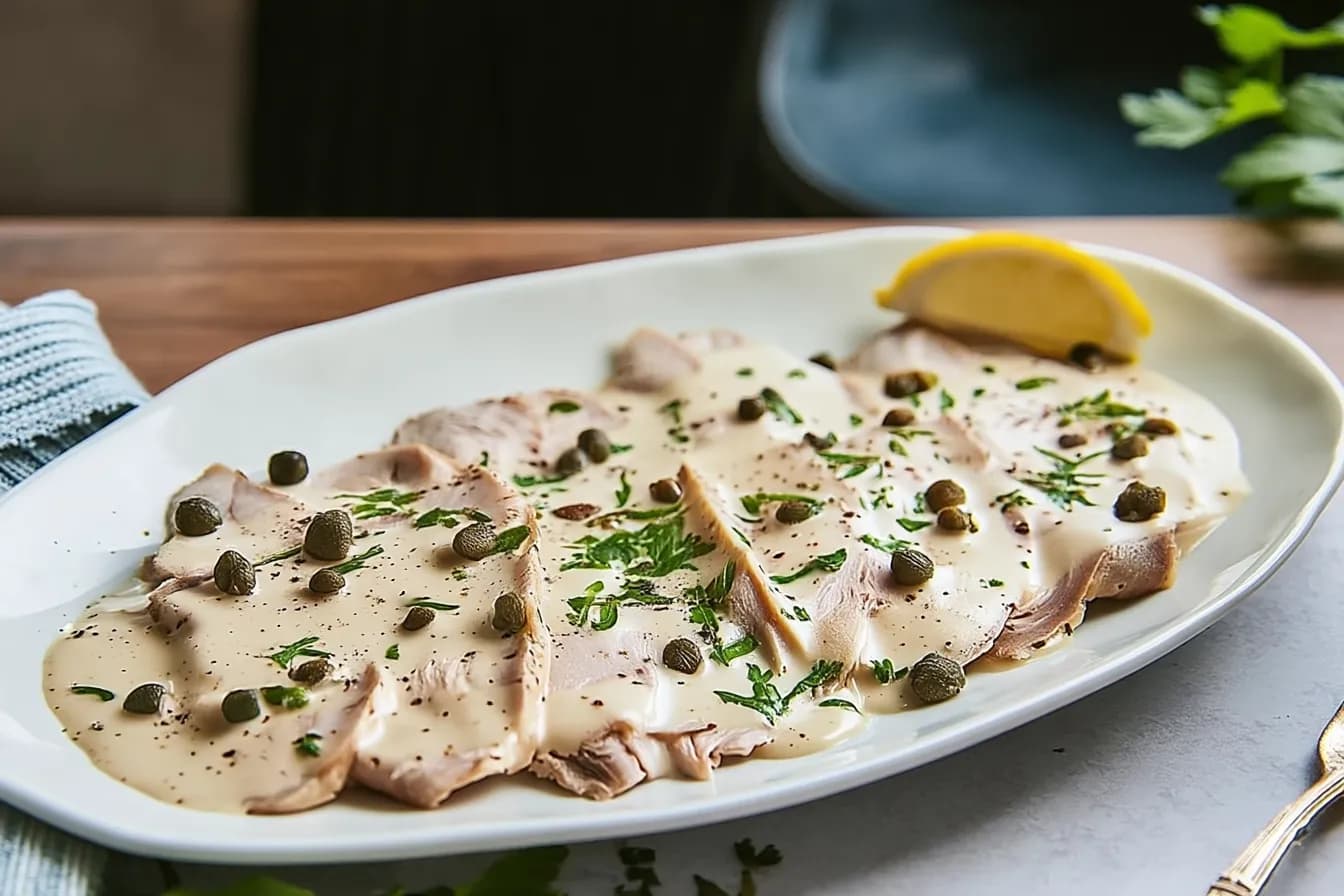
Vitello Tonnato
Veal in tuna sauce, the Piedmontese appetizer where both are better together than apart.
- Preparation
- 40 min
- Cook/bake time
- 1 hr
- Total
- 14 hr 40 min
- Difficulty
- Easy
- Calories
- 530 kcal
- Servings
- 6
- Prep
- 40 min
- Cooking & baking
- 1 hr
- Resting
- 13 hr
Only 1 hr 40 min of that is hands-on – the rest takes care of itself.
Veal in tuna sauce, the Piedmontese appetizer where both are better together than apart. The combination sounds strange but has worked for two hundred years: The mild, cold-sliced veal needs a salty, acidic sauce, and the tuna needs something to carry it. The meat cooks in the broth and cools down in it.
Why this works
The most important step is to let the veal cool in its own broth, and the reason is water loss. If you take a cooked piece of meat out of the liquid while hot, steam escapes as it cools and the meat dries out, especially quickly with a lean cut like the veal round because it lacks the fat that could hold moisture. Cooled in the broth, however, the meat draws liquid back in and stays juicy. The second point concerns the slice thickness: Cold-sliced meat seems tougher than warm meat because the collagen has solidified again. Wafer-thin slices bypass this because the fiber pieces are so short that they offer hardly any resistance when chewing, which is why a sharp knife is more important here than when roasting. The sauce is essentially a mayonnaise into which tuna and capers are blended; its fat buffers the salt of the fish.
Step-by-step instructions
- 1
Cook the meat
Place the veal with carrot, onion, celery, wine, bay leaf, and salt in cold water, bring everything to a simmer, and let it gently poach for 50 to 60 minutes. It must not boil, as boiling water causes the fibers to contract and the lean meat becomes dry.
- 2
Let cool in the broth
Remove the pot from the heat and let the meat cool completely **in the broth**, then leave it in the fridge overnight. This is the step that decides between juicy and dry: Taken out and cooled in the air, the lean veal round noticeably loses moisture.
- 3
Blend the sauce
Blend the tuna, anchovies, capers, lemon juice, and four tablespoons of the cooled broth until smooth, and fold in the mayonnaise. Do not blend it in, otherwise it can break. The sauce should run thickly off the spoon; thin with more broth if needed.
- 4
Slice wafer-thin
Cut the ice-cold meat into wafer-thin slices across the grain with a very sharp knife. Cut cold, meat seems tougher than warm, and only very thin slices bypass this. Anyone with a meat slicer has an advantage here.
- 5
Serve
Arrange the slices overlapping on a platter, coat them generously with the sauce, and let everything steep in the fridge for an hour. Sprinkle with capers before serving. Serve at room temperature, not ice-cold, as the sauce tastes flat straight from the fridge.
Our best tips
- The meat must cool in the broth. It is the only step that can really go wrong with this dish, and it only costs time, not work.
- Tuna in oil, not in water. The oil carries flavor and makes the sauce smoother, whereas tuna in its own juice results in a dry, fibrous sauce.
- Fold in the mayonnaise instead of blending it. In the blender, the emulsion can break due to the shear forces, and then the sauce separates.
Tasty variations
Classic without mayonnaise
The older Piedmontese version binds the sauce with hard-boiled egg yolks and olive oil instead of mayonnaise. Significantly more acidic and less creamy.
With chicken
Chicken breast cooked in the broth instead of veal, cooking time about 25 minutes. Significantly cheaper, and the sauce carries the dish anyway.
Nutrition facts
| Calories | 530 kcal |
|---|---|
| Protein | 38 g |
| Carbohydrates | 4 g |
| – of which sugar | 3 g |
| Fat | 37 g |
| Fiber | 1 g |
Where the 530 kcal come from
per serving
Calculated from the ingredients – how we do it
We add up reference values for every ingredient and divide by the number of servings. These assumptions are baked in:
- Reference values per 100 g – for the raw ingredient, exactly as listed.
- Tinned goods count at drained weight, bone-in meat at purchase weight: you eat about 70 per cent of a chicken thigh and leave the rest.
- Water evaporates as you cook. The energy stays in the pot, the weight does not – so the figure is per serving, not per 100 g of finished dish.
- Anything listed without a quantity – “salt and pepper” – is not counted.
A guide value, not a lab measurement: no two onions weigh the same, and fat content varies from pack to pack.
Frequently asked questions
Does veal really go with tuna?
Surprisingly well, and has done so for over two hundred years in Piedmont. The mild, lean veal needs a salty, acidic accompaniment, and the sauce needs something neutral as a carrier, and together it makes more than both parts individually.
How many calories does Vitello Tonnato have?
Around 530 kcal per portion for six portions. Almost all of it comes from the sauce, as the veal itself is extremely lean at about 150 kcal per portion.
Why is my veal dry?
It was taken out of the broth hot. Veal round is very lean and quickly loses moisture when cooling in the air. Cooled in the broth, it draws liquid back in and stays juicy.
Can I prepare it in advance?
Yes, very well. Meat and sauce can be prepared a day in advance, and the fully assembled dish should steep for at least an hour anyway. Take it out of the fridge before serving.
Comments & ratings(0)
Sign in to rate and comment on this recipe.
You might also like
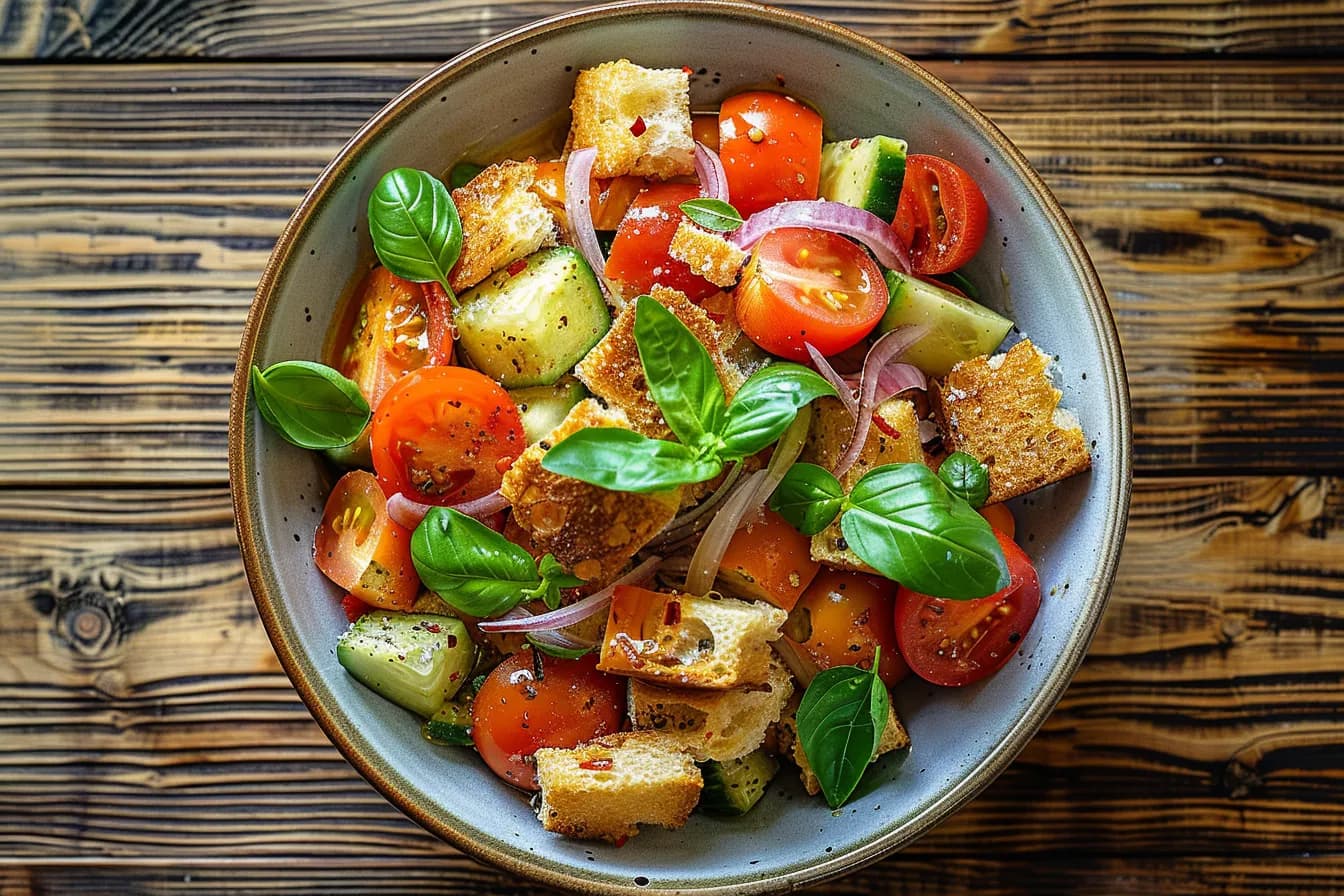 Salads
Panzanella
The salad that makes stale bread the main ingredient, and gives tomato juice a purpose.
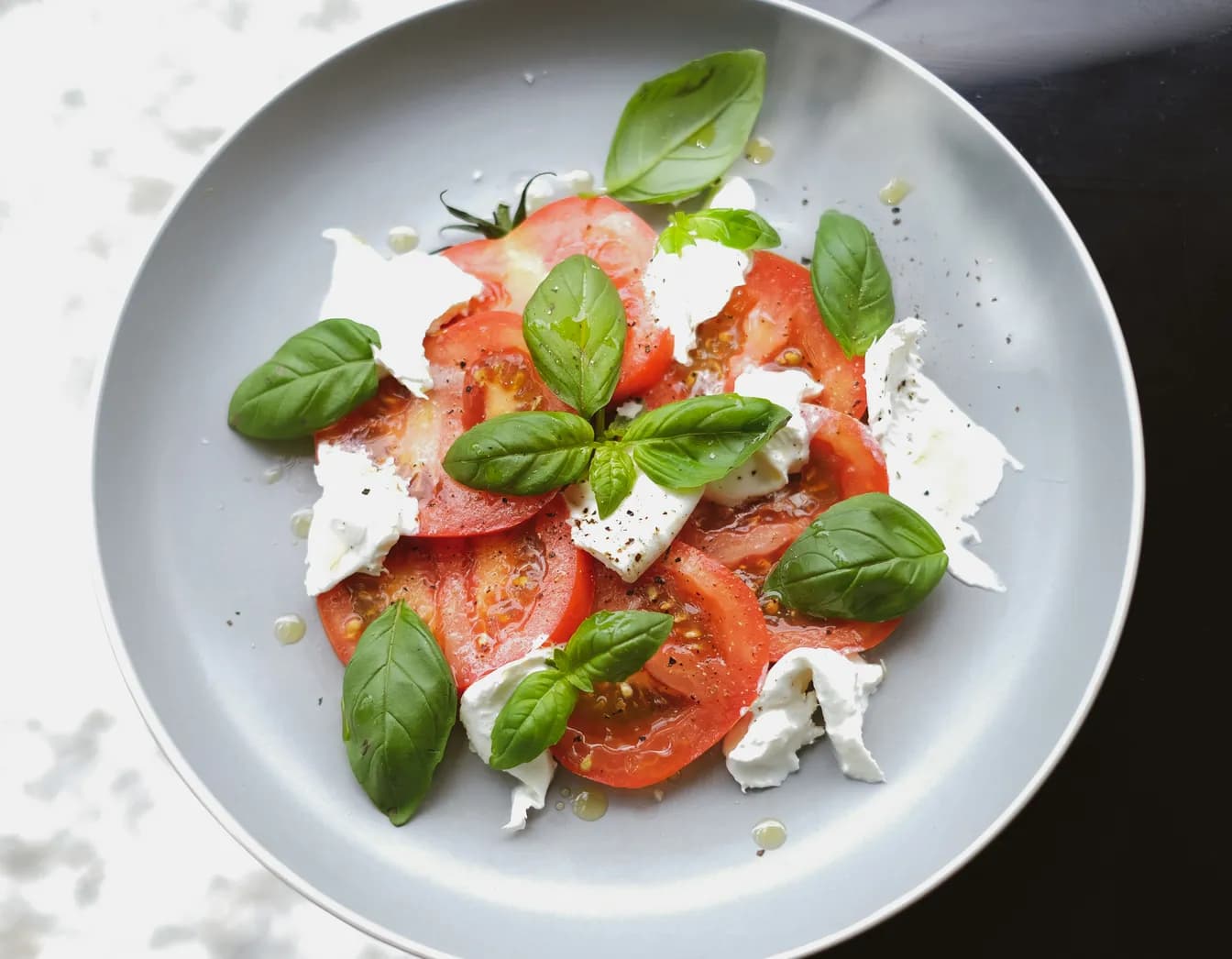 Salads
Caprese Salad
Tomato, mozzarella and basil with good olive oil, three ingredients in perfect balance.
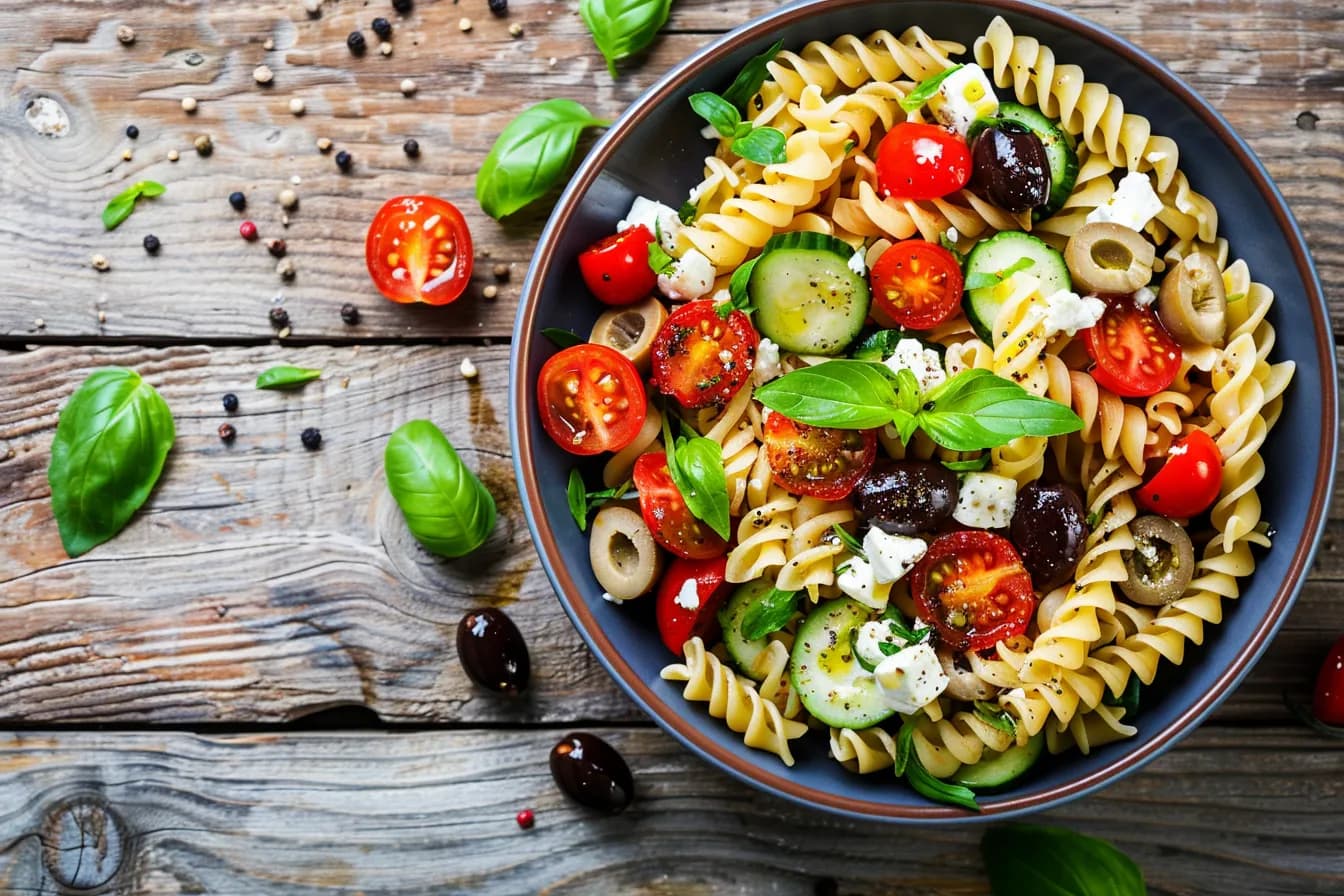 Salads
Mediterranean Pasta Salad
Fusilli with cherry tomatoes, olives, feta and basil, completely without mayonnaise.