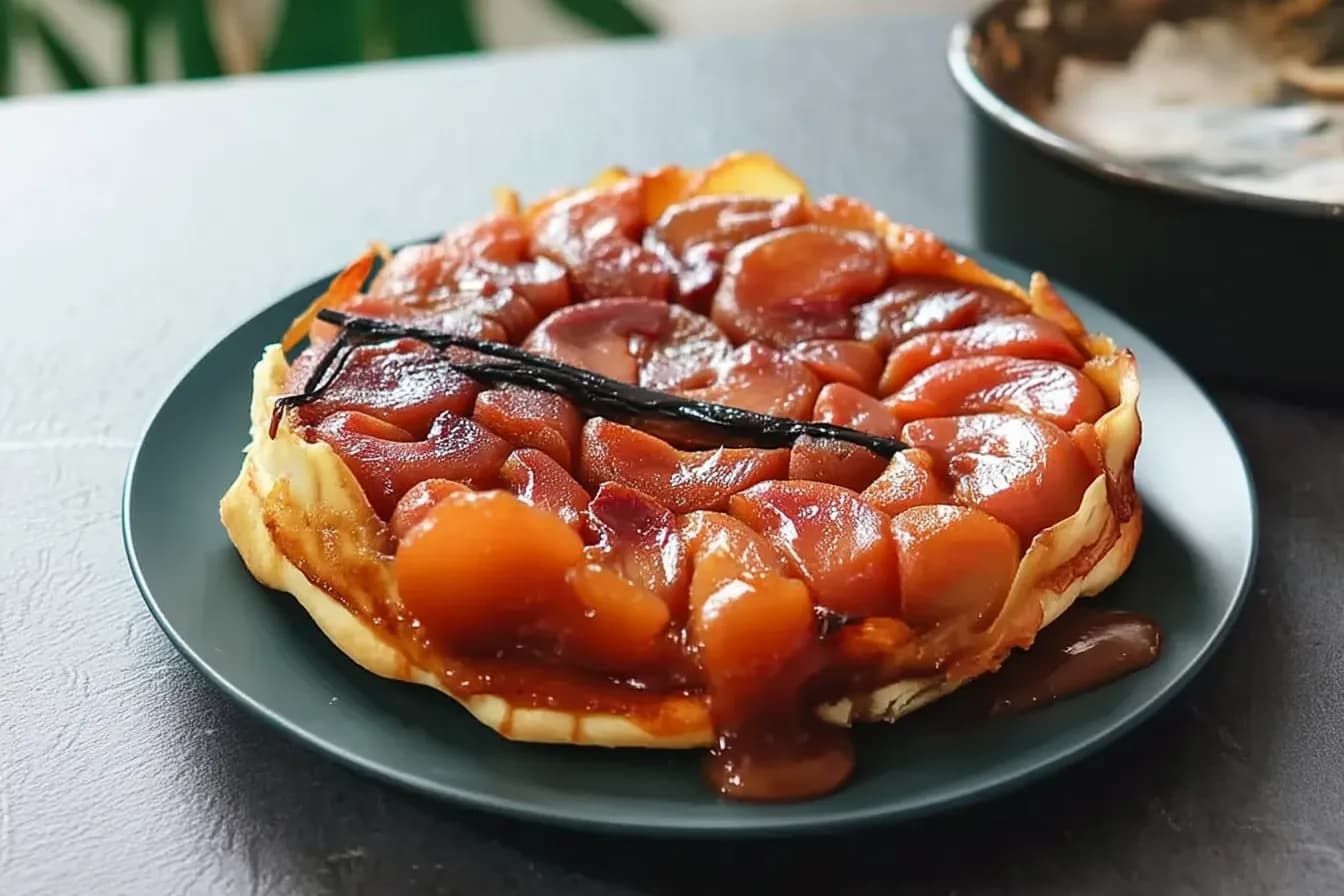
Tarte Tatin
Upside-down apple tart with caramel, the most famous kitchen accident in France, repeated on purpose.
- Preparation
- 20 min
- Cook/bake time
- 50 min
- Total
- 1 hr 25 min
- Difficulty
- Medium
- Calories
- 357 kcal
- Servings
- 8 slices
- Prep
- 20 min
- Cooking & baking
- 50 min
- Resting
- 15 min
Only 1 hr 10 min of that is hands-on – the rest takes care of itself.
Upside-down apple tart with caramel, the most famous kitchen accident in France, repeated on purpose. The apples cook at the bottom in the caramel, the dough lies on top, and only after baking is the whole thing turned upside down. The trick lies in the apple variety: a fruit that falls apart turns the tart into mush.
Why this works
The apple variety decides between success or mush, and that is because of its pectin content and cell structure. Varieties like Boskoop, Elstar or Braeburn have firm flesh and keep their shape when cooked; soft varieties like Golden Delicious fall apart into compote in the caramel. The second point is the caramel itself: sugar caramelizes from about 160 degrees, and the butter in it not only prevents burning, but forms an emulsion with the escaping apple juice, which becomes solid again when it cools down, which is the shiny layer on the upside-down tart. That is why the short resting time after baking is important: turned out immediately, the caramel is still runny and runs off the cake, after fifteen minutes it has the right viscosity. But it must not be longer than twenty minutes, otherwise the tart will stick to the pan.
Step-by-step instructions
- 1
Prepare the apples
Peel the apples, halve them and core them. Drizzle them with lemon juice so they do not turn brown. Halved apples instead of wedges: they keep their shape during the long cooking time, while thin wedges fall apart.
- 2
Start the caramel
Sprinkle the sugar evenly into an ovenproof pan and let it melt over medium heat without stirring, swirl instead of stirring, otherwise it will crystallize. When it is amber-colored, remove the pan from the heat and stir in the butter cubes and the salt. It will splatter briefly, that is part of it.
- 3
Add the apples
Place the apple halves close together in the caramel, rounded side down. Really close: the apples shrink significantly during cooking, and gaps will later become holes in the upside-down tart. Let them simmer on the stove for 10 minutes.
- 4
Place the dough and bake
Place the puff pastry over the apples and tuck the edges between the fruit and the edge of the pan with the handle of a spoon. Prick the dough several times so steam can escape, and bake the tart at 190 °C for about 30 minutes until the dough is deep golden brown.
- 5
Wait fifteen minutes, then turn out
Let the tart stand for exactly fifteen minutes, then place a plate on the pan and turn it out in one decisive movement. Turned out immediately, the caramel runs down, after thirty minutes the tart sticks, the window is narrow and important.
Our best tips
- Use firm apple varieties. Boskoop, Elstar, Braeburn or Cox keep their shape; Golden Delicious and Gala fall apart into mush in the caramel.
- Swirl instead of stirring when caramelizing. A spoon in the melting sugar brings crystals into play, on which the whole batch crystallizes.
- Turn out decisively, not carefully. Hesitant tilting causes the apples to slip, put the plate on, hold tight, turn over.
Tasty variations
With pears
Firm pears like Conference instead of apples, plus a pinch of cardamom in the caramel. Pears need about five minutes less on the stove.
Savory Tatin
Shallots or tomatoes instead of fruit, with balsamic vinegar instead of lemon juice and thyme. Quite common as a starter in French bistros.
Nutrition facts
| Calories | 357 kcal |
|---|---|
| Protein | 3 g |
| Carbohydrates | 48 g |
| – of which sugar | 34 g |
| Fat | 17 g |
| Fiber | 4 g |
Where the 357 kcal come from
per serving
Calculated from the ingredients – how we do it
We add up reference values for every ingredient and divide by the number of servings. These assumptions are baked in:
- Reference values per 100 g – for the raw ingredient, exactly as listed.
- Tinned goods count at drained weight, bone-in meat at purchase weight: you eat about 70 per cent of a chicken thigh and leave the rest.
- Water evaporates as you cook. The energy stays in the pot, the weight does not – so the figure is per serving, not per 100 g of finished dish.
- Anything listed without a quantity – “salt and pepper” – is not counted.
A guide value, not a lab measurement: no two onions weigh the same, and fat content varies from pack to pack.
Frequently asked questions
Which apples are suitable for Tarte Tatin?
Firm, tart varieties: Boskoop, Elstar, Braeburn or Cox Orange. They keep their shape in the caramel. Soft varieties like Golden Delicious fall apart and result in applesauce under puff pastry instead of a tart.
How many calories does a slice of Tarte Tatin have?
Around 355 kcal per slice for eight slices. Caramel and puff pastry together make up the largest part, the apples themselves only contribute about 70 kcal per slice.
When do I have to turn it out?
After about fifteen minutes. Before that, the caramel is too liquid and runs down, after thirty minutes it is so firm that the tart sticks to the pan. The time window is the most critical part of the recipe.
Shortcrust pastry or puff pastry?
Both are common in France. Puff pastry is the more common and easier choice, shortcrust pastry results in a denser, biscuit-like base. The Tatin sisters are said to have used puff pastry.
Comments & ratings(0)
Sign in to rate and comment on this recipe.
You might also like
 Cakes & Pastries
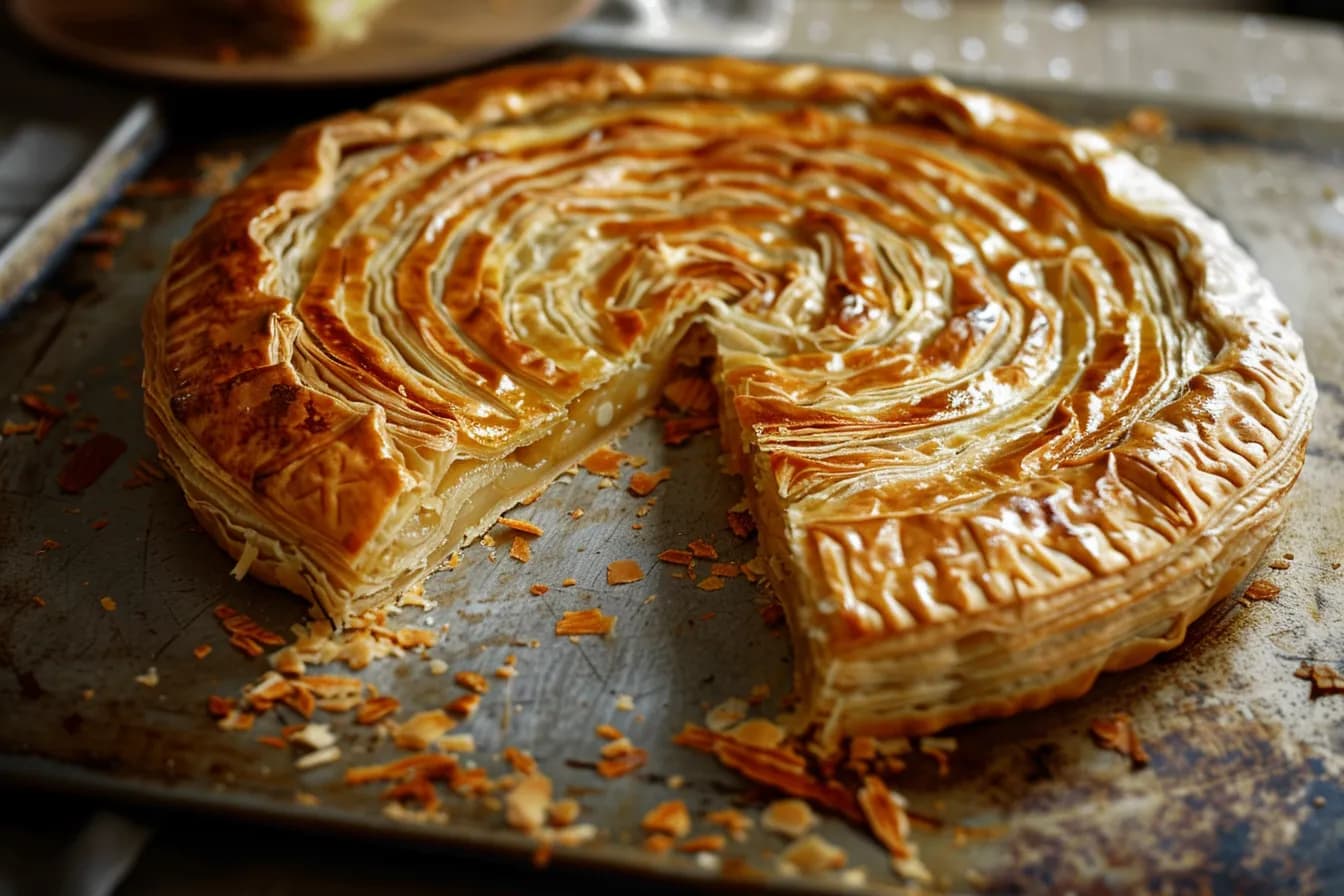
Galette des Rois
French King Cake made of puff pastry and almond cream, with a figurine inside and a crown on top.
 Cakes & Pastries
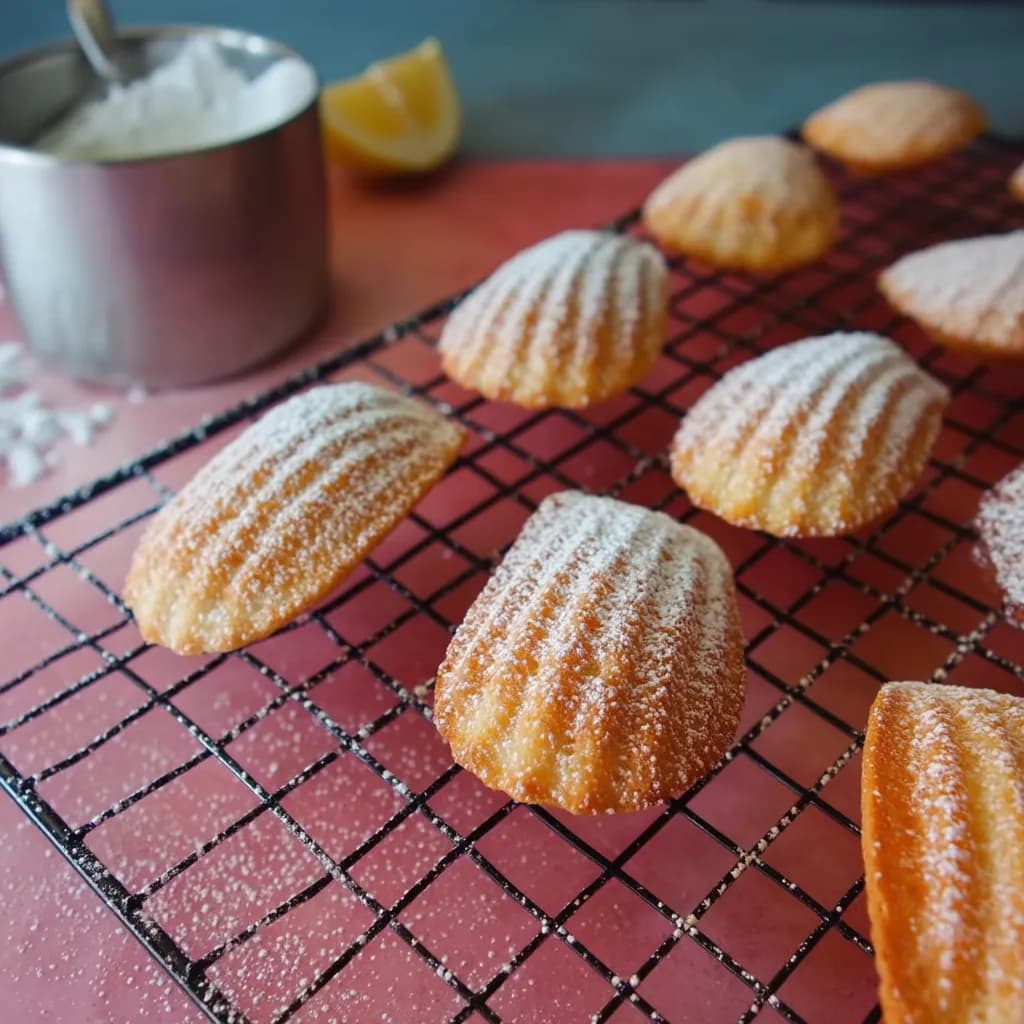
Madeleines
Shell-shaped little cakes with the characteristic bump, and the cold shock that creates it.
 Leftover Cooking
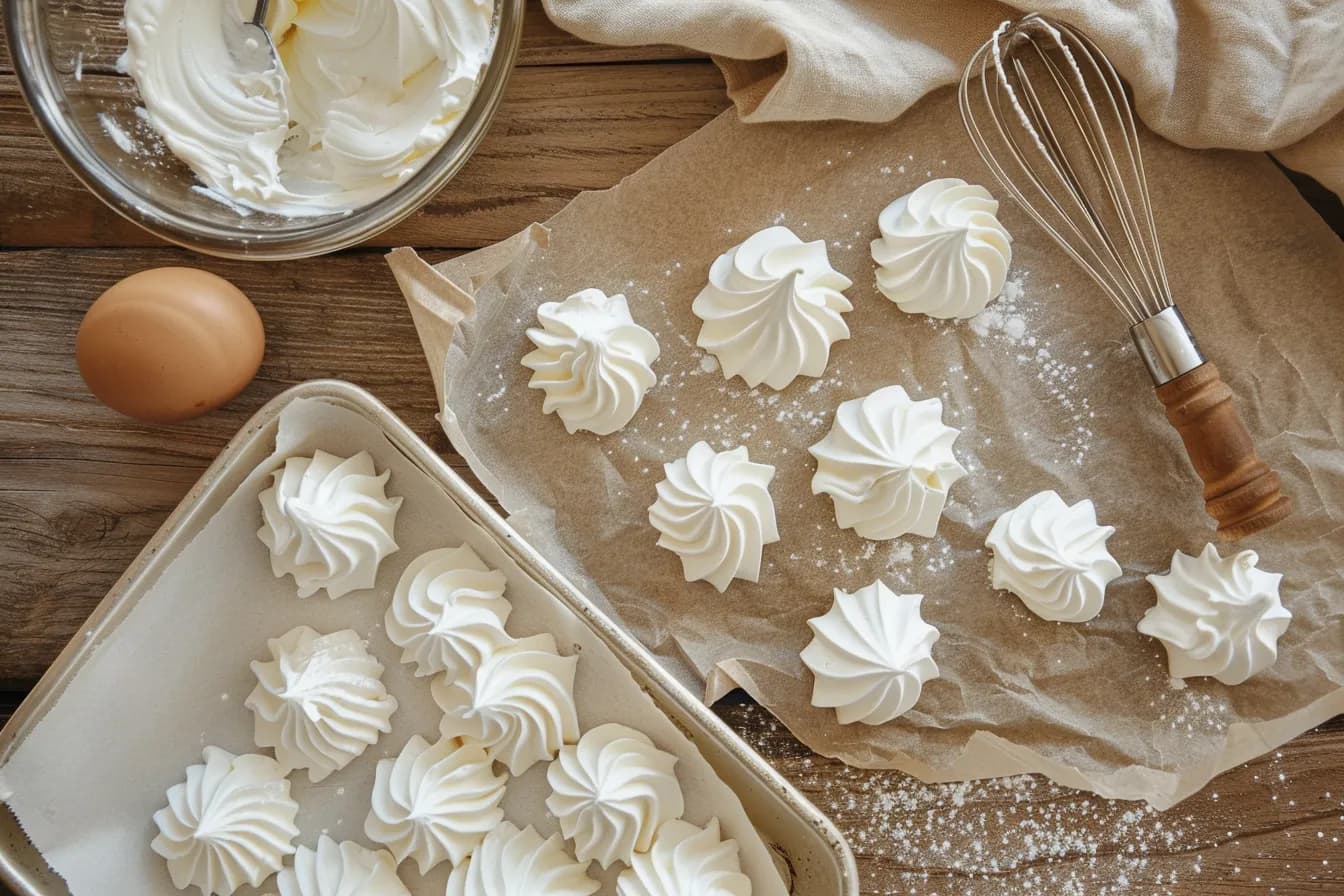
Leftover Egg Whites 3 Ways
Meringue, financiers or an omelet, depending on how many egg whites are in the jar.