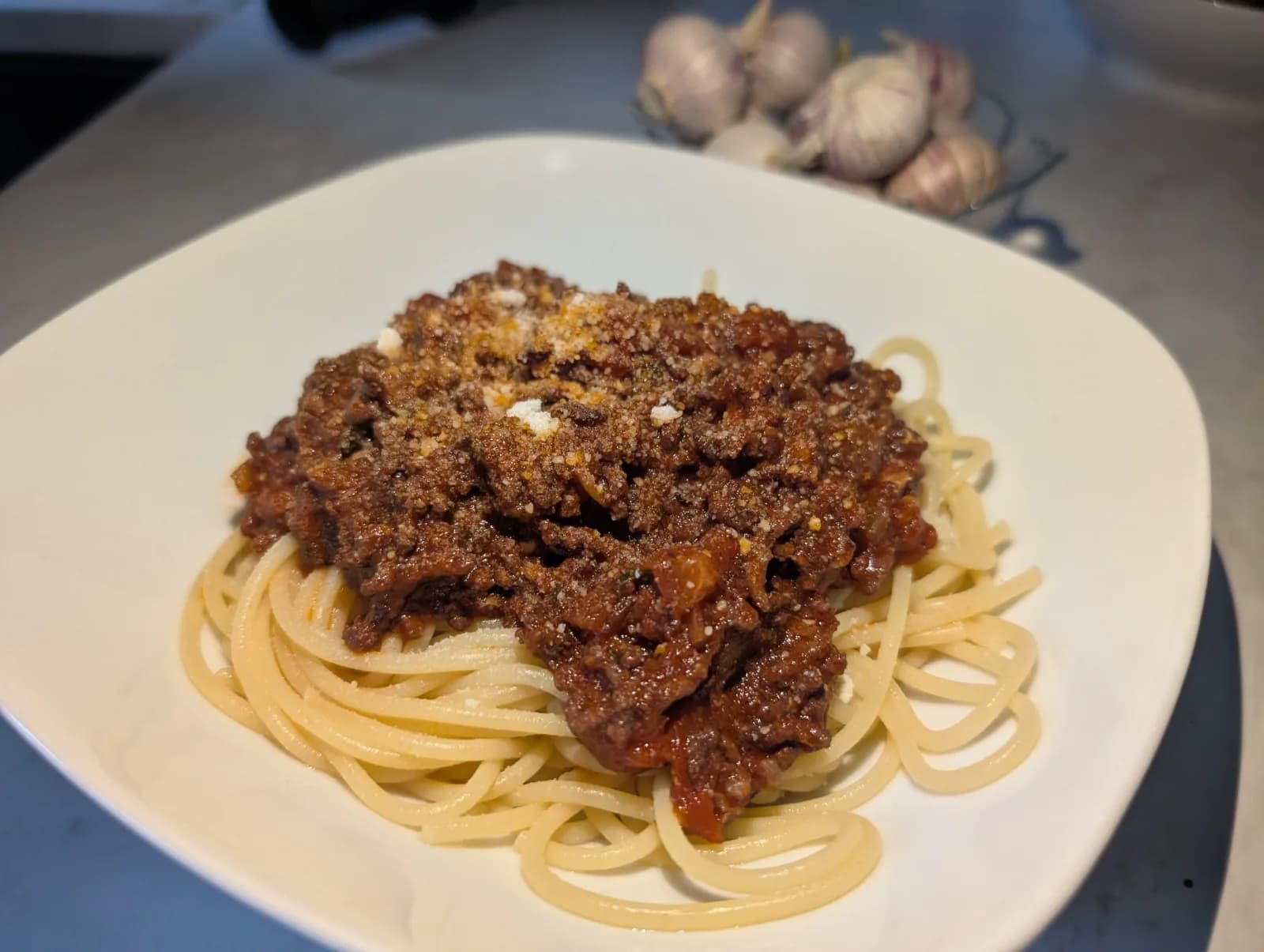
A true ragù alla Bolognese has little to do with a quick meat sauce. A fine sofrito of onion, carrot and celery forms the base, the meat is well browned, a splash of milk makes it tender, and then everything is allowed to simmer gently for two hours. In Bologna it is served with tagliatelle, but it tastes just as great with spaghetti.
Why this works
The splash of milk is the most frequently omitted and most underestimated step. The casein in the milk binds the tannins of the wine and buffers the acidity of the tomatoes, while at the same time acting on the meat protein and keeping it tender. That is why the milk is added before the wine and before the tomatoes, because afterwards it can no longer unfold its effect.
Step-by-step instructions
- 1
Sofrito anschwitzen
Würfle Zwiebel, Karotte und Sellerie sehr fein. Dünste sie mit dem Pancetta in Olivenöl bei mittlerer Hitze weich, ohne dass etwas Farbe nimmt. Das dauert 10 Minuten und ist die Grundlage für alles Weitere.
- 2
Fleisch bräunen
Dreh die Hitze hoch und gib das Hack dazu. Drück es flach und lass es liegen, bis die Unterseite braun ist. Erst dann zerteilen und weiterbraten, bis keine Flüssigkeit mehr im Topf steht. Salzen und pfeffern.
- 3
Milch einkochen
Gieß die Milch an und lass sie bei mittlerer Hitze fast vollständig einkochen. Am Boden bleibt nur noch ein heller Film. Die Milch muss vor dem Wein hinein, sonst flockt sie in der Säure aus.
- 4
Wein und Tomaten
Rühr das Tomatenmark ein und röste es 2 Minuten mit. Lösch mit dem Rotwein ab und lass ihn fast verkochen. Gib Tomaten, Brühe und Lorbeer dazu und bring alles einmal zum Kochen.
- 5
Zwei Stunden schmoren
Zieh die Hitze auf die kleinste Stufe und leg den Deckel schräg auf. Das Ragù blubbert jetzt nur noch alle paar Sekunden. Rühr alle 20 Minuten um. Nach 2 Stunden ist es dick und dunkel.
- 6
Pasta und Anrichten
Koch die Spaghetti bissfest und heb eine Tasse Nudelwasser auf. Schwenk die abgetropfte Pasta im Topf mit dem Ragù und einem Schluck Nudelwasser. Sofort servieren, Parmesan darüber.
Our best tips
- Kein Pancetta da? Ein Stück Speckschwarte mitschmoren und vor dem Servieren herausnehmen.
- Koch gleich die doppelte Menge. Ragù friert portionsweise ein und schmeckt am zweiten Tag runder.
- Nimm einen Topf mit dickem Boden. In einer dünnen Pfanne setzt das Ragù in zwei Stunden an.
Tasty variations
Mit Hühnerleber
50 g fein gehackte Hühnerleber mit dem Hack anbraten. Klassisch in Bologna und gibt dem Ragù eine dunklere Tiefe.
Bianco ohne Tomate
Tomaten und Tomatenmark weglassen, dafür mehr Brühe und Weißwein. Das Ragù bleibt hell und schmeckt deutlicher nach Fleisch.
Nutrition facts
| Calories | 995 kcal |
|---|---|
| Protein | 46 g |
| Carbohydrates | 109 g |
| – of which sugar | 16 g |
| Fat | 37 g |
| Fiber | 7 g |
Where the 995 kcal come from
per serving
These lines have no quantity (“to taste”) or no table value, so they are missing from the total.
Calculated from the ingredients – how we do it
We add up reference values for every ingredient and divide by the number of servings. These assumptions are baked in:
- Reference values per 100 g – for the raw ingredient, exactly as listed.
- Tinned goods count at drained weight, bone-in meat at purchase weight: you eat about 70 per cent of a chicken thigh and leave the rest.
- Water evaporates as you cook. The energy stays in the pot, the weight does not – so the figure is per serving, not per 100 g of finished dish.
- Anything listed without a quantity – “salt and pepper” – is not counted.
A guide value, not a lab measurement: no two onions weigh the same, and fat content varies from pack to pack.
Frequently asked questions
Warum kommt Milch in die Bolognese?
Sie hält das Hack zart und nimmt Wein und Tomaten die Säure. Wichtig ist der Zeitpunkt: Die Milch kocht vor dem Wein ein. Kommt sie später dazu, flockt sie in der sauren Sauce aus.
Spaghetti oder Tagliatelle?
Tagliatelle, wenn du es hältst wie Bologna. Die breiten Bänder nehmen mehr vom Ragù mit als runde Spaghetti. Bei uns sind Spaghetti verbreiteter, und schlechter schmeckt es damit nicht.
Kann ich Bolognese einfrieren?
Ja, ohne Pasta hält das Ragù 3 Monate im Gefrierfach. Aufgewärmt schmeckt es oft besser als am ersten Tag. Portionsweise einfrieren, dann taut nur so viel auf, wie gebraucht wird.
Comments & ratings(0)
Sign in to rate and comment on this recipe.
You might also like
 Pasta
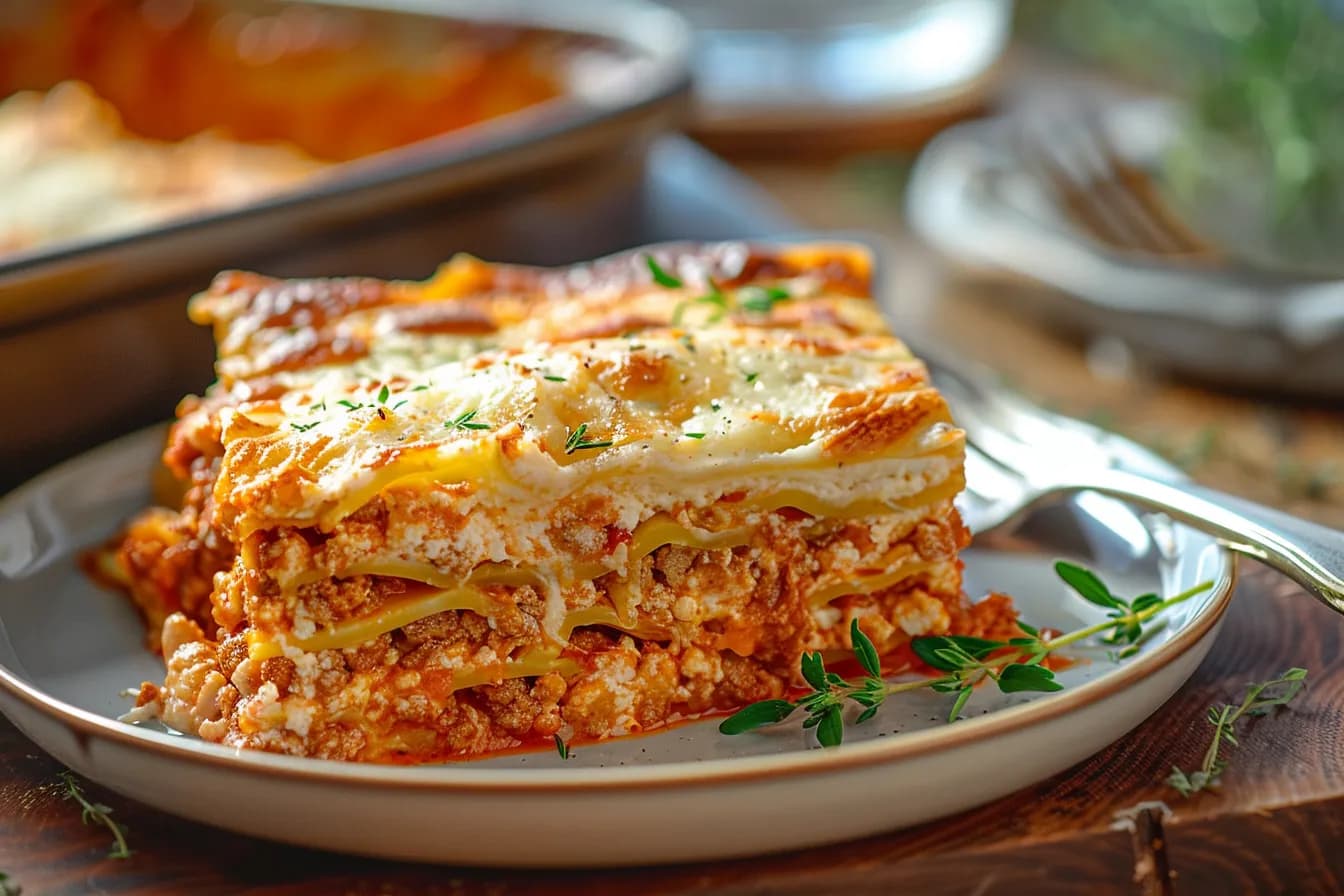
Lasagne al Forno
Layers of ragù, creamy béchamel and Parmesan, baked golden brown to a perfect crust.
 Pasta
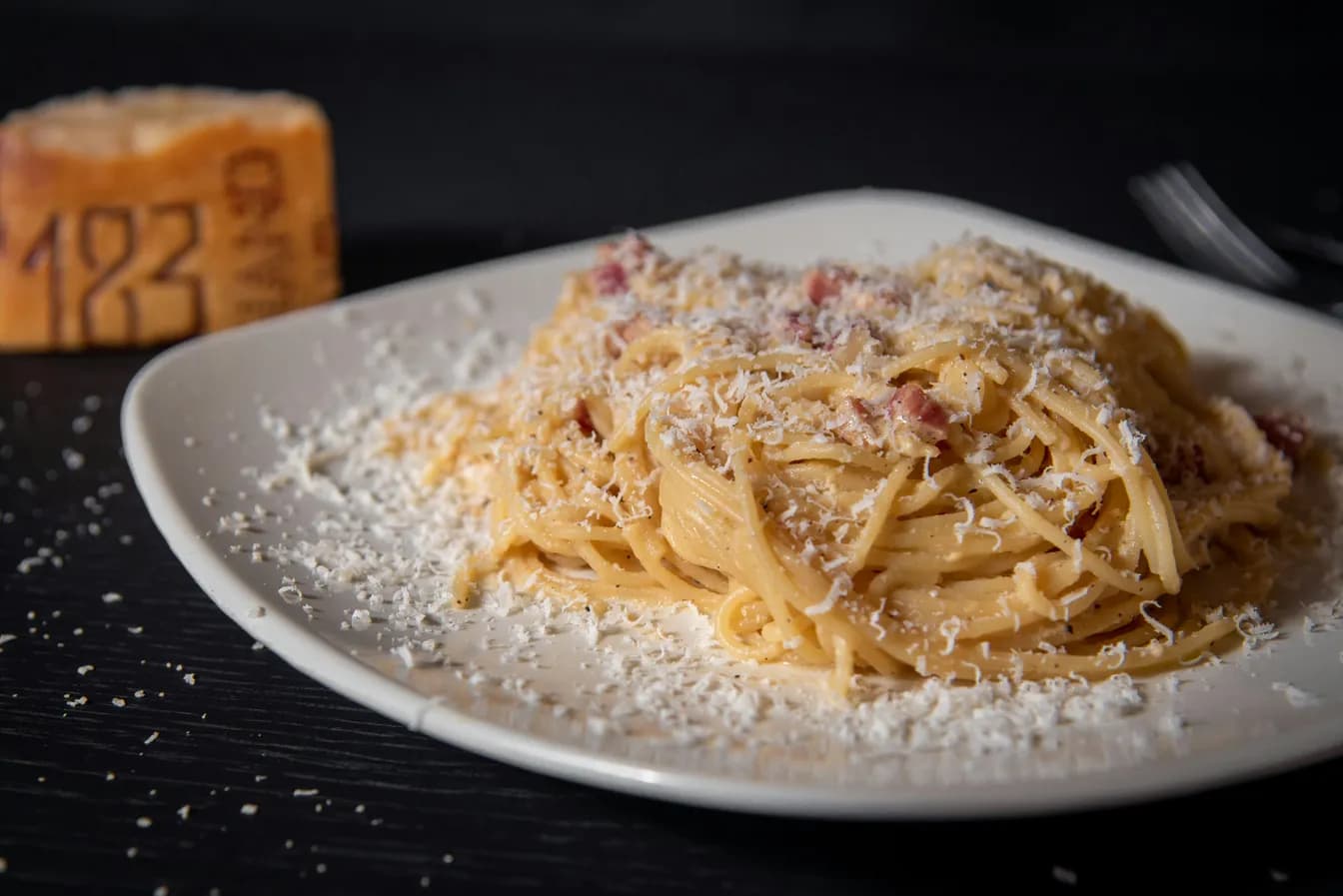
Original Spaghetti Carbonara
The Roman classic with Guanciale, Pecorino, and a creamy egg sauce, completely without cream.
 Pasta
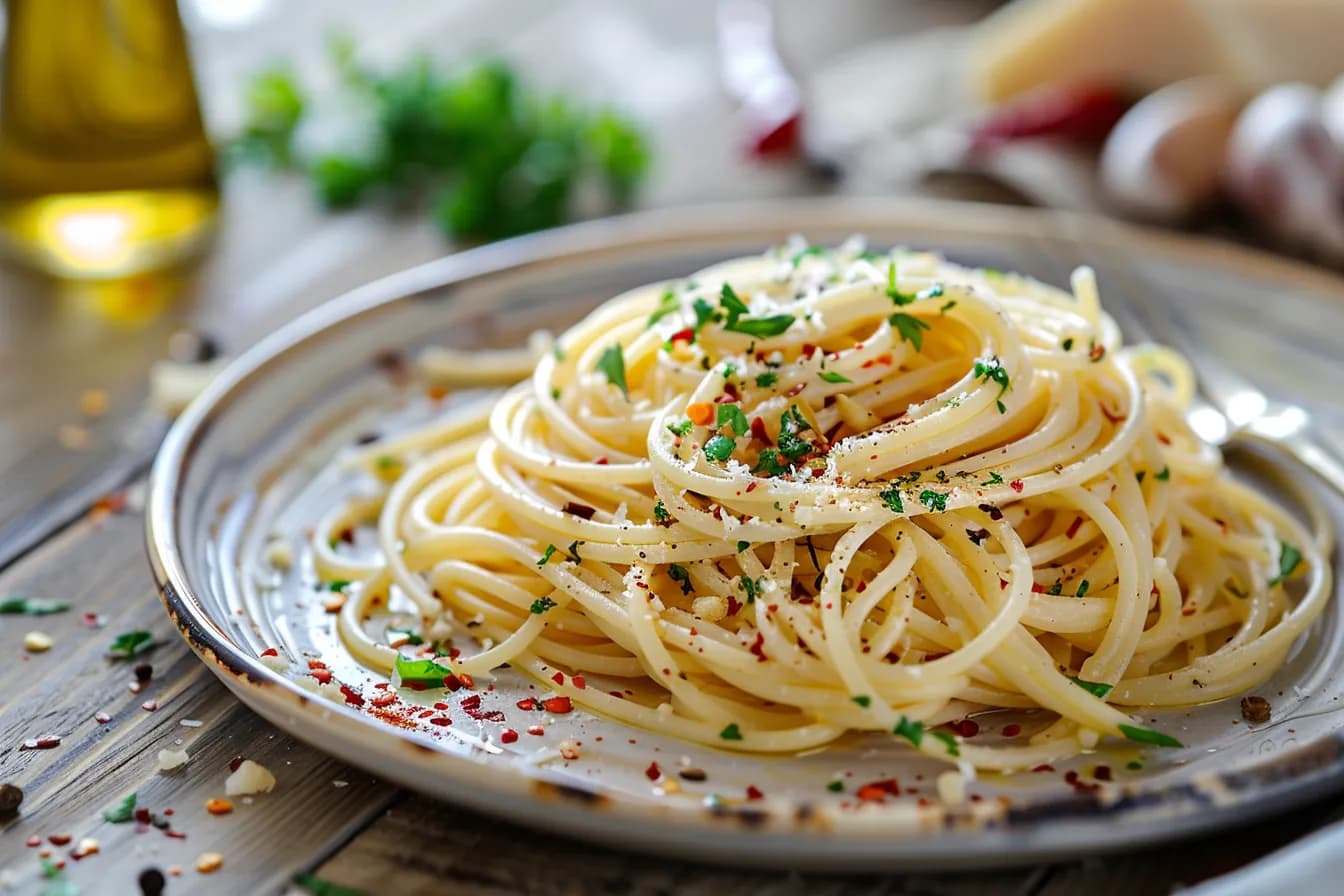
Spaghetti Aglio e Olio
Garlic, good olive oil, chili, and parsley make this the fastest brilliant pasta dish ever.