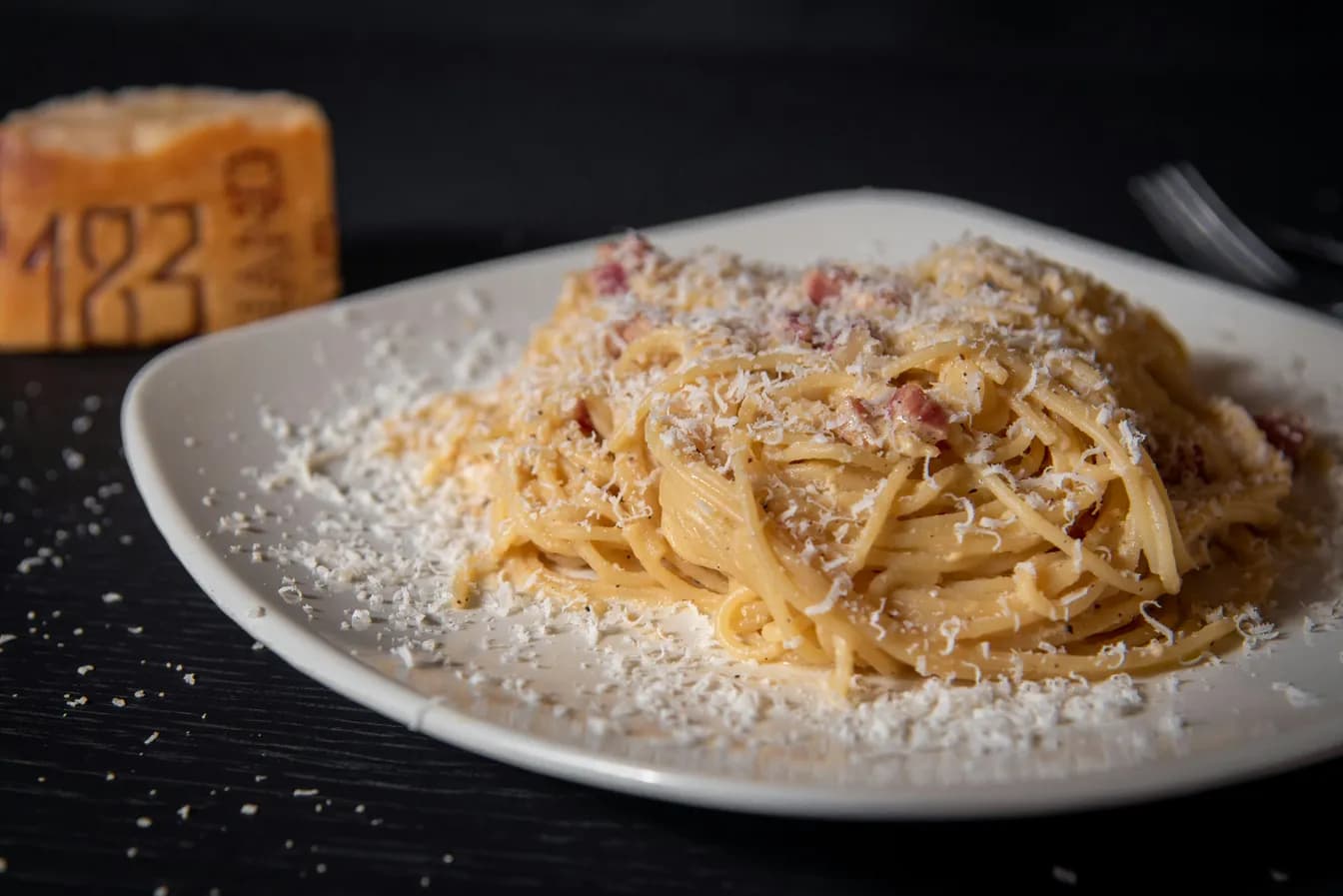
The Roman classic with Guanciale, Pecorino, and a creamy egg sauce, completely without cream. The secret lies in the timing: the eggs thicken only from the residual heat of the pasta and combine with the pasta water to form a silky sauce that clings to the spaghetti just like in the best trattorias of Rome.
Why this works
Egg yolks begin to coagulate at around 65 °C and are firm at 70 °C. The pan is therefore removed from the heat before the egg cream is added: the residual heat of the drained pasta is just below this and thickens the sauce without scrambling it. The starchy pasta water helps doubly because the dissolved starch stabilizes the fat droplets from the Guanciale, and the sauce ends up glossy instead of splitting.
Step-by-step instructions
- 1
Prepare the Guanciale
First, cut the hard rind off the Guanciale and divide the meat into strips about 1 cm wide. Put them into a large, cold pan without any additional fat, and then render them slowly over medium heat. After 6 to 8 minutes, the fat will render out and the strips will become golden brown and wonderfully crispy. Stir occasionally so nothing burns, and then remove the pan from the heat. The rendered fat stays in, because that is exactly where the full flavor of your sauce will come from later.
- 2
Cook the pasta
Bring plenty of water to a boil in a large pot and salt it generously; it should taste like a light sea breeze. Now add the spaghetti and cook according to the package instructions until al dente, meaning with a noticeable bite in the center. About a minute before the end, scoop out a large cup of the cloudy, starchy pasta water and set it aside. This water is your secret for the creamy sauce, so definitely do not pour it away.
- 3
Mix the egg cream
Whisk the egg yolks and the whole egg in a bowl with the finely grated Pecorino until a smooth, thick paste forms. Season generously with freshly ground black pepper; you can be bold here. Now stir in a little hot pasta water by the spoonful so that the mixture slowly gets used to the heat and does not curdle later. It is perfect when it runs thickly off the spoon.
- 4
Combine everything
The spaghetti now goes dripping wet and straight from the pot to the Guanciale in the pan. Toss them for a few seconds so they absorb the aromatic fat. And now for the most important moment: the pan must be off the heat. Pour the egg cream swiftly over the hot pasta and mix everything vigorously. Gradually add a splash of pasta water, stirring continuously, until a glossy, silky sauce forms that coats every single noodle.
- 5
Serve
Now you have to be quick: serve the Carbonara immediately on pre-warmed plates, because it tastes best fresh and sets quickly as it stands. Sprinkle a little more Pecorino over each portion and grind a good amount of fresh black pepper on top. If you like, twirl the spaghetti with a fork into a tall nest, just like in a Roman trattoria. Buon appetito!
Our best tips
- The pan must be off the heat when the egg cream is added, otherwise you will get scrambled eggs instead of sauce.
- Place the Pecorino in the freezer for 15 minutes before grating, then it can be grated more finely and melts better.
- Can't find Guanciale? Pancetta works, but smoked bacon changes the flavor significantly.
Tasty variations
Carbonara with peas
Add a handful of frozen peas to the pasta in the last 2 minutes; not classic, but popular with children.
Vegetarian Carbonara
Replace Guanciale with smoked tofu or fried shiitake mushrooms and work with 1 tablespoon of olive oil.
What is left over?
This recipe only uses the yolks. The whites keep for three days in the fridge and freeze well – nobody has to throw them out.
Nutrition facts
| Calories | 700 kcal |
|---|---|
| Protein | 31 g |
| Carbohydrates | 76 g |
| – of which sugar | 3 g |
| Fat | 30 g |
| Fiber | 3 g |
Where the 700 kcal come from
per serving
Calculated from the ingredients – how we do it
We add up reference values for every ingredient and divide by the number of servings. These assumptions are baked in:
- Reference values per 100 g – for the raw ingredient, exactly as listed.
- Tinned goods count at drained weight, bone-in meat at purchase weight: you eat about 70 per cent of a chicken thigh and leave the rest.
- Water evaporates as you cook. The energy stays in the pot, the weight does not – so the figure is per serving, not per 100 g of finished dish.
- Anything listed without a quantity – “salt and pepper” – is not counted.
A guide value, not a lab measurement: no two onions weigh the same, and fat content varies from pack to pack.
What can go wrong
The points where this recipe most often goes sideways – and what to do about it.
- The sauce has turned into scrambled eggs
- The pan was still too hot. Egg yolk coagulates from about 70 °C; the pan must be removed from the heat before the pasta goes in, and the residual heat is completely sufficient. If it has happened, nothing helps anymore: start over, this time with a pan that has cooled briefly on a damp cloth.
- The sauce remains thin and runs to the edge of the plate
- It lacks starch. Add pasta water by the tablespoon and toss the pan vigorously until the sauce clings to the pasta. It is important that the water comes from cooking the pasta and was not too heavily salted; fresh water does not bind.
- The cheese forms strings instead of dissolving
- It was grated too coarsely or added all at once. Grate the Pecorino finely, mix it with the egg yolk beforehand to form a paste, and only then add this mixture to the pan; then it melts evenly instead of clumping.
Frequently asked questions
Does cream go into Carbonara?
No. The creaminess comes exclusively from egg yolk, Pecorino, and starchy pasta water. Cream is taboo in the original Roman version.
Can I use Parmigiano instead of Pecorino?
Yes, that works. Pecorino is saltier and more savory; with Parmigiano, you might need to use a little more salt and pepper. A 50/50 mix is a good compromise.
Is Carbonara with raw egg safe?
The eggs are heated to about 65 °C by the hot pasta and slightly thickened. Use fresh eggs and serve the dish immediately. Pregnant women are better off switching to pasteurized eggs.
How many calories are in a portion of Carbonara?
One of four portions is around 645 kcal. The largest part is contributed by Guanciale and Pecorino. Without cream, which does not belong in it anyway, the classic version is the lighter one.
Comments & ratings(0)
Sign in to rate and comment on this recipe.
You might also like
 Pasta
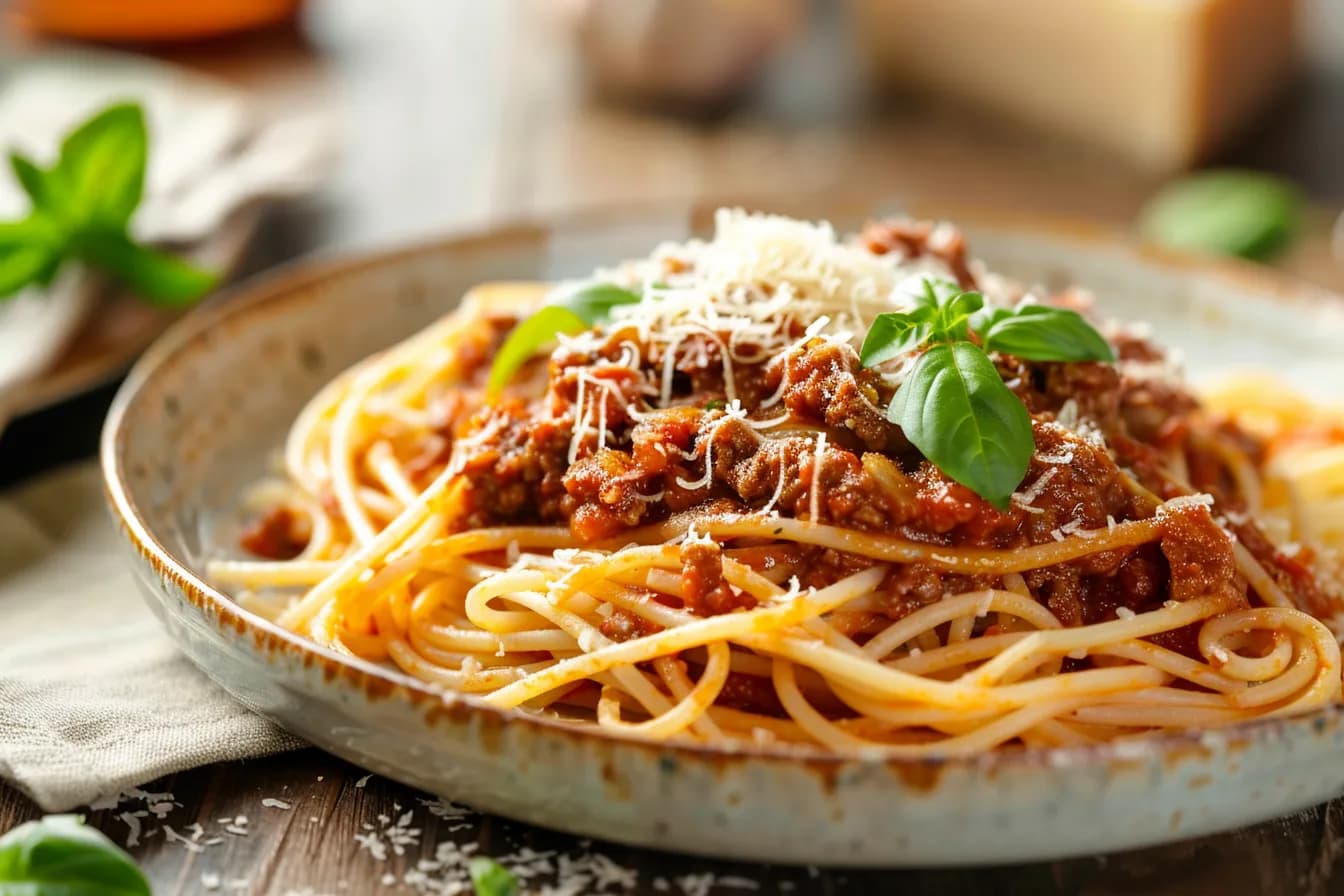
PastaSpaghetti Bolognese
Slow-braised ragù with beef, sofrito and a splash of milk, deep, velvety, irresistible.
 Pasta
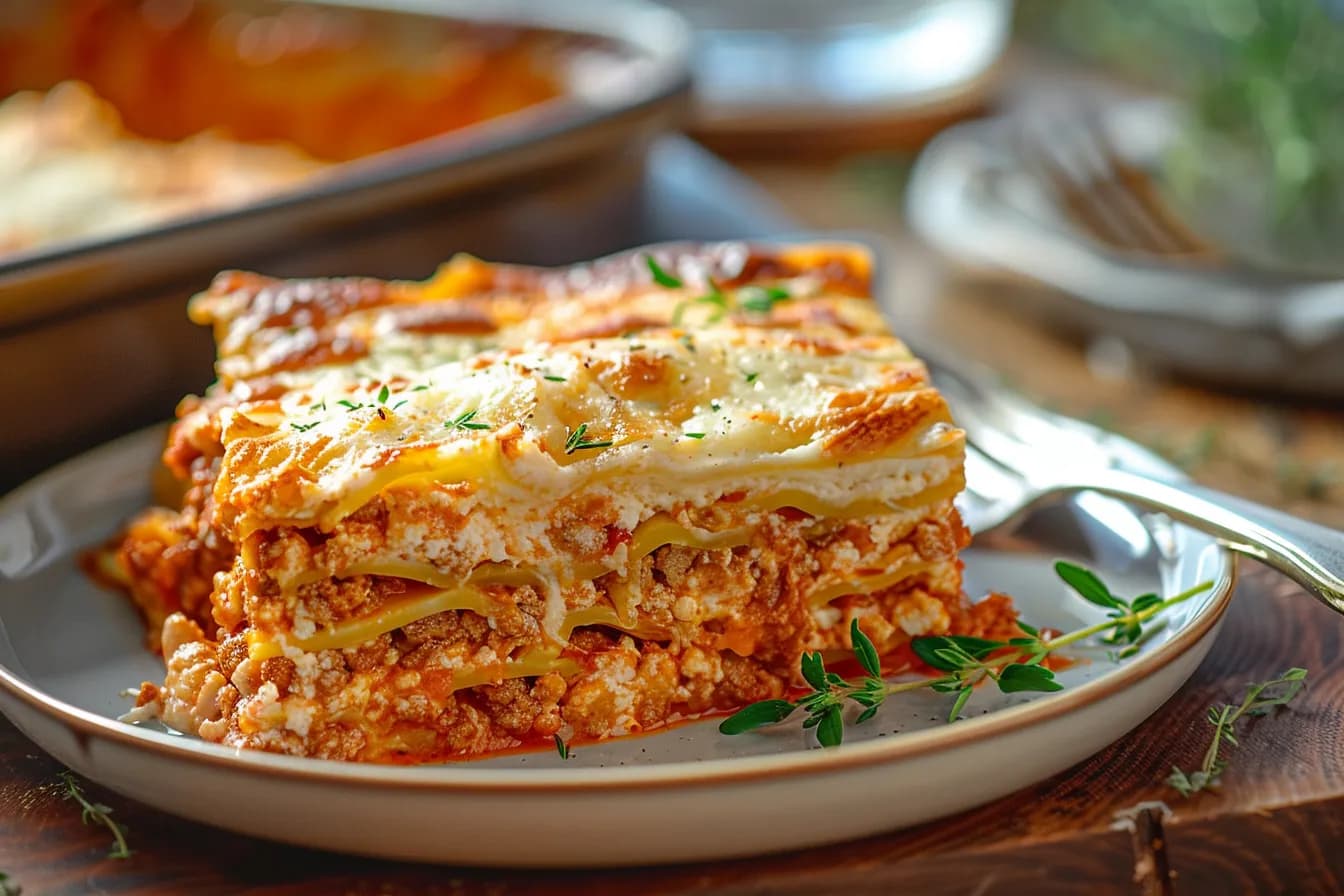
PastaLasagne al Forno
Layers of ragù, creamy béchamel and Parmesan, baked golden brown to a perfect crust.
 Pasta
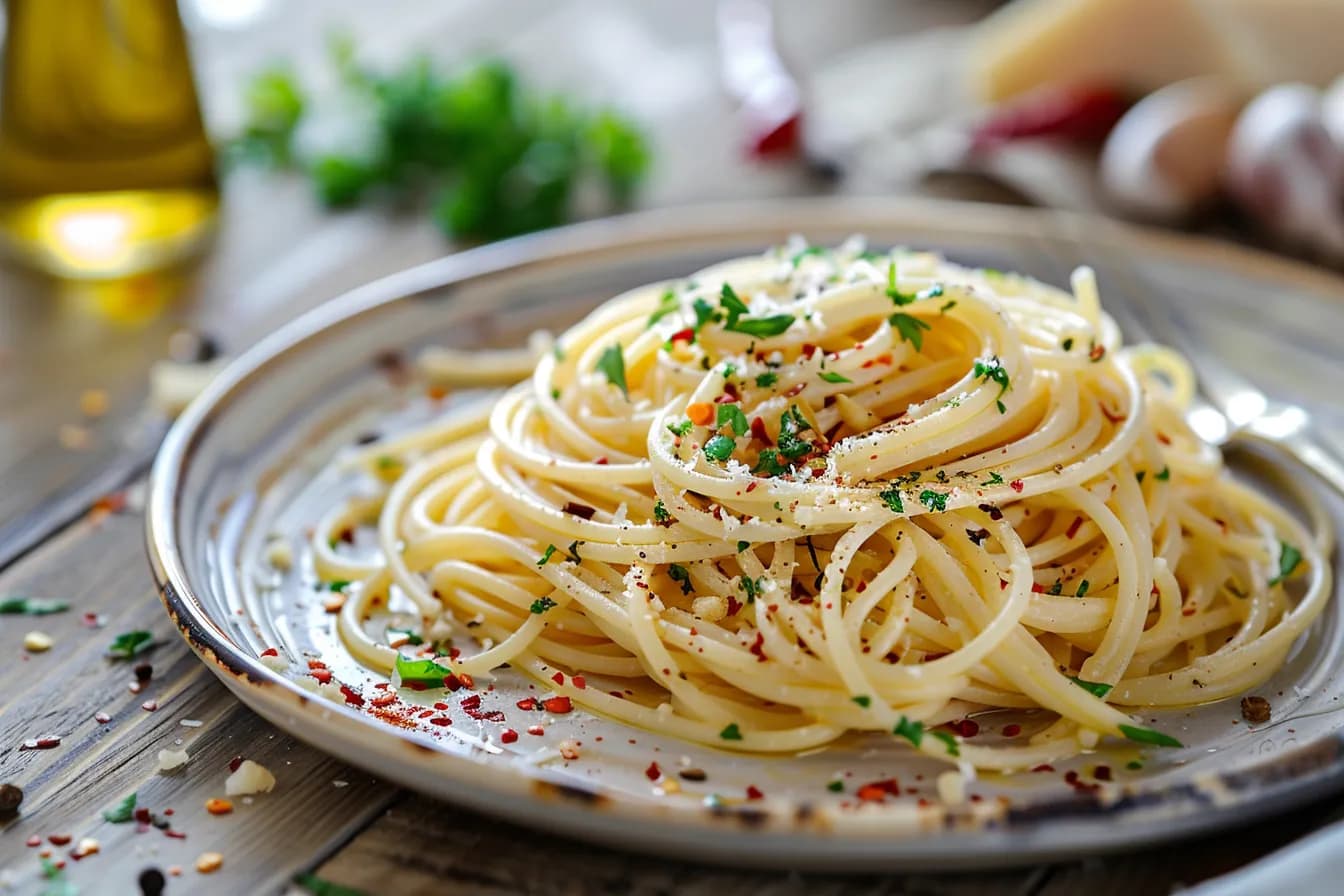
PastaSpaghetti Aglio e Olio
Garlic, good olive oil, chili, and parsley make this the fastest brilliant pasta dish ever.