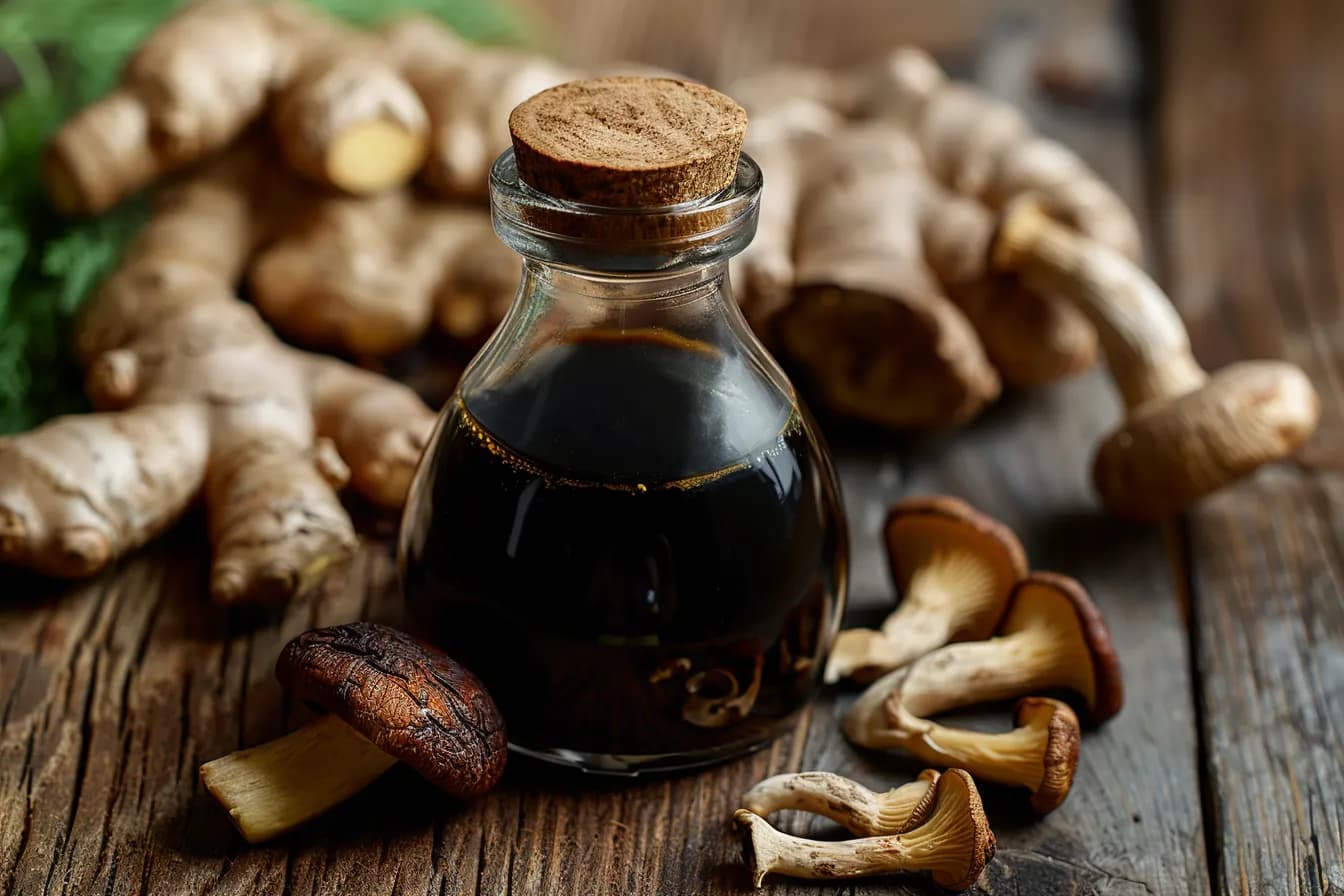
Soy-Free Asian Sauce
Coconut aminos and mushroom broth replace soy sauce. It is salty, dark, and packed with the same umami.
- Preparation
- 10 min
- Cook/bake time
- 20 min
- Total
- 1 hr
- Difficulty
- Easy
- Calories
- 19 kcal
- Servings
- 10 servings
- Prep
- 10 min
- Cooking & baking
- 20 min
- Resting
- 30 min
Only 30 min of that is hands-on – the rest takes care of itself.
Coconut aminos and mushroom broth replace soy sauce. It is salty, dark, and packed with the same umami. Soy sauce is hard to replace in Asian cuisine because it delivers two things at once: salt and fermented glutamate. This sauce recreates both from other sources and works anywhere you would normally use soy sauce.
Why this works
Soy sauce tastes so intense not because it is salty, but because fermentation breaks down soy protein into free amino acids. This is especially true for glutamic acid, which is responsible for the savory base note. To replace it, you need another glutamate source, and dried shiitake mushrooms are one of the strongest available. During the drying process, they also develop guanylate, a nucleotide that multiplies the effect of glutamate. This combination is the reason why a mushroom broth tastes more robust than its individual parts. Coconut aminos contribute saltiness and a slight sweetness, while balsamic vinegar adds dark color and fermented depth. Finally, reducing the liquid concentrates everything to the strength of soy sauce.
Step-by-step instructions
- 1
Soak the mushrooms
Pour boiling water over the dried shiitake mushrooms and let them steep for thirty minutes. The soaking water is not a byproduct here, but rather the main ingredient. It holds the glutamate and guanylate that carry the sauce.
- 2
Reduce the liquid
Pour the soaking water through a sieve into a pot, add the ginger, garlic, and salt, and boil everything uncovered until reduced by about half. You can chop up the mushrooms themselves and use them for something else, as they have done their job.
- 3
Add coconut aminos and acid
Stir in the coconut aminos, balsamic vinegar, and syrup, and let everything simmer gently for another three minutes. Coconut aminos are significantly milder and sweeter than soy sauce, so the salt and balsamic vinegar balance this out.
- 4
Strain and bottle
Pour the sauce through a fine sieve into a clean bottle. It will keep for three weeks in the fridge. As it cools, it will become slightly thicker than soy sauce. This is due to the reduced sugar and is not a mistake.
Our best tips
- The mushroom soaking water is the main ingredient, not waste. It contains the glutamate meant to replace the soy sauce.
- Use dried shiitake mushrooms, not fresh ones. The guanylate, which multiplies the effect of the glutamate, only develops during the drying process.
- Reduce by half. Without this concentration, the sauce remains thin and tastes pale compared to soy sauce.
Tasty variations
Teriyaki variation
Additionally, boil two tablespoons of syrup and one teaspoon of cornstarch mixed in a little water until the sauce becomes glossy. This goes well with anything from the pan or the air fryer.
Without coconut aminos
Use 100 ml of vegetable broth and an extra teaspoon of salt instead. The sauce will be less sweet and slightly thinner, but it accommodates coconut intolerances.
Nutrition facts
| Calories | 19 kcal |
|---|---|
| Protein | 1 g |
| Carbohydrates | 3 g |
| – of which sugar | 2 g |
| Fat | 0 g |
| Fiber | 0 g |
Where the 19 kcal come from
per serving
Calculated from the ingredients – how we do it
We add up reference values for every ingredient and divide by the number of servings. These assumptions are baked in:
- Reference values per 100 g – for the raw ingredient, exactly as listed.
- Tinned goods count at drained weight, bone-in meat at purchase weight: you eat about 70 per cent of a chicken thigh and leave the rest.
- Water evaporates as you cook. The energy stays in the pot, the weight does not – so the figure is per serving, not per 100 g of finished dish.
- Anything listed without a quantity – “salt and pepper” – is not counted.
A guide value, not a lab measurement: no two onions weigh the same, and fat content varies from pack to pack.
Frequently asked questions
What are coconut aminos?
It is the reduced, fermented sap of the coconut blossom, mixed with salt. They contain no soy whatsoever, taste milder and sweeter than soy sauce, and have about two thirds of its salt content. They are available in health food stores and Asian markets.
Is the sauce also gluten-free?
Yes, all ingredients are naturally gluten-free, unlike classic soy sauce, which almost always contains wheat. If you need to avoid both, this is a solution for two allergens at once. Check the label on the balsamic vinegar, as some varieties contain additives.
How salty is it in comparison?
Slightly milder than soy sauce. When cooking with it for the first time, it is better to use a third more and then taste, rather than relying on your usual amount. You can always add more seasoning, but you cannot take it away.
Comments & ratings(0)
Sign in to rate and comment on this recipe.
You might also like
 Low Carb
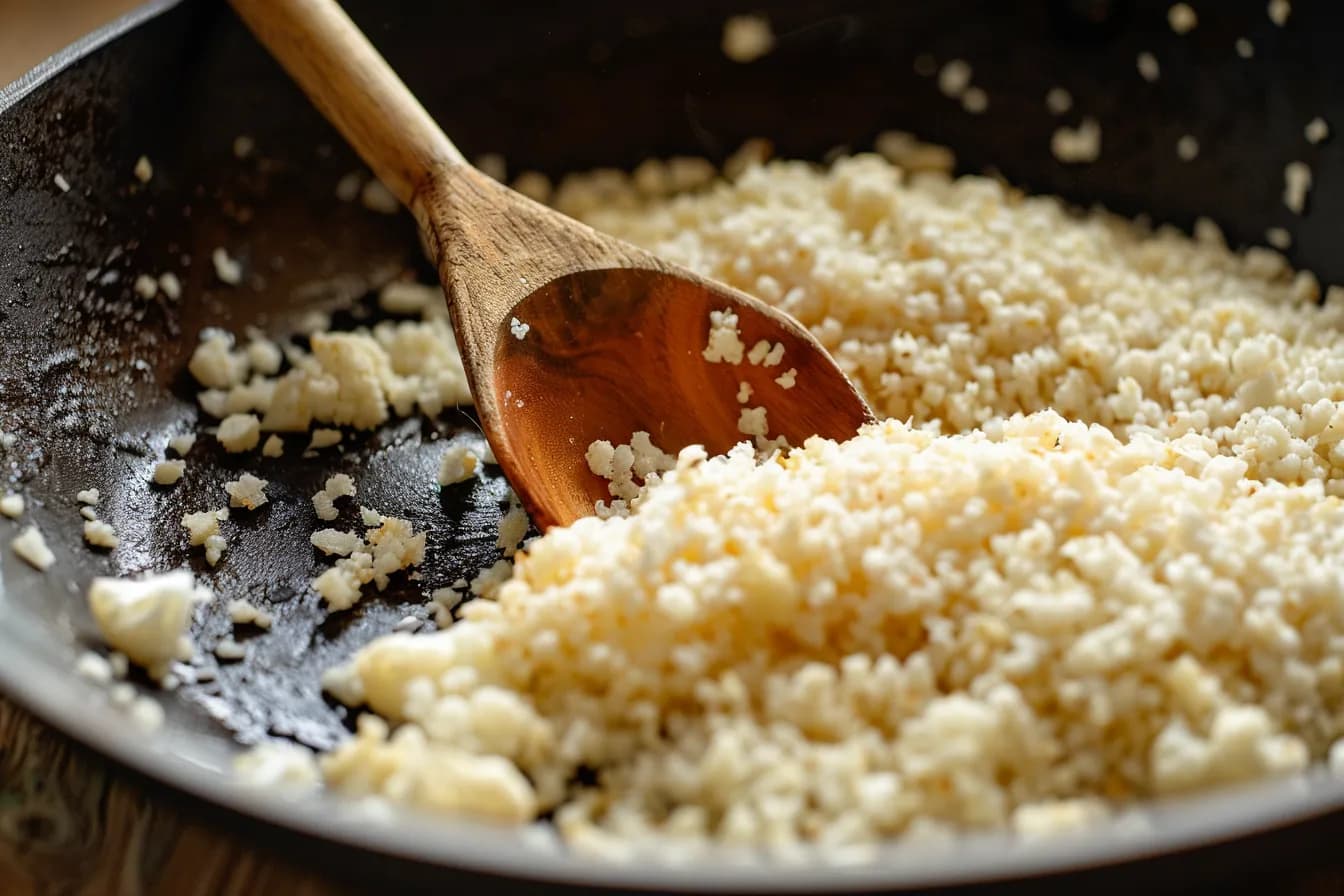
Cauliflower Rice
A rice substitute made from cauliflower with a tenth of the carbohydrates, dry roasted instead of steamed, otherwise it turns to mush.
 Basic Recipes
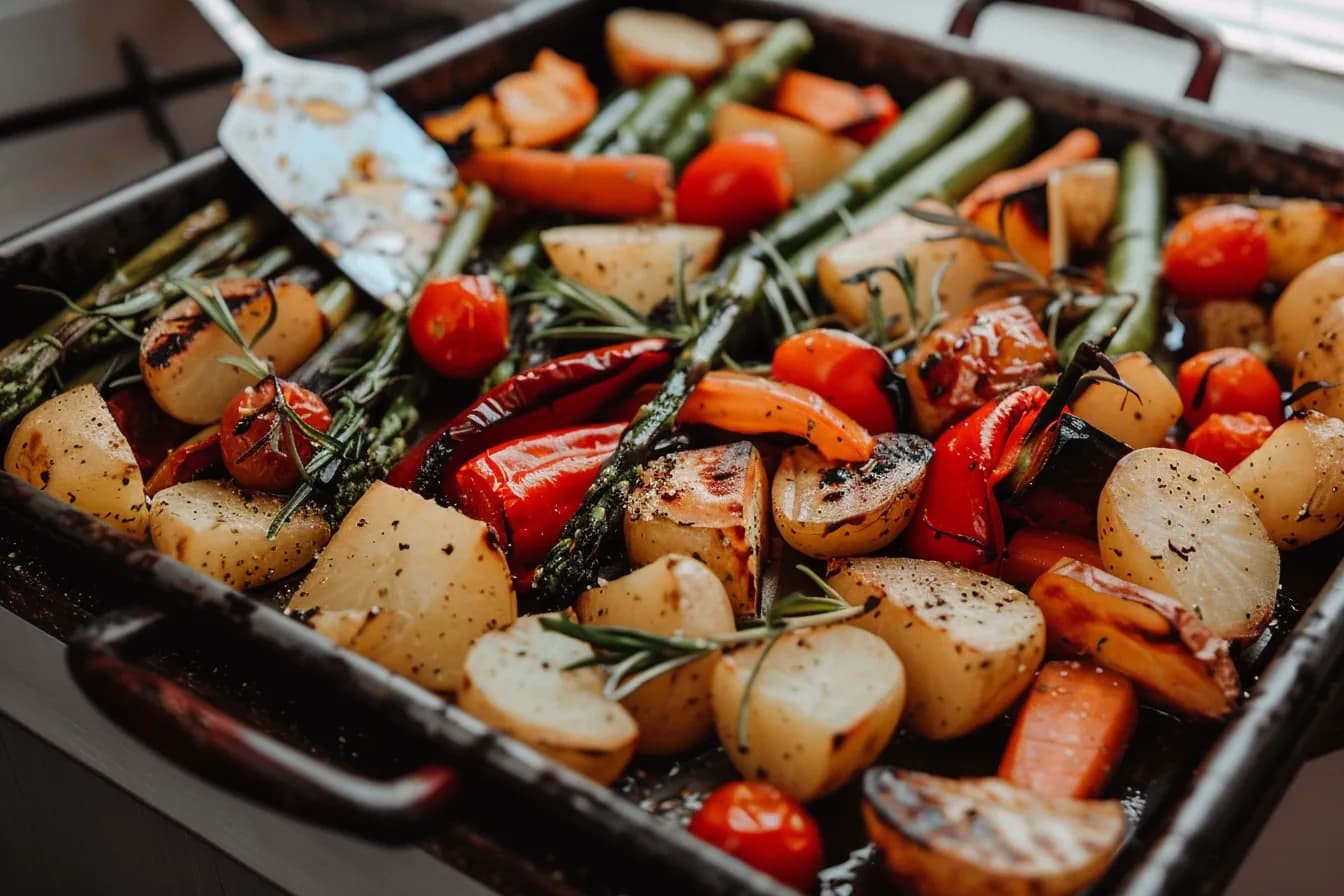
Roasted Vegetables: Time & Temperature for Everything
Sixteen types of vegetables, each with a time and a temperature, so everything is ready at the same time.
 Basic Recipes
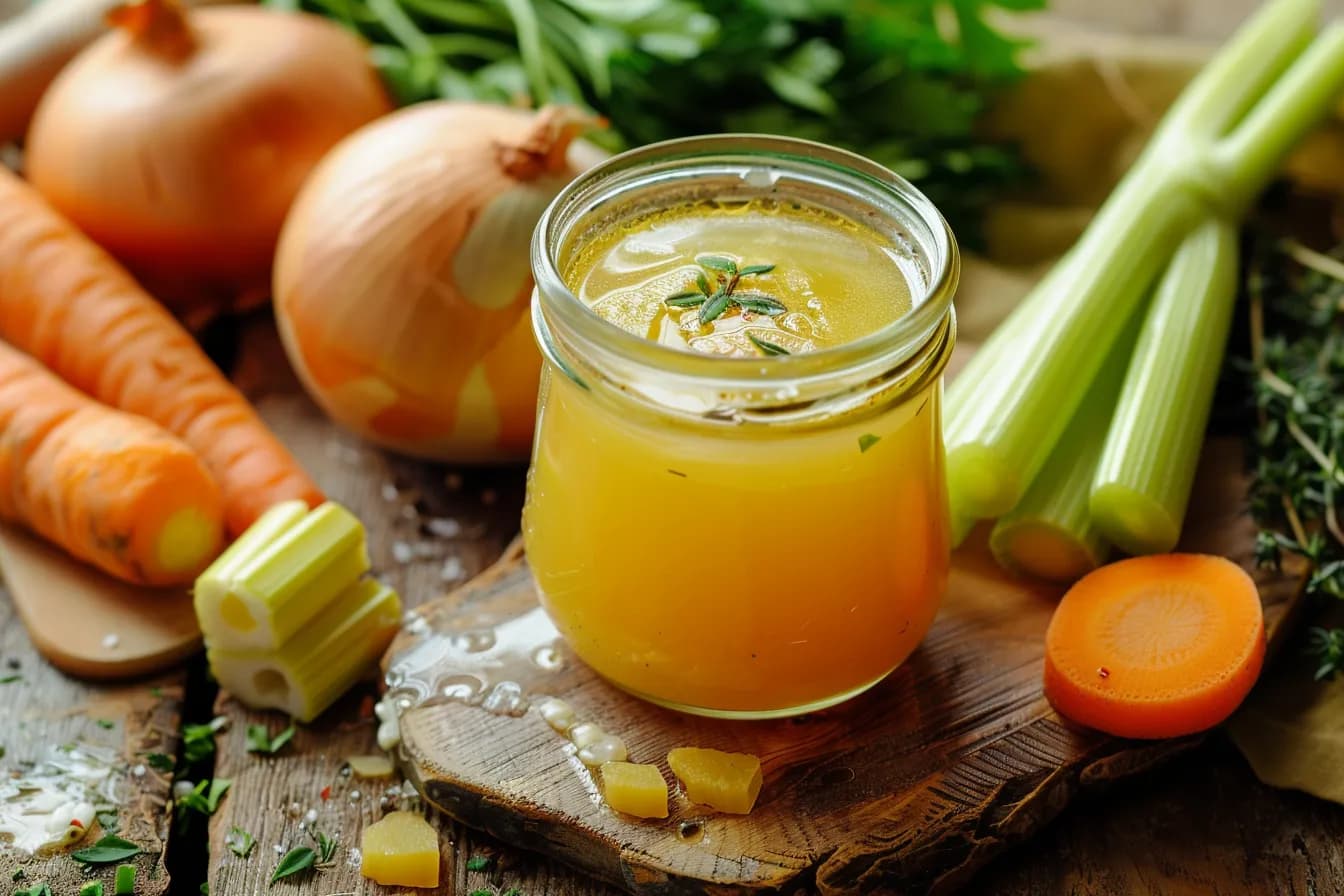
Homemade Vegetable Broth
Ready in 45 minutes. Cooked longer, it does not get stronger, but bitter.